


Creamy chicken curry stuffed bread rolls wrap a colorful filling of spiced chicken, onion, peppers, corn, crème fraîche, and cheese inside soft homemade dough. A Parmesan-curry coating gives each roll a savory golden crust while slices of cheese around the filling create a rich center.
The recipe makes 12 rolls and takes about 2 hours 25 minutes, most of it devoted to two rises. Success depends on kneading the dough until elastic, cooling the filling completely, and sealing every portion firmly. The rolls then bake quickly at 400°F, making them useful for lunch, a party tray, or a warm savory snack.
Ingredients for Chicken Curry Stuffed Rolls
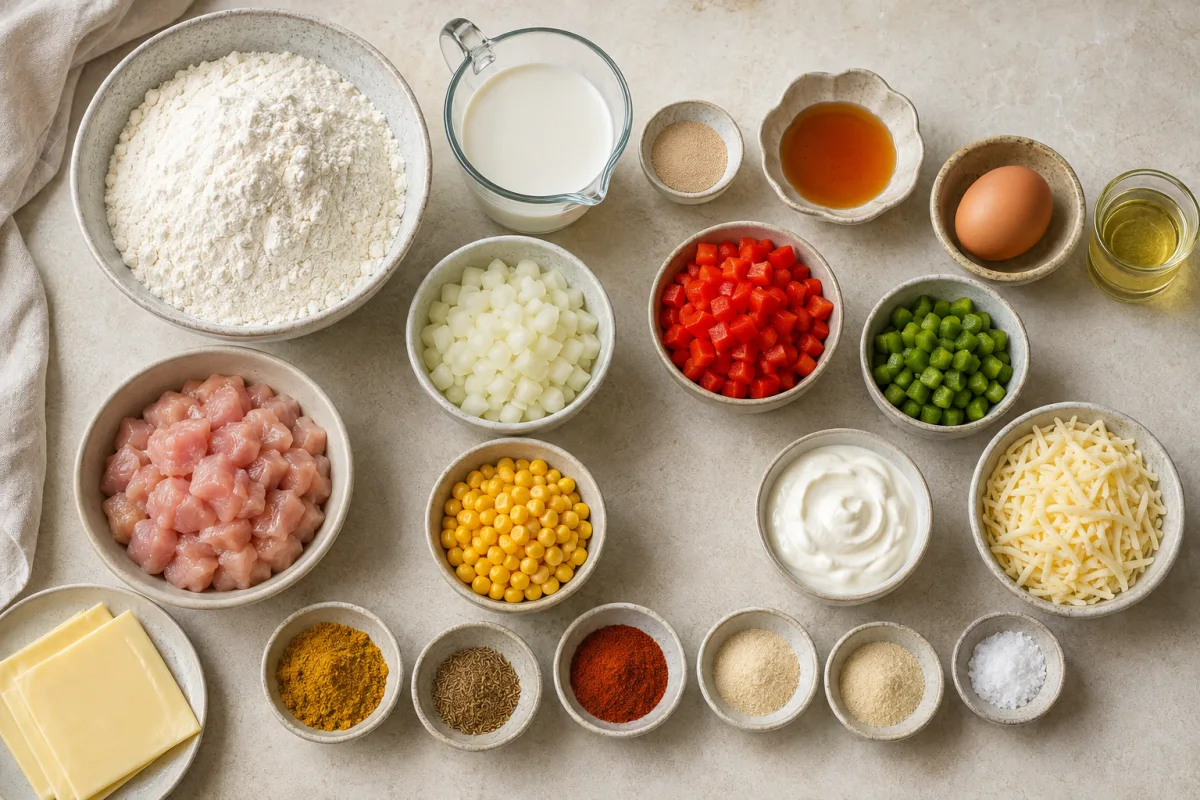
The dough uses 3 1/4 cups all-purpose flour, 3/4 cup plus 2 tablespoons lukewarm milk, 2 teaspoons instant yeast, 1 tablespoon honey, one beaten egg, 2 1/2 tablespoons sunflower oil, and 1 1/2 teaspoons salt.
For the filling, gather 14 ounces diced chicken thighs, one diced yellow onion, half each diced red and green bell pepper, 1/4 cup corn, 1 teaspoon each curry powder, onion powder, and salt, 2/3 teaspoon each garlic powder, cumin, and cayenne, 1/3 cup crème fraîche, 1 cup shredded cheese, and cheese slices. The coating combines 3/4 cup grated Parmesan with 2/3 teaspoon each curry and onion powder; use milk for brushing.
If you enjoy this recipe, you may also like Chicken Fajita Bread Pockets.
How to Make Chicken Curry Stuffed Bread Rolls
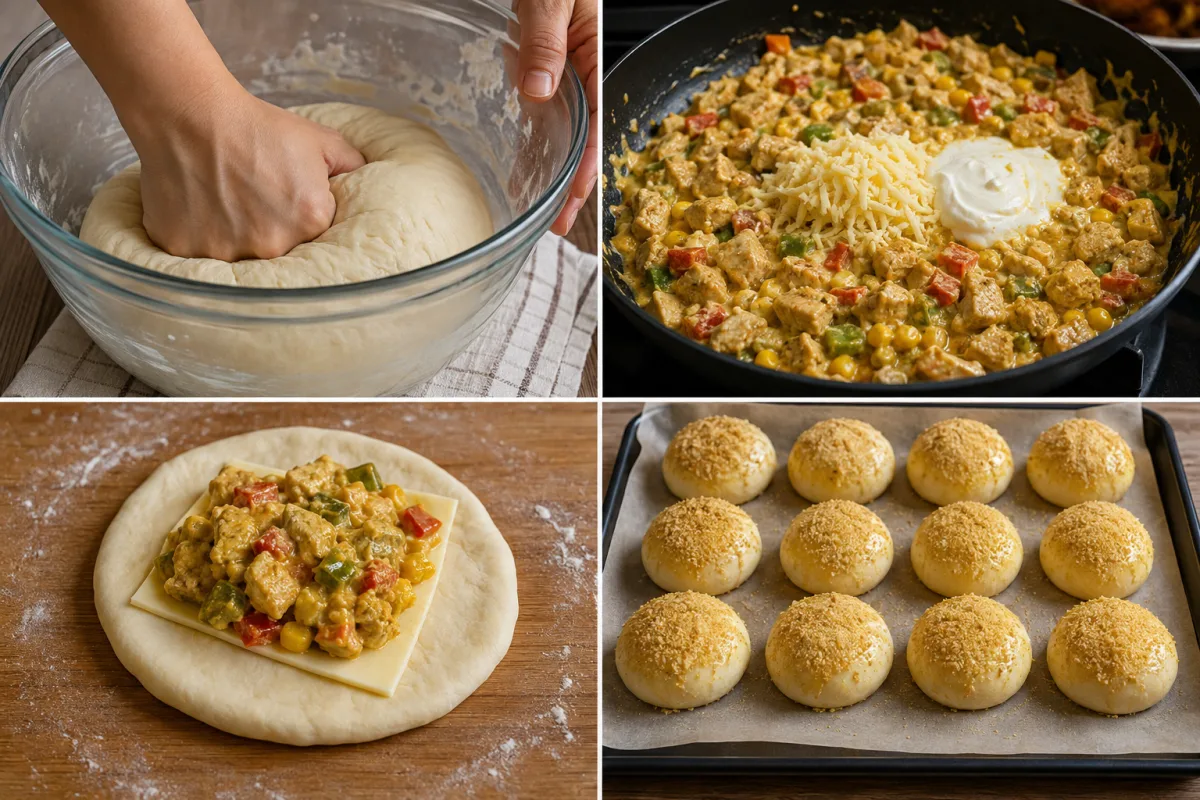
- Start the dough. Combine lukewarm milk, yeast, and honey; rest five minutes. Add egg, oil, flour, and salt, then knead 10 to 12 minutes.
- First rise. Cover and leave in a warm place for about one hour, until doubled.
- Cook the filling. Brown seasoned chicken for 2 to 3 minutes, add onion, peppers, and corn, and cook 4 to 5 minutes.
- Make it creamy. Stir in crème fraîche and shredded cheese, then cool completely.
- Portion. Deflate the dough and divide it into 12 equal pieces.
- Fill and seal. Flatten each piece, add cheese and a modest spoonful of filling, close tightly, and shape into a ball.
- Coat and rise. Brush with milk, roll in seasoned Parmesan, arrange on parchment, and rise 30 minutes.
- Bake. Cook at 400°F for 12 to 18 minutes until golden and fully baked.
For storage details after serving, the USDA leftovers and food safety guidance.
Use Lukewarm Milk
The milk should feel comfortably warm, not hot. Excess heat can damage yeast, while cold milk slows the first rise. Mix it with honey and yeast and wait five minutes before adding the remaining dough ingredients.
Instant yeast may not produce a dramatic foam, but a few bubbles and a yeasty aroma indicate activity. If nothing changes and the yeast is old, replace it before using the flour.
If you enjoy this recipe, you may also like Cheesy Crab Biscuits.
Knead Until Smooth and Elastic
Knead for the full 10 to 12 minutes, whether by hand or with a mixer on low speed. The dough should become smooth, supple, and slightly tacky without coating your fingers.
Add extra flour only a teaspoon at a time if it is genuinely wet. Too much flour creates dense rolls and makes the seams harder to seal. A thin film of oil on the work surface is often better than a heavy dusting.
Cook the Chicken Safely
Cut chicken thighs into small, even pieces so they finish cooking with the vegetables. Brown them with salt, onion powder, garlic powder, cumin, curry, and cayenne before adding the diced produce.
Cook until the chicken reaches 165°F and the vegetables are tender without becoming watery. If the skillet holds excess liquid, let it evaporate before stirring in crème fraîche and cheese.
Keep the Filling Thick
Crème fraîche makes the curry mixture creamy, while shredded cheese helps it hold together. Stir both in off moderate heat until incorporated, then stop cooking before the sauce separates.
The cooled filling should sit on a spoon rather than run from it. A loose mixture leaks through seams and leaves damp bread around the center. Sour cream may replace crème fraîche, but avoid a thin pourable substitute.
Divide Dough Evenly
After the first rise, press out large gas pockets and divide the dough into 12 portions. A kitchen scale gives the most even rolls, but halving repeatedly also works.
Cover the portions while shaping so their surfaces do not dry. Work with one piece at a time and flatten it into a circle with a slightly thicker center than edge.
Fill Without Overloading
Place a piece of sliced cheese in the center, add a controlled spoonful of cooled curry filling, and top with another small piece of cheese if desired. Keep a clean border around the dough.
Pull opposite edges together, pinch firmly, then gather the remaining edges. Turn the seam down and cup the roll against the counter to create surface tension without tearing it.
Coat Before the Second Rise
Mix grated Parmesan with curry and onion powder in a shallow bowl. Brush each sealed roll lightly with milk and press its top and sides into the mixture.
Arrange the rolls seam-side down on parchment with room to expand. Cover loosely and let them rise for 30 minutes. They should look puffy, though they may not double again.

Bake Until Deeply Golden
Bake at 400°F for 12 to 18 minutes. Rotate the tray once if the oven colors unevenly. The coating should be golden and the base should feel set rather than soft.
An instant-read thermometer inserted through the bread, avoiding the molten cheese pocket, should show about 190°F for a fully baked enriched roll. Cool briefly before serving because the filling holds heat.
Storage and Reheating
Refrigerate cooled rolls within two hours and use within three days. Reheat in a 325°F oven until hot in the center; this restores the crust better than a microwave.
Freeze individually wrapped baked rolls for up to two months. Thaw overnight in the refrigerator, then warm uncovered. Do not leave chicken-filled rolls at room temperature for extended periods.
Plan the Timing
Use the first rise to cook and cool the filling and mix the Parmesan coating. By the time the dough doubles, every component should be measured and at a safe temperature for assembly.
Allow extra time in a cool kitchen, because yeast responds to temperature rather than the clock. Judge the first rise by visible doubling and the second by a noticeably puffy texture.
Troubleshooting
- Dough is dense: Check the yeast and avoid adding excess flour.
- Filling leaks: Cool it completely, use less, and pinch clean edges firmly.
- Rolls spread: Build tension when shaping and place seams underneath.
- Coating falls off: Brush evenly with milk before pressing into Parmesan.
- Centers seem doughy: Bake to a deep golden color and check internal temperature.
Conclusion
Knead a soft enriched dough and let it double while cooking a thick chicken curry filling. Cool the filling completely, seal it with cheese inside 12 dough portions, brush with milk, coat in seasoned Parmesan, rise again, and bake at 400°F until golden.
Frequently Asked Questions
- → Can I replace crème fraîche?
Yes. Full-fat sour cream is the closest practical substitute; keep the filling thick.
- → Why did my stuffed rolls leak?
The filling may have been warm or excessive, or the dough border was not sealed firmly.
- → Can chicken curry rolls be frozen?
Yes. Freeze fully baked, cooled rolls for up to two months and reheat after thawing.
- → How do I know the rolls are baked through?
They should be deeply golden, set on the bottom, and about 190°F in the bread.