

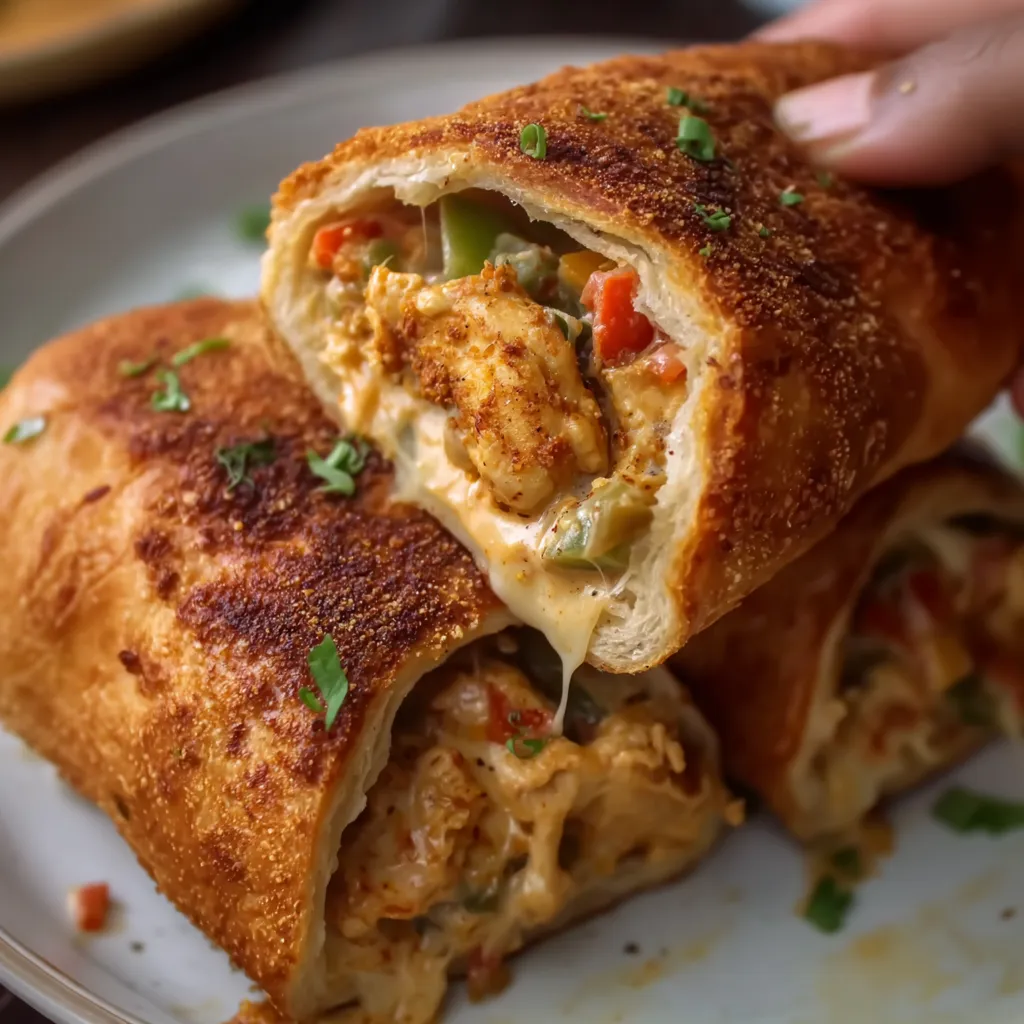
Creamy chicken fajita bread pockets turn flattened sandwich bread into crisp, panko-coated parcels. Inside, seasoned chicken, bell peppers, onion, garlic, cream cheese, heavy cream, and mozzarella make a thick filling that stays contained when the edges are sealed carefully.
The batch yields about 35 to 40 small pockets, making it useful for a large appetizer tray or freezer preparation. The filling must cool before mozzarella and assembly, while the frying oil needs a steady temperature. Those two details protect the cheese texture and keep the bread coating crisp rather than greasy.
Ingredients for Chicken Fajita Bread Pockets
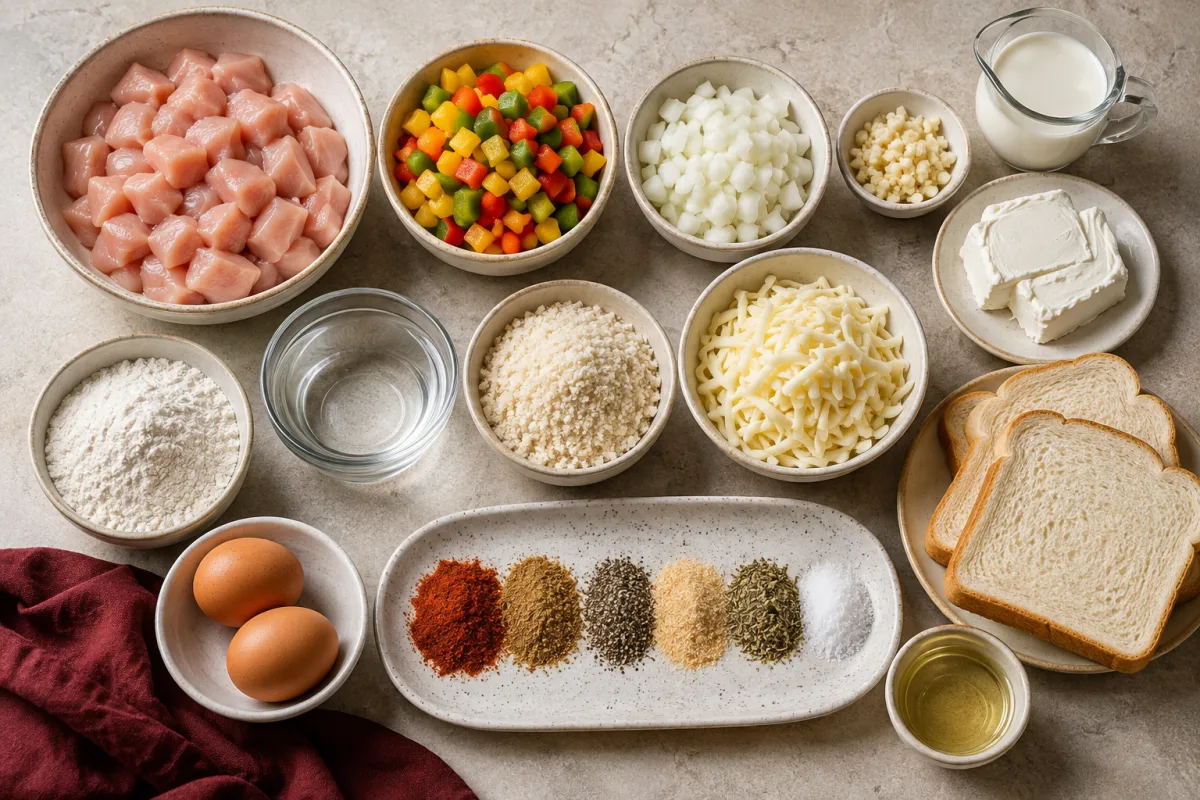
For the filling, use 1 pound cubed chicken breast, cooking oil, 1 cup diced mixed bell peppers, one diced onion, 1 tablespoon minced garlic, 1 cup heavy cream, 1/2 cup cream cheese, and 1 cup shredded mozzarella. Season with salt, 1 teaspoon smoked paprika, 1 tablespoon garlic powder, 1 teaspoon each black pepper, cumin, and Italian seasoning.
Assembly needs about 3 loaves soft sandwich bread, a slurry of 1/2 cup flour and roughly 1/4 cup water, plus 2 cups panko. Whisk 2 eggs with 1/3 cup milk and salt for the coating, and use enough oil for frying.
If you enjoy this recipe, you may also like Chili Cheese Dog Tater Tot Casserole.
How to Make Chicken Fajita Bread Pockets
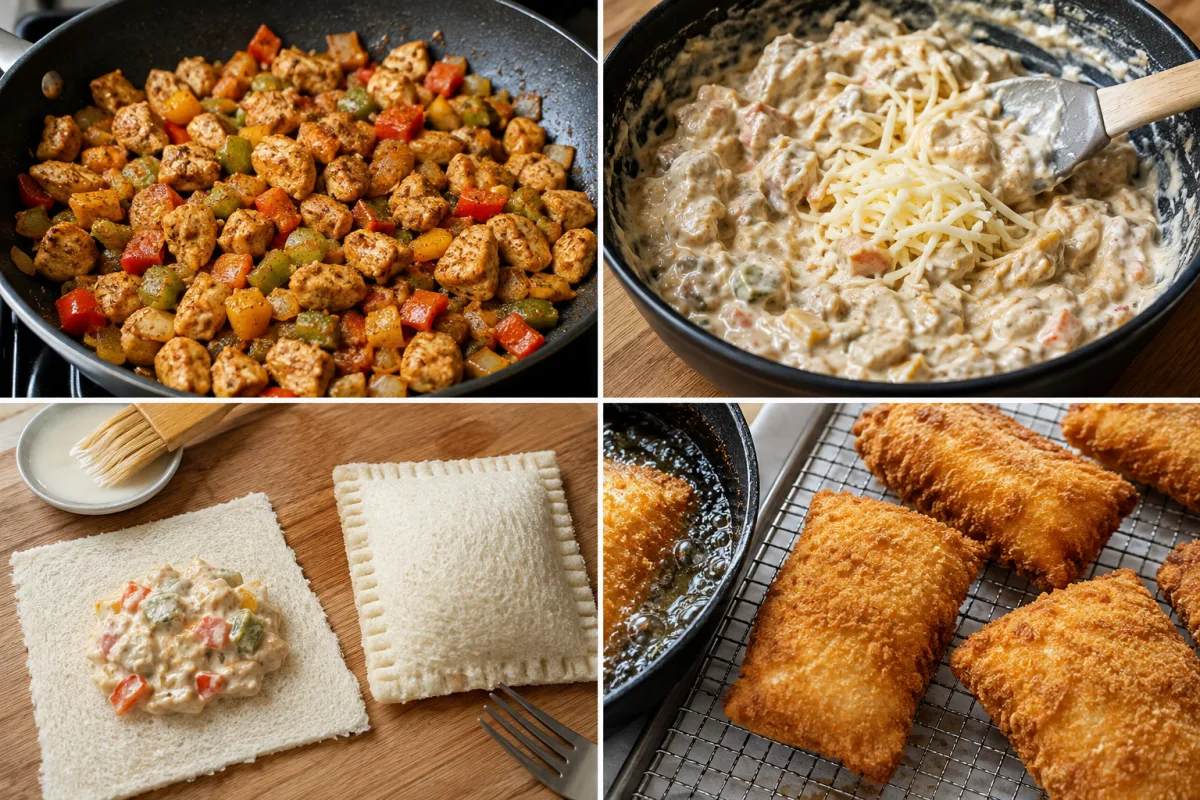
- Cook chicken. Sauté the small cubes in oil with salt, pepper, paprika, cumin, garlic powder, and Italian seasoning for 8 to 10 minutes, until 165°F.
- Add vegetables. Stir in garlic for 30 seconds, then peppers and onion for 2 to 3 minutes.
- Make the filling. Add heavy cream, reduce until thick, and melt in cream cheese.
- Cool completely. Spread the mixture in a shallow dish; once cool, fold in mozzarella.
- Prepare bread. Flatten each slice with a rolling pin and trim the crusts.
- Fill and seal. Brush thick flour slurry along the edges, add about 1 tablespoon filling, fold, press, and crimp with a fork.
- Coat. Dip in egg and milk, then cover fully with panko.
- Fry. Cook 2 or 3 at a time in 350°F oil for 3 to 4 minutes until golden, then drain on a rack.
For storage details after serving, the USDA leftovers and food safety guidance.
Cook a Thick, Dry Filling
Cut the chicken into small even cubes so every pocket is easy to fill. Cook it with the seasonings until the pieces reach 165°F, then add garlic briefly before the peppers and onion.
The vegetables need only 2 to 3 minutes because they continue warming in the cream. Pour in heavy cream and simmer until it coats the ingredients rather than pooling around them. Melt the cream cheese completely to create a cohesive filling that will not run through the bread.
If you enjoy this recipe, you may also like Big Mac Tacos.
Flatten Soft Bread Evenly
Choose standard soft sandwich bread without large holes. Roll each slice firmly in several directions until thin and compact, then trim the crusts to create neat edges.
Keep prepared slices under a clean towel while you work. Exposed bread dries quickly, cracks when folded, and is more likely to leak. Do not stack the flattened pieces with wet filling or slurry between them.
Mix a Thick Flour Slurry
Stir 1/2 cup flour with about 1/4 cup water until it forms a smooth paste. It should brush easily but remain thick enough to sit on the bread's edge without immediately soaking through.
If it drips like milk, add a little more flour. If it tears the bread when spread, loosen it with water a teaspoon at a time. Keep the bowl covered between batches so the surface does not form a dry skin.
Fill Without Overloading
Place about one tablespoon of fully cooled filling on one half of each slice, leaving a clear border. More filling may look generous, but it puts pressure on the seal and can burst in hot oil.
Brush slurry along the border, fold the bread over, and press out large air pockets without squeezing the center. Crimp firmly with fork tines around every edge. Set finished pockets seam-side up while assembling the rest.
Apply an Even Panko Coating
Whisk eggs, milk, and a pinch of salt in one shallow dish and spread panko in another. Dip a sealed pocket quickly in the egg mixture, allow excess to drain, then press every side and edge into the crumbs.
An even coating protects the bread and gives consistent color. Replace panko when it becomes damp and clumpy. Loose wet crumbs darken in the fryer and attach unevenly to later batches.
Control the Frying Temperature
Heat the oil to about 350°F and verify it with a clip-on or instant-read thermometer suitable for oil. Add only 2 or 3 pockets at a time so the temperature does not drop sharply.
Fry for 3 to 4 minutes, turning carefully, until every side is deep golden. Let the oil recover between batches and skim dark crumbs with a metal spider. Oil that is too cool soaks into the bread; oil that is too hot browns panko before the center warms.
Drain on a Wire Rack
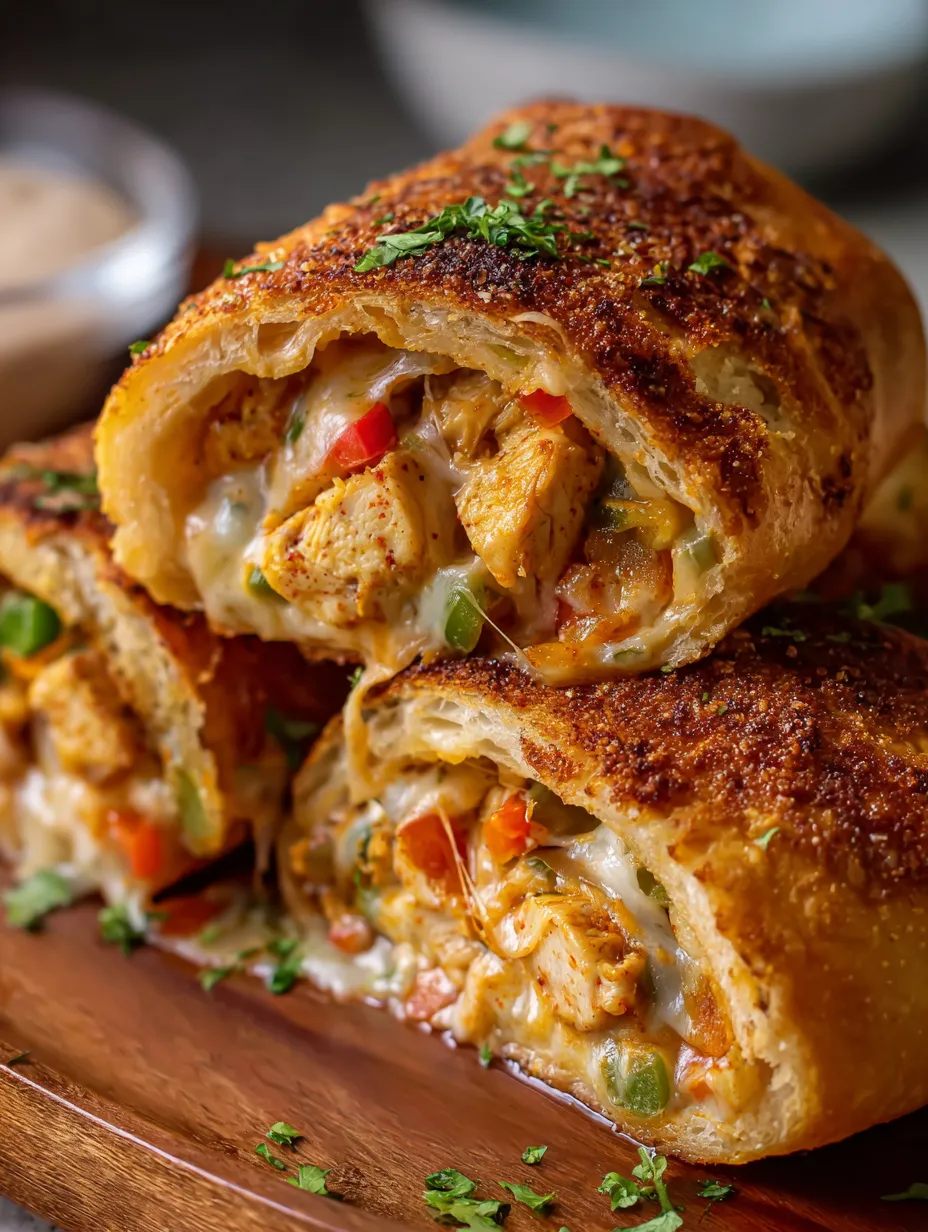
Move fried pockets to a wire rack set over a sheet pan. Air circulating underneath prevents steam from softening the bottom crust, while paper towels alone can trap moisture.
Rest for several minutes before serving because the creamy interior is much hotter than the crust. Offer sour cream, salsa, guacamole, or ranch in separate bowls so the panko remains crisp until each bite is dipped.
Freezing and Make-Ahead Preparation
Arrange coated, unfried pockets in one layer on a parchment-lined tray and freeze until solid. Transfer them to a freezer-safe container with parchment between layers and use within three months.
Fry directly from frozen rather than thawing, adding a minute or two while watching the crust and oil temperature. The chicken is already cooked, but the center must still become steaming hot. Label the container with the preparation date and reheating directions.
Storage and Reheating
Refrigerate cooked pockets within two hours and use them within three days. Keep them in a shallow container once fully cooled so condensation stays limited.
Reheat in an air fryer or 375°F oven until the filling reaches 165°F and the coating is crisp. Turn once for even heating. Microwaving is faster but softens the panko, so it is best reserved for convenience rather than texture.
Troubleshooting
- Filling leaks: Cool it fully, use only one tablespoon, and seal the entire border with thick slurry.
- Bread cracks: Choose soft slices, roll evenly, and keep them covered while working.
- Coating feels greasy: Maintain oil near 350°F and fry only a few pockets at once.
- Panko burns: Lower the heat and remove loose crumbs between batches.
- Bottom turns soft: Drain on a wire rack rather than leaving hot pockets flat on paper towels.
Conclusion
Cook a thick creamy fajita chicken filling and cool it before folding in mozzarella. Flatten soft bread, add one tablespoon filling, seal the edges with flour slurry and a fork, coat with egg wash and panko, then fry in small batches near 350°F until golden.
Frequently Asked Questions
- → Why must the filling cool before assembly?
Cool filling keeps the mozzarella intact, protects the soft bread, and makes the pockets easier to seal.
- → Can chicken fajita bread pockets be frozen?
Yes. Freeze them after coating and before frying, then cook directly from frozen within three months.
- → What oil temperature should I use?
Keep the oil near 350°F and let it recover between small batches.
- → Can I reheat the pockets in an air fryer?
Yes. Reheat until the filling reaches 165°F; the circulating heat helps restore the crisp panko coating.