


Sloppy Joe casserole combines seasoned ground beef, corkscrew pasta, a rich tomato sauce, and two kinds of melting cheese in one family-size bake. The sauce coats the curves of the pasta, while Colby Jack forms a bubbling layer across the top.
This version serves eight and takes about 35 minutes when the pasta is cooked while the beef browns. Thick sauce, pasta cooked just shy of tender, and freshly shredded topping cheese keep the casserole creamy rather than watery.
Ingredients for Sloppy Joe Casserole
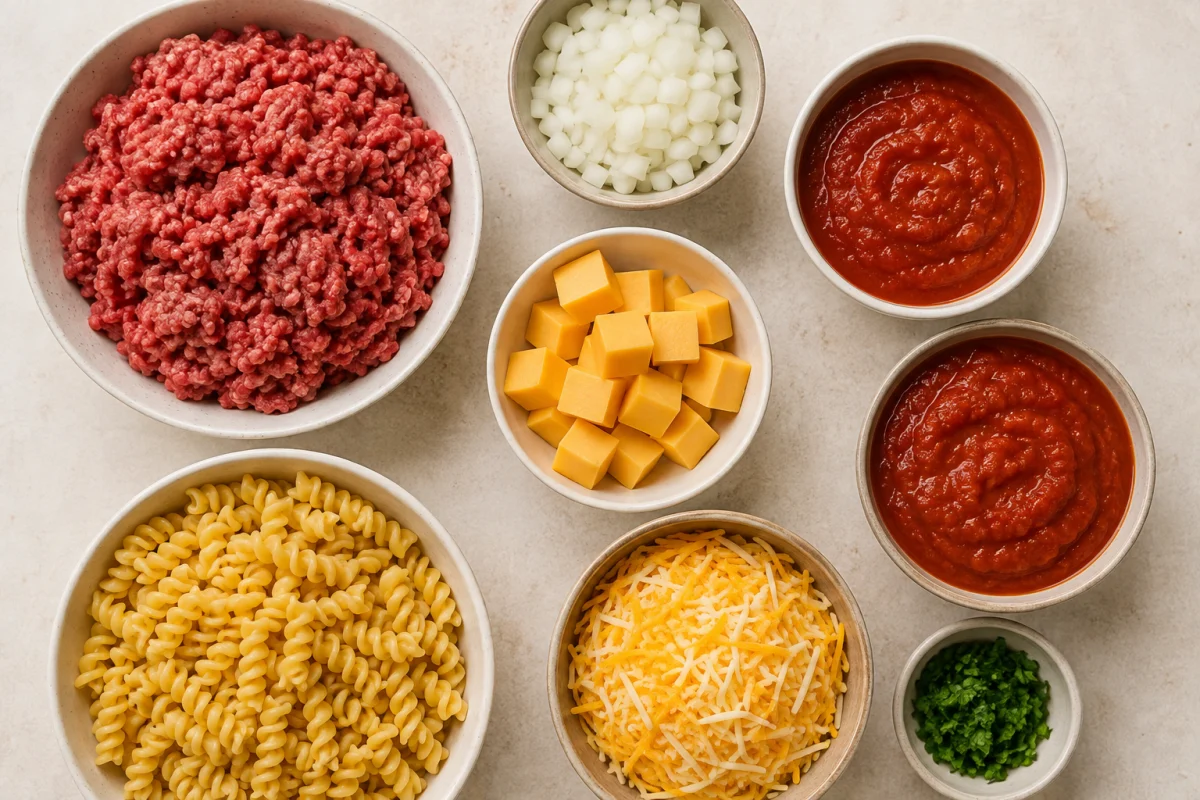
Use 1 pound ground beef, 1/2 small diced onion, and two 24-ounce cans or jars of prepared sloppy Joe sauce. For the creamy base, cut 8 ounces smooth-melting processed cheese into small cubes.
Cook 1 pound corkscrew pasta and shred 1 cup Colby Jack cheese by hand. One tablespoon chopped fresh parsley is optional for garnish. Choose a pasta shape with curves or ridges that can hold the thick meat sauce.
If you enjoy this recipe, you may also like Cheesy Stuffed Shells.
How to Make the Casserole
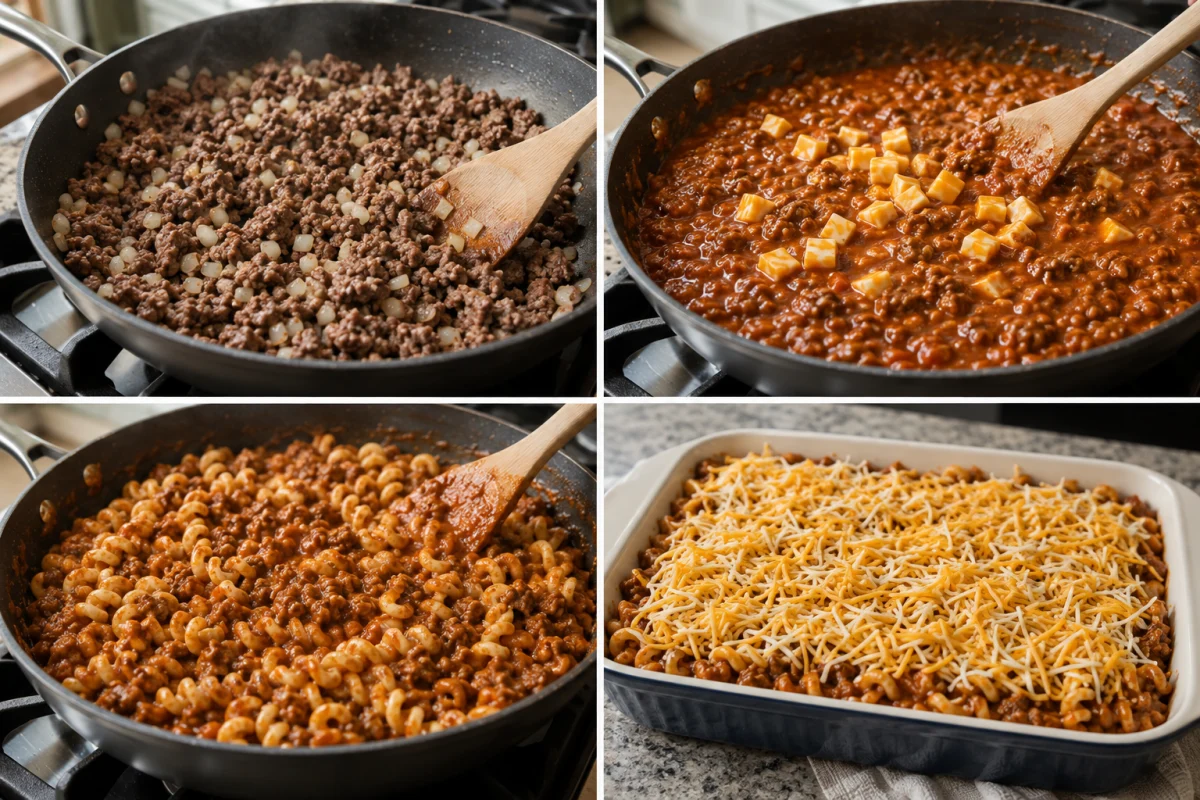
- Prepare. Heat the oven to 350°F and grease a 9-by-13-inch baking dish.
- Cook pasta. Boil corkscrew pasta in salted water until one minute shy of al dente, then drain.
- Brown beef. Cook ground beef and onion over medium-high heat until no pink remains. Drain excess fat.
- Make the sauce. Stir in sloppy Joe sauce and cubed melting cheese until completely smooth.
- Combine. Fold cooked pasta through the meat sauce until evenly coated.
- Assemble. Transfer to the baking dish and cover with shredded Colby Jack.
- Bake. Bake on the center rack for about 15 minutes, until hot and melted.
- Rest. Wait 2 to 4 minutes, add parsley if desired, and serve.
For storage details after serving, the USDA leftovers and food safety guidance.
Choose Pasta That Holds Sauce
Corkscrews, rotini, or cavatappi catch ground beef and cheese along their ridges. Smooth long noodles can slide through the sauce and make portions harder to serve. Use one pound of dry pasta for the intended sauce-to-pasta ratio.
Salt the boiling water before adding pasta. Cook until slightly firmer than the package's al dente direction because the noodles continue absorbing moisture in the oven.
If you enjoy this recipe, you may also like Mushroom Swiss Burger.
Drain the Pasta Well
Reserve a small cup of pasta water, then drain the noodles thoroughly without rinsing. Surface starch helps the sauce cling. Water trapped in the curves can thin the casserole, so shake the colander several times.
The reserved water is only insurance. Add a spoonful if the meat sauce becomes too thick before assembly; otherwise leave it out.
Brown Beef with the Onion
Use a wide skillet over medium-high heat so the beef can contact the hot surface. Add diced onion with the meat and break it into small crumbles. Let some pieces remain undisturbed briefly to develop browned edges.
Cook until the onion is soft and no pink remains. Spoon off excess grease or drain carefully. A thin film in the pan is fine, but pooled fat prevents the tomato sauce from coating the meat.
Melt the Cubed Cheese Slowly
Add sloppy Joe sauce to the drained beef, reduce the heat to medium-low, and stir in small cubes of smooth-melting cheese. Smaller pieces melt faster and distribute without scorching. Keep the mixture moving along the base of the skillet.
Do not let the sauce boil aggressively after the cheese is added. Gentle heat creates a uniform creamy texture; high heat can make the fat separate.
Taste Before Combining
Prepared sloppy Joe sauces vary in sweetness, salt, and acidity. Taste the meat mixture once the cheese has melted. Black pepper, a little mustard, or a dash of Worcestershire can sharpen an overly sweet sauce, but additional salt may not be necessary.
Make adjustments before pasta is added. Once the full pound of noodles is folded in, tasting and distributing small amounts of seasoning becomes harder.

Fold Pasta Without Breaking It
Add drained pasta to the skillet in two portions. Turn it through the sauce with a broad spoon or spatula until every curve is coated. Avoid vigorous stirring, which tears hot pasta and creates small fragments.
If the skillet is not large enough, combine pasta and sauce directly in the prepared baking dish. Mix gently, then level the surface without pressing it down.
Top with Freshly Shredded Cheese
Shred Colby Jack from a block for the most even melt. Packaged shreds are coated with starch to prevent clumping and may stay visibly separate. Scatter the cup of cheese from edge to edge so all eight portions receive some.
Do not mix the topping cheese into the casserole. The processed cheese already makes the sauce creamy, while Colby Jack is meant to form the distinct golden top layer.
Bake Only Until Hot
All components are already cooked, so the 15-minute bake is for heating the center and melting the top. Place the dish on the center rack at 350°F. The edges should bubble gently and the cheese should lose its shredded shape.
Long baking dries the pasta and thickens the sauce excessively. If the assembled casserole was refrigerated, cover it for the first part of reheating and allow additional time until the center reaches 165°F.
Rest Before Serving
Let the dish stand for 2 to 4 minutes. The short rest allows bubbling sauce to settle so portions hold together without becoming firm. Use a wide serving spoon and scoop to the base of the dish.
Fresh parsley adds color but is optional. Sliced scallions, pickled jalapeños, or a small spoonful of tangy coleslaw can be offered at the table.
Sides That Balance the Meal
Pair the rich casserole with steamed broccoli, roasted green beans, a crisp garden salad, or vinegar-based cabbage slaw. Fresh, lightly seasoned vegetables balance the sweet tomato sauce and cheese.
Garlic bread is useful for a large gathering, but it makes the meal heavier. If serving bread, keep portions small and add a generous vegetable side.
Make-Ahead Instructions
Brown the beef and prepare the cheese sauce up to two days ahead. Cool it quickly and refrigerate covered. Cook pasta and assemble the casserole on the day of serving for the best noodle texture.
A fully assembled dish can be refrigerated for up to 24 hours. Let a glass or ceramic baking dish stand at room temperature while the oven heats, then bake until the center is hot, adding several minutes as needed.
Storage and Reheating
Refrigerate leftovers in shallow airtight containers for up to three days. Reheat individual portions in the microwave with a loose cover, or warm a larger amount in a covered 325°F oven. Add a spoonful of water if the sauce has become very thick.
Freeze cooled portions for up to two months. Thaw overnight in the refrigerator before reheating. The pasta will be softer after freezing but should remain coated and flavorful.
Troubleshooting
- Watery casserole: Drain pasta well and simmer thin sauce before combining.
- Greasy sauce: Remove pooled beef fat before adding tomato sauce and cheese.
- Mushy pasta: Boil it one minute short of al dente and limit oven time.
- Cheese will not melt smoothly: Cut cubes small and use gentle heat.
- Dry leftovers: Reheat covered with a spoonful of water.
Conclusion
Cook corkscrew pasta just shy of al dente. Brown ground beef with onion and drain excess fat. Stir in thick sloppy Joe sauce and cubed melting cheese. Fold in pasta, transfer to a 9-by-13-inch dish, top with fresh Colby Jack, and bake at 350°F for 15 minutes.
Frequently Asked Questions
- → What pasta is best for sloppy Joe casserole?
Corkscrew pasta, rotini, or cavatappi works well because the curves and ridges hold the thick meat sauce.
- → How do I keep sloppy Joe casserole from becoming watery?
Drain pasta and beef well, and simmer the sloppy Joe sauce uncovered until it coats a spoon before combining.
- → Can sloppy Joe casserole be made ahead?
Yes. Assemble it up to 24 hours ahead, refrigerate covered, and bake until the center is thoroughly hot.
- → Can leftover sloppy Joe casserole be frozen?
Yes. Freeze cooled portions for up to two months and thaw overnight in the refrigerator before reheating.