


Garlic Parmesan steak tortellini brings seared beef, cheese-filled pasta, zucchini, tomatoes, and onion together on one hot griddle. A prepared garlic Parmesan sauce coats the tortellini, while the vegetables stay distinct and the steak develops browned edges.
The recipe serves four in about 30 minutes. Cooking the components in separate heat zones is the central technique: vegetables need time to soften, frozen tortellini needs steam, and steak needs direct heat. They come together only at the end, which protects every texture.
Ingredients for Steak Tortellini
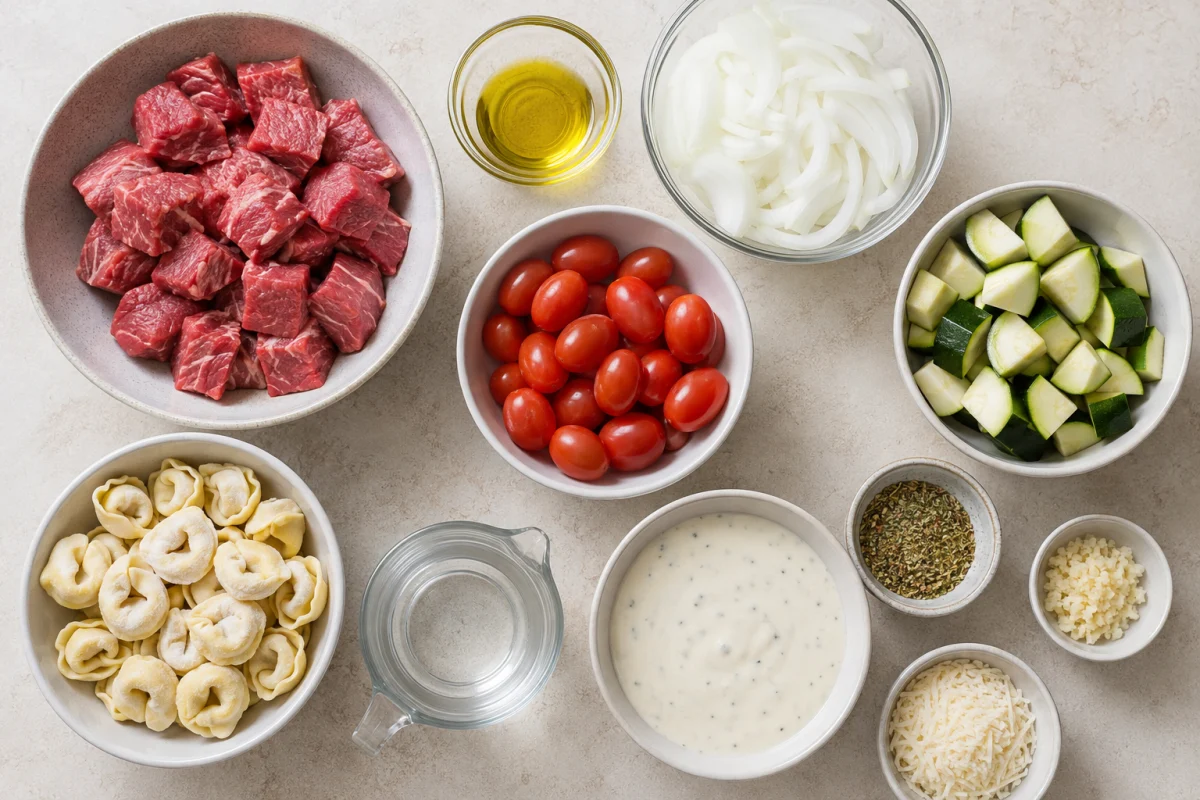
You need 2 strip steaks cut into bite-size cubes, 1 tablespoon cooking oil, 1 sliced onion, 1 zucchini cut into large pieces, and 10 ounces grape tomatoes. Season the meat and vegetables with a garlic-forward all-purpose seasoning.
For the pasta portion, use one 19-ounce bag frozen cheese tortellini, 1/4 to 1/2 cup water, 1/4 cup prepared garlic Parmesan sauce, and shredded Parmesan for finishing. Keep the tortellini frozen until the griddle is ready.
If you enjoy this recipe, you may also like Cheeseburger Potato Skillet.
How to Make Garlic Parmesan Steak Tortellini
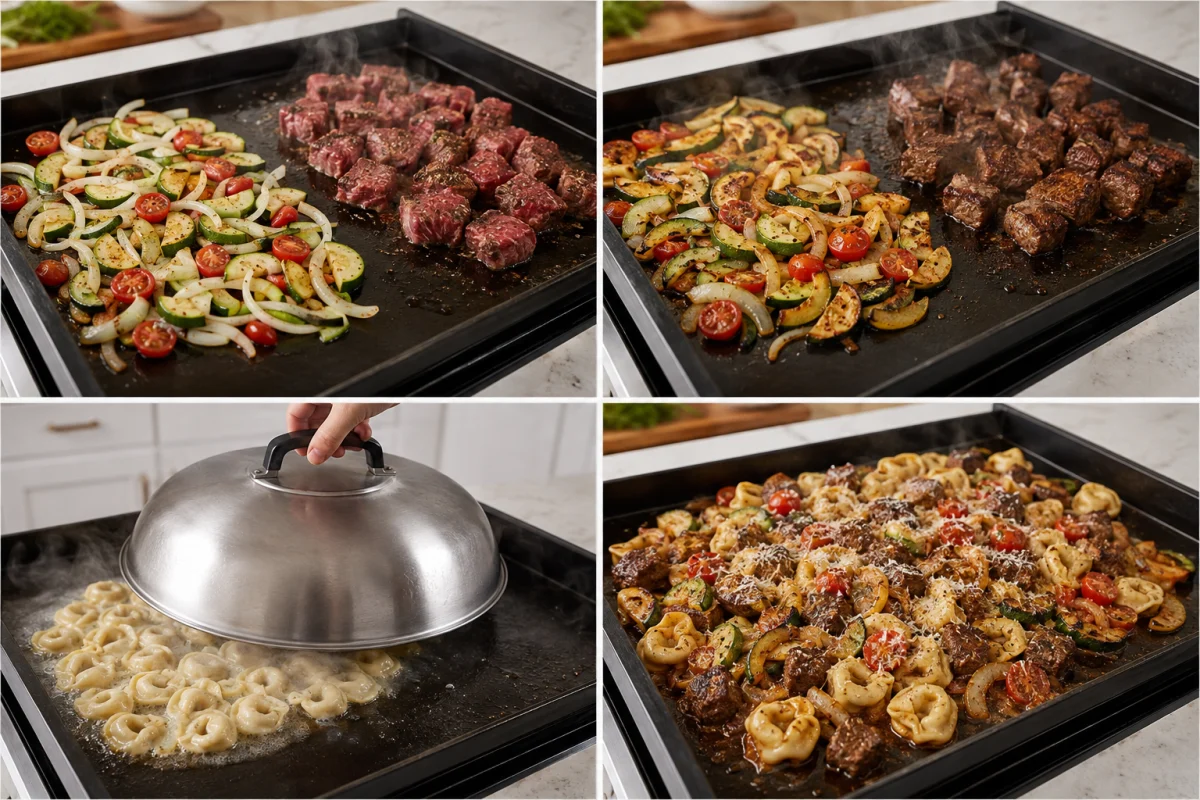
- Preheat. Heat a large flat-top griddle to medium-high and oil the surface lightly.
- Start vegetables. Put onion, zucchini, and tomatoes in one zone and season them.
- Sear steak. Add steak cubes to a separate hot zone in one layer and let the first sides brown.
- Steam tortellini. Place frozen tortellini in a third zone, add 1/4 cup water, and cover with a dome for 3 to 5 minutes. Add a little more water only if needed.
- Sauce the pasta. Remove the dome, let excess water evaporate, and toss tortellini with garlic Parmesan sauce.
- Finish. Cook steak to the desired safe temperature and vegetables until crisp-tender.
- Combine. Fold everything together, add Parmesan, and serve immediately.
For storage details after serving, the USDA leftovers and food safety guidance.
Cut the Steak into Even Pieces
Trim obvious tough connective tissue, then cut the strip steaks into cubes of similar size. Pieces around 1 inch brown well without cooking through before a crust forms. Pat them dry with paper towels before seasoning.
Moisture on the surface creates steam and delays browning. Keep the cut beef refrigerated until the griddle is fully preheated. Cold steak holds its shape better and gives you time to develop color without overcooking the center.
If you enjoy this recipe, you may also like Cheesy Stuffed Shells.
Create Separate Cooking Zones
A flat griddle is large enough to hold vegetables, steak, and tortellini in separate areas. Use the hottest section for beef, a medium-hot section for vegetables, and a clear area where the pasta can be covered with a dome.
Do not mix the components too early. Vegetables release moisture that interferes with the steak's sear, while sauce can scorch if it reaches the hot beef zone. A wide cast-iron skillet and a second covered skillet can reproduce the same method indoors.
Cook the Vegetables Until Crisp-Tender
Slice the onion so pieces separate easily, and keep zucchini chunks relatively large. Small zucchini pieces soften before the steak is ready. Grape tomatoes can remain whole; their skins blister while the centers become warm and juicy.
Turn the vegetables occasionally rather than constantly. Letting them touch the griddle creates browned spots. Move any tender pieces to a cooler edge while the remaining components finish, especially if the tomatoes begin to split.
Sear Steak Without Crowding
Spread the cubes in one layer with visible space between them. Leave the first side undisturbed until it releases easily and shows a brown crust, then turn to expose other sides. Crowded beef releases enough moisture to simmer rather than sear.
Use an instant-read thermometer on one of the largest pieces. For food safety, whole cuts of beef should reach at least 145°F followed by a three-minute rest. Cook longer if you prefer a more well-done center.

Steam Frozen Tortellini on the Griddle
Frozen tortellini can go directly onto the hot surface. Add water around, rather than directly over, the pasta and cover immediately. Steam softens the dough and heats the cheese filling without requiring a separate pot.
Check after three minutes and turn the pieces gently. The tortellini should feel flexible and hot in the center. If needed, add another small splash of water and cover briefly. Allow all visible liquid to evaporate before sauce is introduced.
Use Sauce as a Light Coating
One-quarter cup prepared garlic Parmesan sauce is enough to coat the tortellini without flooding the griddle. Spoon it over the cooked pasta in its own zone and toss gently. Thick filled pasta can tear if pressed with a sharp-edged spatula.
Keep the sauce away from the hottest section because Parmesan and dairy scorch quickly. If it tightens before assembly, loosen it with a teaspoon of water, not another large pour.
Combine Only at the End
Once steak is cooked, vegetables are crisp-tender, and tortellini is sauced, bring the three piles together. Fold rather than chop so the pasta stays intact. Taste before adding extra salt because the seasoning, sauce, cheese filling, and Parmesan all contribute sodium.
Scatter shredded Parmesan over the hot mixture and allow it to soften for a few seconds. Transfer everything to a serving platter promptly so residual griddle heat does not overcook the steak.
Indoor Skillet Method
If you do not have a flat-top griddle, cook the vegetables in a large skillet and transfer them to a plate. Sear steak in the same skillet, then rest it with the vegetables. Meanwhile, steam or boil the tortellini in a second pan according to package guidance.
Drain the pasta well, return it to its pan, and coat it with sauce over low heat. Combine all components just before serving. The workflow uses one extra pan but preserves the same textures.
Serving Suggestions
This is a complete meal with protein, filled pasta, and vegetables. A simple green salad with lemon vinaigrette makes a fresh side without competing with the garlic Parmesan flavor. Warm bread is optional and useful for any sauce left on the plate.
Finish with black pepper, parsley, or a small amount of grated Parmesan. Avoid adding a heavy second sauce; the steak and vegetables should remain visible and distinct.
Storage and Reheating
Refrigerate cooled leftovers in a shallow airtight container for up to three days. Reheat in a covered skillet over low heat with a tablespoon of water. Stir gently and stop as soon as the center is hot.
A microwave also works in short intervals, but steak becomes firmer when overheated. Freezing the finished dish is not ideal because zucchini softens and tortellini can split. Freeze uncooked steak and tortellini separately instead.
Troubleshooting
- Steak does not brown: Dry it thoroughly, preheat the griddle, and leave space between cubes.
- Tortellini sticks: Oil the surface lightly and introduce water before covering.
- Sauce is watery: Evaporate steaming water completely before adding sauce.
- Zucchini is mushy: Cut larger pieces and move them to a cool zone when tender.
- Pasta tears: Use a broad spatula and fold gently.
Conclusion
Cook onion, zucchini, and tomatoes in one griddle zone while searing cubed strip steak in another. Steam frozen tortellini under a dome with a small amount of water, let excess water evaporate, and coat it with garlic Parmesan sauce. Combine everything at the end and finish with Parmesan.
Frequently Asked Questions
- → Can frozen tortellini be cooked directly on a griddle?
Yes. Add a small amount of water, cover with a griddle dome for 3 to 5 minutes, and let excess water evaporate before adding sauce.
- → What steak is best for steak tortellini?
Strip steak works well because it is flavorful and easy to cut into even cubes. Sirloin is another practical option.
- → How do I make steak tortellini without a griddle?
Cook the vegetables and steak in a large skillet, prepare the tortellini separately, and combine all components after coating the pasta with sauce.
- → How long can leftover steak tortellini be stored?
Refrigerate it in an airtight container for up to three days and reheat gently to avoid toughening the steak.