

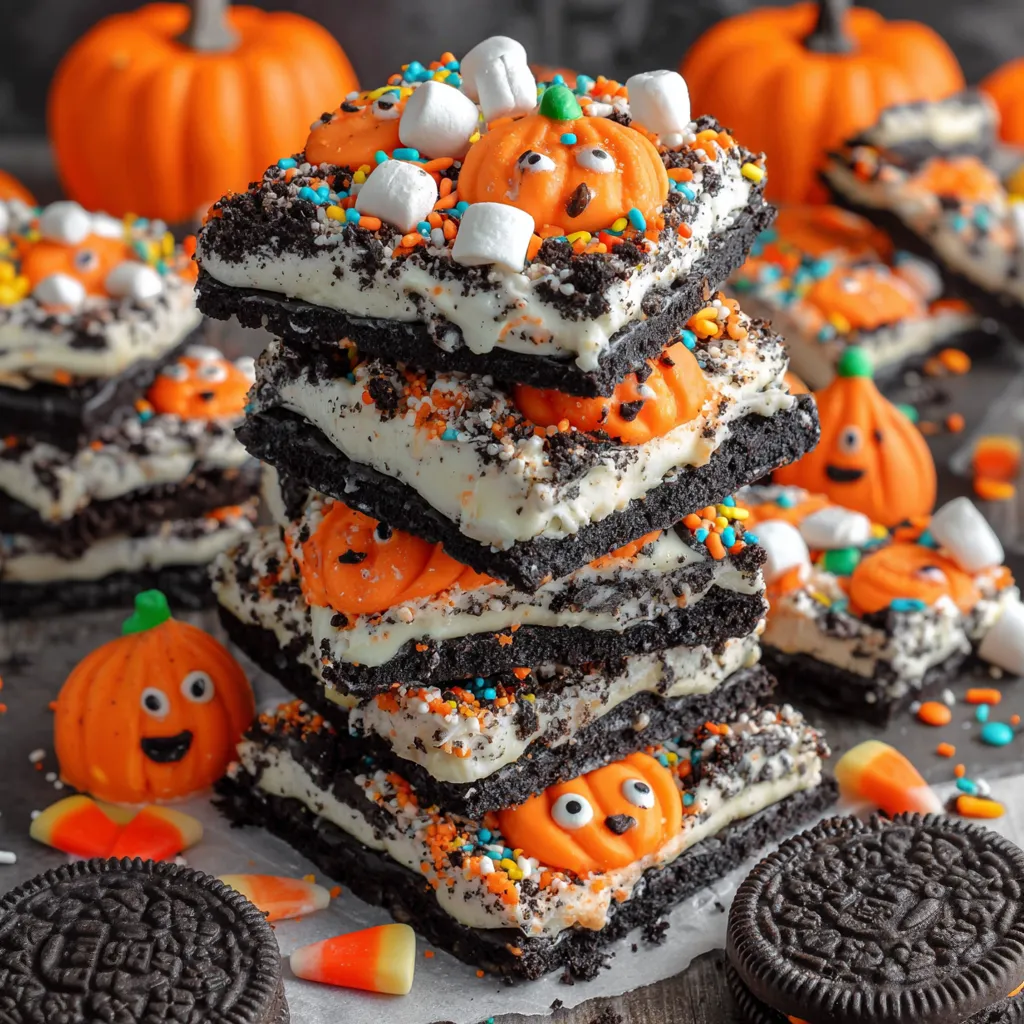
Halloween Oreo chocolate bark covers a tray of orange cream-filled chocolate sandwich cookies with white melting chocolate, then adds pumpkin marshmallows, candy corn, colorful chocolate candies, sprinkles, and candy eyes. The result is crisp, creamy, and deliberately irregular, with a different combination of toppings on every piece.
There is no oven and no candy thermometer. The most important details are melting the wafers gently, securing the cookies to the parchment, and placing every topping before the coating sets. After a short rest at room temperature, the slab is ready to cut or break into about 24 pieces.
Ingredients for Halloween Chocolate Bark
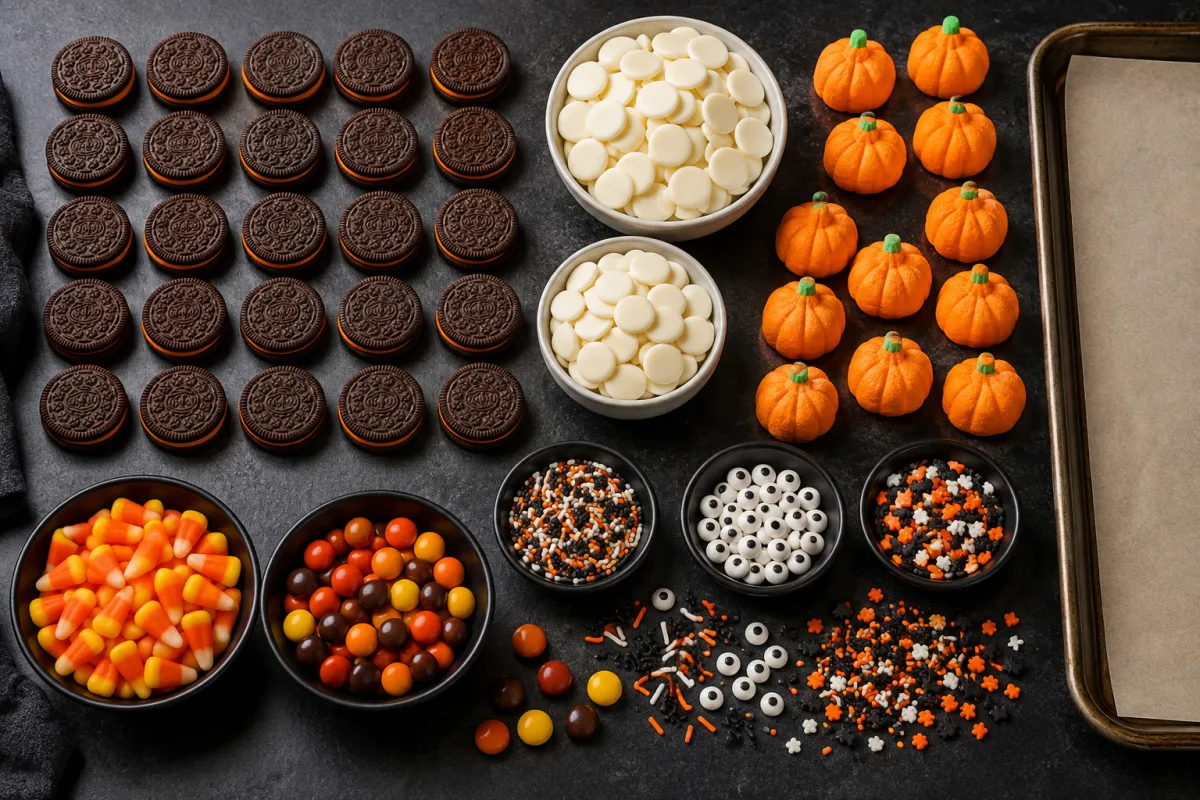
Use 30 orange cream-filled chocolate sandwich cookies and two 10-ounce packages white chocolate melting wafers. The wafers are formulated to melt smoothly and set firmly, making them more predictable here than ordinary white chocolate chips.
For decoration, prepare 12 pumpkin-shaped marshmallows, 1/4 cup candy-coated chocolate pieces, 1/4 cup candy corn, and about 1/4 cup mixed Halloween sprinkles and candy eyes. Line a rimmed sheet pan with parchment before melting anything so assembly can move quickly.
If you enjoy this recipe, you may also like Cookie Dough Stuffed Crust Pizza.
How to Make Halloween Cookie Bark
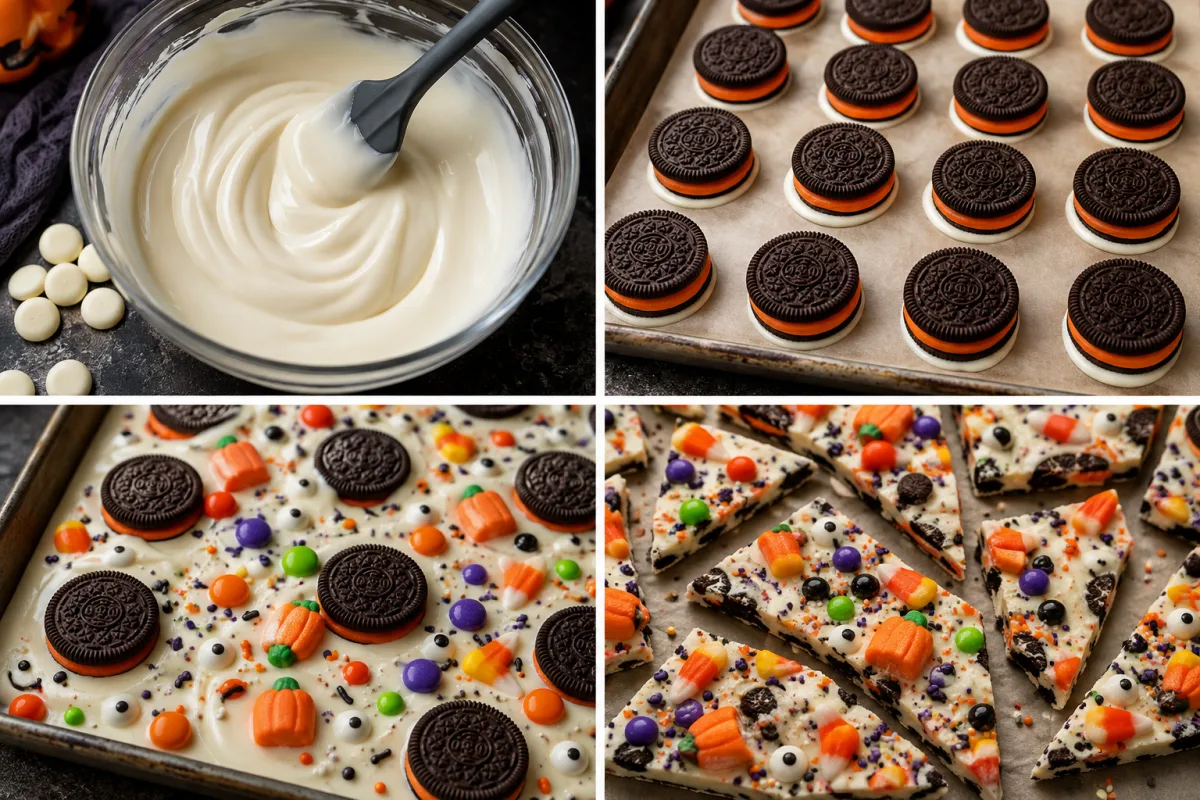
- Prepare the pan. Cover a rimmed sheet pan with parchment paper and organize all candy toppings nearby.
- Melt the wafers. Microwave them in a dry microwave-safe bowl at 50 percent power for 30-second intervals, stirring after each interval until smooth.
- Anchor the cookies. Dab a little melted coating under each sandwich cookie and arrange all 30 close together on the parchment.
- Cover the cookies. Pour and spread the remaining coating across the arrangement, leaving some cookie shapes visible if desired.
- Add toppings immediately. Press pumpkin marshmallows, candy pieces, candy corn, sprinkles, and eyes into the wet coating.
- Set and cut. Leave the tray at room temperature until completely firm, then cut or break it into about 24 pieces.
For storage details after serving, the USDA leftovers and food safety guidance.
Prepare Every Topping First
Melting wafers begin to set soon after spreading, so open packages and measure all decorations before heating the coating. Separate any candy pieces that are cracked or discolored and unwrap marshmallows if necessary.
For balanced pieces, divide the toppings mentally across the sheet pan rather than dropping everything in the center. Cutting large marshmallows in half can give more pieces a pumpkin accent, although leaving some whole creates a bolder finish.
If you enjoy this recipe, you may also like Buttercream Chocolate Truffles.
Line the Pan with Parchment
Parchment provides a nonstick surface and makes it easy to lift the finished slab. Cut a sheet large enough to cover the flat base of a rimmed pan. Crease it at the corners so it lies flat instead of rolling into the wet coating.
Wax paper can soften under warm coating and may stick, while foil wrinkles easily and can tear into the bark. A clean, completely dry pan and parchment sheet give the most reliable release.
Melt White Wafers Gently
Put the wafers in a microwave-safe bowl with enough room to stir. Use 50 percent power in 30-second intervals. Stir thoroughly each time, since wafers can retain their shape even after they are soft enough to blend.
Stop heating when only a few small lumps remain and let the residual warmth finish melting them. Overheating makes white coating thick and difficult to spread. If package directions differ, follow the manufacturer's recommended method.
Anchor the Sandwich Cookies
A small dab of melted coating beneath each cookie keeps it from sliding when the main layer is spread. Arrange the 30 cookies in close rows, leaving narrow channels where the coating can connect the entire slab.
The cookies do not need to touch, but large gaps create sections made only of white coating. Keep the orange cream visible at a few edges to reinforce the Halloween color palette without relying only on loose candy.
Spread the Coating Without Breaking Cookies
Pour the smooth coating in ribbons over the arranged cookies rather than in one heavy mound. Use a silicone spatula to guide it outward with light strokes. Pressing too hard can split the cookies or drag them out of alignment.
Complete coverage is not required. Small exposed cookie areas add contrast and show what is inside. What matters is connecting the coating between cookies so the slab holds together after it firms.
Add Decorations While the Surface Is Wet
Begin with the largest pumpkin marshmallows, then distribute candy corn and candy-coated chocolates. Finish with sprinkles and candy eyes, using the smaller pieces to fill empty areas. Press each item gently enough to make contact without submerging it.
Keep a little open white space so the design remains readable. Candy eyes look best when some are paired and others are scattered. Avoid building tall piles that fall away when the bark is cut.
Let the Bark Set at Room Temperature
Leave the pan undisturbed on a level counter until the coating is completely firm and no longer glossy-soft. Room-temperature setting helps prevent condensation and color bleeding from candies.
If the kitchen is very warm, refrigerate the tray briefly only after the surface has started to set. Do not freeze it. Rapid chilling can make the slab brittle and may cause moisture to form when it returns to room temperature.
Cut or Break into Pieces
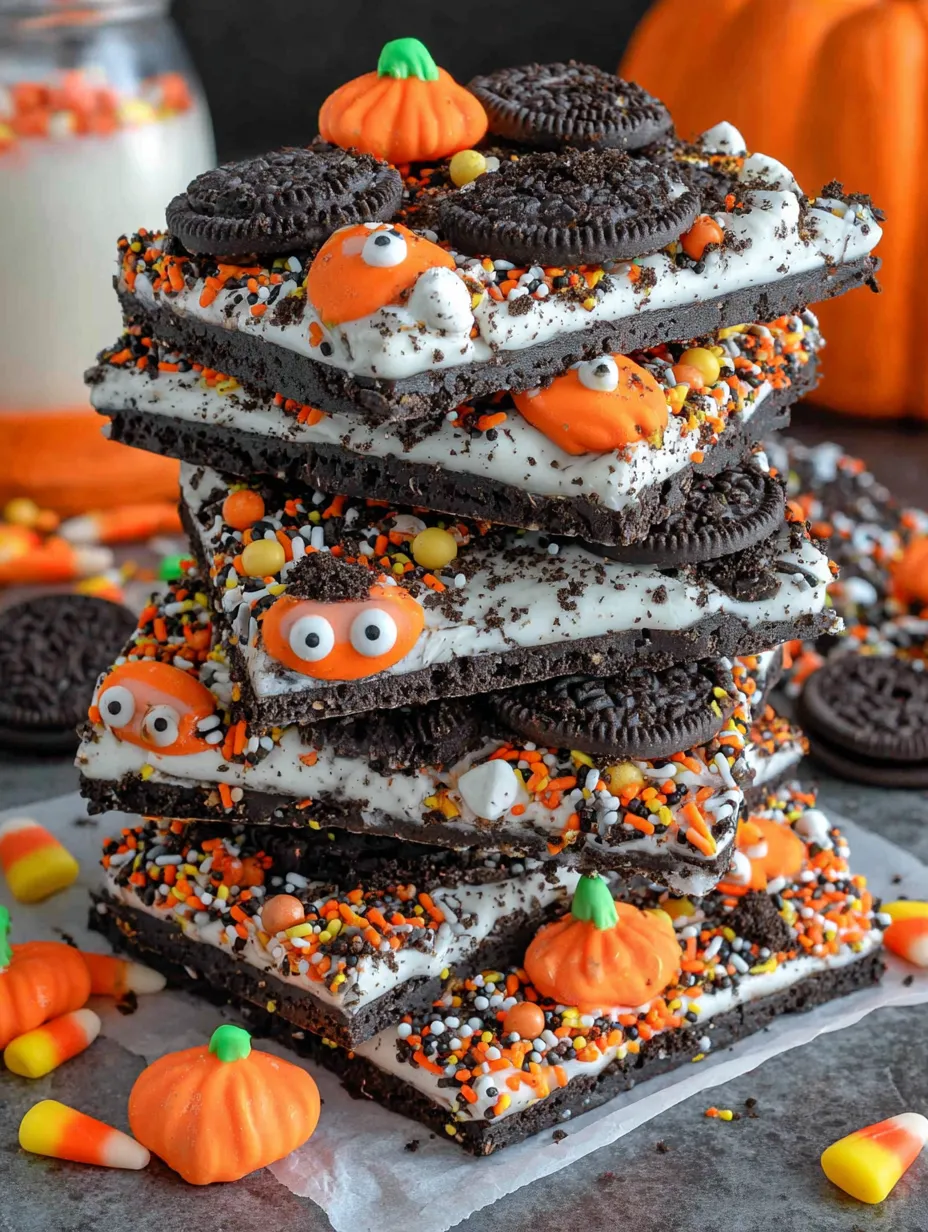
Lift the firm slab by the parchment and place it on a cutting board. A large sharp knife creates more controlled portions, while breaking by hand gives classic irregular bark. Aim for about 24 pieces so the toppings are distributed fairly.
Cut between the largest decorations where possible. If the knife resists, warm the blade very slightly, wipe it completely dry, and press straight down. Avoid sawing, which scatters sprinkles and crushes cookie layers.
Storage and Gifting
Store the bark in an airtight container in a cool, dry place for up to one week, separating layers with parchment. Keep it away from sunlight and heat, which can soften the coating and fade the candy colors.
For gifts, place a few pieces in food-safe bags or small boxes only after they are fully set. Add an ingredient and allergen note because sandwich cookies, melting wafers, candies, and marshmallows can contain milk, soy, wheat, gelatin, or other allergens depending on the brand.
Troubleshooting
- Coating turns thick: Use half power, short intervals, and dry tools; overheating or moisture causes trouble.
- Cookies slide: Anchor each one with a dab of coating before covering the tray.
- Toppings fall off: Add and press them while the coating is still wet.
- Bark bends instead of snapping: Allow more time for it to set in a cool room.
- Candy colors bleed: Keep moisture away and avoid storing the bark in a humid refrigerator.
Conclusion
Arrange orange cream-filled chocolate sandwich cookies on a parchment-lined pan, anchoring each with melted white coating. Cover with more coating, immediately add pumpkin marshmallows, candy corn, candy pieces, sprinkles, and eyes, then let the slab set before cutting into about 24 pieces.
Frequently Asked Questions
- → Can I use white chocolate chips instead of melting wafers?
Melting wafers are more reliable because they melt smoothly and set firmly. Chips often stay thicker and may not harden with the same clean snap.
- → Why did my white coating become grainy?
It was likely overheated or touched by water. Melt at 50 percent power in short intervals with completely dry tools.
- → How long does Halloween bark keep?
Store it airtight in a cool, dry place for up to one week, with parchment between layers.
- → Should Halloween bark set in the refrigerator?
Room temperature is preferred because it limits condensation and candy color bleeding. Chill briefly only if the room is unusually warm.