

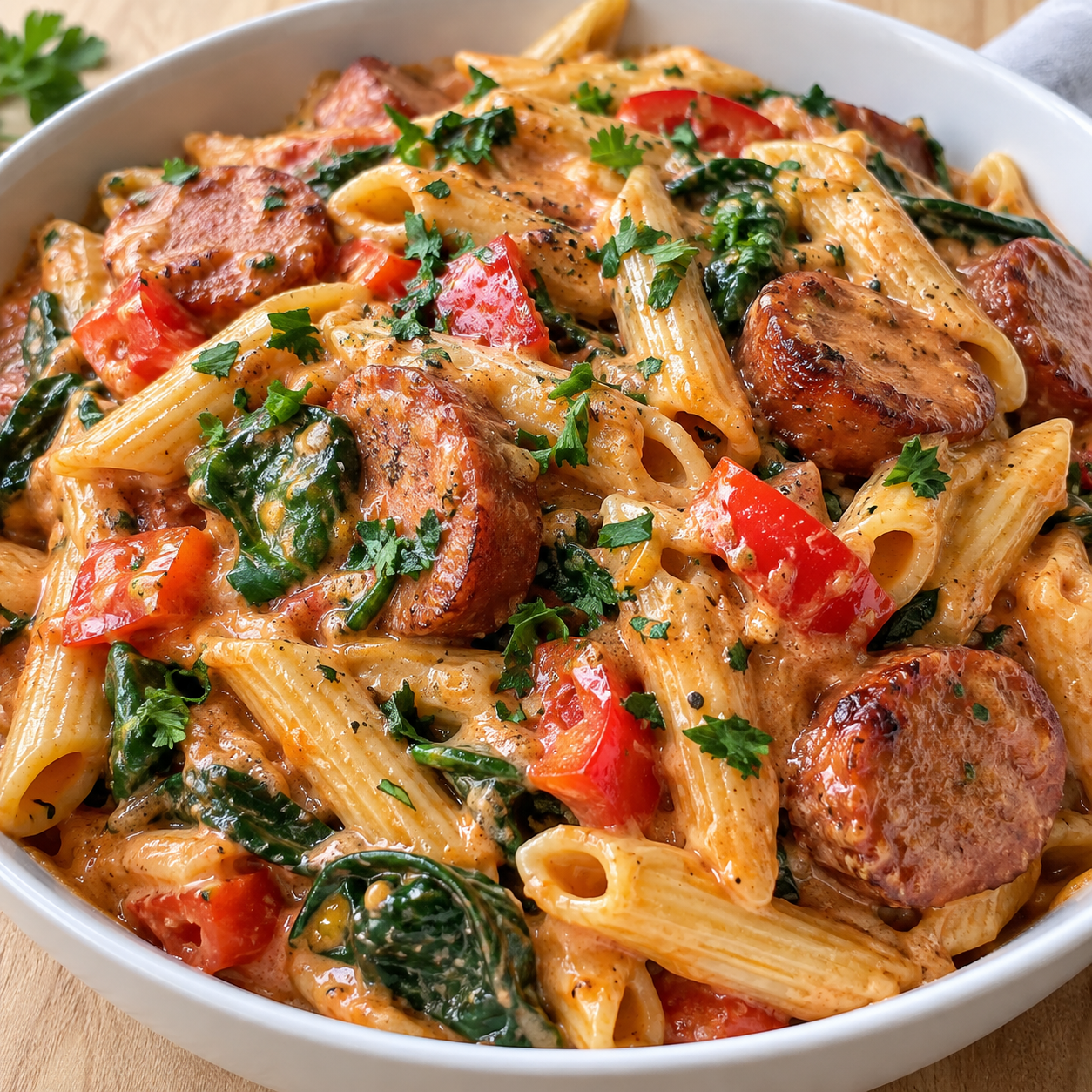
One-Pan Kielbasa Pasta is the kind of dinner that feels generous without asking much from you. The sausage brings smoke and salt, the pasta cooks right in the tomato broth, and the cheese melts into a creamy sauce at the end.
The key is to brown the kielbasa first, then use those browned bits to season the whole pan. Stir the pasta a few times while it simmers so it cooks evenly and releases enough starch to make the sauce cling.
One-Pan Kielbasa Pasta Basics
Choose fully cooked smoked kielbasa with a firm texture and a good snap. Low-sodium broth helps because the sausage and cheese already bring plenty of salt.
If you enjoy this recipe, you may also like Pizza Cheesesteak.
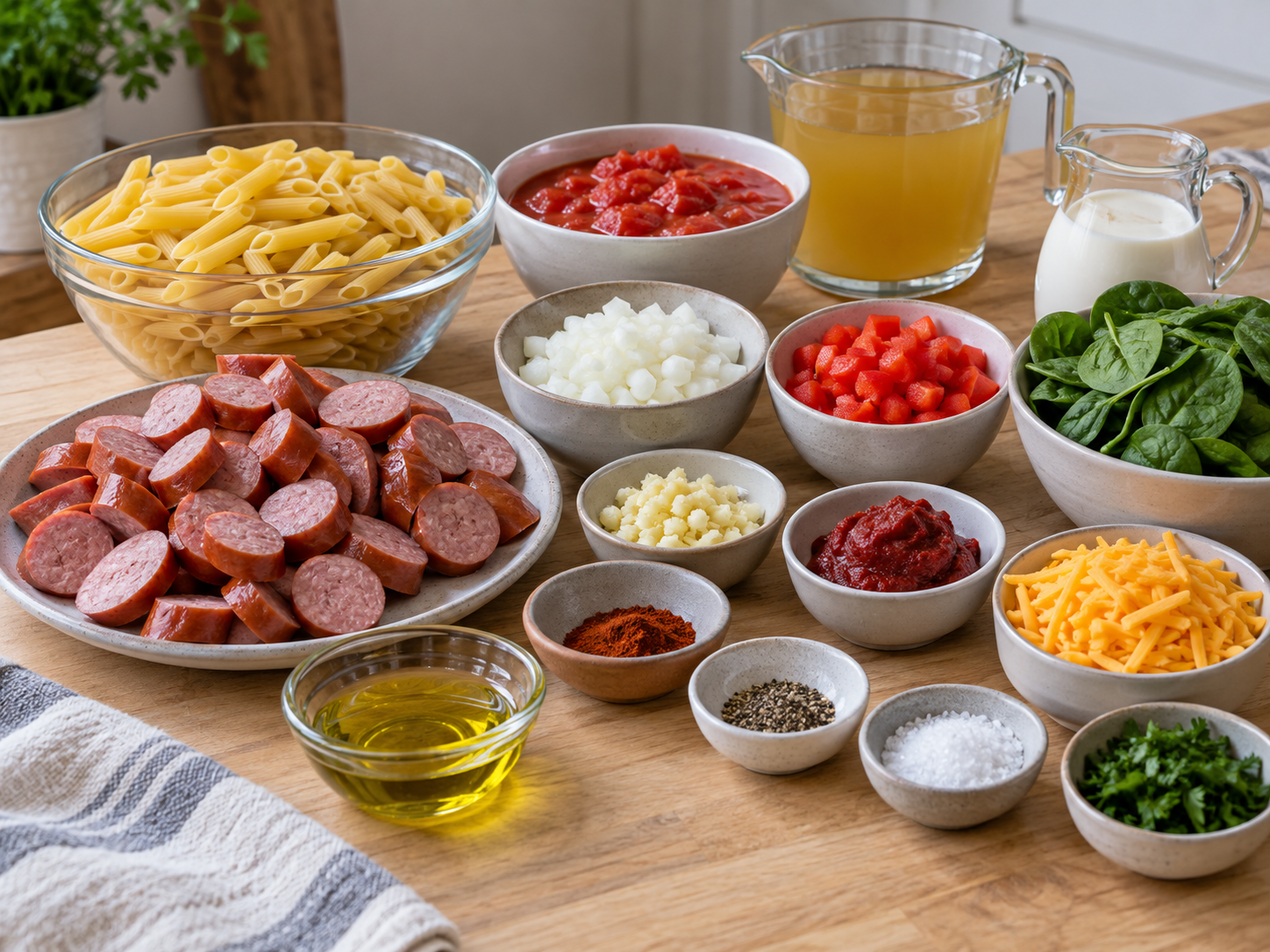
- Smoked kielbasa. Brings the smoky, savory backbone and browns quickly in the skillet.
- Penne pasta. Holds up well during simmering and catches the creamy tomato sauce inside each tube.
- Onion and bell pepper. Add sweetness and soften into the base of the sauce.
- Garlic and tomato paste. Deepen the pan flavor before the liquid goes in.
- Diced tomatoes. Give the sauce body and enough acidity to balance the sausage.
- Chicken broth. Cooks the pasta and becomes part of the sauce instead of being drained away.
- Heavy cream and cheddar. Turn the tomato broth into a smooth, cozy sauce.
- Baby spinach. Wilts at the end and adds freshness without extra prep.
For storage details after serving, the USDA leftovers and food safety guidance.
Simmer Everything in One Pan
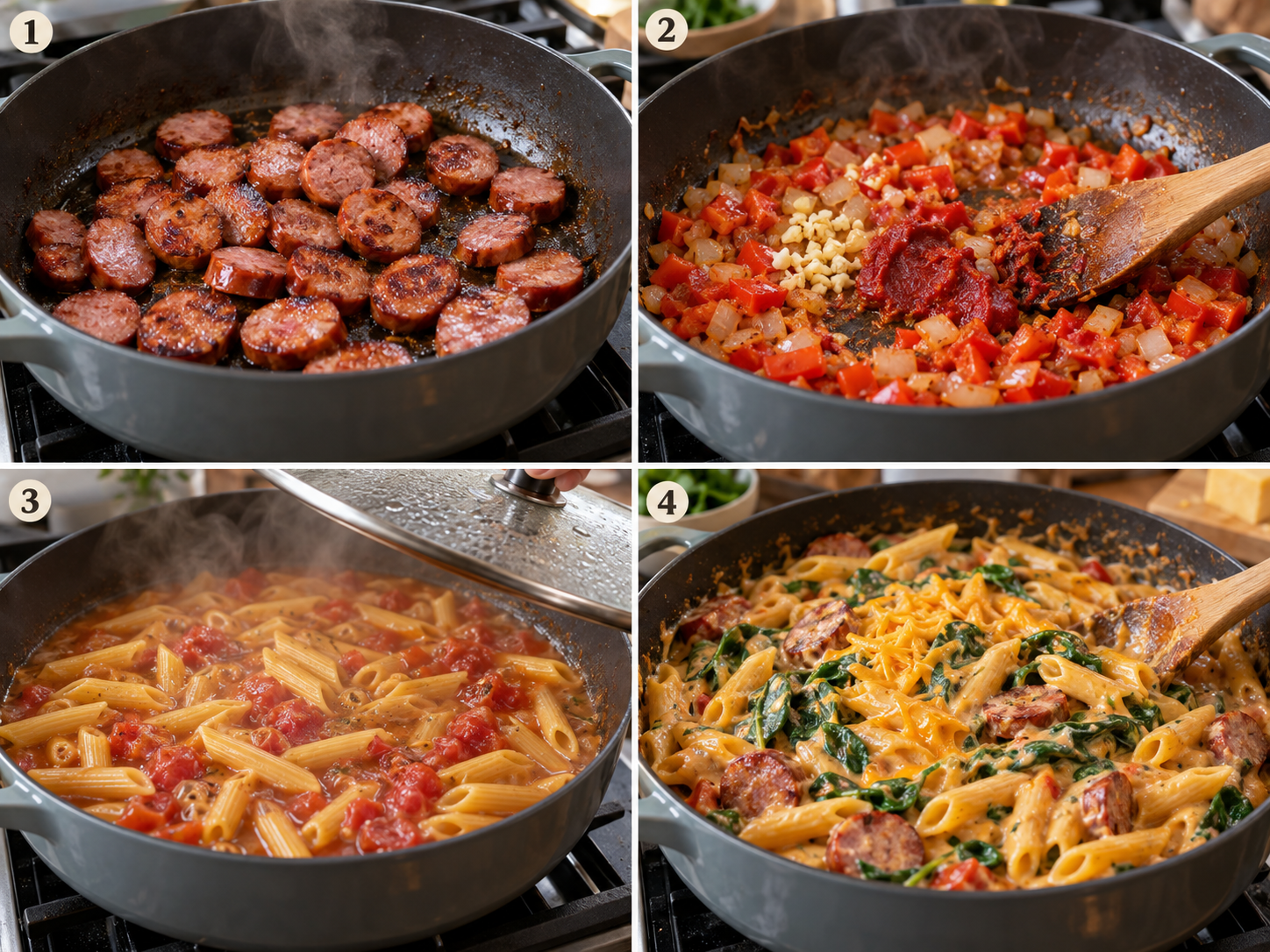
- Brown the kielbasa. Heat the oil in a deep skillet and brown the sausage slices until the edges are caramelized. Move them to a plate so they keep their texture.
- Soften the vegetables. Add the onion and bell pepper to the same pan. Cook until the onion looks glossy and the pepper starts to soften.
- Toast the flavor base. Stir in garlic, tomato paste, smoked paprika, salt, and pepper. Cook briefly until the paste darkens a shade and smells savory.
- Simmer the pasta. Add penne, diced tomatoes, and broth. Cover and simmer, stirring a few times, until the pasta is just tender.
- Finish the sauce. Stir in cream, spinach, and the browned kielbasa. Let the spinach wilt and the sauce thicken slightly.
- Melt in the cheese. Turn off the heat, add cheddar in handfuls, and stir until creamy. Rest for a few minutes before serving.
If you enjoy this recipe, you may also like Cheesy Ranch Potatoes.
Why Browning Comes First
Kielbasa is already smoky, but a hot skillet gives it the browned edges that make the whole dish taste fuller. Let the slices sit still for a minute or two before stirring. If you move them constantly, they warm through but never pick up color.
Most packaged smoked kielbasa is fully cooked, but labels matter. If your sausage is raw or marked cook-before-eating, follow the package and cook ground meat sausage to 160°F as listed in the FoodSafety.gov temperature chart. Fully cooked kielbasa only needs reheating in this recipe, but it should still be hot before serving.
Pasta Texture Matters
One-pan pasta works because the noodles release starch into the cooking liquid. That starch gives the sauce body. The tradeoff is that you need to stir more than you would with a separate pasta pot. Stir every few minutes, scraping the bottom and pulling the pasta from the edges into the center.
Keep the simmer active but not wild. A hard boil evaporates the broth before the penne softens. A weak simmer leaves the pasta chalky. If the skillet looks dry before the pasta is tender, add warm water or broth in small splashes. If it looks loose at the end, uncover the pan for a minute and let the sauce tighten.
Make It Creamy, Not Heavy
The cream goes in after the pasta is tender, not at the start. This keeps the sauce smooth and lets the tomato broth reduce first. Once the cream and spinach are stirred in, lower heat is your friend. A gentle bubble is enough.
Add the cheese with the burner off. Shredded cheddar melts best when the sauce is hot but no longer boiling. Pre-shredded cheese works, though a block you grate yourself melts more smoothly. Monterey Jack is softer and milder if you want a silkier finish. Sharp cheddar gives a stronger flavor and a deeper color.
Easy Swaps That Fit
Use turkey kielbasa if you want a lighter skillet, or choose andouille for more heat. Red bell pepper keeps the flavor sweet, but green pepper gives a sharper diner-style taste. A handful of frozen peas can replace spinach. Add them with the cream so they heat through without getting dull.
For pasta, penne is dependable because it holds its shape. Rotini and shells also work. If you use whole wheat pasta, expect a slightly longer simmer and a nuttier flavor. Gluten-free pasta can be trickier in a covered skillet because it releases starch fast. Stir gently, check early, and add liquid in small amounts.
Storing the Leftovers
Cool leftovers in shallow containers and refrigerate them within 2 hours. FoodSafety.gov recommends using refrigerated leftovers within 4 days and reheating them to 165°F, which is helpful for a creamy meat pasta like this leftovers storage guide explains.
Reheat gently in a skillet with a splash of broth, water, or milk. The pasta will absorb sauce as it sits, so that extra liquid brings back the creamy texture. Microwave portions also work. Cover the bowl, stir halfway through, and let it stand briefly so the heat evens out.
Conclusion
This skillet pasta is rich, smoky, and practical. Keep the heat steady, stir often, and finish the dairy off the boil for the smoothest sauce.
Frequently Asked Questions
- → Can I use a different pasta shape?
Yes. Short shapes such as rotini, shells, cavatappi, or rigatoni work well. Check early because thicker shapes may need a splash more broth and a few extra minutes.
- → Can I make One-Pan Kielbasa Pasta without cream?
You can skip the cream and use a little extra broth for a lighter tomato-style skillet pasta. For creaminess without heavy cream, stir in a few spoonfuls of cream cheese off the heat.
- → What kind of kielbasa should I buy?
Use fully cooked smoked kielbasa for this recipe. If the package says uncooked or cook-before-eating, cook it fully according to the label before using it in the pasta.
- → Why is my pasta still firm?
The skillet may be too wide, the simmer may be too low, or the lid may not be tight enough. Add 1/4 cup more broth or water, cover again, and cook for 2-3 minutes longer.
- → How do I keep the cheese from clumping?
Turn off the heat before adding the cheese. Sprinkle it in by handfuls and stir until each addition melts before adding more.
- → What should I serve with kielbasa pasta?
A crisp green salad, roasted broccoli, or garlic bread balances the creamy sauce. If you want something simple, add extra spinach or peas right into the skillet.