

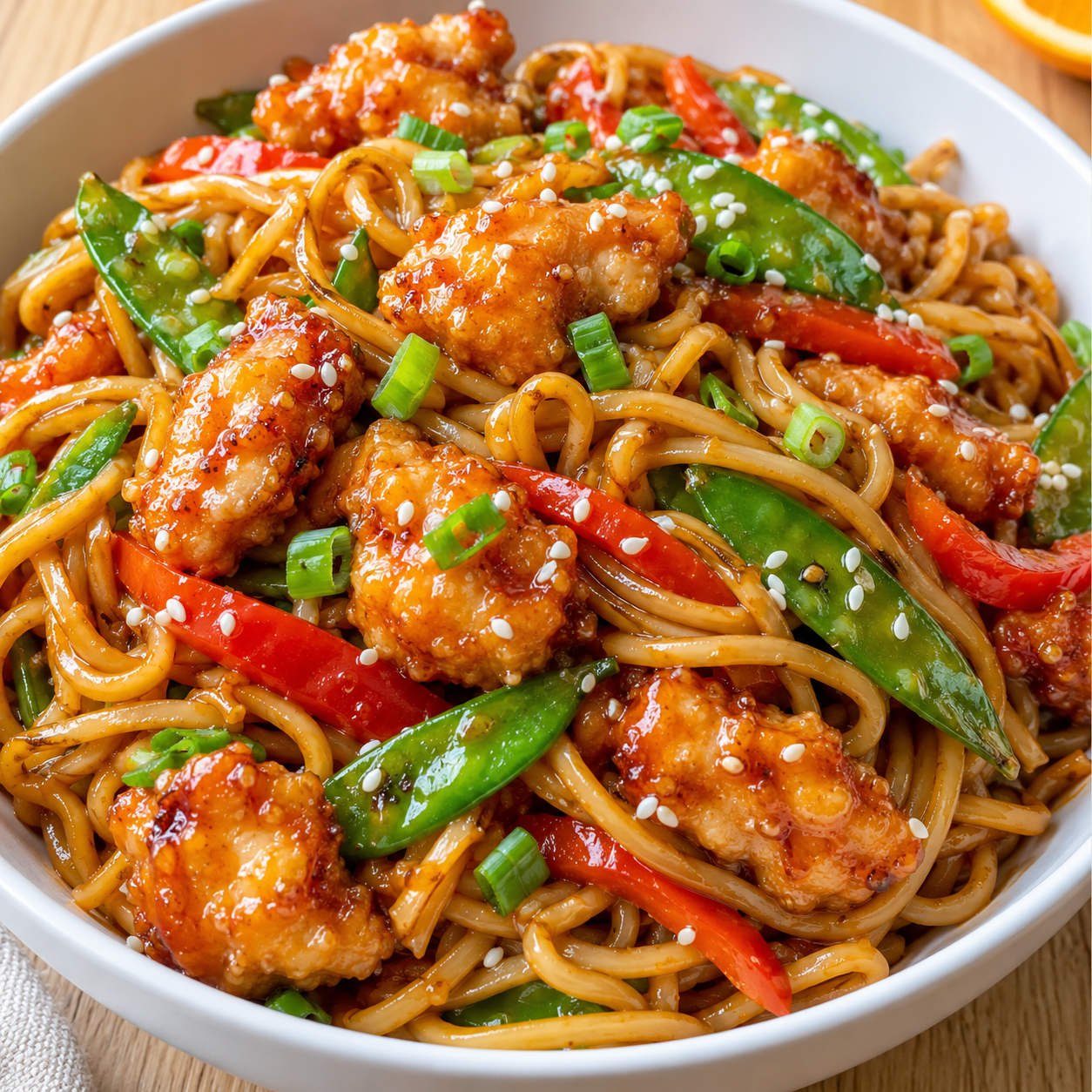
Orange Chicken Noodles are for the night when takeout sounds good but a hot skillet sounds better. You get golden bites of chicken, a glossy orange sauce, and noodles that catch every sweet, salty, gingery drop.
The recipe keeps the chicken crisp without deep frying. A cornstarch coating browns quickly in a shallow layer of oil, then the sauce goes in at the end so the coating stays pleasantly craggy instead of soggy.
Orange Chicken Noodles Ingredients
Choose juicy oranges with fragrant zest and boneless chicken thighs that can handle quick, hot cooking. Have everything sliced, mixed, and within reach before the pan gets hot.
If you enjoy this recipe, you may also like Cheesy Ranch Potatoes.
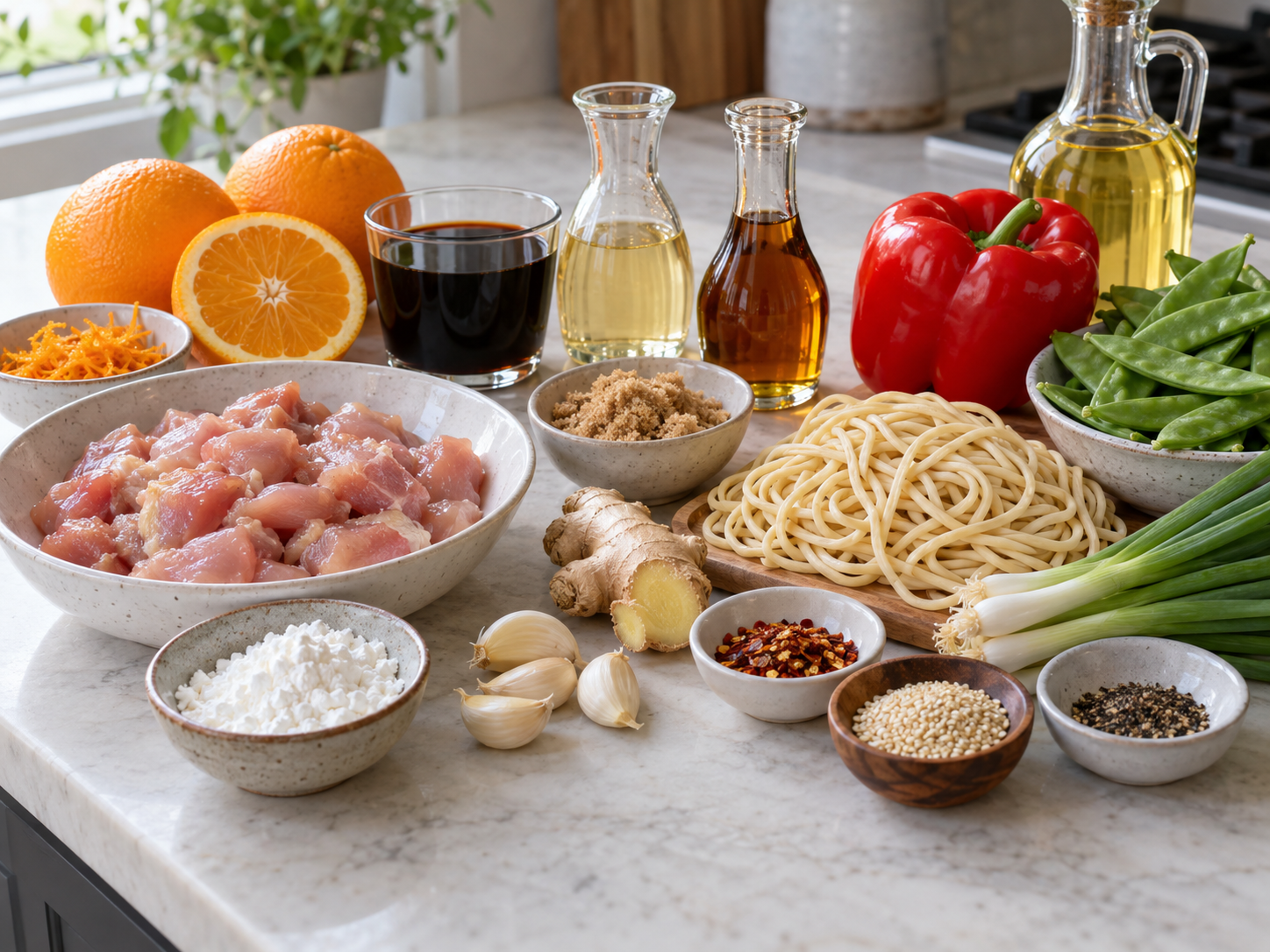
- Chicken thighs. They stay tender as the coating browns and the sauce clings.
- Cornstarch. It creates a light crust on the chicken and thickens the orange glaze.
- Orange juice and zest. Juice gives the sauce body, while zest brings fresh citrus aroma.
- Soy sauce. It balances the sweetness with salt and savory depth.
- Rice vinegar. A small splash keeps the glaze bright instead of flat.
- Garlic and ginger. These cook fast and make the sauce smell warm and sharp.
- Lo mein noodles. Their chewy texture holds up when tossed in the skillet.
- Bell pepper and snow peas. They add color, crunch, and a fresh contrast to the sticky sauce.
For storage details after serving, the USDA leftovers and food safety guidance.
Build The Sticky Orange Toss
- Mix the sauce. Whisk orange juice, zest, soy sauce, vinegar, brown sugar, broth, sesame oil, garlic, ginger, and cornstarch until smooth.
- Cook the noodles. Boil or soak the noodles according to the package, then drain and toss with a little oil so they do not clump.
- Coat the chicken. Pat the chicken dry, season it, and toss it with cornstarch until every piece has a thin, dusty layer.
- Pan-fry in batches. Cook the chicken in hot oil until golden and cooked through, then move it to a plate.
- Stir-fry the vegetables. Cook the bell pepper and snow peas just until bright and crisp-tender.
- Toss and finish. Add the sauce, simmer until glossy, then fold in the noodles and chicken. Finish with scallions and sesame seeds.
If you enjoy this recipe, you may also like Cajun Garlic Butter Shrimp and Sausage.
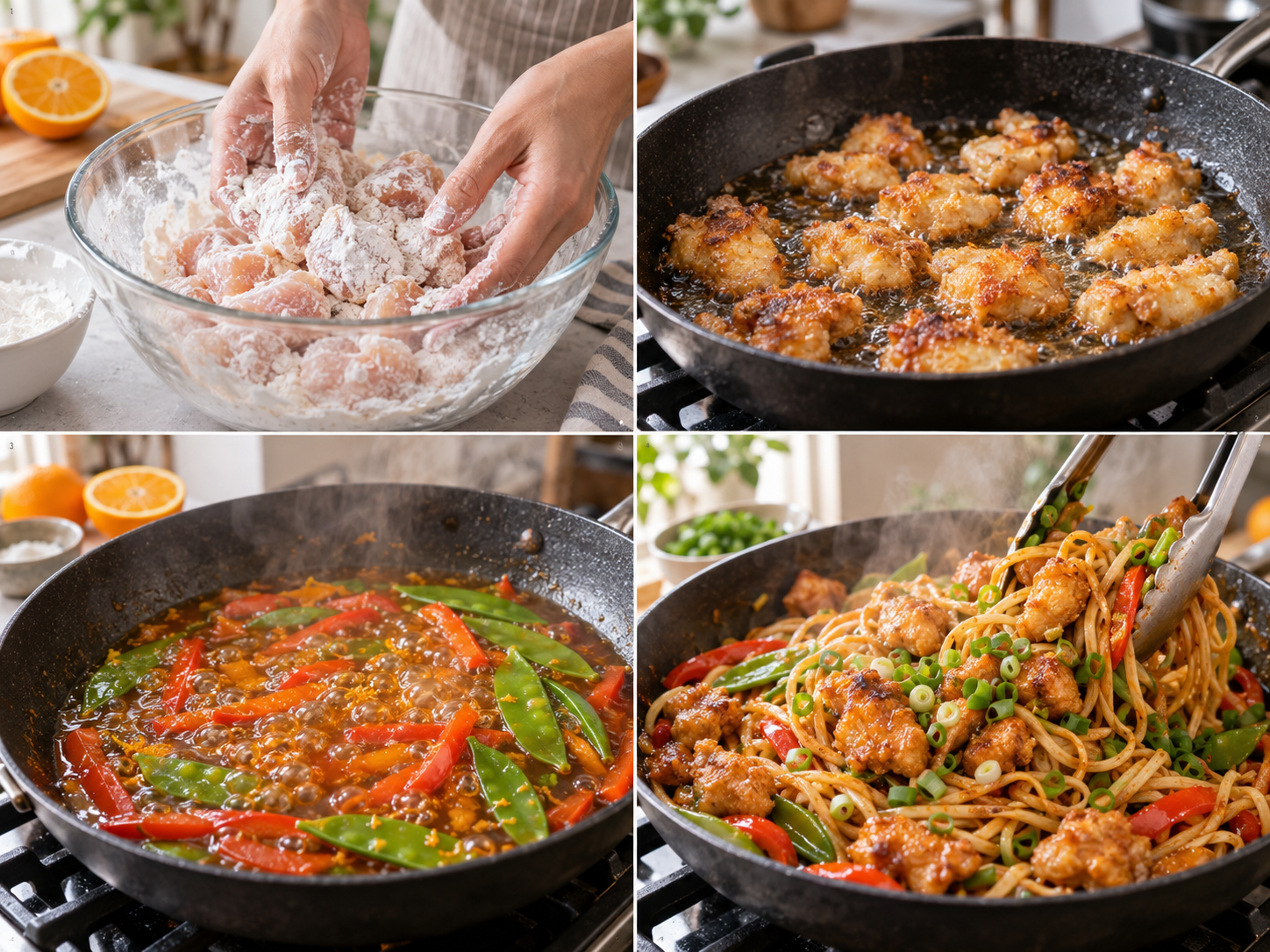
Crispy Chicken Without Deep Frying
The coating is simple, but the details matter. Dry chicken grabs cornstarch better than damp chicken, and a thin coating browns more evenly than a heavy one. Shake off loose starch before the pieces hit the pan. Too much powder turns gummy once the sauce lands.
Cook in two batches. A crowded skillet drops in temperature, and the chicken steams before it browns. Utah State University Extension gives the same practical stir-fry cue, cooking protein in batches helps keep the pan hot in a quick stir-fry. Their basic guide is useful for the rhythm of this recipe, especially the part about returning the protein after the sauce is ready in this stir-fry method.
The Sauce Should Shine
Orange sauce should taste bright first, then sweet, then savory. Zest the orange before juicing it, and add the zest to the sauce rather than the hot oil. That keeps the citrus aroma lively. Brown sugar gives the glaze a rounded sweetness, while rice vinegar keeps it from tasting sticky in the wrong way.
Cornstarch is the thickener here. Whisk it into the cold sauce before the sauce goes into the pan. The Illinois Extension stir-frying guide notes that cornstarch should be blended with cold liquid before it meets heat, which helps prevent lumps. It also thickens quickly, so simmer only until the sauce coats a spoon in this stir-frying reference.
Noodles That Stay Springy
Cook the noodles a little shy of done because they will spend another minute in the skillet. Fresh lo mein noodles often need only a brief warm-up. Dried ramen or spaghetti needs boiling, but pull it while it still has a firm bite. Rinse only if the package directs it, then toss with a teaspoon of oil to stop sticking.
When the sauce is glossy, add the noodles before the chicken. Tongs help separate strands without crushing the crispy pieces. If the pan looks dry, splash in warm water or broth. A tablespoon is enough to loosen the glaze and help it slide over the noodles.
Swaps With Good Payoff
Chicken breast, pork tenderloin, or extra-firm tofu can step in for chicken thighs. Keep the pieces small so they cook quickly. For vegetables, broccoli florets, shredded cabbage, carrots, or mushrooms all fit the orange-garlic sauce. Add firmer vegetables first and tender ones later so everything lands crisp-tender.
For more heat, add chili crisp at the table or stir a pinch of crushed red pepper into the sauce. For a less sweet pan, reduce the brown sugar by one tablespoon and add an extra teaspoon of vinegar. If you use fresh oranges, rinse them under running water before zesting. The FDA recommends washing produce before cutting or preparing it in its produce safety guidance.
Store It Without Mush
These noodles are best right away, when the chicken edges still have crunch and the sauce is glossy. Leftovers are still worth keeping. Pack them in a shallow airtight container and refrigerate within 2 hours, following the FDA home food-safety guidance for cooked foods in this food safety overview.
Reheat in a skillet rather than blasting it in the microwave. Add a spoonful of water, cover for a minute to loosen the noodles, then uncover and toss until hot. The chicken coating will soften, but the sauce will taste full and bright.
Conclusion
Serve these noodles hot from the pan with scallions and sesame seeds. The sauce thickens quickly, so have the noodles drained and the vegetables sliced before you start cooking.
Frequently Asked Questions
- → Can I use chicken breast instead of thighs?
Yes. Chicken breast works well if you cut it into even 1-inch pieces and avoid overcooking it. Thighs are a little more forgiving, but breast meat gives a lighter texture.
- → What noodles work best for Orange Chicken Noodles?
Fresh lo mein noodles are the easiest because they are springy and ready to toss. Dried ramen, udon, or spaghetti also work. Cook dried noodles just shy of done so they do not soften too much in the sauce.
- → Can I make this gluten-free?
Use gluten-free tamari instead of soy sauce and swap the wheat noodles for rice noodles. Check the labels on chicken broth and cornstarch if you are cooking for someone who needs strict gluten avoidance.
- → How do I keep the chicken crispy?
Pat the chicken dry before coating it, cook it in batches, and let it sit on a rack or plate while you finish the rest. Add it back only after the sauce has thickened. Toss briefly so the coating stays textured.
- → Why did my orange sauce get too thick?
Cornstarch thickens fast once it hits heat. If the sauce turns tight or gluey, add warm water or chicken broth one tablespoon at a time. Toss until it loosens and shines again.
- → How should I store leftovers?
Refrigerate leftovers in an airtight container within 2 hours. Reheat in a skillet with a splash of water over medium-low heat. The chicken will soften, but the sauce and noodles will come back nicely.