


Sausage cheese sheet pan pancakes turn a familiar breakfast into an easy, sliceable meal for a full table. Savory sausage and cheddar are folded through tender pancake batter, while a little maple syrup brings the sweet-and-salty balance together in every square.
The whole batch bakes at once, so no one has to stand over a griddle flipping pancakes in shifts. The recipe serves about eight and takes roughly 30 minutes from start to finish. Careful mixing, an evenly greased pan, and a short rest after baking produce fluffy centers and clean edges.
Ingredients for Sausage Cheese Sheet Pan Pancakes
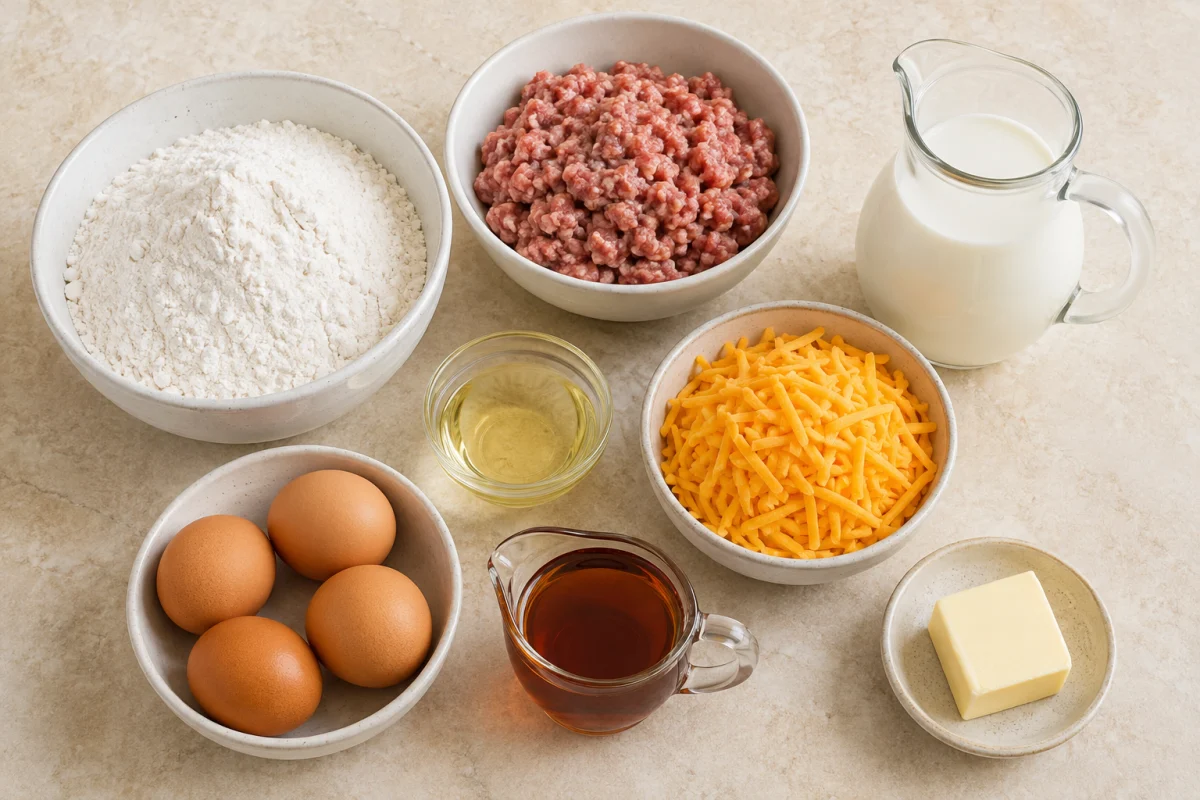
You need 3 cups pancake mix plus the eggs, milk, and oil called for on its package. The savory mix-ins are 1 pound breakfast sausage and 1 cup shredded cheddar cheese. Stir 1/4 cup maple syrup into the batter, then keep butter and additional syrup ready for serving.
Because pancake mixes vary, follow the liquid and egg amounts printed on your box rather than guessing. Use a complete mix exactly as directed if it only calls for water. The finished batter should be pourable but thick enough to suspend the sausage.
If you enjoy this recipe, you may also like 4 Ingredient Cherry Danish.
How to Make Sausage Cheese Sheet Pan Pancakes
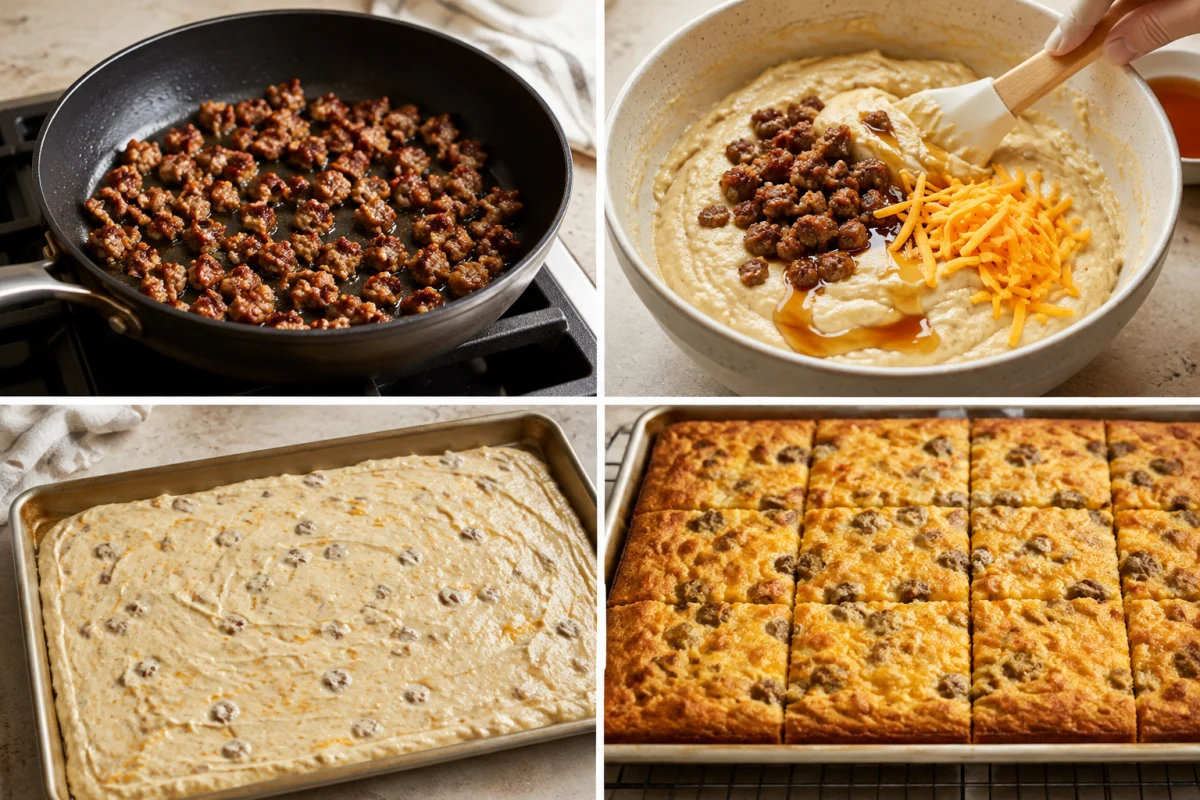
- Heat the oven. Set the oven to 400°F and grease a large rimmed sheet pan generously.
- Brown the sausage. Crumble it into a skillet and cook until no pink remains and it reaches 160°F. Drain well.
- Mix the batter. Prepare the pancake mix with the ingredients specified on its package.
- Fold in flavor. Gently stir in the cooked sausage, cheddar, and 1/4 cup maple syrup.
- Fill the pan. Spread the batter into an even layer, reaching the corners without overworking it.
- Bake. Bake for 12 to 15 minutes, until golden and set in the center.
- Rest and slice. Wait 5 minutes, cut into squares, and serve with butter and syrup.
For storage details after serving, the USDA leftovers and food safety guidance.
Choose the Right Sheet Pan
A large rimmed sheet pan gives the batter room to form a moderately thin, even layer. A half-sheet or jelly-roll pan works well, provided the sides are high enough to contain the batter. Avoid a flat cookie sheet because the mixture can spill while it is moved to the oven.
If your pan is smaller than the one used for the recipe, do not force all the batter into it. A very deep layer may brown at the edges while remaining wet in the center. Divide excess batter into a greased small baking dish and begin checking it at the same time.
If you enjoy this recipe, you may also like Breakfast Crescent Rolls.
Brown and Drain the Sausage
Break the sausage into small crumbles as it cooks over medium-high heat. Pieces about the size of a blueberry distribute more evenly than large chunks and make the baked pancakes easier to cut. Cook until the meat is fully browned, with no pink areas remaining.
Breakfast sausage should reach 160°F. Transfer it to a paper-towel-lined plate or drain the skillet carefully. Excess fat can create greasy pockets in the batter and weigh down the crumb, while well-drained sausage adds flavor without changing the pancake texture.
Prepare the Batter by the Package Directions
Measure the pancake mix by spooning it into a dry measuring cup and leveling the top unless the manufacturer gives a weight. Add the exact eggs, milk, water, or oil specified for 3 cups of mix. That keeps the hydration consistent with the product you are using.
Whisk only until the dry pockets disappear. A few small lumps are normal and will hydrate during baking. Vigorous or prolonged mixing develops gluten and can make sheet pan pancakes rubbery instead of soft.
Balance Cheddar and Maple
One cup of shredded cheddar gives the pancakes a savory edge without making the batter too heavy. Medium or sharp cheddar provides the clearest flavor. Shred it from a block when possible because freshly shredded cheese melts more evenly than heavily coated bagged shreds.
The 1/4 cup syrup mixed into the batter does not make the dish as sweet as pancakes covered in syrup. It lightly seasons the entire pan and complements the sausage. Use real maple syrup or a standard pancake syrup according to preference, then offer more at the table.
Fold Instead of Beating
Add the cooled sausage, cheddar, and syrup after the basic batter is mixed. Use a flexible spatula to lift batter from the bottom and fold it over the additions. Stop once the pieces are evenly dispersed.
Beating at this stage can make the batter tough and may cause sausage to collect at the bottom. If the mixture has become unusually thick after the additions, fold in a small splash of the liquid recommended on the pancake package rather than pouring in a large amount at once.

Grease the Pan Thoroughly
Coat the base, corners, and sides of the sheet pan with cooking spray or a thin layer of softened butter. The cheese near the edges can stick more firmly than plain pancake batter, so complete coverage matters.
For especially easy lifting, line the pan with parchment and grease the parchment lightly. Leave enough paper at the short sides to act as handles after the pancakes have rested. Do not let loose parchment extend close to an exposed heating element.
Spread an Even Layer
Pour batter near the center and guide it toward the corners with an offset spatula. Keep the depth as uniform as possible. Thin corners finish before a thick center and can dry out while the middle catches up.
Tap the pan gently against the counter once or twice to settle the batter and release large air pockets. Check that sausage and cheese are distributed across the surface rather than clustered in one section.
Know When the Pancakes Are Done
Begin checking at 12 minutes. The top should look dry rather than glossy, the edges should be lightly golden, and the center should spring back when touched gently. A toothpick inserted into a batter-only area should come out clean or with a few moist crumbs.
Do not test directly through a melted cheese pocket because it may look wet even when the batter is cooked. If the center needs more time, return the pan for 1 to 2 minutes and check again rather than adding a long interval.
Rest, Cut, and Serve
Let the pan rest on a rack for about 5 minutes. The structure settles and the cheese firms slightly, which makes tidy squares easier to cut. Use a thin knife or pizza wheel, taking care not to scratch a nonstick pan.
Serve warm with butter and extra syrup. Fresh berries or orange slices add brightness, while scrambled eggs make the meal more substantial. A square can also be split and filled with an egg for a convenient breakfast sandwich.
Make-Ahead, Storage, and Reheating
Cook and drain the sausage up to two days ahead and refrigerate it in a covered container. For the best rise, mix the pancake batter shortly before baking rather than storing it overnight.
Cool leftover squares within two hours and refrigerate for up to four days. Reheat them on a covered sheet pan at 325°F until hot, or microwave individual portions briefly. Freeze separated squares for up to two months and thaw overnight before warming.
Troubleshooting
- Dense pancakes: Mix only until combined and bake promptly after the batter is prepared.
- Greasy spots: Drain the sausage well and avoid adding it while piping hot.
- Wet center: Use a large enough pan and spread the batter to a consistent depth.
- Dry edges: Start checking at 12 minutes and remove the pan when the center springs back.
- Squares stick: Grease the corners and sides as carefully as the center.
Conclusion
Brown and drain breakfast sausage, prepare 3 cups of pancake mix as directed, and gently fold in sausage, cheddar, and maple syrup. Spread the batter evenly in a greased rimmed sheet pan and bake at 400°F for 12 to 15 minutes. Rest briefly, slice into squares, and serve with butter and syrup.
Frequently Asked Questions
- → What size pan is best for sheet pan pancakes?
A large rimmed half-sheet or jelly-roll pan works well. The batter should form an even, moderately thin layer without approaching the top of the rim.
- → Can I cook the sausage ahead of time?
Yes. Brown, drain, cool, and refrigerate it for up to two days, then let it lose some chill before folding it into the batter.
- → How do I know sheet pan pancakes are done?
The surface should be dry, the center should spring back lightly, and a toothpick inserted away from cheese pockets should come out clean.
- → Can sausage cheese sheet pan pancakes be frozen?
Yes. Cool and separate the squares, freeze for up to two months, and thaw overnight before reheating.