


Sheet pan Parmesan garlic chicken brings juicy boneless thighs, golden baby potatoes, broccoli, and onion together in one complete oven dinner. A creamy Parmesan garlic sauce coats the chicken, while smoked paprika and Italian seasoning give the vegetables a savory roasted finish.
The recipe serves four and takes about 52 minutes. The vegetables and chicken share one pan, but their size and placement matter: small potato pieces become tender on schedule, larger broccoli florets resist overcooking, and open space helps everything roast instead of steam.
Ingredients for Sheet Pan Parmesan Garlic Chicken
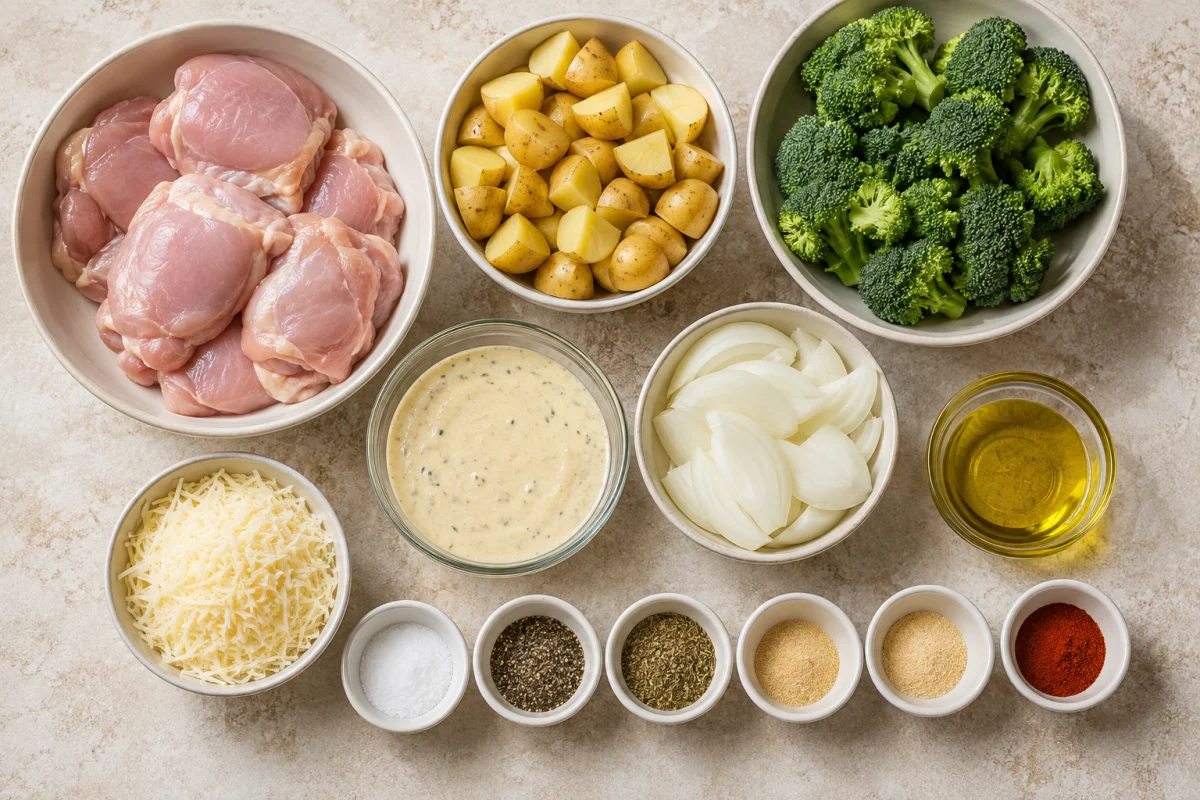
Use 2 pounds boneless chicken thighs and enough Parmesan garlic sauce to coat them generously. The seasoning blend is 1 teaspoon each salt, black pepper, Italian seasoning, and onion powder, plus 2 teaspoons each garlic powder and smoked paprika.
For the vegetables, prepare 24 ounces baby potatoes cut into quarters, 1 small head broccoli divided into large florets, and 1 sliced onion. Add olive oil for coating and shredded Parmesan for the finish. A bottled Parmesan garlic wing sauce works, or use a comparable creamy garlic-Parmesan sauce.
If you enjoy this recipe, you may also like Cranberry Spinach Stuffed Chicken.
How to Make Sheet Pan Parmesan Garlic Chicken
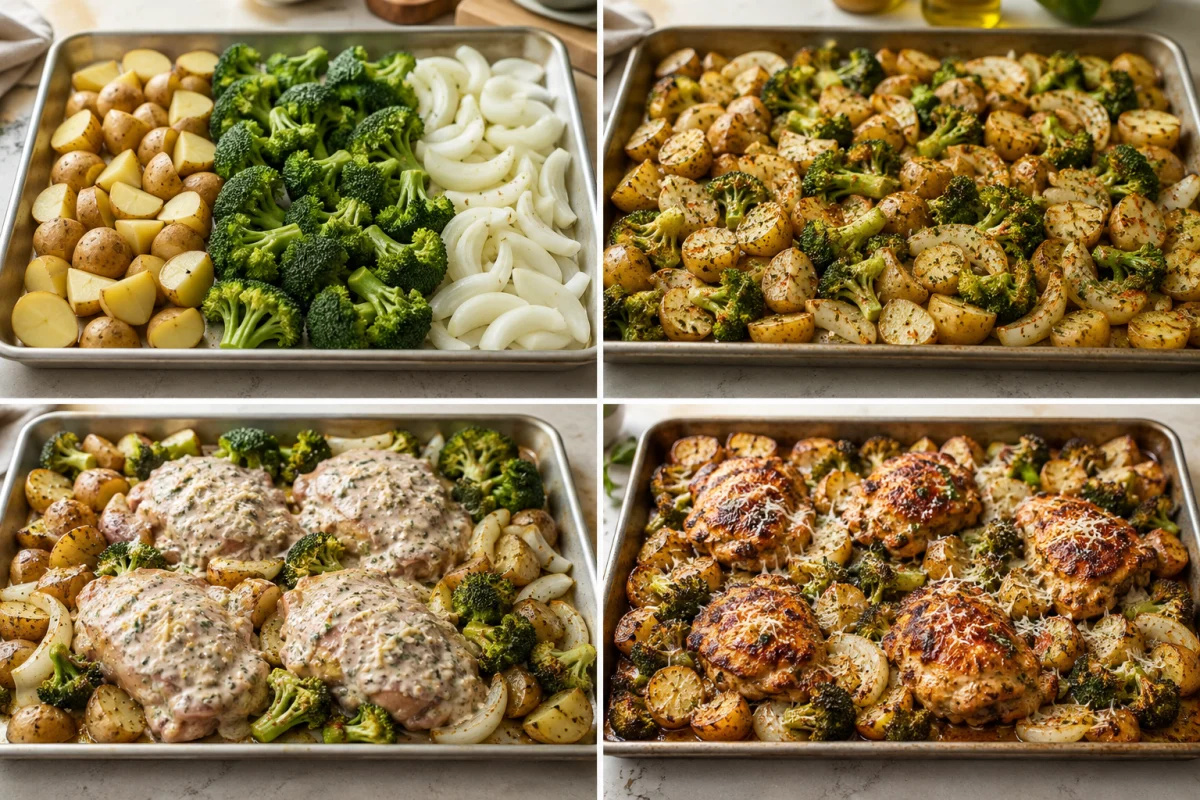
- Heat the oven. Set it to 400°F and grease a large rimmed sheet pan.
- Prepare vegetables. Quarter the potatoes, cut broccoli into large florets, and slice the onion.
- Season. Toss vegetables with olive oil and half the salt, pepper, Italian seasoning, onion powder, garlic powder, and paprika.
- Coat chicken. Season thighs with the remaining blend and toss with Parmesan garlic sauce.
- Arrange. Make spaces among the vegetables and place chicken in a single layer.
- Roast. Bake about 35 minutes, until chicken reaches at least 165°F and potatoes are tender.
- Broil if desired. Brown the top for 1 to 2 minutes while watching closely.
- Finish. Sprinkle with Parmesan, rest briefly, and serve.
For storage details after serving, the USDA leftovers and food safety guidance.
Use a Large Rimmed Pan
A sturdy half-sheet pan gives two pounds of chicken and the vegetables enough room to roast. High rims contain juices without trapping as much steam as a deep casserole dish. Line with foil for easier cleanup or cook directly on a lightly greased pan for stronger browning.
If the ingredients overlap heavily, divide them between two pans. Crowding holds moisture around the food and can leave potatoes pale and broccoli soft. Rotate the pans from top to bottom halfway through when using two oven racks.
If you enjoy this recipe, you may also like Creamy Chicken and Gnocchi.
Cut Each Vegetable for the Same Finish Time
Quarter small baby potatoes so the pieces expose cut surfaces and become tender in about 35 minutes. If the potatoes are larger than a golf ball, cut them into 1-inch chunks instead. Uniform pieces are more important than the exact shape.
Keep broccoli florets relatively large because their tips cook quickly. Slice the onion into sturdy wedges or thick strips rather than fine slivers. Very thin onion can burn before the potatoes soften.
Mix the Seasoning Before Dividing It
Combine salt, black pepper, Italian seasoning, onion powder, garlic powder, and smoked paprika in a small bowl. Stir well, then use roughly half for the vegetables and half for the chicken.
Premixing prevents one portion from receiving mostly salt while another gets most of the paprika. The Parmesan garlic sauce and final cheese both contain salt, so taste the sauce before increasing the seasoning blend.
Coat the Vegetables Lightly
Drizzle the vegetables with enough olive oil to make their surfaces glossy, then toss with half the seasoning. Too little oil leaves dry spice patches; too much collects beneath the food and softens the edges.
Spread the vegetables across the pan before adding chicken. Turn some potato cut sides downward against the metal, where they can develop the deepest color.
Prepare Boneless Chicken Thighs
Trim large pieces of loose fat and pat the thighs dry. Boneless thighs vary in thickness, so open any tightly folded pieces to create a more even layer. Keep each thigh whole rather than cutting it into small chunks, which could overcook during the vegetable roasting time.
Season with the remaining spice blend, then add enough Parmesan garlic sauce to cover every surface without leaving a deep pool in the bowl. Use clean utensils after they contact raw chicken.

Arrange for Airflow
Move vegetables aside to make individual spaces for the chicken, then place the thighs directly against the pan. Avoid setting chicken on top of potatoes or broccoli. The meat releases juices as it cooks, and vegetables beneath it will steam rather than roast.
Leave small gaps wherever possible. Arrange broccoli near the pan edges if your oven browns the center most strongly, and keep delicate onion pieces from sitting alone in exposed corners.
Roast to Temperature, Not Color Alone
Bake at 400°F for about 35 minutes. Insert an instant-read thermometer into the thickest chicken thigh without touching the pan. Poultry is safe at 165°F. Thighs often become especially tender at a somewhat higher temperature, but they do not need to reach 185°F for safety.
Check the potatoes with a thin knife; it should slide through the center easily. If chicken finishes before the potatoes, transfer it to a clean covered plate and return the vegetables to the oven.
Turn or Rotate Only When Needed
At the halfway point, rotate the pan if the back of the oven browns more strongly. Flip pale potato pieces with a spatula while leaving the sauced chicken undisturbed so its coating remains in place.
Broccoli does not need frequent turning. Opening the oven repeatedly releases heat and extends the roasting time, so make one quick adjustment rather than checking every few minutes.
Broil With Close Attention
For deeper color, switch to broil after both chicken and potatoes are fully cooked. Move the pan to an upper-middle rack and broil for 1 to 2 minutes. Watch continuously because Parmesan sauce and broccoli tips can darken suddenly.
Confirm that the liner and pan are broiler-safe. Parchment should not be placed close to an exposed flame or heating element. Skip broiling if the vegetables are already well browned.
Rest and Add Parmesan
Sprinkle shredded Parmesan over the hot pan as soon as it leaves the oven. Residual heat softens the cheese without requiring another long bake. Let the chicken rest for 5 minutes before serving so its juices settle.
Spoon some flavorful pan juices over each portion. Lemon wedges or chopped parsley add freshness, and a simple green salad is enough if you want an additional side.
Useful Substitutions
Boneless chicken breasts can replace thighs, but choose similar-sized pieces and begin checking early because lean breast meat dries more readily. Cook all poultry to 165°F. Cauliflower can replace broccoli, while carrots should be cut small enough to soften with the potatoes.
Any comparable creamy garlic-Parmesan sauce can be used. If it is especially thick, coat the chicken in a thinner layer so the exterior browns rather than remaining pasty.
Storage and Reheating
Refrigerate leftovers within two hours in covered containers for up to four days. Keep the chicken and vegetables in a shallow layer so they cool promptly.
Reheat on a sheet pan at 350°F until the chicken reaches 165°F. An air fryer also restores crisp edges in small portions. The microwave works but softens the roasted surfaces. Freeze the cooked chicken for up to two months; potatoes and broccoli may change texture after thawing.
Troubleshooting
- Pale vegetables: Dry them well, use enough room, and place potato cut sides against the pan.
- Hard potatoes: Cut them into consistent 1-inch pieces and return them to the oven if chicken finishes first.
- Burned broccoli: Keep florets large and move them away from the hottest area.
- Dry chicken: Use a thermometer and remove it once safely cooked.
- Watery pan: Avoid crowding and do not pour excess sauce over the vegetables.
Conclusion
Quarter baby potatoes, cut large broccoli florets, and slice onion. Toss the vegetables with olive oil and half the seasonings, then coat chicken thighs with the remaining seasonings and Parmesan garlic sauce. Arrange everything in one layer and roast at 400°F until chicken reaches at least 165°F and potatoes are tender. Finish with Parmesan and rest before serving.
Frequently Asked Questions
- → What temperature should chicken thighs reach?
Boneless chicken thighs are safe at 165°F. Measure in the thickest portion with an instant-read thermometer.
- → How do I keep the vegetables from becoming soggy?
Dry them, use a large pan, avoid overlap, and place the chicken directly on the pan instead of on top of the vegetables.
- → Can I use chicken breast instead of thighs?
Yes. Use pieces of similar thickness and begin checking early, removing them as soon as they reach 165°F.
- → How long do leftovers keep?
Refrigerate for up to four days and reheat at 350°F or in an air fryer until the chicken reaches 165°F.