


Slow Cooker Beef Ragu is built from the recorded ingredient list and ordered method below. Read each quantity as a working part of the recipe: keeping the listed ingredients measured, using the stated equipment, and following the sequence gives the clearest path to the intended texture and finish. This editorial guide preserves the original recipe facts while explaining the practical cues that help a home cook work carefully and confidently.
Slow Cooker Beef Ragu Ingredients
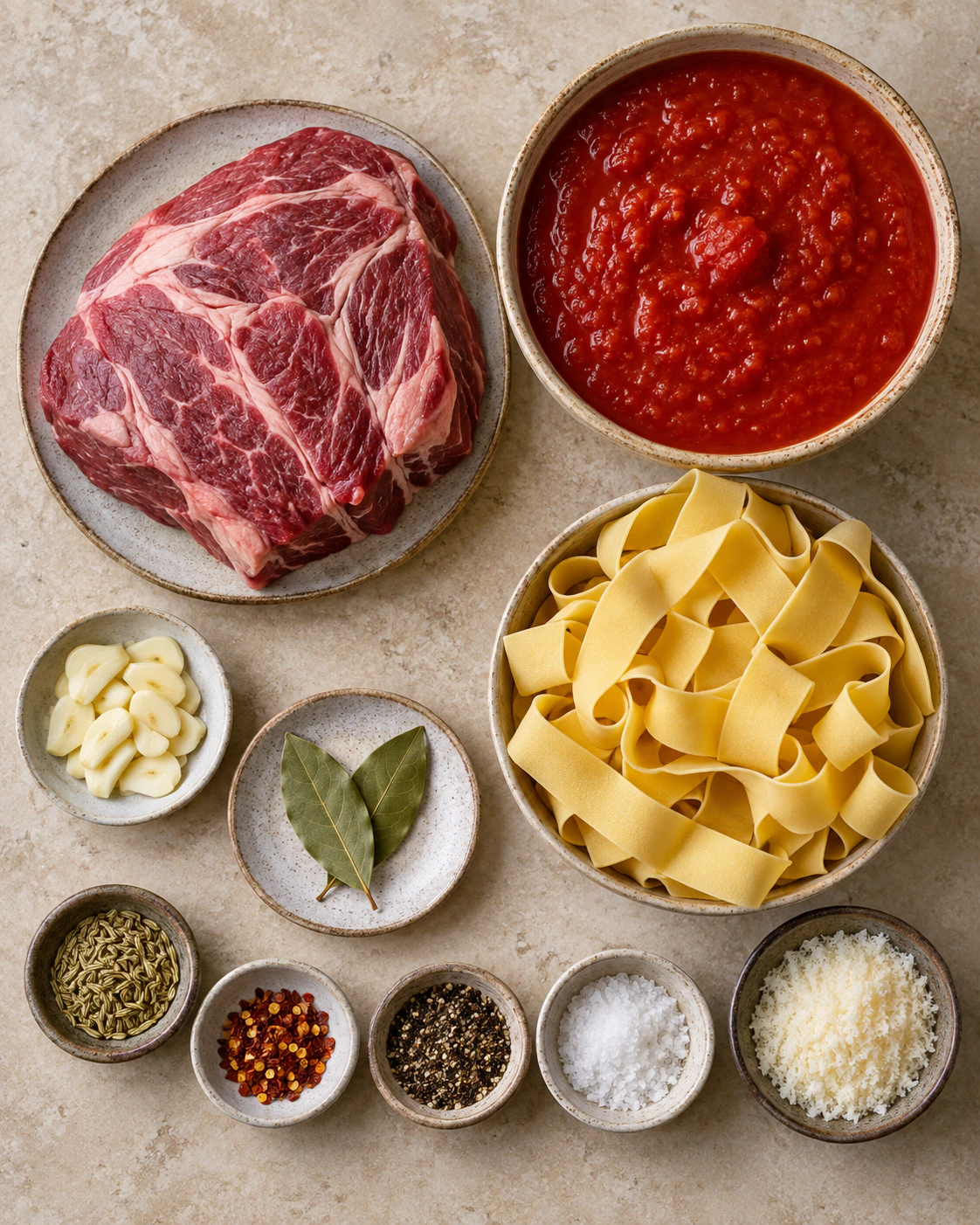
Main Ingredients: 1.25-1.75 pounds chuck roast (trimmed of excess fat and bone removed); 30 oz tomato sauce; 8.8 oz pappardelle pasta; 4 garlic cloves, thinly sliced.
Seasonings: 2 bay leaves; 1 teaspoon fennel seeds; ¼ teaspoon red pepper flakes (optional); ¼ teaspoon pepper; Salt to taste.
For Serving: Parmesan cheese for topping (optional).
If you enjoy this recipe, you may also like Ground Beef Philly Cheesesteak.
How to Make Slow Cooker Beef Ragu
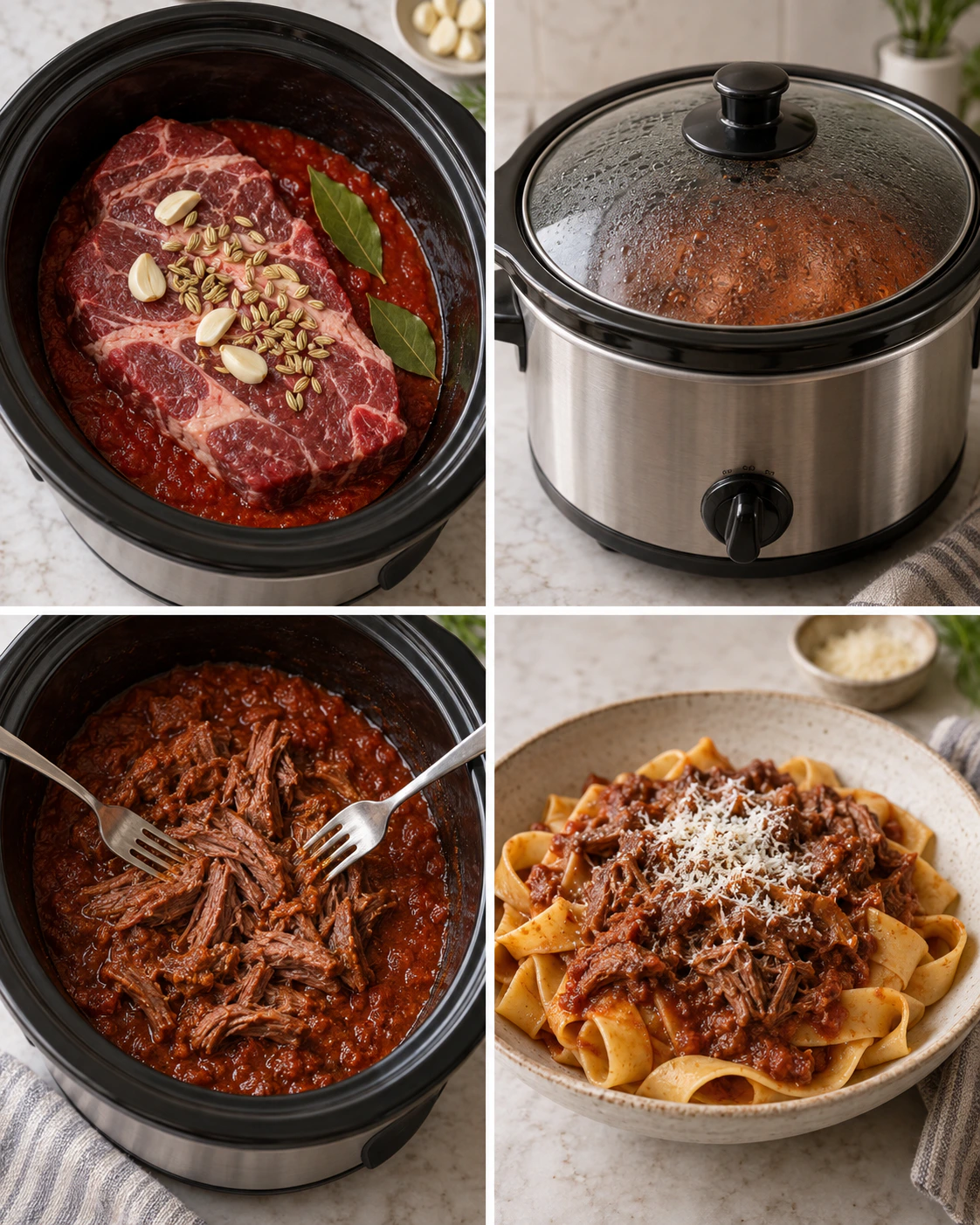
- Combine Ingredients: Add chuck roast, tomato sauce, garlic cloves, bay leaves, fennel seeds, red pepper flakes, and pepper into the crockpot and cover.
- Slow Cook: Cook on low for 6-8 hours or high for 3-4 hours.
- Cook Pasta: Cook pasta as directed on packaging.
- Finish Sauce: Remove bay leaves from the crockpot and shred the beef. Salt the sauce to taste.
- Serve: Divide among 4 bowls and top with Ragu sauce and parmesan cheese, if you choose to use it.
For storage details after serving, the USDA leftovers and food safety guidance.
Why the Order Matters
The order is useful because it separates preparation, mixing, shaping, cooking, and finishing into deliberate stages. Set out every measured ingredient before starting, use the stated temperature and timing from the source, and pause to check texture at each transition. Combine only as much as the instruction asks; aggressive mixing, early cutting, or changing the listed pan or vessel can alter the result. Use the visual cue in the recorded step alongside its time range, then let the finished dish rest, chill, cool, or set whenever the method specifies.
If you enjoy this recipe, you may also like Cheesy Italian Beef Sandwiches.
Critical Visual and Timing Cues
Work with clean bowls and measured portions so the recipe remains repeatable. Keep wet and dry components separate until the stated joining point. If the source calls for folding, use a broad gentle motion rather than beating; if it calls for chilling, baking, or cooling, allow the full recorded interval. Check colour, firmness, and texture at the point named in each instruction instead of adding unlisted ingredients. These small decisions preserve the intended balance without changing the verified formula.
Serving and Storage
Serve the finished recipe in the form and temperature directed by the source. Cool or chill it fully before storage when the method calls for that step, and keep leftovers covered in an appropriate container. The exact ingredients and quantities remain the reference point; substitutions should only be made where the original recipe explicitly permits them. Use sensible food-safety handling for dairy, eggs, or other perishable ingredients. Present each portion neatly and enjoy it promptly for the best texture.
Practical Kitchen Notes
The ingredient list is not a suggestion: every listed amount, including optional ingredients and garnish directions, belongs to the verified record. Measure before beginning, preserve the named pan or preparation surface, and avoid adding familiar extras that are not present in the source. The recorded preparation, cooking, and total times communicate the recipe's intended schedule, while individual resting and cooling steps still need their full attention.
Details Worth Preserving
The new ingredient photograph and chronological 2×2 process photograph support the written method without replacing it. The current hero image remains unchanged. The earlier repeated body image is excluded, and a separate original image from the source record is retained as the third body image. Before serving, review the finished texture against the final cue in the original instruction rather than relying on an arbitrary clock alone. Keep surfaces clean, portion tools ready, and perishable ingredients appropriately chilled. If you make the recipe ahead, complete every stated cooling or setting stage before covering it. Wash measuring tools promptly and return ingredients to proper storage after use. When portions are shaped or served, work steadily and keep the serving surface dry and clean. A careful final check of colour, aroma, firmness, and temperature helps preserve the recipe's intended result without adding a new ingredient or changing its method. Direct responsive WebP copies preserve orientation and aspect ratio without crop, upscaling, transformations, or a Worker deployment.
A Steady Workflow
Read the complete method, measure every recorded amount, and arrange the named equipment before starting. Keep the written recipe beside you. The source method controls the sequence, temperature, timing, and any cooling, chilling, setting, or resting interval. Keep perishables appropriately chilled and leftovers covered. This steady approach preserves the verified formula without adding changes.
Recorded Recipe Tips
- Different pasta shapes work well if pappardelle isn't available.
- The sauce can be made ahead and reheated when needed.

Conclusion
Slow Cooker Beef Ragu makes 4 servings in 195 recorded minutes. Preserve every listed quantity, temperature, timing cue, and ordered instruction for the intended result. Place the trimmed chuck, tomato sauce, garlic, bay leaves, fennel, optional red pepper flakes, and pepper together before closing the cooker, then use the low or high schedule recorded in the method. Cook the pappardelle separately as its package directs. Remove both bay leaves before shredding the tender beef, salt the sauce only to taste, and divide the ragu over the pasta for four portions, adding Parmesan only as the optional topping.
Frequently Asked Questions
- → How many servings does Slow Cooker Beef Ragu make?
It makes 4 servings and serves 4.
- → How long does Slow Cooker Beef Ragu take?
The recipe records 15 minutes of preparation, 180 minutes of cooking, and 195 minutes total.
- → What is the best way to keep Slow Cooker Beef Ragu consistent?
Measure every listed ingredient, follow the ordered instructions, and use the stated temperature and timing cues rather than adding unrecorded changes.
- → Why should the recorded cooling or resting directions be followed?
Those directions are part of the method and help the finished recipe reach the texture and structure intended by the source.