


Steak fajita quesadillas bring grilled steak, charred peppers, onions, jalapeños, and Monterey Jack together inside crisp flour tortillas. A cool chipotle-lime sauce adds tang and gentle smoke, making every wedge rich without feeling flat.
The recipe makes three to four large quesadillas and serves about four people in 30 minutes. Cook the components in a deliberate order: mix the sauce first, grill and rest the steak, char the vegetables, then assemble each quesadilla in a wiped skillet.
Ingredients for Steak Fajita Quesadillas
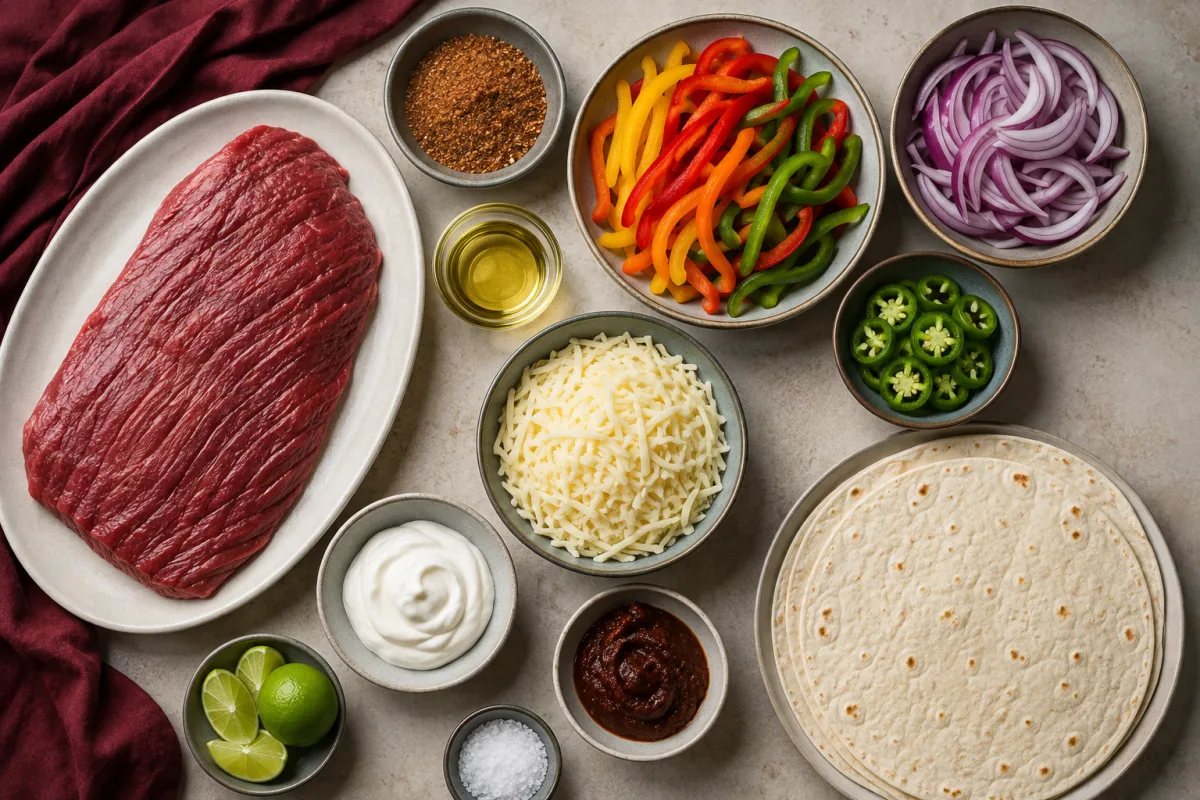
Use 2 to 3 skirt or hanger steaks, 4 to 5 sliced bell peppers, 2 sliced red onions, and 2 sliced jalapeños. You also need 3 to 4 large flour tortillas and 4 to 5 cups shredded Monterey Jack. Canola oil handles both the steak and vegetables.
The source calls for up to 1 cup steak rub or a mixture of salt, pepper, and garlic powder. That quantity can be more than the meat needs, so season the surface evenly rather than forcing all of it onto the steaks. For the sauce, combine 1 cup sour cream, juice from 2 limes, 2 tablespoons chipotle puree, and kosher salt to taste.
If you enjoy this recipe, you may also like Chicken Crescent Braid.
How to Make Steak Fajita Quesadillas
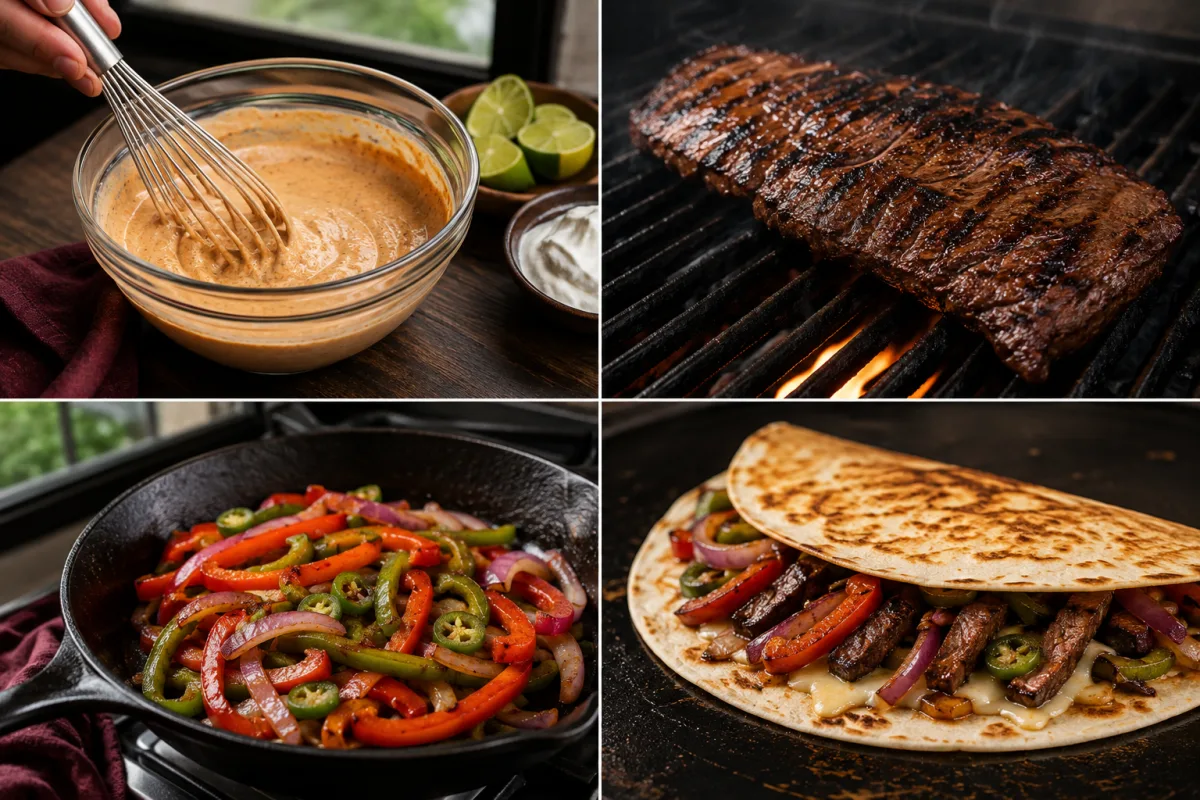
- Mix the sauce. Stir sour cream, lime juice, chipotle puree, and salt until smooth. Cover and refrigerate.
- Season the steak. Coat lightly with oil and apply steak rub evenly. Add a squeeze of lime if desired, then refrigerate 15 to 20 minutes.
- Grill. Heat the grill to roughly 375°F and cook the steak about 4 to 5 minutes per side, monitoring internal temperature.
- Rest and slice. Rest the steak before cutting thinly across the grain.
- Char the vegetables. Cook peppers, onions, and jalapeños in an oiled hot skillet for 4 to 5 minutes, keeping some texture.
- Start the tortilla. Wipe the skillet, toast one side of a tortilla, and flip it.
- Fill and fold. Add cheese, steak, vegetables, and more cheese to one half. Fold and cook until crisp on both sides.
- Serve. Cut into wedges and offer the cold chipotle-lime sauce alongside.
For storage details after serving, the USDA leftovers and food safety guidance.
Make the Chipotle-Lime Sauce First
Whisking the sauce before cooking gives the chipotle time to disperse through the sour cream. Start with the measured 2 tablespoons of puree, then taste. Different canned chipotle products vary in heat, salt, and smokiness.
Fresh lime should make the sauce lively but still thick enough to cling to a wedge. If the limes are especially juicy, add the liquid gradually. Cover and refrigerate the finished sauce so it remains cold against the hot quesadilla.
If you enjoy this recipe, you may also like Mini Meatloaf Sliders on Hawaiian Rolls.
Choose and Season the Steak
Skirt steak has a loose grain and pronounced beef flavor; hanger steak is thicker and especially tender when sliced correctly. Either works, but steaks of similar thickness are easier to finish at the same time. Trim only heavy exterior fat or silver skin.
Brush the meat with a light coat of canola oil so the seasoning adheres. The original cup measurement for rub is best treated as a supply rather than a required amount. Cover the surfaces evenly, avoid a heavy salty crust, and refrigerate during the optional 15-to-20-minute lime rest.
Grill, Rest, and Slice Across the Grain
A grill near 375°F provides enough heat for browned marks without scorching a chile-heavy seasoning. Start with 4 to 5 minutes per side, but let thickness and internal temperature determine the actual finish. Avoid repeatedly moving the steak so each side has time to color.
Transfer the grilled steak to a clean board and rest it before slicing. Look for the direction of the long muscle fibers, then cut across them into thin strips. Shortening those fibers makes skirt and hanger steak far easier to bite through inside a crisp tortilla.
Char the Vegetables Without Making Them Soft
Use a broad, hot skillet so the peppers and onions touch the surface rather than pile up. Add just enough canola oil to coat the pan, followed by peppers, onion, and jalapeños. Stir occasionally for 4 to 5 minutes.
The goal is browned edges with a little bite remaining. Fully softened vegetables release more moisture, which can turn the quesadilla soggy. If your skillet is crowded, work in batches and combine everything once the color develops.
Layer Cheese on Both Sides of the Filling
Wipe away loose vegetable bits before toasting the tortilla so they do not burn. Toast the first side briefly, flip, then add Monterey Jack to one half. Arrange a modest layer of sliced steak and vegetables over it, followed by another light layer of cheese.
Cheese beneath and above the filling acts like an edible seal. It holds the components together when the tortilla is folded and turned. Avoid overfilling; a thinner quesadilla becomes crisper and is easier to cut into neat wedges.

Control the Heat for a Crisp Tortilla
Once filled, use medium heat. High heat can blacken the flour tortilla before the center warms and the cheese melts. Press lightly with a spatula, then turn when the underside is evenly golden and the folded quesadilla feels stable.
Rest it for a minute on a cutting board before slicing. This brief pause keeps the molten cheese from running out. A sharp chef’s knife or pizza cutter makes cleaner wedges than a dull blade pressed repeatedly through the crust.
Variations and Serving Ideas
Use a mixture of pepper colors for visual contrast, or remove the jalapeño seeds for milder heat. Monterey Jack melts smoothly, but pepper Jack can replace part of it if you want a stronger chile note. Keep the overall cheese quantity similar so the tortilla closes comfortably.
Serve the wedges immediately with chipotle-lime sauce, fresh lime, or a crisp cabbage salad. Beans or plain rice can stretch the meal. Because the quesadilla is rich, fresh accompaniments usually work better than another heavy sauce.
Storage, Reheating, and Troubleshooting
Refrigerate cooked steak, vegetables, sauce, and cheese separately for up to 3 days. Assemble fresh when possible. Reheat a finished quesadilla in a dry skillet over medium-low heat, turning once, so the outside becomes crisp again. Keep the sour-cream sauce cold.
- Soggy tortilla: Cook vegetables in batches and do not overfill.
- Filling falls out: Put cheese below and above it, then let the first side set before turning.
- Tough steak: Rest fully and slice thinly across the grain.
- Outside burns early: Reduce the skillet to medium heat.
Conclusion
Mix and chill chipotle-lime sauce, season and grill the steak, then rest and slice it across the grain. Char the vegetables, layer them with Monterey Jack inside toasted tortillas, and cook each folded quesadilla until crisp.
Frequently Asked Questions
- → What steak is best for fajita quesadillas?
Skirt or hanger steak both work well. Grill carefully, rest the meat, and slice thinly across the grain for the most tender bite.
- → How do I keep a quesadilla from getting soggy?
Char the vegetables without overcooking them, avoid crowding the skillet, and use a moderate amount of filling.
- → Can I make the chipotle-lime sauce ahead?
Yes. Mix it, cover it, and refrigerate until serving. Stir once before bringing it to the table.
- → What is the best way to reheat leftovers?
Warm quesadillas in a dry skillet over medium-low heat, turning once. This restores the crisp exterior better than a microwave.