


Sticky honey garlic chicken coats crisp cornstarch-fried chicken pieces in a glossy sauce made with honey, soy sauce, fresh garlic, vinegar, ketchup, and sesame oil. A cornstarch slurry thickens the sauce quickly so it clings instead of pooling under the chicken.
The recipe serves four in about 35 minutes. Cooking the chicken in one layer and adding it back only after the sauce thickens preserves the contrast between crisp edges and sticky glaze.
Ingredients for Sticky Honey Garlic Chicken
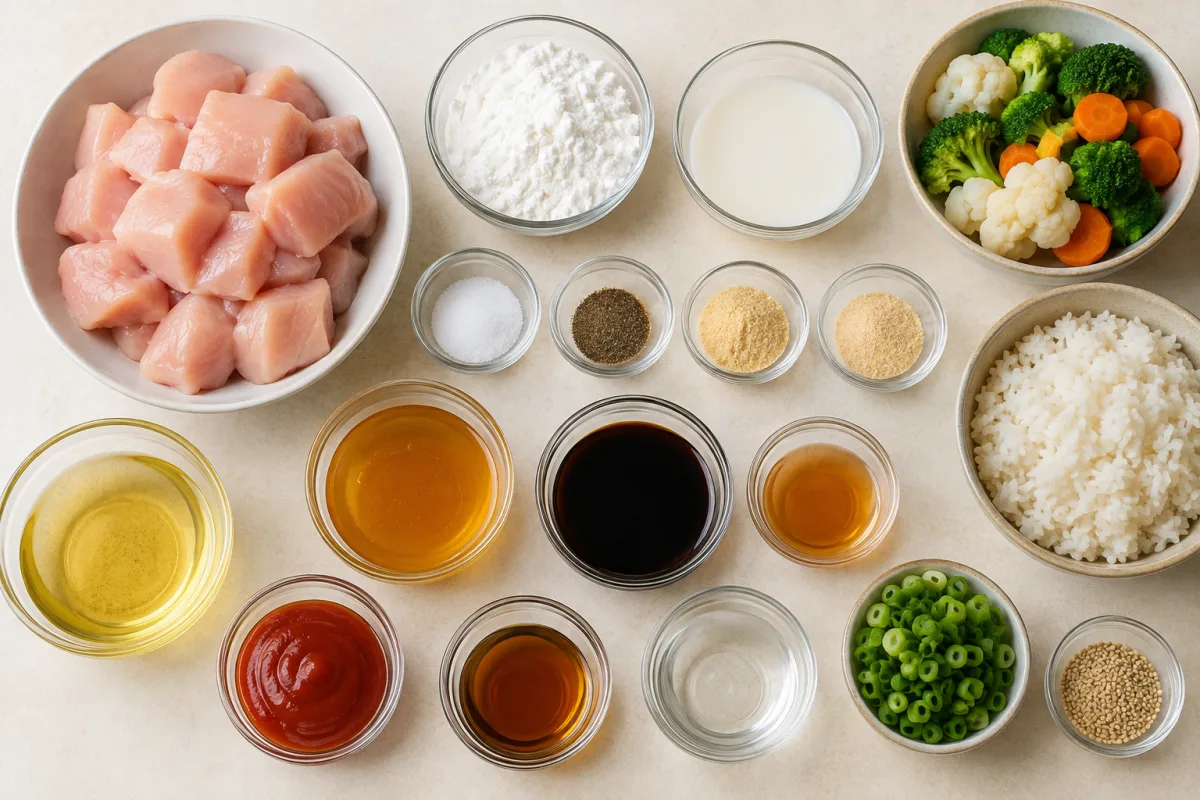
Coat 1 pound bite-size chicken breast with 1/2 cup cornstarch, 1/2 teaspoon each salt and pepper, and 1 teaspoon each garlic powder and onion powder. Fry in 3 to 4 tablespoons peanut oil or another suitable oil.
The sauce uses 1/3 cup honey, 1/4 cup soy sauce, 2 tablespoons minced garlic, 1 tablespoon apple cider vinegar, 1 tablespoon ketchup, and 1 teaspoon sesame oil. Thicken it with 1 tablespoon cornstarch mixed with 2 tablespoons water. Sesame seeds, green onions, rice, and steamed vegetables are optional.
If you enjoy this recipe, you may also like Layered Taco Salad.
How to Make Sticky Honey Garlic Chicken
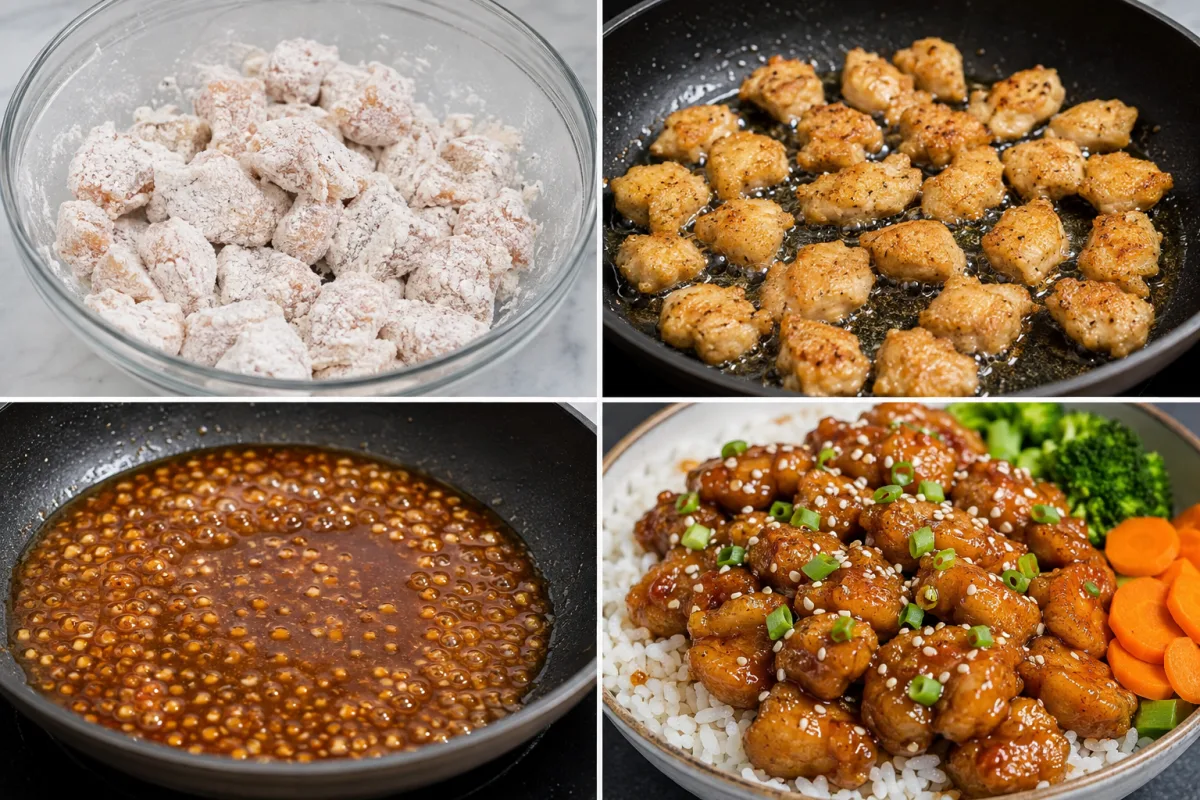
- Dry and coat. Pat chicken dry and toss with cornstarch, salt, pepper, garlic powder, and onion powder.
- Fry. Heat 3 to 4 tablespoons oil over medium-high. Add chicken in one layer, leave undisturbed 3 to 4 minutes, then turn until crisp and cooked.
- Remove. Transfer chicken from the pan once it reaches 165°F.
- Start sauce. Lower heat to medium and stir honey, soy sauce, garlic, vinegar, ketchup, and sesame oil in the same pan.
- Thicken. Simmer 2 minutes, stir in the cornstarch slurry, and cook until glossy.
- Coat. Return chicken and toss until every piece is glazed.
- Serve. Add sesame seeds and green onions and serve with rice and vegetables.
For storage details after serving, the USDA leftovers and food safety guidance.
Cut and Dry the Chicken
Cut the chicken breast into similar bite-size pieces. Uniform cubes cook at the same rate and create plenty of surface area for the crisp coating and sauce.
Pat the pieces thoroughly dry with paper towels. Surface moisture turns cornstarch gummy before the chicken reaches the pan and encourages steaming instead of browning.
If you enjoy this recipe, you may also like Slow Cooker Hot Honey Chicken.
Season the Cornstarch Coating
Combine cornstarch, salt, black pepper, garlic powder, and onion powder in a large bowl. Add the dry chicken and toss until every surface looks lightly white and powdery.
Shake off thick loose clumps before frying. A thin, even coating becomes crisp; excessive starch can fall into the oil and burn.
Heat the Oil Before Adding Chicken
Warm 3 to 4 tablespoons peanut oil over medium-high heat. The oil should shimmer but not smoke. Peanut oil handles the temperature well, though another neutral frying oil can be substituted.
Place the chicken carefully in one layer, leaving space between pieces. Let it cook undisturbed for 3 to 4 minutes so the first side forms a crust before turning.
Cook to 165°F and Remove
Turn the pieces and continue until all sides are golden and crisp. Check the largest pieces with an instant-read thermometer; chicken breast must reach 165°F.
Transfer it to a clean plate once done. Leaving the chicken in the skillet during sauce preparation would soften its coating and risk overcooking the center.
Balance the Honey Garlic Sauce
Lower the skillet to medium and add honey, soy sauce, minced garlic, apple cider vinegar, ketchup, and sesame oil. Stir while scraping up flavorful browned bits that are not burnt.
Honey gives sweetness and shine, soy sauce provides salt and savory depth, vinegar adds acidity, ketchup contributes body, and sesame oil brings a toasted aroma. Simmer for 2 minutes so the fresh garlic mellows.
Mix the Slurry Before Adding
Stir 1 tablespoon cornstarch with 2 tablespoons cool water until completely smooth. Cornstarch added directly to hot sauce forms stubborn lumps, while cool water disperses it evenly.
Pour the slurry into the simmering sauce while stirring. Within a short time, the sauce should turn glossy and thick enough to leave a path when the spatula crosses the pan.
Glaze the Chicken Briefly
Return the cooked chicken to the thick sauce and toss until every piece is evenly coated. Keep this stage short; prolonged simmering softens the crust and can make the honey sauce overly thick.
If the sauce tightens too much, add a teaspoon of water at a time. If it remains thin, simmer for another minute before serving.
Troubleshooting
- Coating falls off: Dry chicken well and shake off excess cornstarch.
- Chicken does not crisp: Heat the oil first and avoid crowding.
- Sauce has lumps: Mix cornstarch with cool water before adding.
- Sauce is too thick: Loosen with small additions of water.
- Chicken turns soft: Add it only after the sauce has thickened and toss briefly.
Serving Suggestions
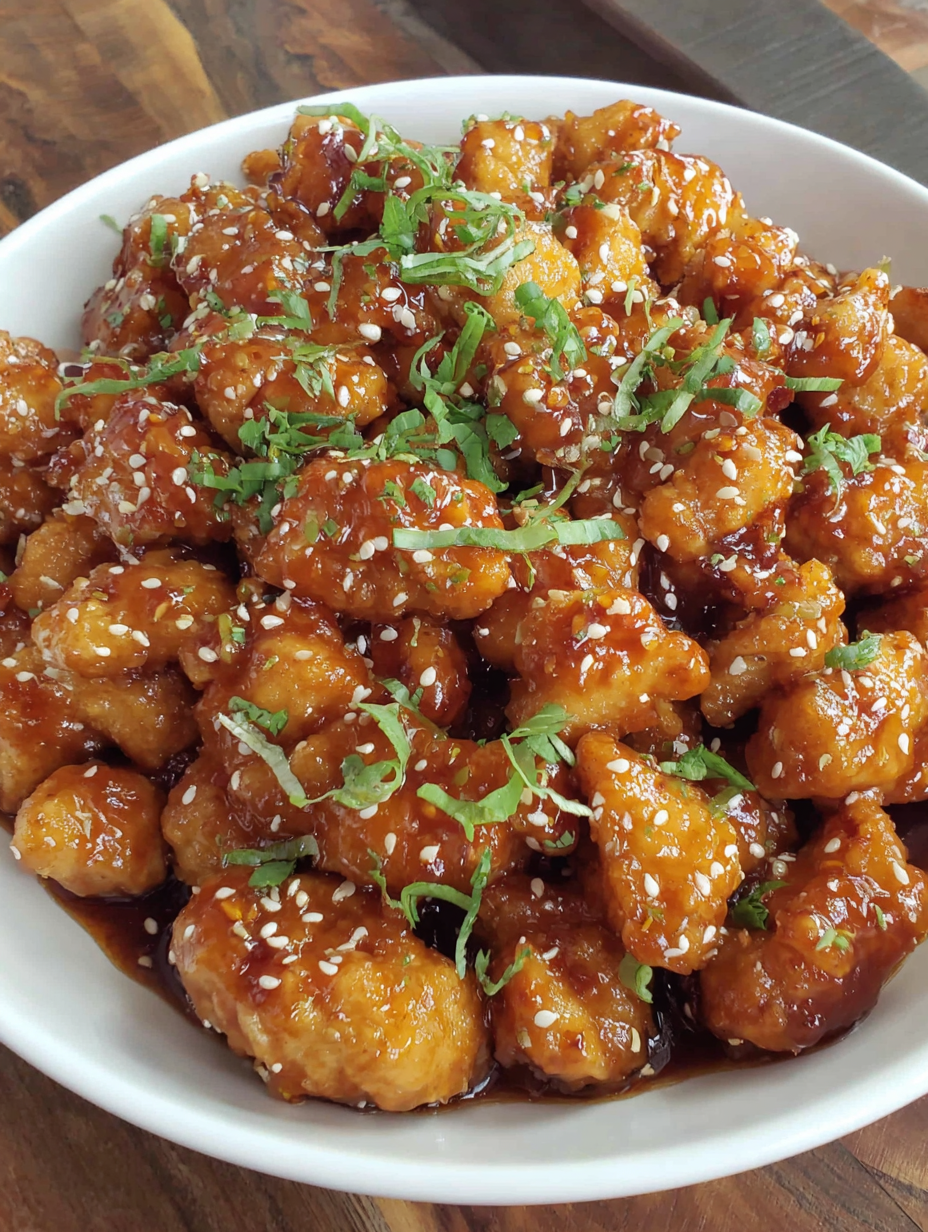
Serve immediately over warm jasmine rice, which catches the extra sauce. Steamed broccoli, carrots, snap peas, or a mixed vegetable side balances the sweet-savory glaze.
Finish with toasted sesame seeds and sliced green onions for texture and fresh color. Because the sauce is strongly flavored, keep accompanying side dishes simply seasoned.
Substitutions and Allergy Notes
Boneless chicken thighs can replace breast and remain especially juicy; cut them to the same size and still cook to 165°F. Use a neutral frying oil if avoiding peanut oil.
The recipe contains soy and sesame. Choose labeled alternatives if required, and note that standard soy sauce contains wheat unless specifically marked gluten-free.
Storage and Reheating
Refrigerate cooled leftovers airtight for up to 3 days. The coating softens under the sauce, but the chicken remains flavorful.
Reheat in a skillet over medium-low with a small splash of water until the chicken reaches 165°F. The microwave works in short intervals. Freezing is possible for up to 2 months, though the original crisp texture will not fully return.
Conclusion
Dry chicken pieces and coat with seasoned cornstarch. Fry in one layer until crisp and 165°F. Simmer honey, soy sauce, garlic, vinegar, ketchup, and sesame oil, then thicken with a cornstarch slurry. Return chicken briefly and toss until glossy.
Frequently Asked Questions
- → Why is cornstarch used on the chicken?
It creates a light crisp coating that gives the sticky sauce a surface to cling to.
- → Can chicken thighs replace chicken breast?
Yes. Use boneless thighs cut into equal pieces and cook them to 165°F.
- → How do I keep the chicken crispy?
Fry in a single layer, remove it while making sauce, and toss it back only after the sauce thickens.
- → How long do leftovers keep?
Refrigerate them airtight for up to 3 days and reheat to 165°F.