

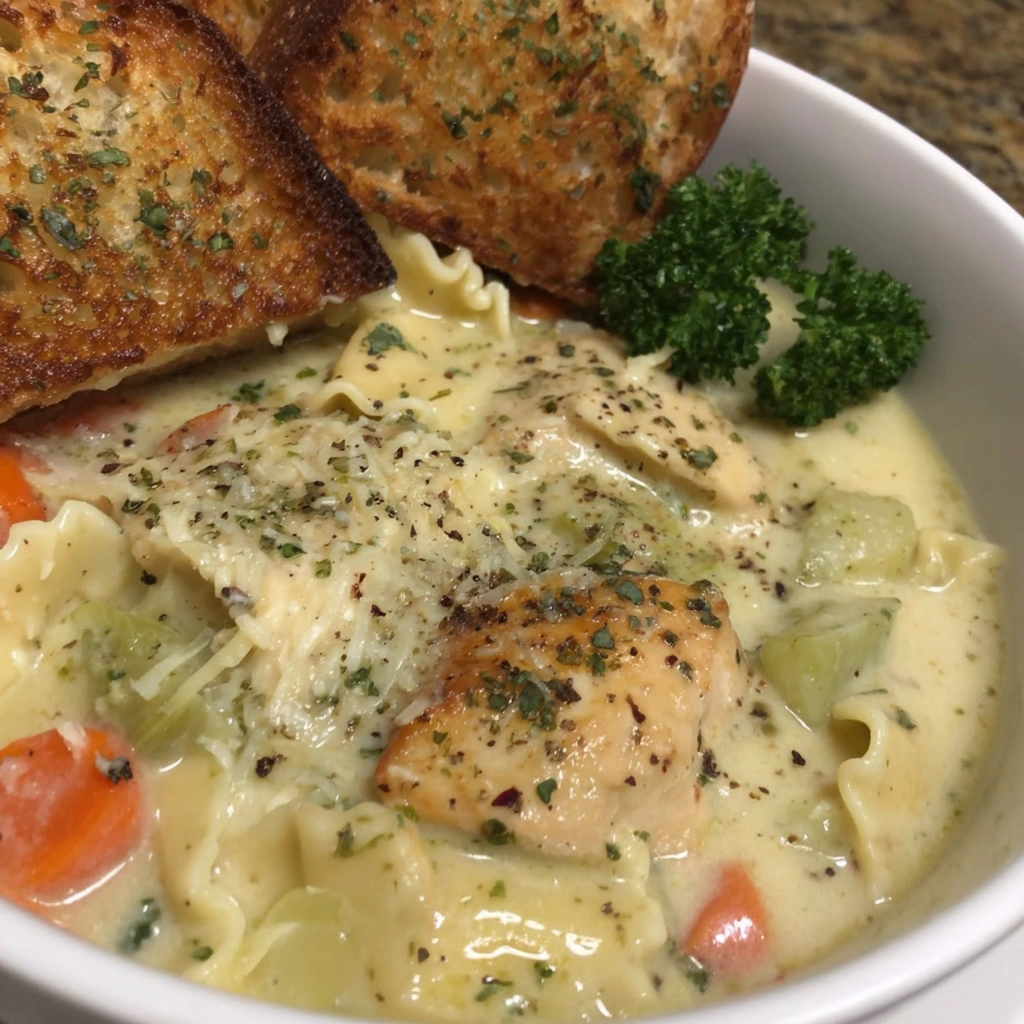
White chicken lasagna soup brings seared chicken, broken lasagna noodles, broccoli, Parmesan, and a creamy herb broth together in one pot. A butter-and-flour roux gives the soup enough body to coat the pasta while the vegetables keep each bowl balanced.
The chicken is cooked first so the same pot captures its browned flavor. Broth is whisked into the roux gradually, then cream, noodles, and broccoli turn the base into a complete dinner for eight in about 45 minutes.
Ingredients for White Chicken Lasagna Soup
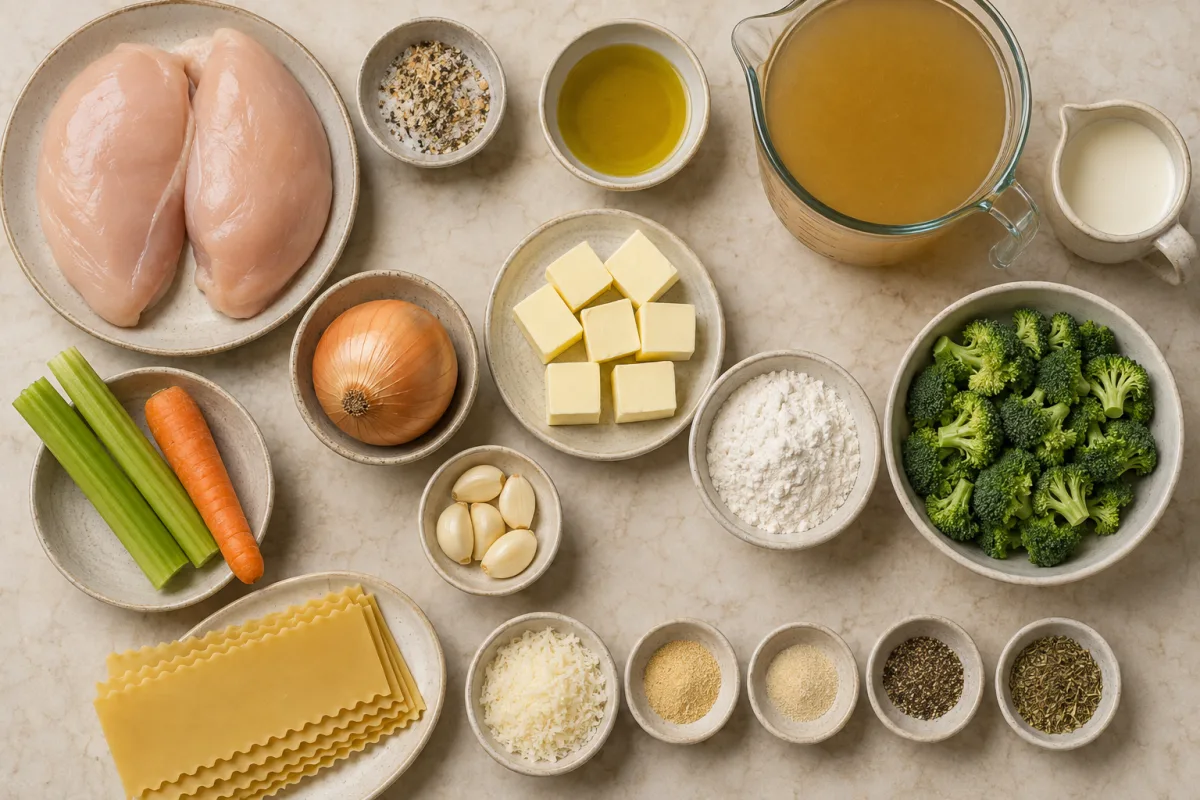
For the chicken, use 2 boneless skinless breasts cut in half, salt-pepper-garlic seasoning, 1 tablespoon olive oil, and 1 tablespoon salted butter. The soup base needs another 4 tablespoons butter, one diced yellow onion, one diced carrot, 2 diced celery ribs, 6 to 7 minced garlic cloves, 1/3 cup flour, 6 cups chicken broth, and 2 cups heavy cream.
Season with 1/2 teaspoon each garlic powder, onion powder, and black pepper, plus 1 teaspoon Herbs de Provence and salt to taste. Add 3 cups chopped fresh broccoli, 10 broken lasagna sheets, and 1 1/2 cups Parmesan.
If you enjoy this recipe, you may also like Pizza Pasta Bake.
How to Make White Chicken Lasagna Soup
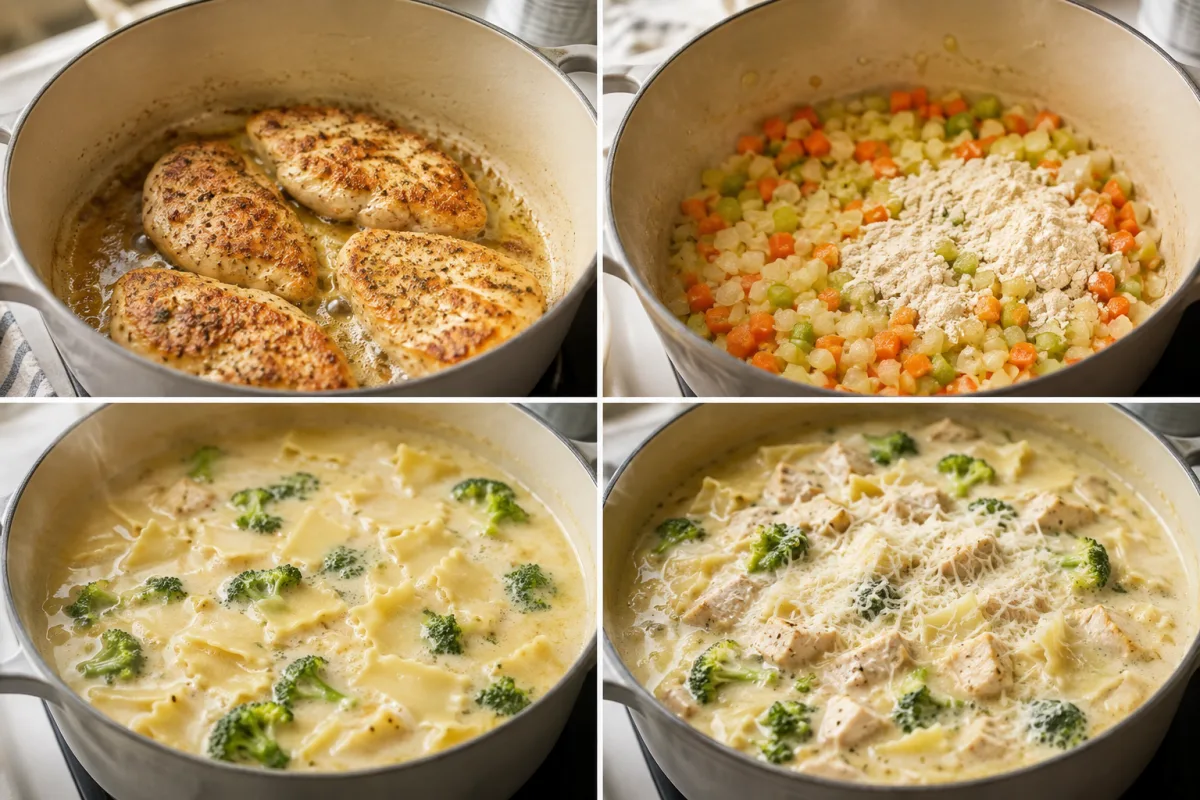
- Sear the chicken. Season the four chicken pieces and cook them in 1 tablespoon each butter and oil over medium heat for about 4 minutes per side, until they reach 165°F. Transfer to a plate.
- Soften the vegetables. Melt the remaining 4 tablespoons butter in the same pot. Add onion, carrot, celery, and a light seasoning of salt and pepper; cook 5 minutes.
- Make the roux. Stir in garlic for 1 minute, add flour, and cook while stirring for 2 minutes.
- Add the liquids. Whisk in broth about 1 1/2 cups at a time, then stir in cream and the dry seasonings.
- Simmer the pasta. Bring to a gentle boil, add broccoli and broken lasagna sheets, lower the heat, and simmer 15 minutes. Stir often.
- Finish the soup. Lower the heat and stir in Parmesan until smooth. Chop the chicken, return it to the pot, and adjust salt and pepper.
For storage details after serving, the USDA leftovers and food safety guidance.
Sear the Chicken in the Soup Pot
Cutting each breast in half creates four thinner pieces that cook evenly in the stated time. Season both sides, then wait until the butter and oil are hot before adding the chicken. Leave space between pieces so they brown instead of steaming.
About 4 minutes per side is a guide; confirm the thickest portion reaches 165°F. Move the chicken to a clean plate and leave the browned bits in the pot. They loosen when the vegetables and broth are added and deepen the otherwise pale soup.
If you enjoy this recipe, you may also like Million Dollar Baked Spaghetti.
Build a Smooth Roux
Cook the onion, carrot, and celery in the remaining butter until softened but not browned. Garlic goes in afterward because it needs only a minute. Sprinkle flour evenly across the vegetables and stir continuously for 2 minutes to remove its raw taste.
The mixture will look thick and pasty. Add broth gradually, whisking after every addition until the pot is smooth before pouring more. Rushing all 6 cups in at once makes flour pockets harder to break. Scrape the bottom as you whisk so none of the roux scorches.
Break and Cook the Lasagna Noodles
Break 10 dry lasagna sheets into spoon-size pieces. Irregular pieces are fine, but keep them similar enough to finish together. Add them only after the creamy broth reaches a gentle boil, then reduce the heat immediately.
Stir several times during the 15-minute simmer. Flat pasta tends to settle against the pot and overlap, so lift pieces apart with a wooden spoon. Check a thicker piece before moving on; it should be tender while still holding its shape.
Add Broccoli at the Right Time
Three cups of fresh chopped broccoli cook alongside the pasta. Cut large florets into bite-size pieces and include tender stems in small dice. This timing softens the broccoli while keeping some texture and color.
If the pieces are especially small, add them halfway through the noodle time instead. Frozen broccoli releases extra water and becomes softer, so fresh broccoli gives the most predictable result for the broth and cooking time used here.
Finish with Parmesan over Low Heat
Lower the burner before adding 1 1/2 cups Parmesan. Stir in small additions so the cheese melts into the liquid rather than collecting in strings or clumps. Freshly grated Parmesan melts more smoothly than shelf-stable powdered cheese.
Chop the rested chicken into bite-size pieces and return it with any juices from the plate. Taste only after the Parmesan is incorporated because both broth and cheese contribute salt. The soup thickens as it stands, so keep extra broth available if a looser consistency is preferred.
Troubleshooting
- Lumpy broth: Add broth gradually and whisk each addition smooth.
- Noodles sticking: Maintain a gentle simmer and stir across the bottom often.
- Soup too thick: Add warm broth a little at a time.
- Grainy cheese: Reduce the heat before stirring in Parmesan.
- Dry chicken: Use a thermometer and remove it at 165°F.
Storage and Reheating
Refrigerate cooled soup airtight for 3 to 4 days. The noodles continue to absorb broth, so leftovers will be thicker than the freshly cooked soup.
Reheat gently on the stovetop with a splash of chicken broth or milk, stirring from the bottom. Avoid a rapid boil. Freezing is not recommended because cream can separate and cooked pasta can lose its texture after thawing. Add freshly grated Parmesan only after reheating if a serving needs more savory flavor.
Conclusion
Sear seasoned chicken, soften onion, carrot, celery, and garlic in butter, then cook flour for 2 minutes. Whisk in broth and cream, simmer broccoli and broken lasagna for 15 minutes, and finish with Parmesan and chopped chicken. Serve while creamy and hot.
Frequently Asked Questions
- → How do I keep the roux from becoming lumpy?
Whisk broth into the cooked flour mixture gradually, making each addition smooth before adding more.
- → Can I cook the noodles separately?
You can, but cooking them in the soup adds starch and helps thicken the broth. Reduce the liquid only with care if changing the method.
- → Why does the soup thicken after it sits?
The roux sets further and the lasagna noodles continue absorbing liquid. Thin leftovers with broth or milk.
- → Can white chicken lasagna soup be frozen?
Freezing is not recommended because the cream may separate and the cooked pasta can become soft.