

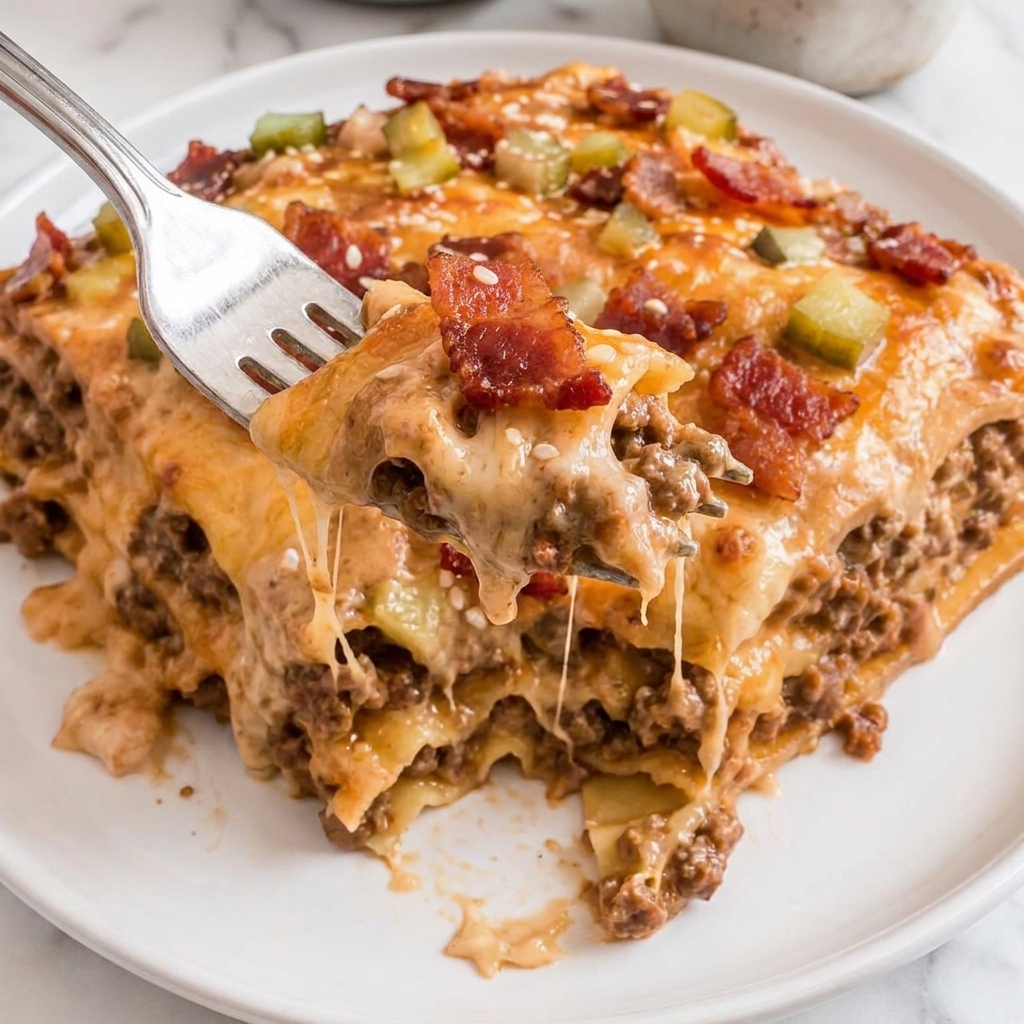
Bacon Cheeseburger Sheet Lasagna layers the familiar flavors of a bacon cheeseburger into a wide, sliceable pasta bake. A thick beef-and-tomato sauce carries ketchup, mustard, Worcestershire, smoked paprika, bacon, and optional pickles, while ricotta, cheddar, and mozzarella give the center a creamy lasagna texture. Baking it covered first allows the no-boil noodles to soften before the cheese browns.
Why a Wide Pan Changes the Texture
A 13-by-18-inch rimmed sheet pan makes thinner layers and creates more browned surface than a deep casserole. A 9-by-13-inch baking dish also works, but the lasagna will be taller and may need a few extra minutes for the noodles in the center to become tender.
The meat sauce must be thick enough to stay between the layers but moist enough to cook the no-boil noodles. Draining the diced tomatoes and simmering the finished sauce for 5 to 8 minutes gives that balance. Covering the pan tightly for the first 25 minutes traps the steam the noodles need.
If you enjoy this recipe, you may also like Marshmallow Sweet Potato Casserole.
Ingredients and Useful Choices
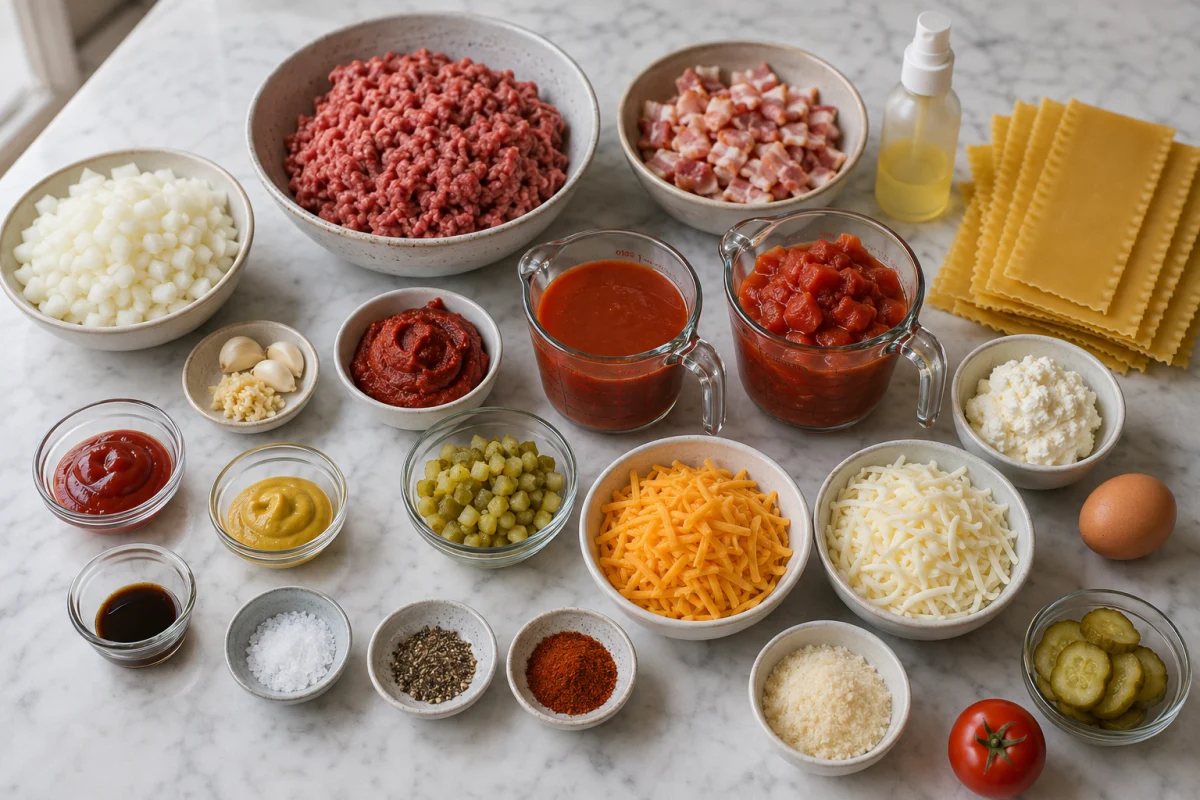
- Ground beef: One pound makes a meaty sauce without overpowering the pasta. Break it into small crumbles so every slice holds together.
- Bacon: Cook the six chopped slices until crisp, then save 1 to 2 tablespoons of drippings for the onion. Reserve half the bacon for the top.
- Yellow onion and garlic: Soften the onion in the bacon drippings before adding garlic. This removes the raw bite and builds a savory base.
- Tomato paste, sauce, and diced tomatoes: Paste deepens the flavor, sauce supplies moisture, and drained tomatoes give texture without watering down the layers.
- Ketchup, yellow mustard, and Worcestershire: These create the recognizable cheeseburger flavor. Use measured amounts so mustard and sweetness remain balanced.
- Salt, black pepper, and smoked paprika: Season after the beef is drained. Bacon, cheese, ketchup, and Worcestershire already contribute salt.
- Dill pickles: Chopped pickles in the sauce are optional. Pat them dry first, and save sliced pickles for serving so they remain crisp.
- Ricotta and egg: The egg firms the ricotta layer just enough for clean slices after the lasagna rests.
- Cheddar and mozzarella: Cheddar supplies burger flavor, while mozzarella gives the smooth melt associated with lasagna. Divide both cheeses before assembly.
- No-boil lasagna noodles: Flat oven-ready sheets are easiest to arrange in a wide pan. Every exposed edge needs sauce or it can remain hard.
- Parmesan: A light amount on top adds savory depth and helps the cheese brown.
For storage details after serving, the USDA leftovers and food safety guidance.
How to Make Bacon Cheeseburger Sheet Lasagna
- Heat the oven and prepare the pan. Set the oven to 375°F and coat a 13-by-18-inch rimmed sheet pan or a 9-by-13-inch baking dish lightly with cooking spray.
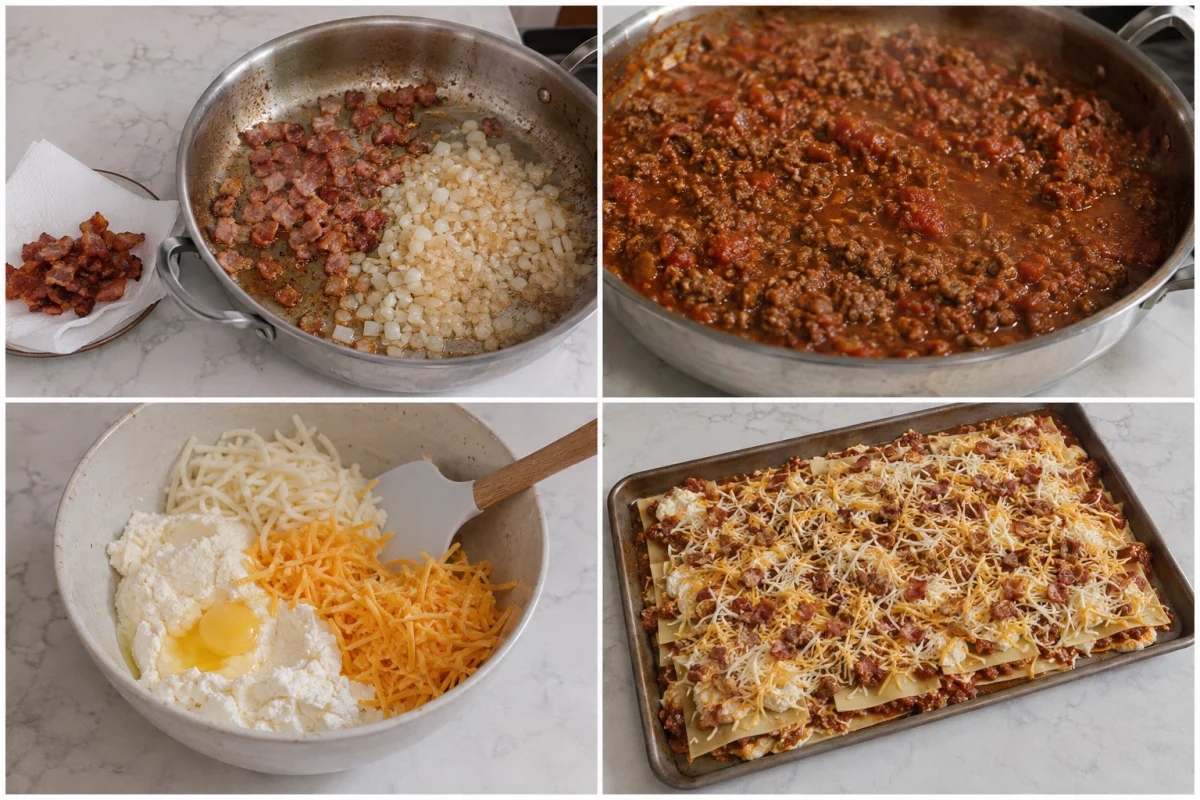
- Crisp the bacon. Cook the chopped bacon over medium heat. Transfer it to paper towels and keep 1 to 2 tablespoons of drippings in the skillet.
- Soften the aromatics. Cook the diced onion in the drippings until translucent. Add the minced garlic and stir only until fragrant.
- Brown and drain the beef. Add the ground beef, break it into fine crumbles, and cook until no pink remains. Drain excess fat from the skillet.
- Build the sauce. Stir in the tomato paste and cook for 1 minute. Add tomato sauce, drained diced tomatoes, ketchup, mustard, Worcestershire, salt, pepper, and smoked paprika.
- Simmer until thick. Cook for 5 to 8 minutes, stirring occasionally. Fold in half the crisp bacon and the optional chopped pickles.
- Mix the ricotta layer. Combine ricotta, egg, 3/4 cup cheddar, and 3/4 cup mozzarella until evenly mixed.
- Start the layers. Spread a thin film of meat sauce over the pan and cover it with no-boil noodles. Keep noodle edges inside the sauce.
- Build the middle. Spread half the ricotta mixture over the noodles and add about one-third of the remaining sauce. Repeat with noodles, remaining ricotta, and another third of sauce.
- Finish the top. Add the final noodles and remaining sauce. Scatter over the remaining cheddar, mozzarella, Parmesan, and bacon.
- Bake covered, then uncovered. Seal tightly with foil and bake for 25 minutes. Remove the foil and bake 12 to 18 minutes more, until the noodles are tender and the top is lightly browned.
- Rest and garnish. Wait 10 minutes before cutting. Add sliced pickles, shredded lettuce, and diced fresh tomato only to portions being served immediately.
If you enjoy this recipe, you may also like Garlic Parmesan Chicken Pasta.
How to Prevent Hard Noodle Edges
No-boil noodles cook by absorbing liquid from the surrounding sauce. Begin with a thin sauce layer, overlap the sheets only slightly, and make sure the final sauce reaches every corner and exposed edge. If the sauce has reduced until very stiff, stir in a few tablespoons of water before layering.
Foil needs to seal the pan rather than sit loosely on top. Trapped steam softens the pasta during the first bake. Remove the cover only after 25 minutes, then use the uncovered time to brown the cheese and finish any slightly firm centers.
Common Problems and Reliable Fixes
- The sauce is watery: Drain the canned tomatoes and beef thoroughly, then simmer until a spoon dragged through the skillet leaves a brief trail.
- The lasagna is greasy: Remove excess bacon drippings before browning the beef and drain the beef after it cooks.
- The noodle edges are hard: Cover every exposed edge with sauce and seal the foil tightly for the first bake.
- The ricotta layer slides: Spread it in small portions, avoid an overly wet sauce, and allow the baked lasagna to rest for the full 10 minutes.
- The top browns too early: Lay the foil back over the pan loosely and continue baking until the center noodles are tender.
- The flavors are too salty: Bacon, Parmesan, Worcestershire, and pickles vary widely. Begin with less added salt and adjust the simmered sauce before assembling.
Serving Ideas and Variations
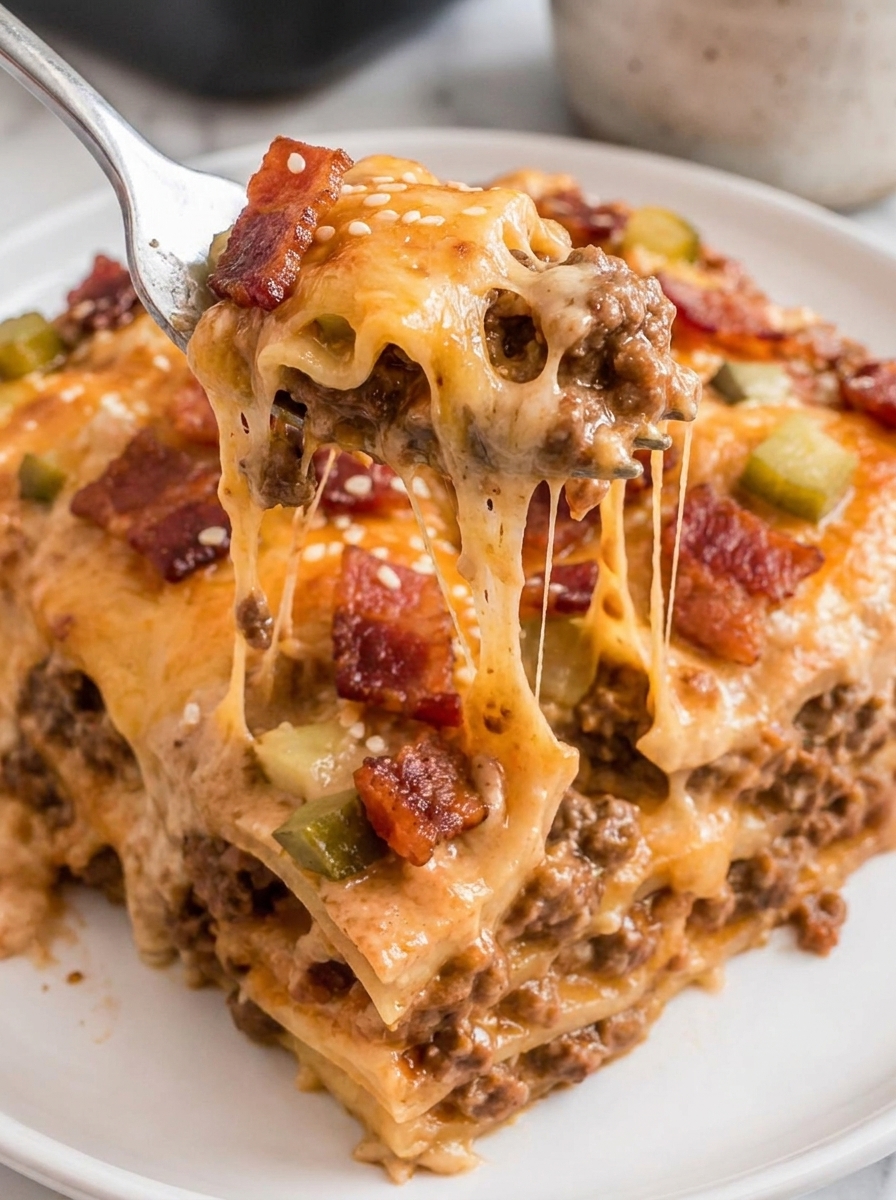
Cut the rested lasagna into wide squares and let each person add pickles, shredded lettuce, and diced tomato. A vinegar-dressed slaw or simple green salad keeps the meal balanced, while oven fries carry the cheeseburger theme further.
For a little heat, add diced pickled jalapeños to the sauce or replace part of the cheddar with pepper Jack. Ground turkey can replace the beef, though it benefits from a teaspoon of oil. If you prefer a classic lasagna finish, leave off the fresh burger toppings and serve the pan with salad and garlic bread.
Make-Ahead, Storage, and Reheating
The meat sauce and cooked bacon can be made two days ahead and refrigerated separately. For a fully assembled make-ahead meal, layer the lasagna one day before baking, cover it tightly, and keep it cold. Let the pan stand while the oven heats and expect the covered stage to take a little longer.
Refrigerate leftovers without the fresh lettuce and tomato for up to four days. Cover a larger portion with foil and reheat at 325°F until hot. For one serving, add a teaspoon of water, cover loosely, and microwave in short intervals. Add new pickles and fresh toppings after reheating.
Conclusion
For tender noodles and clean slices, keep the cheeseburger meat sauce thick but moist, cover every noodle edge, and seal the pan for the first 25 minutes. Finish uncovered for color, then rest the lasagna for 10 minutes and add cool burger toppings only at the table.
Frequently Asked Questions
- → Can Bacon Cheeseburger Sheet Lasagna be made ahead?
Yes. Assemble it one day ahead, cover tightly, and refrigerate. Add a few minutes to the covered bake so the cold center heats through before the foil is removed.
- → Can I use a 9-by-13-inch baking dish?
Yes. The layers will be deeper than they are on a sheet pan. Keep the dish covered until the center noodles are tender and allow extra baking time if needed.
- → Do no-boil noodles need to be soaked first?
No. They soften in the sauce while the covered pan traps steam. Make sure every noodle surface and edge touches sauce.
- → How should leftovers be reheated?
Refrigerate without fresh lettuce or tomato for up to four days. Cover and reheat at 325°F, or microwave an individual portion with a spoonful of water until hot.