

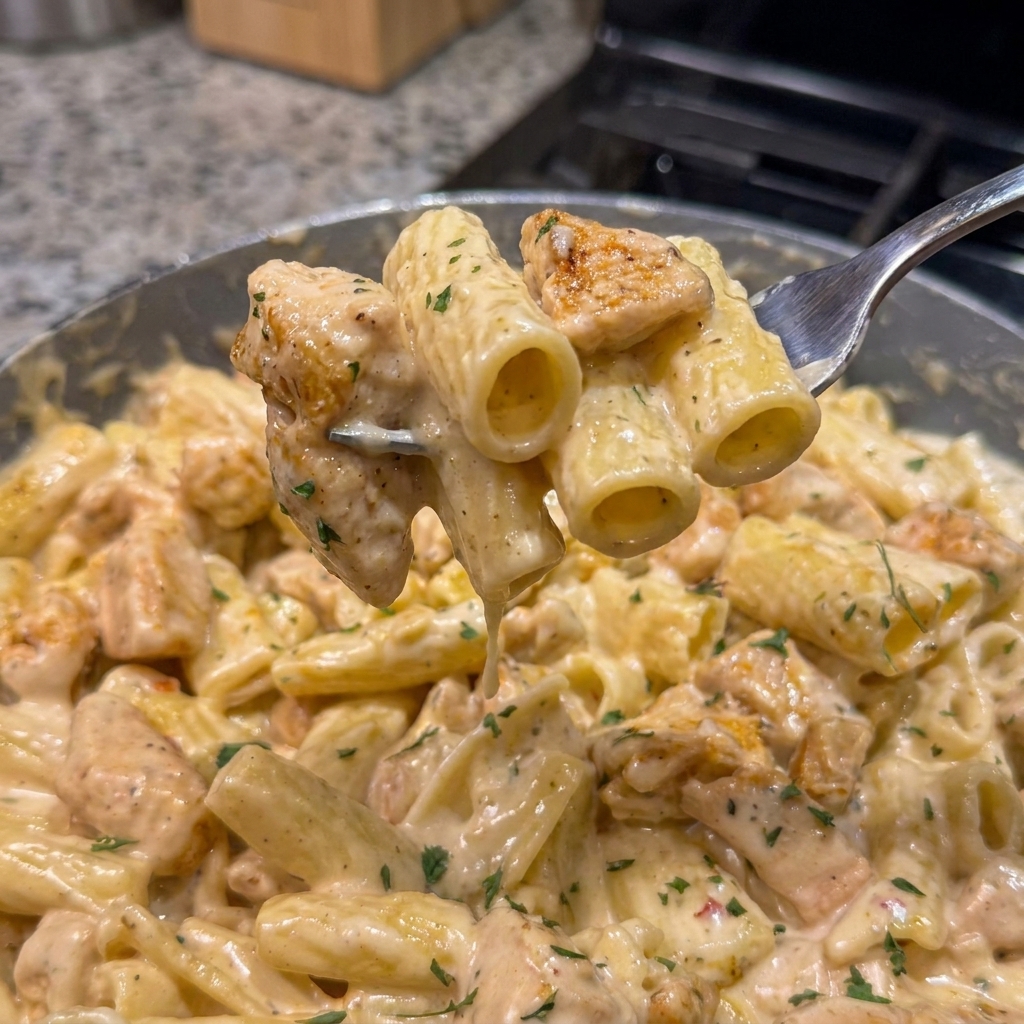
Garlic Parmesan chicken pasta is a full skillet dinner built around tender chicken, ziti, and a creamy sauce with enough body to cling to every tube. The sauce starts with butter, onion, garlic, and flour, then uses both heavy cream and whole milk for a balance of richness and pourability.
The cooking order matters more than any special technique. Brown the chicken first, build the sauce in the same skillet, and return the chicken only after the dairy has thickened. Keeping the heat controlled protects the garlic and gives the roux time to lose its raw flour taste.
Ingredients for a Balanced Parmesan Sauce
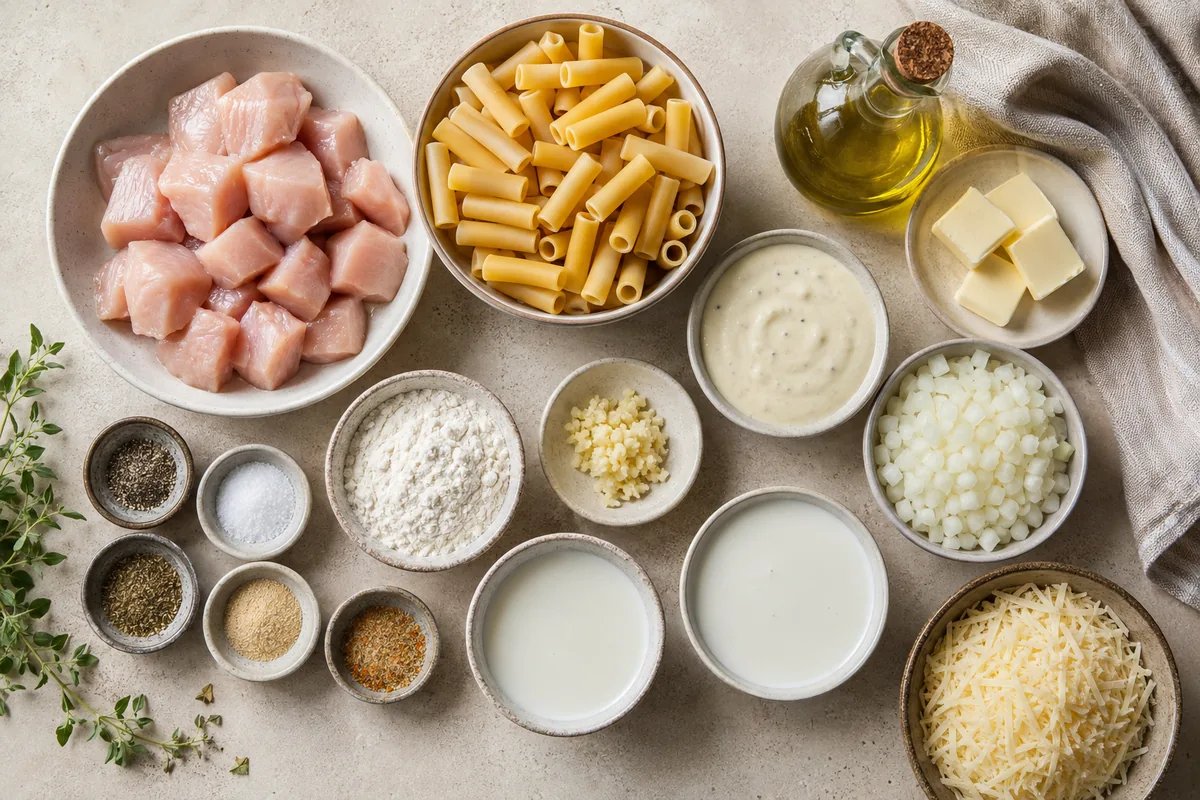
Two diced chicken breasts make this substantial enough for dinner, while two cups of uncooked ziti give the sauce plenty of hollow surfaces to fill. Seasoned salt, onion powder, garlic powder, and Italian seasoning flavor the chicken before it reaches the skillet.
- Chicken breasts: Cut them into similar bite-size cubes so all pieces reach 165°F at the same time.
- Ziti: Cook it to the package's al dente stage and drain; do not rinse away the starch that helps the sauce cling.
- Butter, onion, and garlic: These form the aromatic base. Low heat keeps the butter and garlic from browning too quickly.
- All-purpose flour: Three tablespoons thicken the dairy. Cook it for 2 to 3 minutes after stirring it into the butter.
- Heavy cream and whole milk: Equal amounts create a sauce that is rich without becoming paste-like.
- Parmesan garlic sauce: One cup adds concentrated savory flavor. Use a smooth prepared sauce you enjoy; no particular brand is required.
- Shredded Parmesan: Add freshly shredded cheese for the smoothest melt and adjust salt only after tasting.
If you enjoy this recipe, you may also like Copycat Taco Bell Mexican Pizza.
How to Make Garlic Parmesan Chicken Pasta
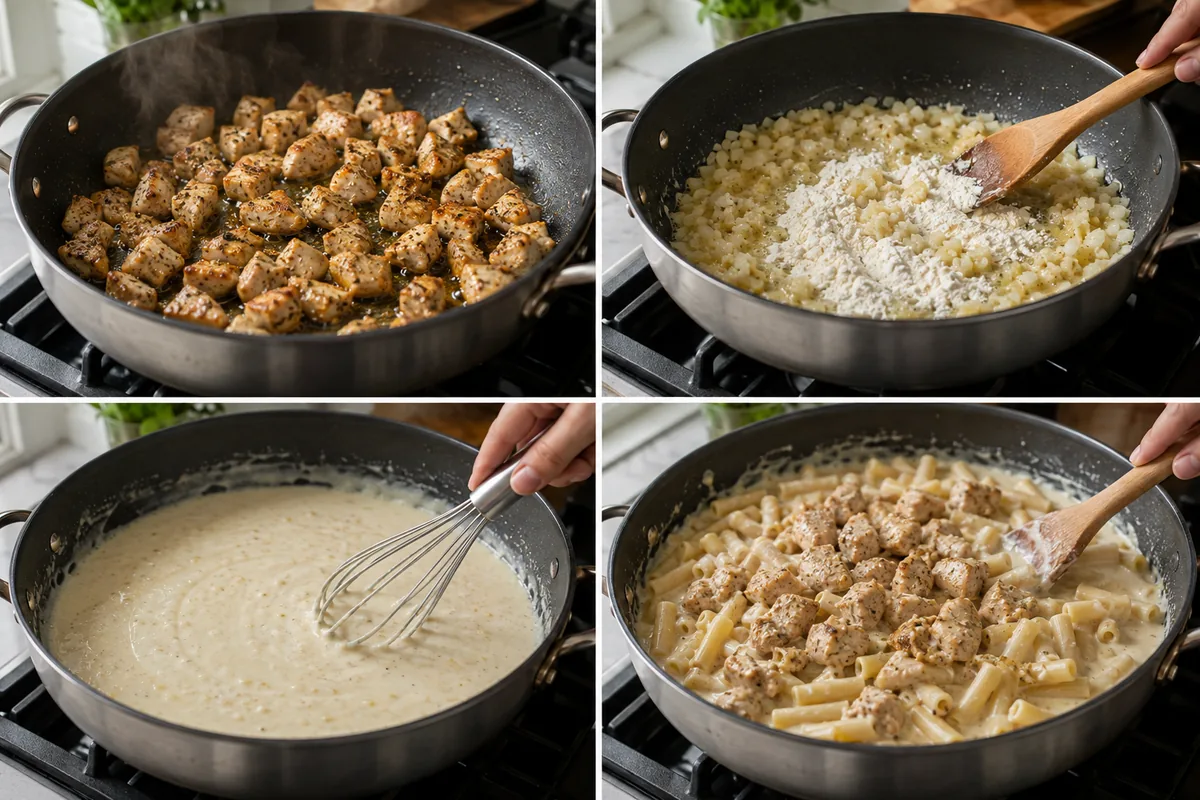
- Cook the ziti. Boil the pasta according to its package directions. Drain it and set it aside while the sauce is finished.
- Brown the chicken. Heat one tablespoon of olive oil in a large skillet over medium-high heat. Add the diced chicken and season it with seasoned salt, onion powder, garlic powder, and Italian seasoning. Cook for 7 to 8 minutes, until browned and 165°F in the center, then transfer it to a clean plate.
- Soften the aromatics. Reduce the heat to low. Add three tablespoons of butter and the diced yellow onion to the same skillet. Cook for 3 to 4 minutes, then stir in the minced garlic for 30 seconds.
- Cook the roux. Sprinkle in the flour and stir until no dry patches remain. Continue cooking and stirring for 2 to 3 minutes.
- Add the dairy slowly. Pour in the heavy cream and whole milk in a steady stream while whisking. Keep whisking for 2 to 3 minutes, until the mixture begins to thicken.
- Finish the sauce. Stir in the Parmesan garlic sauce and shredded Parmesan. Taste before adding salt and black pepper.
- Combine. Fold in the drained ziti and cooked chicken. Toss over low heat until everything is evenly coated and hot.
For storage details after serving, the USDA leftovers and food safety guidance.
A Smooth Sauce Starts with the Roux
The flour needs to be completely coated in butter before the liquid goes in. This separates the starch particles and helps prevent lumps. Two to three minutes of cooking is enough to remove the raw taste without darkening the roux; this is meant to remain a pale cream sauce.
Add the cream and milk gradually and whisk into the corners of the skillet. The sauce will look loose at first and thicken as it heats. Stop short of making it overly thick because Parmesan, pasta, and a few minutes of standing will tighten it further.
If you enjoy this recipe, you may also like Queso Taco Rice.
Chicken That Stays Tender
Even cubes are the first safeguard against dry chicken. Pat the pieces dry before seasoning so they sear rather than steam, then spread them in a single layer in the hot oil. Leave them undisturbed briefly to develop color before turning.
Remove the chicken as soon as the thickest pieces register 165°F. It will warm again when it returns to the sauce, so leaving it in the skillet throughout the roux and sauce stages would only overcook it. Use a clean plate after the raw chicken has touched the pan.
Control the Final Consistency
If the sauce is thicker than you prefer, stir in whole milk a few tablespoons at a time. If it is too thin, let it simmer gently before adding the pasta, or fold in a small amount of additional shredded Parmesan off the heat. Avoid adding a large quantity of cheese at once.
Pasta continues to absorb liquid as it sits. For a dish that will wait before serving, keep the sauce slightly looser and reserve a little milk for reheating. Freshly grated Parmesan at the table adds flavor without forcing more cheese into the skillet.
Serving Ideas and Practical Variations
Serve the pasta hot with a crisp green salad, roasted broccoli, or steamed green beans. A bright vegetable side cuts through the cream sauce, while garlic bread makes sense when a more generous comfort-food meal is the goal.
Ziti can be replaced by penne or rigatoni in the same quantity. Boneless chicken thighs also work, though they may need a little longer to reach the safe internal temperature. For a vegetable addition, fold in cooked spinach or peas at the end rather than crowding the pan while the chicken browns.
Troubleshooting Before You Serve
- Lumpy sauce: Add the dairy slowly while whisking continuously, and press any remaining flour pockets against the side of the pan.
- Grainy cheese: Lower the heat and use finely, freshly shredded Parmesan rather than adding cheese during a vigorous boil.
- Dry pasta: Loosen the skillet with small additions of whole milk and serve promptly.
- Flat flavor: Taste after the prepared sauce and Parmesan are added, then adjust salt, black pepper, or Italian seasoning.
- Pale chicken: Dry the pieces, preheat the skillet, and avoid piling them into a crowded layer.
Storage and Reheating
Cool leftovers promptly and refrigerate them in a sealed container for up to three days. Reheat gently in a covered skillet over low heat or in short microwave intervals. Add a splash of milk before heating and stir once or twice to restore the sauce.
Freezing is possible, but cream sauces can separate and pasta softens after thawing. For the best texture, freeze the cooked chicken separately and make fresh pasta and sauce. If freezing the finished dish, thaw it overnight in the refrigerator and reheat slowly rather than boiling it.
Conclusion
Brown evenly diced, well-seasoned chicken to 165°F and remove it before building a pale onion-garlic roux in the same skillet. Whisk in the cream and milk gradually, melt the Parmesan over gentle heat, and fold in the ziti and chicken only when the sauce is smooth.
Frequently Asked Questions
- → How do I keep the Parmesan sauce from becoming grainy?
Use low heat after adding the dairy, shred the Parmesan finely, add it gradually, and do not let the finished sauce boil hard.
- → Can I use a different pasta shape?
Yes. Penne or rigatoni are good substitutes because their hollow shapes hold the sauce. Cook the chosen pasta according to its own package directions.
- → What temperature should the chicken reach?
The thickest pieces should reach an internal temperature of 165°F. Remove them from the skillet at that point so they stay tender.
- → How can I loosen leftover garlic Parmesan pasta?
Add a splash of whole milk and reheat slowly, stirring as the sauce relaxes. Avoid high heat, which can separate the dairy.