


Baked Teriyaki Salmon is built from the recorded ingredient list and ordered method below. Read every quantity as a working part of the recipe: measuring the listed ingredients, using the stated equipment, and keeping the recorded sequence gives the clearest path to the intended texture and finish. This editorial guide preserves the source facts while explaining the practical cues that help a home cook work carefully and confidently.
Baked Teriyaki Salmon Ingredients
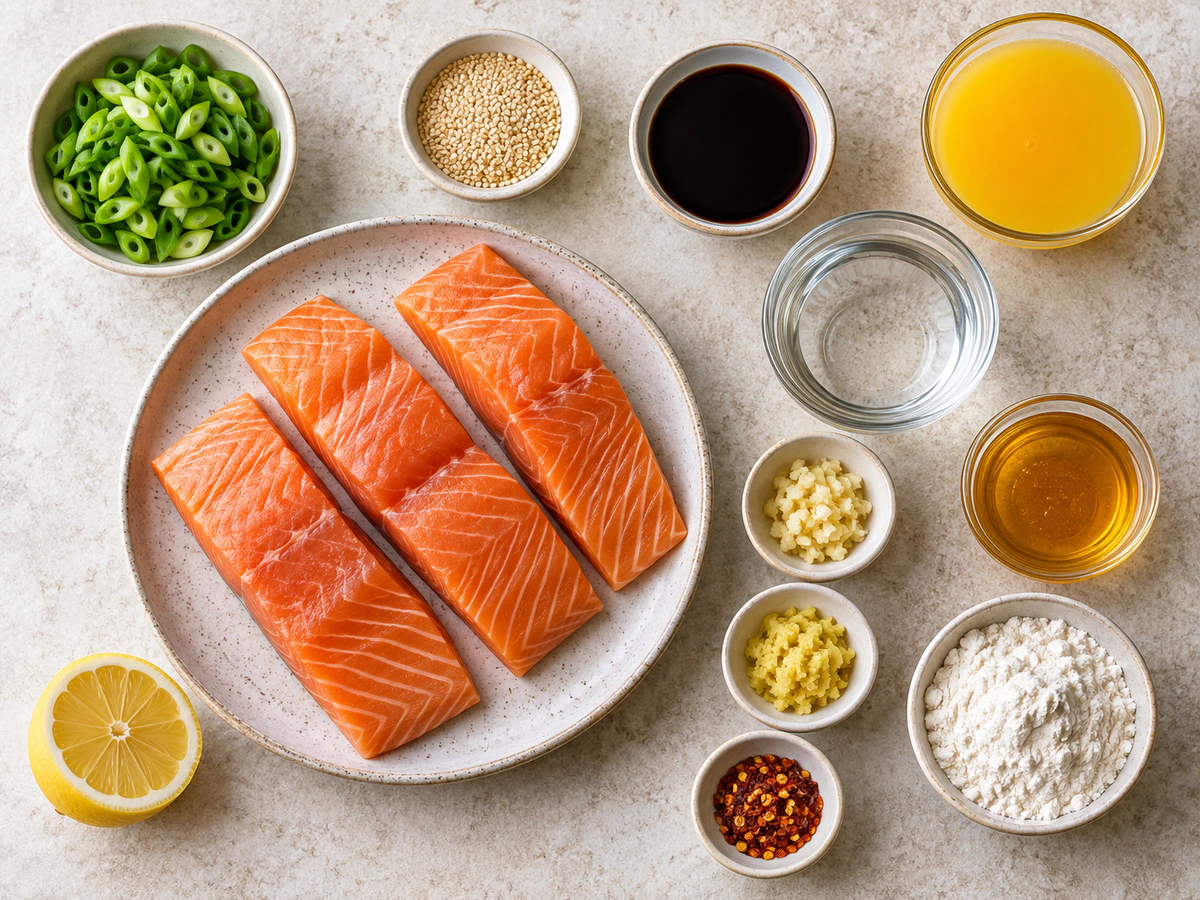
Main: 4 skinless salmon fillets (about 6 ounces each); 1 green onion, sliced; 1 tablespoon sesame seeds.
Teriyaki Sauce: ⅓ cup low-sodium soy sauce; ¼ cup fresh orange juice; 2-3 tablespoons water; 2 tablespoons honey; 2 cloves garlic, minced; 1 tablespoon minced fresh ginger; 1 teaspoon chili flakes; ½ lemon, juiced; ½ tablespoon gluten-free flour.
If you enjoy this recipe, you may also like High Protein Broccoli Cheddar Soup.
How to Make Baked Teriyaki Salmon
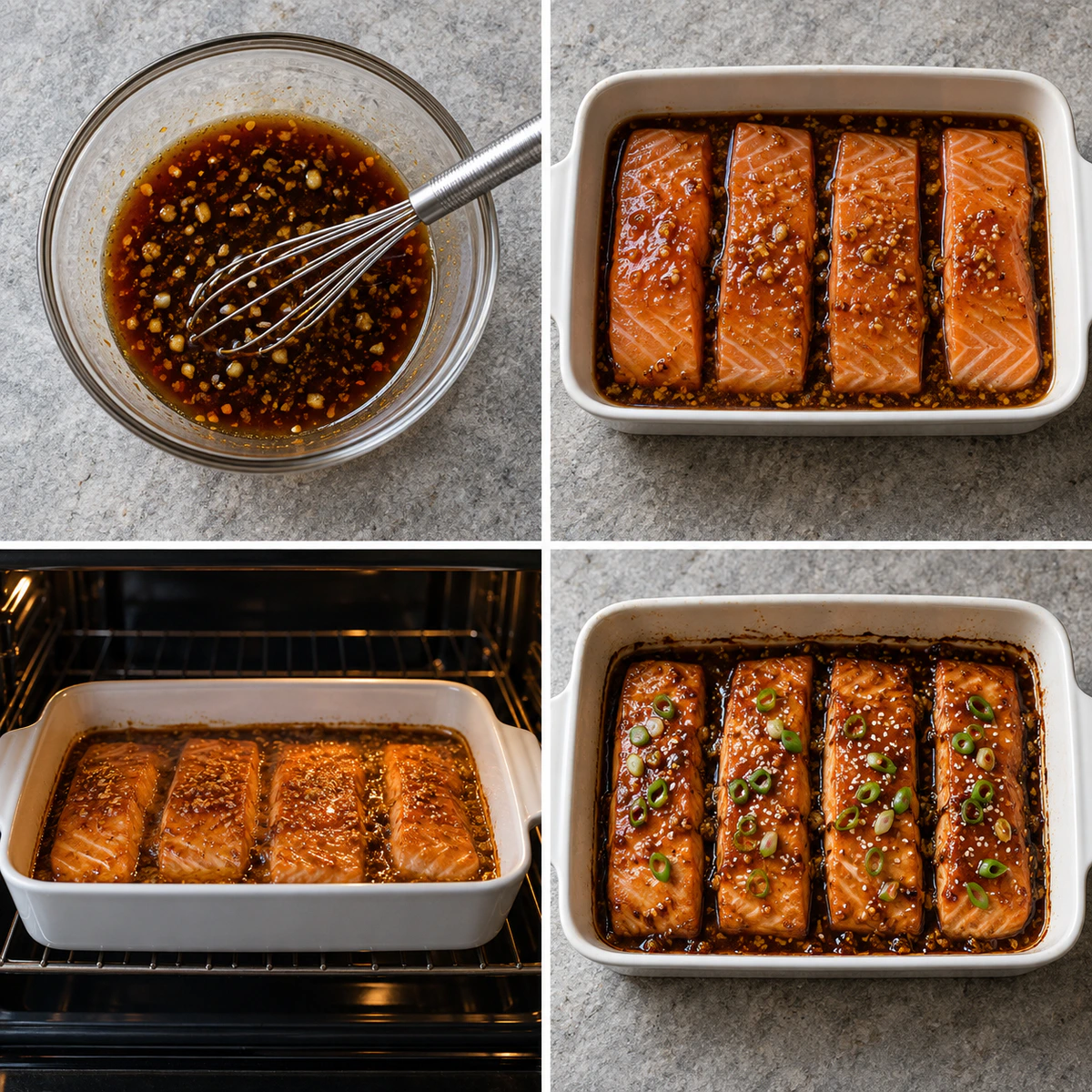
- Preheat: Preheat oven to 400°F
- Make Sauce: Whisk together all teriyaki sauce ingredients in a small bowl until well combined
- Prepare Salmon: Place salmon fillets in a greased baking dish and pour sauce over them
- Bake: Bake for 12-15 minutes until salmon is cooked through and flakes easily
- Finish: Spoon thickened sauce over salmon and garnish with sesame seeds and sliced green onion
For storage details after serving, the USDA leftovers and food safety guidance.
Recipe-Specific Method Notes
For Baked Teriyaki Salmon, preheat the oven to 400°F. Whisk the low-sodium soy sauce, orange juice, water, honey, garlic, ginger, chili flakes, lemon juice, and gluten-free flour smooth. Put the skinless salmon fillets in a greased baking dish and pour sauce over them. Bake 12–15 minutes, until the fish is cooked through and flakes easily. Spoon the thickened sauce over the salmon and finish with sesame seeds and sliced green onion.
If you enjoy this recipe, you may also like Easy Asian Cabbage Stir-Fry.
Why the Order Matters
The order matters because it separates preparation, cooking, sauce-building, pasta handling, and finishing into deliberate stages. Set out every measured ingredient before starting and use the visual cue named in each instruction alongside its stated time. Keep components separate until the method tells you to join them. Avoid adding familiar extras or changing the order merely for convenience: a sauce can thicken differently, chicken can overcook, and cheese can become grainy when the sequence is altered. The source recipe remains the controlling reference for every temperature, timing cue, and cooking step.
Critical Visual and Timing Cues
Work with clean bowls, measured portions, and the named pan or pot so the method is repeatable. Keep perishables appropriately chilled until they are needed. Brown meat only as directed, let liquids reach the stated boil or simmer stage, and lower heat before gradual dairy additions. Check texture and colour at the point named by the source instead of relying on an arbitrary clock. When pasta is folded into sauce, stir steadily and gently so it remains intact and coated. These small decisions preserve the intended balance without introducing unrecorded ingredients or substitutions.
Serving and Storage
Serve the finished recipe in the form and temperature directed by the source. Keep leftovers covered in a suitable container and refrigerate promptly after cooling. The verified ingredient list and quantities remain the reference point; substitutions should be limited to options the original recipe explicitly permits. Use sensible food-safety handling for chicken, beef, dairy, and cooked pasta. Present each portion neatly and enjoy it promptly for the best texture, because creamy sauces and cooked pasta are at their most appealing just after the final combine stage.
A Steady Workflow
Read the full method before heating the pan, measure every recorded amount, and arrange the listed equipment nearby. Keep the written recipe beside you throughout cooking. The source controls its sequence, temperatures, timing, and resting cues. A steady workflow makes it easier to protect tender chicken, avoid overcooked pasta, and add dairy at the right temperature. Clean tools as you work, return unused ingredients to proper storage, and check the finished dish against the final cue rather than adding a new step.
Finishing Check
Before serving, make one calm final check: the pasta should be coated rather than dry, the sauce should match the thickness described by the method, and any meat should be fully cooked through as directed. Use a broad spoon or spatula to combine rather than crushing pasta shapes. Keep the cooking surface clear, scrape browned flavour only when the written method calls for it, and serve promptly after the final stage. This careful finish respects the recipe record and gives every portion the same balanced sauce, seasoning, and texture.
Recipe Safeguard
Keep the recipe card visible while cooking and resist treating listed measurements as rough suggestions. The difference between a simmer and a full boil, or between a gradual addition and an all-at-once addition, can change the finished texture. Measure the full ingredient groups before heating the pan, use the stated cookware, and reserve only what the method explicitly identifies. If the recipe includes a rest, stand, broil, or off-heat stage, it is a deliberate part of the result. This simple discipline protects the verified recipe without inventing another technique.
Image and Recipe Integrity
The new ingredient photograph and chronological 2×2 process photograph support the written method without replacing it. The site’s original hero remains unchanged. The earlier repeated body image is excluded, while a separate original final-serving image is retained as the third body image. Direct responsive WebP copies preserve aspect ratio and orientation without crop, upscaling, image transformations, or a Worker deployment.
Recorded Recipe Tips
- Can use skin-on or skinless salmon fillets
- Honey can be substituted with brown sugar, maple syrup, or agave
- Best with fresh ginger, garlic, and lemon juice

Conclusion
Baked Teriyaki Salmon makes 4 servings in 25 recorded minutes. Preserve every listed quantity, temperature, timing cue, and ordered instruction for the intended result. Use the written sequence and final visual cues as the guide.
Frequently Asked Questions
- → How many servings does Baked Teriyaki Salmon make?
It makes 4 servings and serves 4.
- → How long does Baked Teriyaki Salmon take?
The recipe records 10 minutes of preparation, 15 minutes of cooking, and 25 minutes total.
- → How do I keep Baked Teriyaki Salmon consistent?
Measure every listed ingredient, follow the ordered instructions, and use the stated visual, temperature, and timing cues rather than adding unrecorded changes.
- → Why should I preserve the written method?
The sequence is part of the verified recipe: it guides texture, food safety, and the intended finish without changing the original formula.