

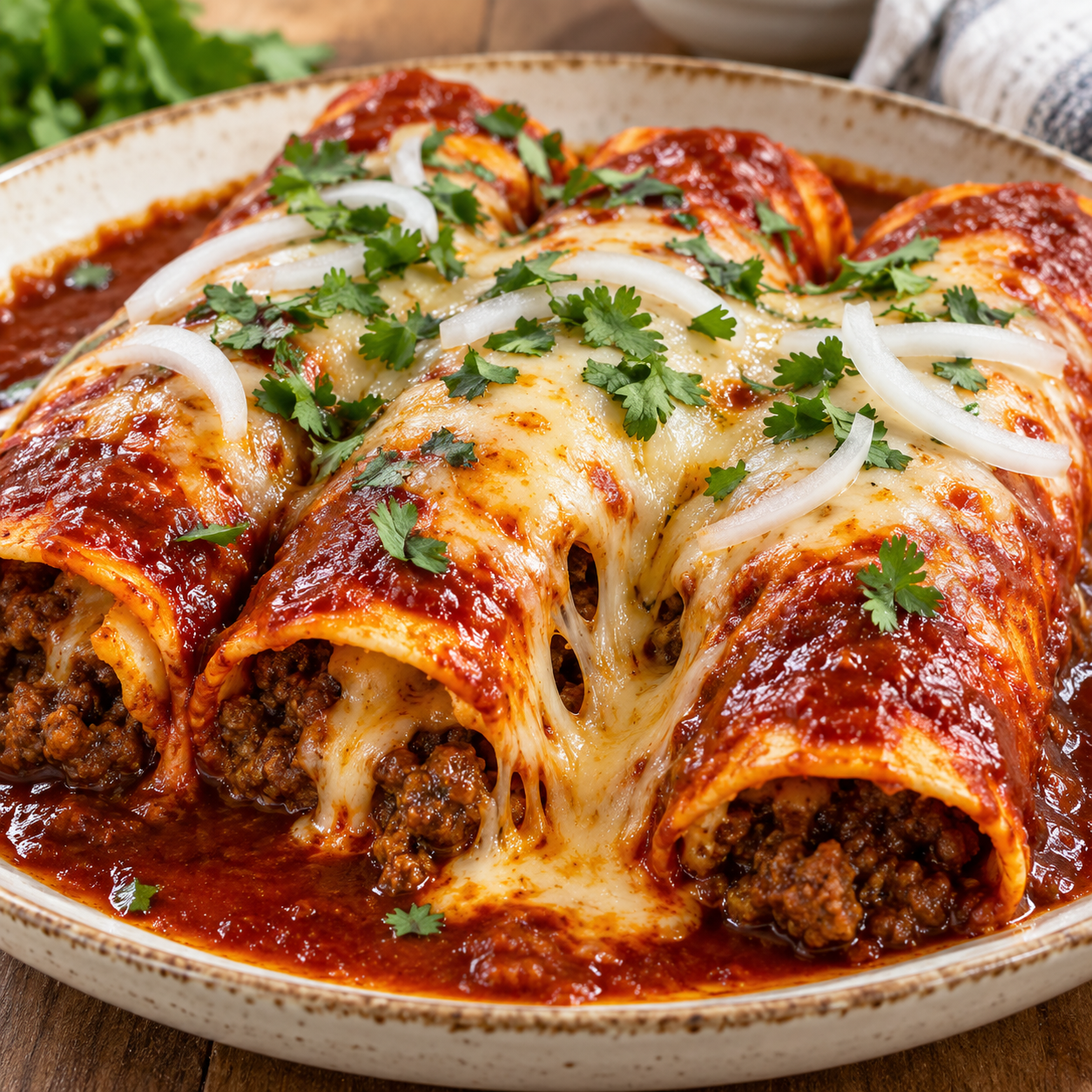
Beef enchiladas with red sauce are the kind of dinner that quiets a table. Seasoned ground beef gets rolled into warm corn tortillas, bathed in a deep red chile sauce, and baked under melted cheese until the edges turn a little crisp.
This version builds the sauce from dried ancho and guajillo chiles instead of a canned shortcut. It takes an extra twenty minutes, and the payoff is a sauce with real depth, smoky and a little fruity, not just hot.
It works well as a weeknight project if you start the sauce while the beef browns. Leftovers hold up nicely in the fridge, so this is also a good dish to make once and eat from for a few days.
Ground Beef, Dried Chiles, And Cheese
Good enchiladas start with dried chiles, not a jar of sauce. Look for ancho and guajillo chiles that are still pliable, and buy corn tortillas fresh enough to fold without cracking.
If you enjoy this recipe, you may also like Loaded Bacon Cheeseburger Tacos.
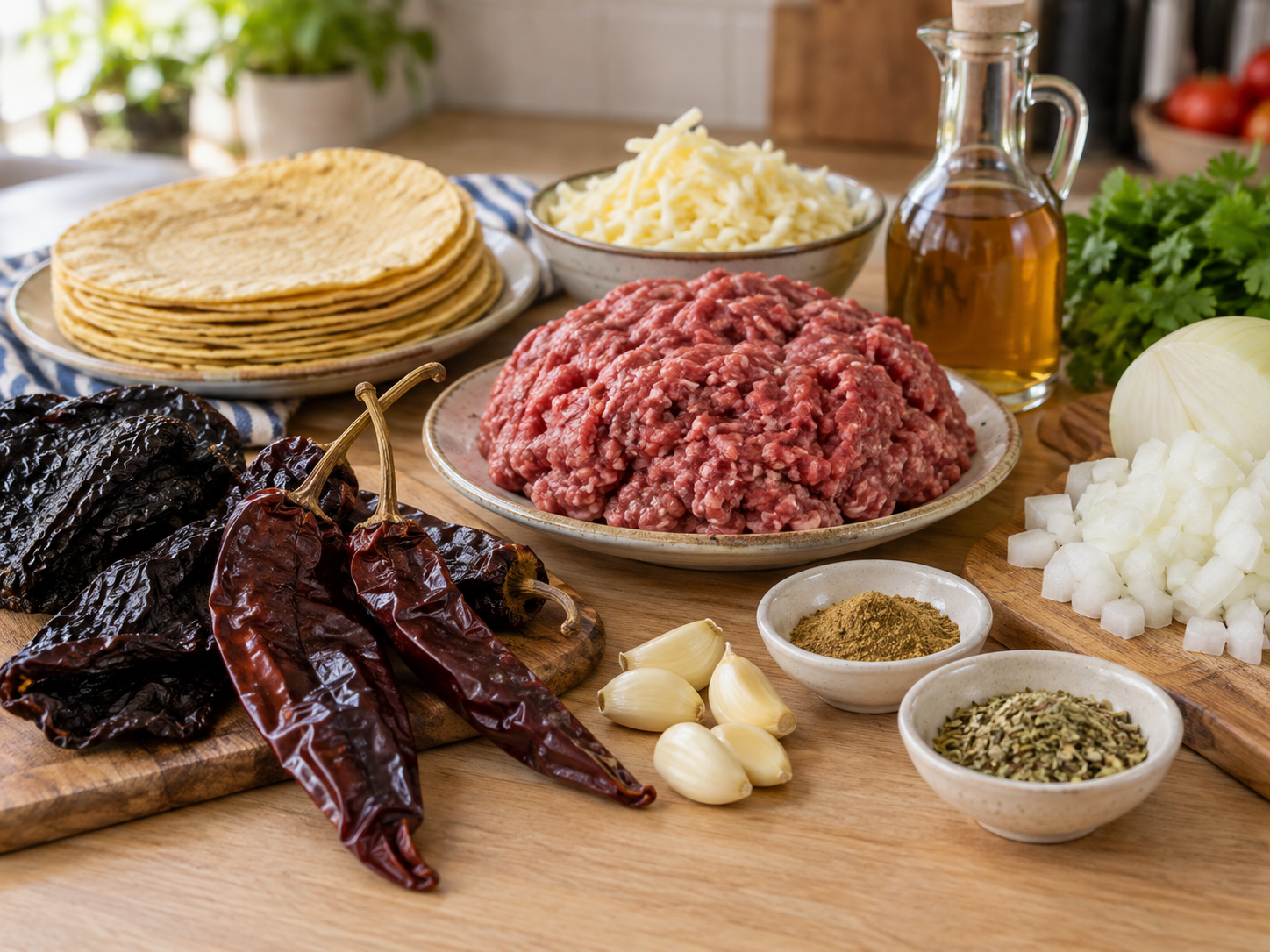
- Dried ancho chiles. Mild and slightly sweet, they build the base color and body of the sauce.
- Dried guajillo chiles. Add brightness and a gentle tang that keeps the sauce from tasting flat.
- Ground beef. An 80/20 blend stays juicy in the filling without turning greasy.
- White onion. Cooked into both the sauce and the filling for sweetness and depth.
- Garlic. Rounds out the sauce and seasons the beef.
- Ground cumin and dried oregano. The backbone spices of a Tex-Mex red sauce.
- Corn tortillas. Hold up to the sauce better than flour and stay tender once baked.
- Shredded Mexican-blend cheese. Melts into the sauce and binds the whole dish together.
- Apple cider vinegar. A small splash that brightens the sauce's deep, roasted flavor.
For storage details after serving, the USDA leftovers and food safety guidance.
From Dried Chiles To Baked Enchiladas
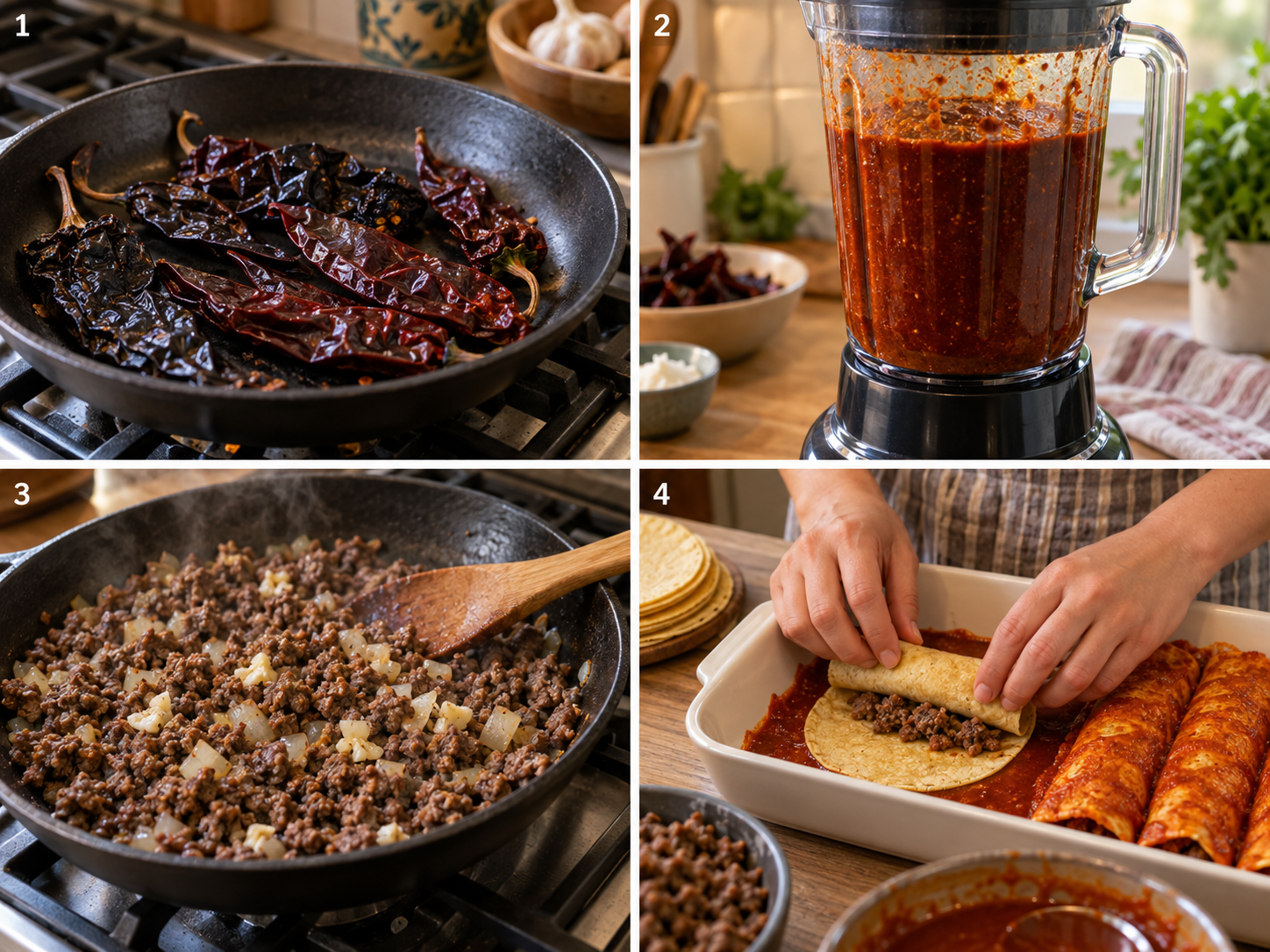
- Toast the chiles. Wipe the ancho and guajillo chiles clean, then toast them in a dry skillet over medium heat for about 30 seconds per side until fragrant and slightly puffed, not blackened.
- Soak and blend. Cover the toasted chiles with hot broth and let them soften for 15 minutes, then blend them with the broth, onion, garlic, cumin, oregano, and vinegar until smooth.
- Simmer the sauce. Warm the oil in a saucepan, add the blended sauce, and simmer for 10 to 15 minutes, stirring now and then, until it thickens slightly and coats a spoon.
- Brown the beef. Cook the ground beef with onion and garlic in a skillet over medium-high heat, breaking it up as it goes, until no pink remains and it reaches 160°F on a thermometer.
- Warm and fill the tortillas. Heat the tortillas briefly so they bend without cracking, dip each one in the sauce, then fill with the beef and a pinch of cheese and roll snugly.
- Sauce, top, and bake. Arrange the rolled tortillas seam-side down in a baking dish, pour over the remaining sauce, scatter with the rest of the cheese, and bake at 375°F (190°C) for 18 to 20 minutes until bubbling.
If you enjoy this recipe, you may also like Cheesy Chicken Stuffed Shells.
Why Dried Chiles Change The Sauce
Most red enchilada sauce shortcuts start with a can of commercial sauce or a spoonful of chili powder stirred into broth. Toasting whole dried chiles and blending them yourself gets you somewhere better. Ancho chiles bring a raisin-like sweetness, guajillo chiles add a sharper, almost tangy edge, and together they taste far deeper than powder alone.
The dry toast step matters more than it looks. Thirty seconds per side wakes up the chile's natural oils and rounds out any bitterness, but a few seconds too long turns that same oil acrid. Watch for the chiles to puff slightly and smell smoky-sweet, then pull them immediately. If a few spots blacken, trim them away before soaking so the sauce doesn't pick up a burnt edge.
Getting The Beef Safely Done
Ground beef is the one ingredient here that leaves no room for guessing. Because grinding mixes any surface bacteria throughout the meat, the FDA's safe food handling guidance calls for cooking ground beef to a minimum internal temperature of 160°F, checked with a food thermometer rather than by color. Browned meat can still look pink near the center, so a thermometer reading is the only reliable check.
Break the beef into small, even pieces as it cooks so every piece gets equal heat, and drain excess fat once it's done rather than before so the meat doesn't dry out. If you're scaling the recipe up for a crowd, cook the beef in two batches instead of crowding one pan, since an overloaded skillet steams the meat instead of browning it and can leave cooler spots in the center.
Keeping Tortillas From Cracking
Corn tortillas are sturdier than flour once baked, but straight from the fridge they crack the second you try to roll them. The fix is a quick, direct heat before they touch the sauce. Warm each tortilla for about ten seconds per side in a dry skillet, or stack them between two damp paper towels and microwave the whole stack for thirty seconds.
Dipping the warmed tortilla briefly in the red sauce before filling does two things at once. It seasons the tortilla itself, so every bite tastes like sauce and not just plain corn, and the moisture keeps the edges pliable while you roll. Work with a few tortillas at a time so they don't cool and stiffen again before you get to them.
Easy Swaps That Still Work
This recipe is flexible once you understand what each ingredient is doing. Shredded rotisserie chicken or pulled pork both work in place of ground beef, just season them the same way with cumin and a little of the red sauce so they don't taste bland against it.
For a vegetarian version, swap the beef for a mix of black beans and sauteed mushrooms, which hold up well against the chile sauce's weight. Flour tortillas can replace corn if that's what you have, though they turn softer and a little more fragile once baked. Monterey Jack, a mild cheddar, or a Mexican cheese blend all melt well here. For more heat, add a minced chipotle to the sauce while it simmers.
Make It Ahead Or Freeze It
Beef enchiladas are a good make-ahead dish because the components hold their texture well. You can assemble the rolled tortillas in the baking dish, cover tightly, and refrigerate for up to a day before pouring on the sauce and baking as directed.
For longer storage, university extension guidance on freezing prepared casseroles notes that frozen prepared meals hold their best quality for about three months, and recommends adding any cheese topping fresh rather than before freezing so it doesn't turn soggy. Assemble without the final cheese layer, wrap tightly in freezer-safe packaging, and freeze flat. Thaw overnight in the refrigerator, then top with cheese and bake as usual, adding a few extra minutes since the dish starts out colder.
Storing And Reheating What's Left
Leftover enchiladas keep their flavor well, which makes this a good recipe to double. Once the baking dish has cooled, move leftovers into an airtight container and refrigerate. Extension food safety guidance recommends using refrigerated leftovers within three to four days and reheating them to an internal temperature of 165°F, which you can check with the same thermometer used for the beef.
A low oven, around 350°F, reheats enchiladas more evenly than a microwave and keeps the tortillas from turning rubbery. Cover the dish loosely with foil for the first ten minutes so the cheese doesn't dry out, then uncover for the last few minutes to let the top brown again.
Frequently Asked Questions
- → Can I use flour tortillas instead of corn tortillas?
Yes, though corn tortillas hold up better once baked in sauce. Flour tortillas turn softer and can tear more easily, so roll them a little looser and handle the baking dish gently.
- → Why do my tortillas keep cracking when I roll them?
Cold tortillas crack because they're stiff. Warm each one in a dry skillet for a few seconds per side, or steam a stack of them in a damp towel, until they bend easily before you fill and roll.
- → Can I make this dish vegetarian?
Yes. Replace the ground beef with a mix of black beans and sauteed mushrooms, seasoned the same way with cumin and a little of the red sauce so the filling doesn't taste flat.
- → How long do leftover enchiladas keep, and how should I reheat them?
Refrigerate leftovers in an airtight container and eat them within three to four days. Reheat in a 350°F oven, covered loosely with foil, until the center reaches 165°F on a food thermometer.
- → Can I freeze beef enchiladas before baking?
Yes. Assemble them without the final layer of cheese, wrap tightly, and freeze flat for up to about three months. Thaw overnight in the fridge, add the cheese, and bake as directed with a few extra minutes.
- → What goes well with beef enchiladas?
Mexican rice, refried or black beans, and a simple salad of shredded lettuce with lime work well alongside. A dollop of sour cream and a scatter of chopped cilantro round it out.