

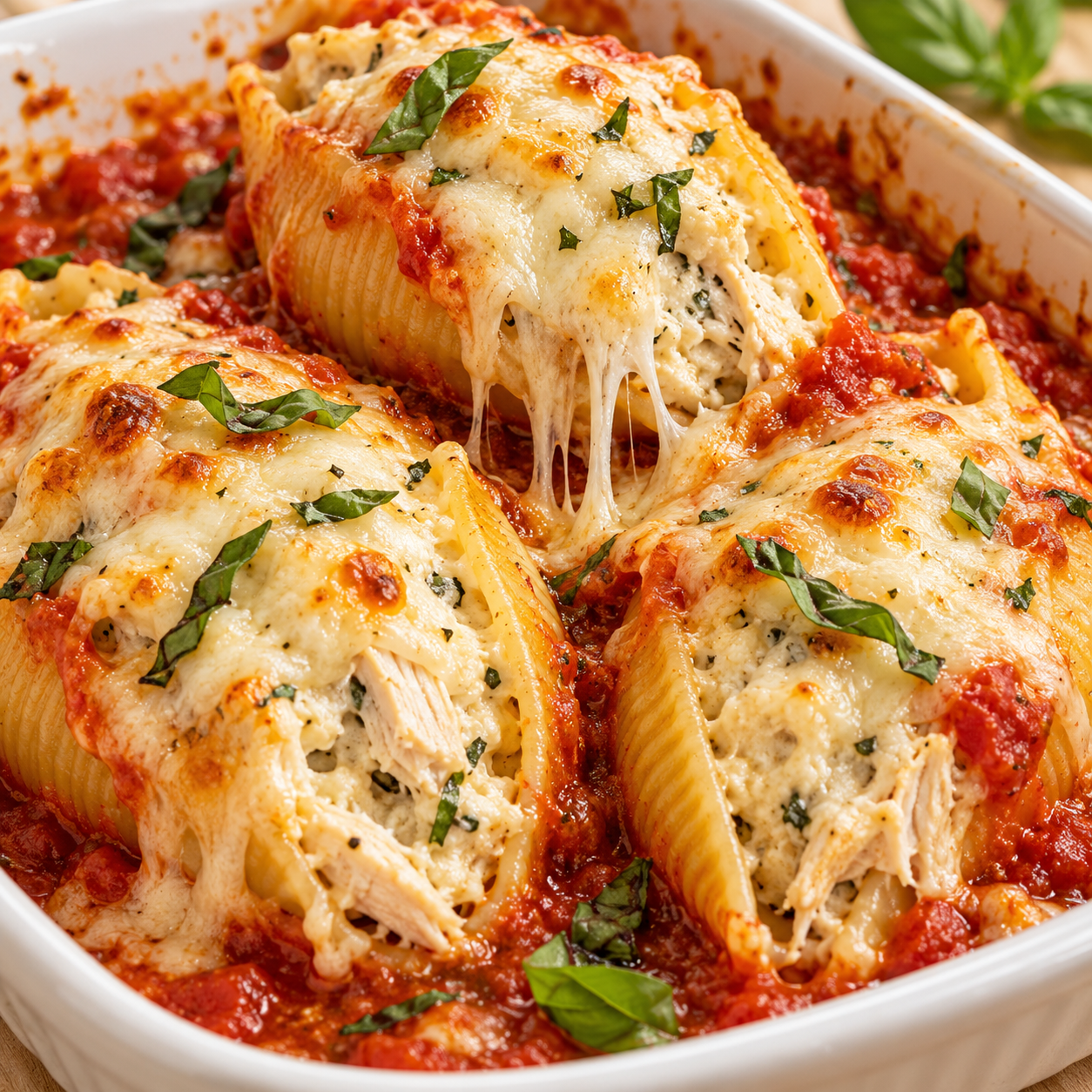
Stuffed shells are the dinner you make when you want something that looks like it took all afternoon but mostly just takes patience with a piping bag. This version swaps the usual spinach-only ricotta filling for shredded chicken, so every shell eats more like a full meal and less like a side.
It's the kind of dish that disappears fast at a family table. The shells hold a creamy chicken and three-cheese filling, get blanketed in marinara, and come out of the oven bubbling at the edges with a layer of melted mozzarella on top.
Make the filling while the pasta cooks and the whole thing comes together faster than you'd expect for something this rich.
What Goes Into Each Shell
Pull the chicken and ricotta out of the fridge about twenty minutes before you start so the filling mixes smooth instead of lumpy. A rotisserie chicken is the fastest route to the two cups of shredded meat this recipe needs, though any cooked, shredded chicken breast or thigh works.
If you enjoy this recipe, you may also like Cajun Surf and Turf Stuffed Peppers.
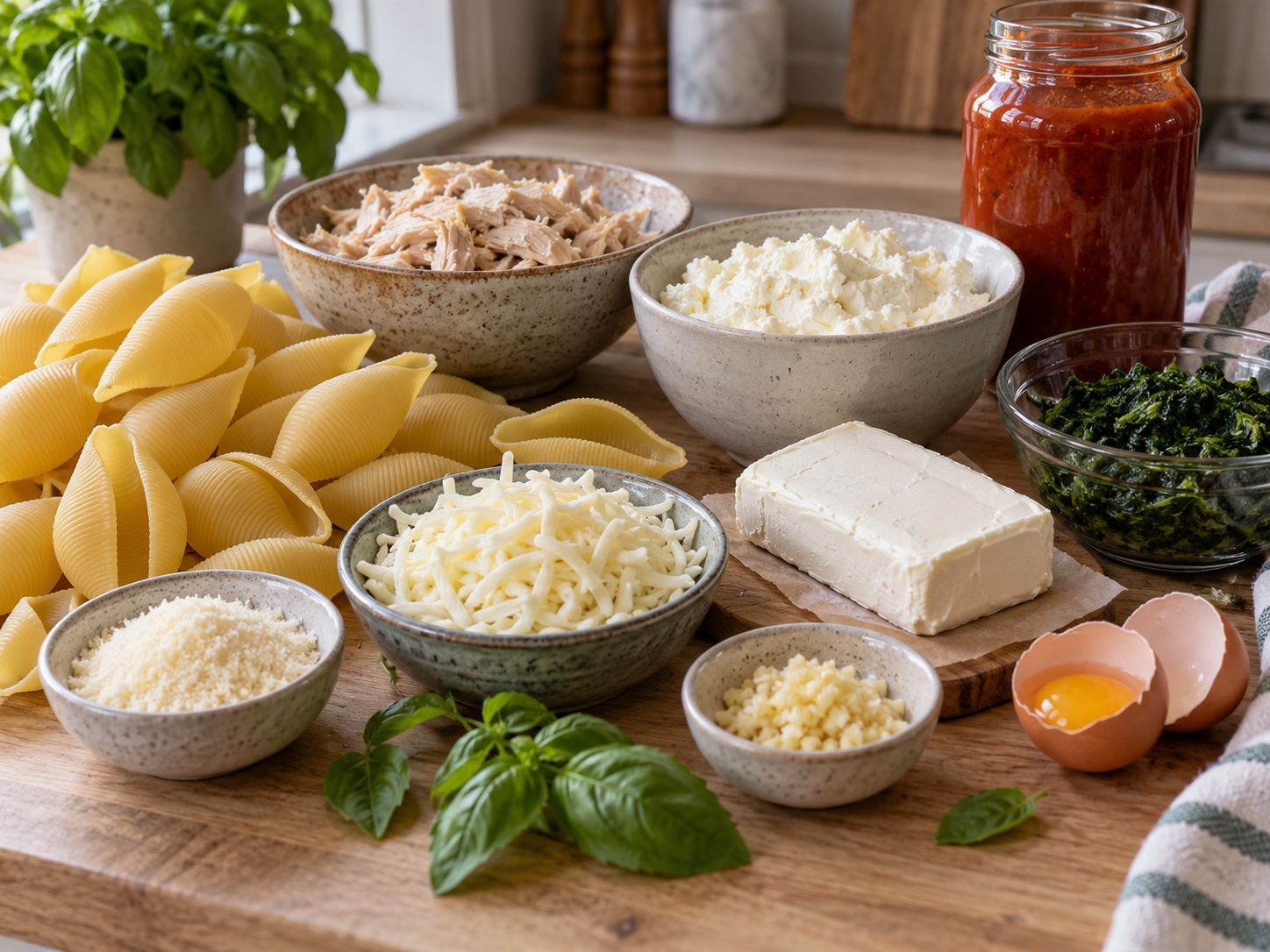
- Jumbo pasta shells. The edible vessel for the filling, holds its shape once baked without turning mushy if you undercook it slightly first.
- Shredded chicken. Turns this from a side dish into a full dinner, and rotisserie chicken is the fastest route to tender, well-seasoned meat.
- Ricotta and cream cheese. Build the creamy base of the filling, cream cheese adds richness and helps everything hold together when sliced.
- Mozzarella and Parmesan. Melt into gooey pockets inside the filling and form the golden, bubbling top layer.
- Frozen spinach. Adds color and a mild vegetable note, squeeze it very dry or it waters down the filling.
- Marinara sauce. Keeps the shells moist in the oven, and its acidity balances all the rich cheese.
- Garlic and Italian seasoning. Season the filling itself, since the chicken and ricotta alone are mild.
For storage details after serving, the USDA leftovers and food safety guidance.
From Pot To Baking Dish
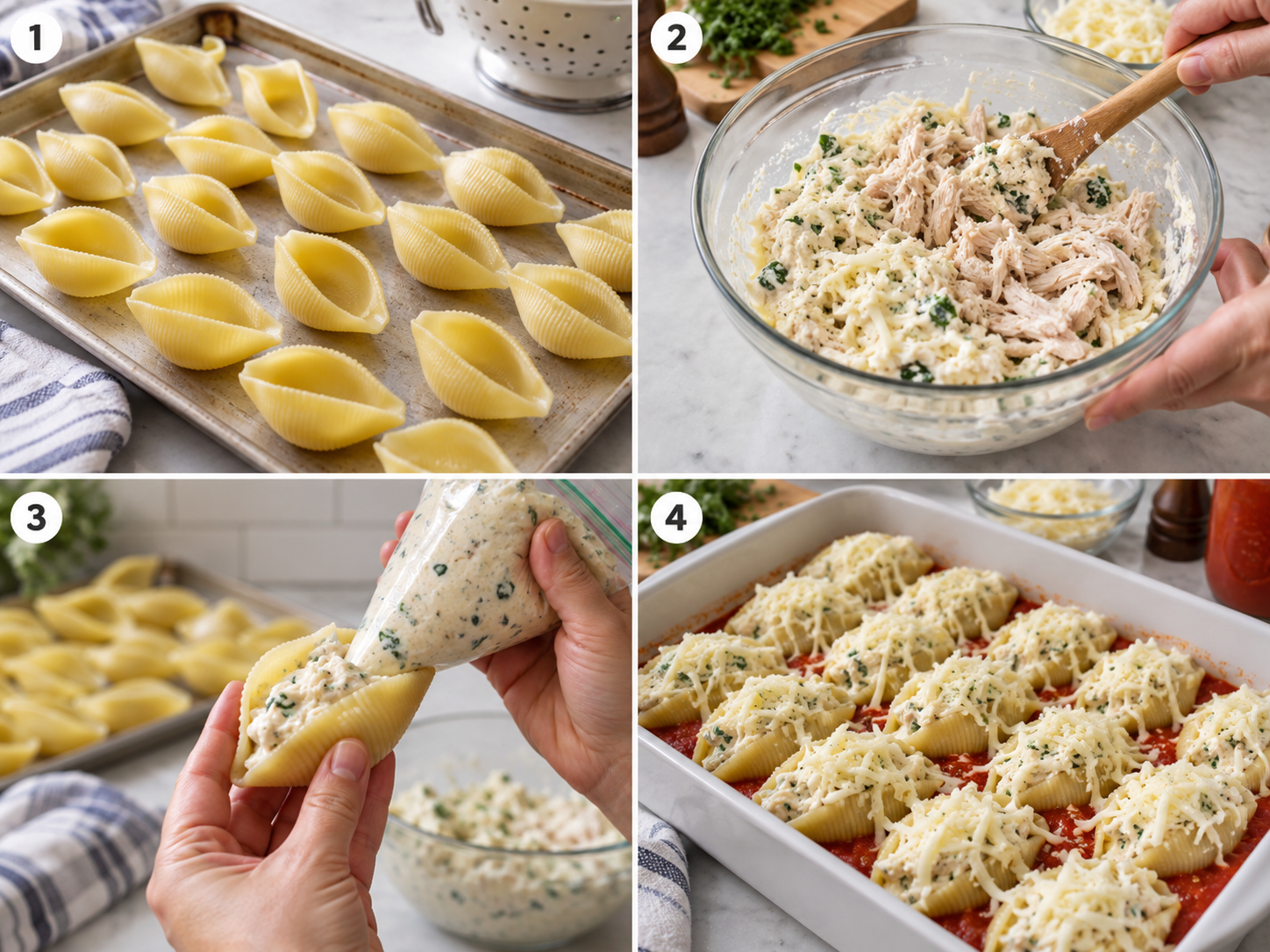
- Boil the shells. Bring a large pot of well-salted water to a boil and cook the jumbo shells about 2 minutes less than the package directions, until just pliable but still firm. Drain and spread them on a baking sheet in a single layer so they cool without sticking together or tearing.
- Mix the chicken filling. Beat the ricotta and cream cheese together in a large bowl until smooth. Stir in the shredded chicken, mozzarella, Parmesan, spinach if using, egg, garlic, Italian seasoning, salt, and pepper until evenly combined.
- Sauce the baking dish. Stir the marinara with the chicken broth to loosen it slightly, then spread about half of it over the bottom of a 9x13-inch baking dish so the shells don't catch on the hot pan.
- Stuff the shells. Spoon the filling into a large zip-top bag, snip off one corner, and pipe about 2 to 3 tablespoons into each cooled shell. Arrange them filling-side up in a single layer over the sauce.
- Top and cover. Spoon the remaining sauce over the stuffed shells, then sprinkle with the remaining mozzarella and Parmesan. Cover the dish tightly with foil.
- Bake until bubbly. Bake at 350°F (175°C) for 25 minutes covered, then remove the foil and bake 10 to 15 minutes more until the cheese is melted and the sauce bubbles at the edges. The chicken is already fully cooked, so this step is about heating the filling through.
- Rest and serve. Let the dish rest for 5 to 10 minutes before serving so the filling sets slightly. Scatter torn basil over the top if using.
If you enjoy this recipe, you may also like Bacon Beer Cheese Burger.
Why Shells Come Out Underdone
Pull the shells before they hit fully al dente, about 2 minutes short of the package time. They still have a full bake ahead of them, covered in sauce and cheese, and that extra oven time finishes the cooking. Shells boiled all the way through turn soft and tear the moment you try to fill them, and a torn shell leaks filling into the sauce instead of holding it.
Undercooking slightly also means less starch washes off into the sauce, so the marinara stays a little thicker instead of watering down. Lay the drained shells in a single layer on a sheet pan rather than piling them in a colander. Stacked shells steam each other and stick together, and peeling them apart tears the delicate edges you need intact for stuffing.
The Piping Bag Shortcut
Spooning filling into two dozen floppy shells by hand gets messy fast. A large zip-top bag with one corner snipped off turns into a makeshift piping bag that fills each shell quickly, without smearing filling all over the open edges where it would scorch in the oven.
Hold the shell steady with one hand and pipe from the wide opening toward the pointed end so the filling reaches every pocket. Aim for a generous 2 to 3 tablespoons per shell. Underfilled shells look sparse once baked and dry out faster, since there's less cheese and chicken left to hold moisture. A real piping bag or a cookie scoop works just as well if you have one you like better.
Marinara, Alfredo, Or Both
This recipe leans on marinara because its acidity cuts through all that cheese, but a half-and-half mix with jarred alfredo makes the dish noticeably richer if that's what you're after. Pour straight alfredo over the shells instead of marinara, or layer a thin ribbon of both so you get pockets of each in every scoop.
Avoid using alfredo as the only sauce on the bottom of the dish though. It's thick enough to scorch against the hot pan before the shells finish baking, so keep at least some marinara or a splash of broth under the first layer. A pinch of crushed red pepper in the marinara is a simple way to balance the richness without turning the whole dish spicy.
Keeping The Chicken Safe
The chicken filling in this recipe should already be fully cooked before it goes into the shells. The safe minimum internal temperature for poultry is 165°F, checked with a food thermometer rather than by color, since pale meat near the bone doesn't always mean it's undercooked and a hint of pink doesn't always mean it isn't done.
Baking the stuffed shells is about melting cheese and warming the filling through, not cooking raw chicken, so don't skip pre-cooking it to save time. If you're shredding a rotisserie bird, that work is already done. If you're poaching or baking chicken breast specifically for this dish, check it with a thermometer in the thickest part before shredding.
Make Ahead And Storage
Stuffed shells are a genuinely good make-ahead dinner. Assemble the whole dish up to a day in advance, cover it tightly, and refrigerate it unbaked. Add 5 to 10 minutes to the covered bake time since it's going into the oven cold.
Once baked, leftovers should go into the refrigerator within two hours and are good for 3 to 4 days in an airtight container. For longer storage, freeze unbaked stuffed shells in the sauce for up to 3 months. Thaw them in the fridge overnight before baking, or add extra covered time straight from frozen.
Swaps That Still Work
No ricotta in the fridge? Full-fat cottage cheese blended briefly until smooth is a close stand-in and adds a touch more protein. Swap the chicken for the same amount of shredded turkey, or cooked Italian sausage if you want a different direction entirely.
The spinach is there for color and a mild vegetable note, so leave it out if you'd rather keep the filling purely cheese and chicken, or swap in finely chopped sauteed mushrooms. Gluten-free jumbo shells hold up fine here too, just watch them closely while boiling since they can go from firm to mushy faster than wheat pasta.
Frequently Asked Questions
- → Can I use rotisserie chicken for the filling?
Yes, rotisserie chicken is the easiest option and works great here. Pull about 2 cups of meat from the breast and thigh, shred it finely, and skip cooking chicken separately.
- → Can I assemble the shells ahead of time?
Yes. Stuff and sauce the shells up to a day ahead, cover tightly, and refrigerate unbaked. Add 5 to 10 minutes to the covered bake time since the dish starts cold.
- → Can I freeze stuffed shells?
Freeze the assembled, unbaked dish in its sauce for up to 3 months. Thaw it in the refrigerator overnight, then bake as directed, or bake straight from frozen with extra covered time until the center is hot throughout.
- → What can I use instead of ricotta?
Full-fat cottage cheese blended until smooth is the closest substitute and adds a little extra protein. Mascarpone works too, though the filling turns out richer and slightly sweeter.
- → How do I keep the pasta shells from tearing?
Boil them about 2 minutes less than the package time so they stay sturdy, then cool them in a single layer on a sheet pan instead of a stacked colander. Fill them while they're still slightly warm and pliable.
- → Can I make this gluten-free?
Yes, swap in gluten-free jumbo pasta shells, which are widely available. Watch them closely while boiling since they tend to go from firm to soft more quickly than wheat pasta.
- → How long do leftovers keep?
Refrigerate leftovers within two hours of baking and eat them within 3 to 4 days. Reheat portions until the center reaches 165°F, covered, in the oven or microwave.