


Big Mac tacos bring burger-night flavors into a compact, crisp-edged tortilla. Ground beef is pressed directly onto each small tortilla, cooked beef-side down for deep browning, then flipped so the tortilla can toast. Cheddar, lettuce, pickles, and a creamy burger sauce complete the familiar combination.
The technique is fast, but timing matters: prepare the sauce and toppings first because the tacos are best served immediately. A hot skillet gives the beef a caramelized surface, while moderate heat allows it to cook safely without burning the tortilla after the flip.
Ingredients for Big Mac Tacos
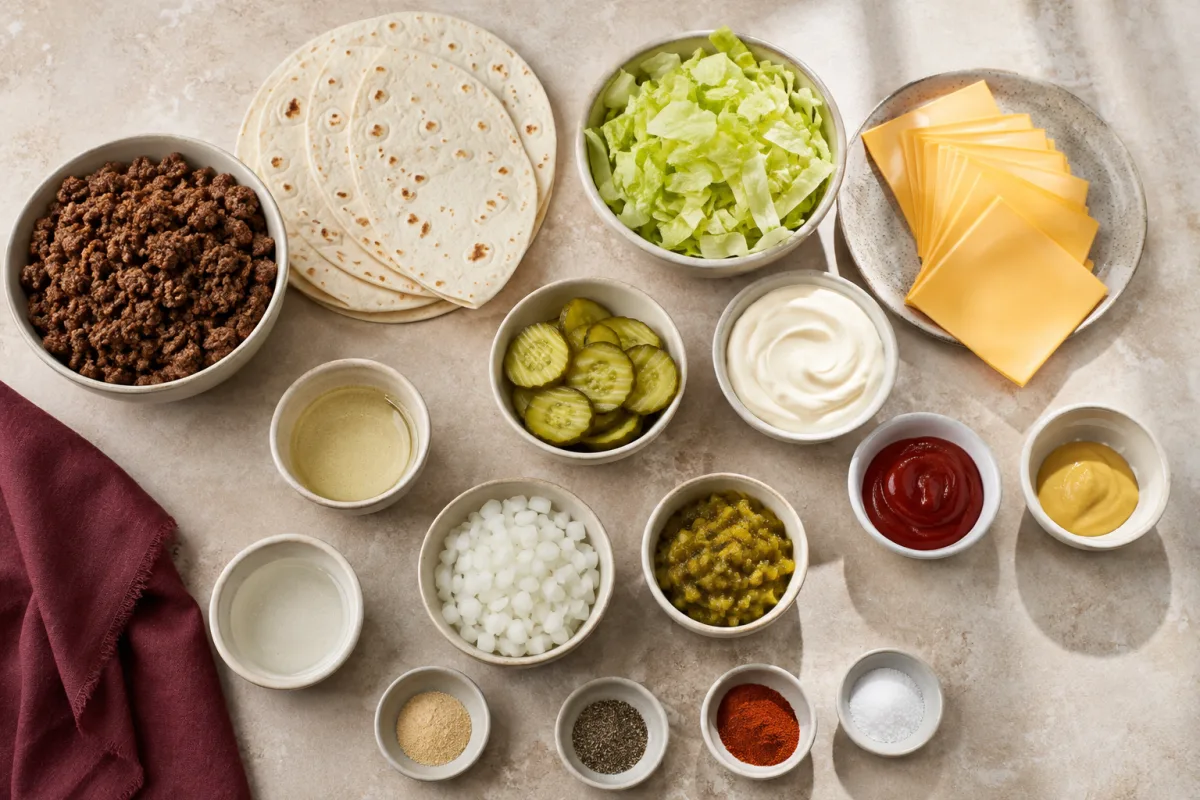
The tacos use 1 pound 80/20 ground beef, 8 to 10 mini tortillas, 10 cheddar slices, 1 cup finely chopped lettuce, 1 cup sliced pickles, salt, and a little cooking oil. Soft flour tortillas are easy to press and fold, but small flexible tortillas of another type may also work if they make firm contact with the beef.
For the sauce, gather 1 cup mayonnaise, 3 tablespoons ketchup, 1 tablespoon Dijon mustard, 2 tablespoons finely diced yellow onion, 1 tablespoon each relish, white vinegar, and garlic powder, 1 teaspoon each black pepper and smoked paprika, plus salt. Mixing it first gives the onion and seasonings time to settle into the creamy base.
If you enjoy this recipe, you may also like Classic Knorr Spinach Dip.
How to Make Big Mac Tacos
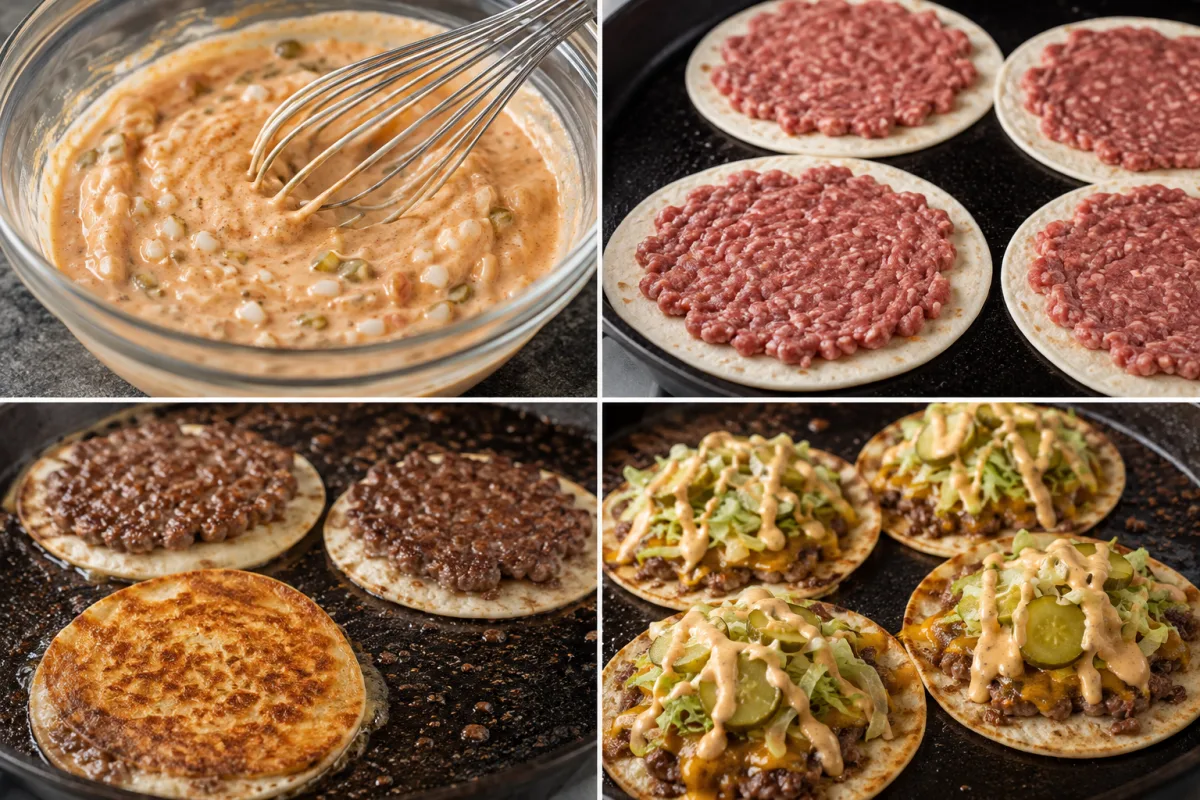
- Mix the sauce. Stir mayonnaise, ketchup, Dijon, onion, relish, vinegar, garlic powder, pepper, paprika, and salt until uniform. Cover and chill for 30 minutes.
- Prepare the toppings. Chop the lettuce, slice the pickles, and separate the cheese so assembly moves quickly.
- Press the beef. Spread 2 to 3 tablespoons raw ground beef in a thin, even layer across one side of each tortilla, reaching close to the edges. Season lightly with salt.
- Cook beef-side down. Heat a lightly oiled skillet, then reduce to medium-low. Place one or two tortillas beef-side down and cook 4 to 5 minutes.
- Check doneness. The beef should be browned, cooked through, and reach 160°F.
- Flip and crisp. Turn each taco, add cheddar over the hot beef, and cook until the tortilla is lightly crisp.
- Finish. Add lettuce, pickles, and sauce, fold, and serve at once.
For storage details after serving, the USDA leftovers and food safety guidance.
Choose Ground Beef with Enough Fat
An 80/20 blend browns well and stays flavorful in the thin layer used here. Very lean beef can dry out before a crust forms, while much fattier meat may leave the tortilla greasy. Keep the beef refrigerated until it is time to press it onto the tortillas.
Divide the package visually before starting so each taco receives a similar amount. Two to three tablespoons creates a thin layer that can cook in a few minutes. A thick mound takes longer, cooks unevenly, and makes the folded taco difficult to eat.
If you enjoy this recipe, you may also like Crispy Beef Cones.
Press the Beef to the Edges
Lay a tortilla flat and use clean fingertips or the back of a spoon to spread the meat. Extend it close to the rim because beef contracts as it cooks. Keep the thickness consistent, especially around the center, and wash hands and utensils immediately after handling raw beef.
Season after pressing so salt covers the broad surface evenly. Prepare only as many tacos as can go into the skillet soon; raw meat should not sit at room temperature. Place the prepared tacos on a clean tray that will not be reused for cooked food.
Control the Skillet Heat
Begin with a properly heated pan to start browning, then use medium-low heat so the thin beef layer has time to cook through. Press gently with a spatula during the first few seconds to maintain full contact. Avoid moving the taco repeatedly; uninterrupted contact produces a better crust.
When the beef releases from the skillet and looks browned around the edges, check the temperature and flip. The tortilla side needs much less time. Watch closely because small tortillas can shift from golden to overly dark quickly, particularly after several batches have heated the pan.
Make the Burger Sauce Ahead
The sauce combines creamy, tangy, sweet, and smoky elements. Dice the onion very finely so it distributes throughout rather than falling out in large pieces. Stir until no streaks of ketchup or mustard remain, then refrigerate for about 30 minutes.
Taste before serving and adjust salt carefully because pickles, relish, and cheddar contribute their own saltiness. For neat tacos, spoon the sauce into a squeeze bottle or use a small spoon to apply a narrow ribbon instead of covering the entire filling.

Layer Toppings for the Best Texture
Add cheddar immediately after flipping so the residual heat softens it. If needed, cover the skillet for only a few seconds, then remove the lid before the tortilla traps steam. Lettuce and pickles should go on after the taco leaves the heat so they remain cool and crisp.
Keep the toppings modest enough for the tortilla to fold without breaking. A line of pickles rather than a high pile provides acidity in every bite. Finish with sauce last, then serve before the hot beef wilts the lettuce.
Batch Cooking and Serving
Use a large skillet or griddle if it allows the tacos to lie completely flat without touching. Otherwise, work in pairs and keep the uncooked ingredients refrigerated between batches. Finished tacos can rest briefly on a wire rack in a low oven, although fresh from the skillet gives the crispest result.
Serve with oven fries, a chopped salad, corn, or extra pickles. For a casual gathering, place the lettuce, pickles, and sauce in separate bowls and let guests finish each hot taco as it comes from the pan.
Storage and Reheating
These tacos are best freshly assembled. If leftovers remain, remove as much lettuce and sauce as practical, then refrigerate the cooked beef-and-tortilla portions within two hours. Keep toppings and sauce in separate covered containers and use within three days.
Reheat the cooked taco in a dry skillet over medium-low heat until the beef is steaming and the tortilla regains some crispness. Add fresh lettuce, pickles, and chilled sauce afterward. Microwaving is convenient, but it softens the tortilla and should be followed by a brief skillet finish when possible.
Troubleshooting
- Beef separates from the tortilla: Press it firmly and evenly before cooking, extending close to the edges.
- Outside burns before beef cooks: Reduce the heat and use a thinner meat layer.
- Tortilla turns soggy: Drain excess fat between batches and avoid adding sauce until serving.
- Cheese will not melt: Add it immediately after flipping and briefly cover the skillet.
- Taco will not fold: Do not overcrisp the tortilla or overfill the center.
Conclusion
Chill the burger sauce for 30 minutes, press a thin layer of seasoned ground beef onto each mini tortilla, and cook beef-side down until browned and 160°F. Flip to crisp the tortilla, melt cheddar on top, then finish with lettuce, pickles, and sauce.
Frequently Asked Questions
- → What ground beef is best for Big Mac tacos?
An 80/20 blend provides enough fat for good browning and flavor without making the small tortillas excessively greasy.
- → How do I keep the beef attached to the tortilla?
Press a thin, even layer firmly to the edges and place it directly against the hot skillet without moving it at first.
- → Can the burger sauce be made ahead?
Yes. Keep it covered in the refrigerator and stir it before using. Preparing it ahead also gives the flavors time to blend.
- → Can Big Mac tacos be reheated?
Reheat the cooked beef-and-tortilla portion in a skillet, then add fresh lettuce, pickles, and chilled sauce.