

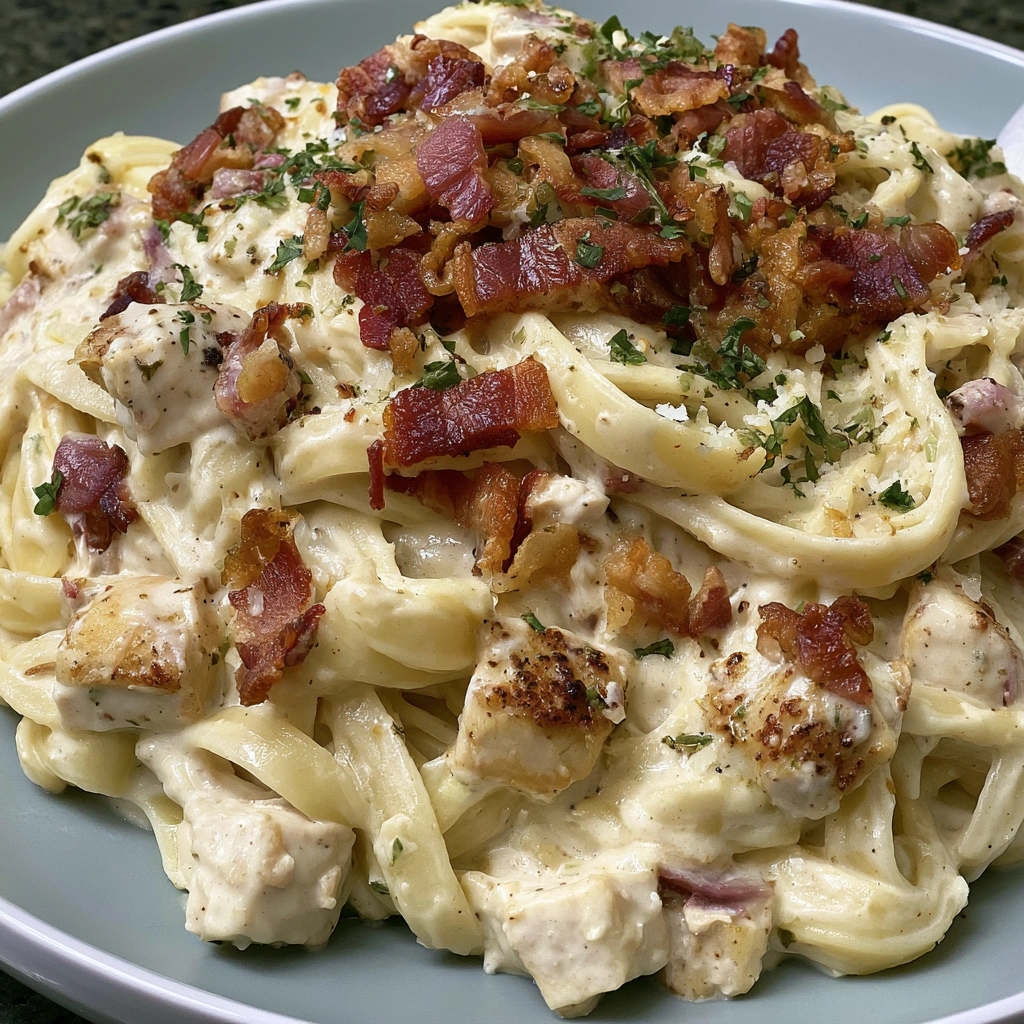
Creamy chicken bacon Alfredo brings together tender seasoned chicken, crisp bacon, fettuccine, and a simple Parmesan cream sauce in about 30 minutes. The sauce uses butter, heavy cream, and freshly shredded cheese, so it tastes full and silky without relying on a jar.
Timing matters more than complexity. Cook the pasta while the bacon and chicken are on the stove, keep the cream below a boil, and add Parmesan over low heat. Those small choices help the cheese melt smoothly and keep the chicken juicy.
Ingredients for Chicken Bacon Alfredo
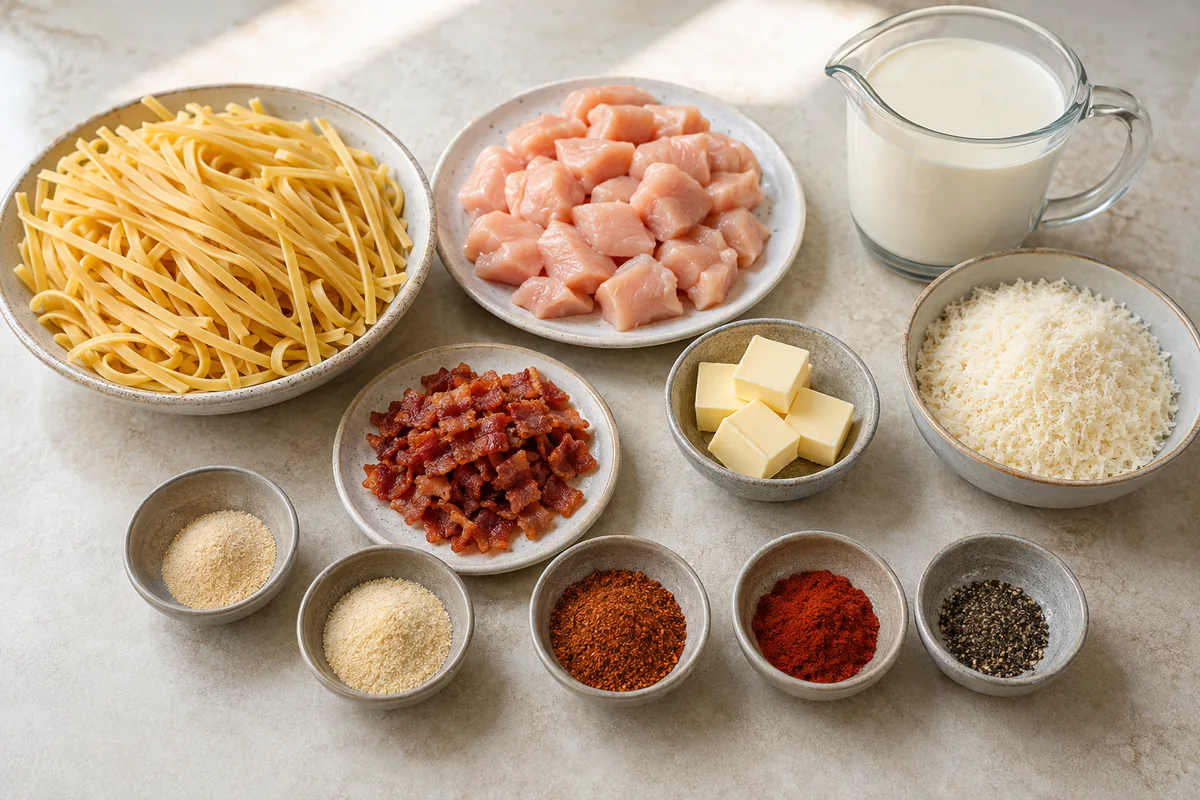
You need 1 pound fettuccine, 2 large boneless skinless chicken breasts cut into bite-size pieces, and 5 bacon slices cut small. Season the chicken with 2 teaspoons onion powder, 2 teaspoons garlic powder, 1 teaspoon Cajun seasoning, 1 teaspoon paprika, and black pepper.
For the sauce, use 5 tablespoons butter, 2 cups heavy cream, and 2 cups freshly shredded Parmesan cheese.
- Fettuccine: Its broad strands hold the rich sauce, though linguine can work in a pinch.
- Parmesan: Shred it from a block. Pre-grated cheese often contains anti-caking powder that can make the sauce grainy.
- Heavy cream: Its fat keeps the sauce stable and gives it enough body to coat the pasta.
- Cajun seasoning: It adds warmth to the chicken; use a mild blend if serving spice-sensitive diners.
- Bacon: Cook until crisp so it stays distinct once folded into the cream sauce.
If you enjoy this recipe, you may also like Jollibee Style Spaghetti.
How to Make Creamy Chicken Bacon Alfredo
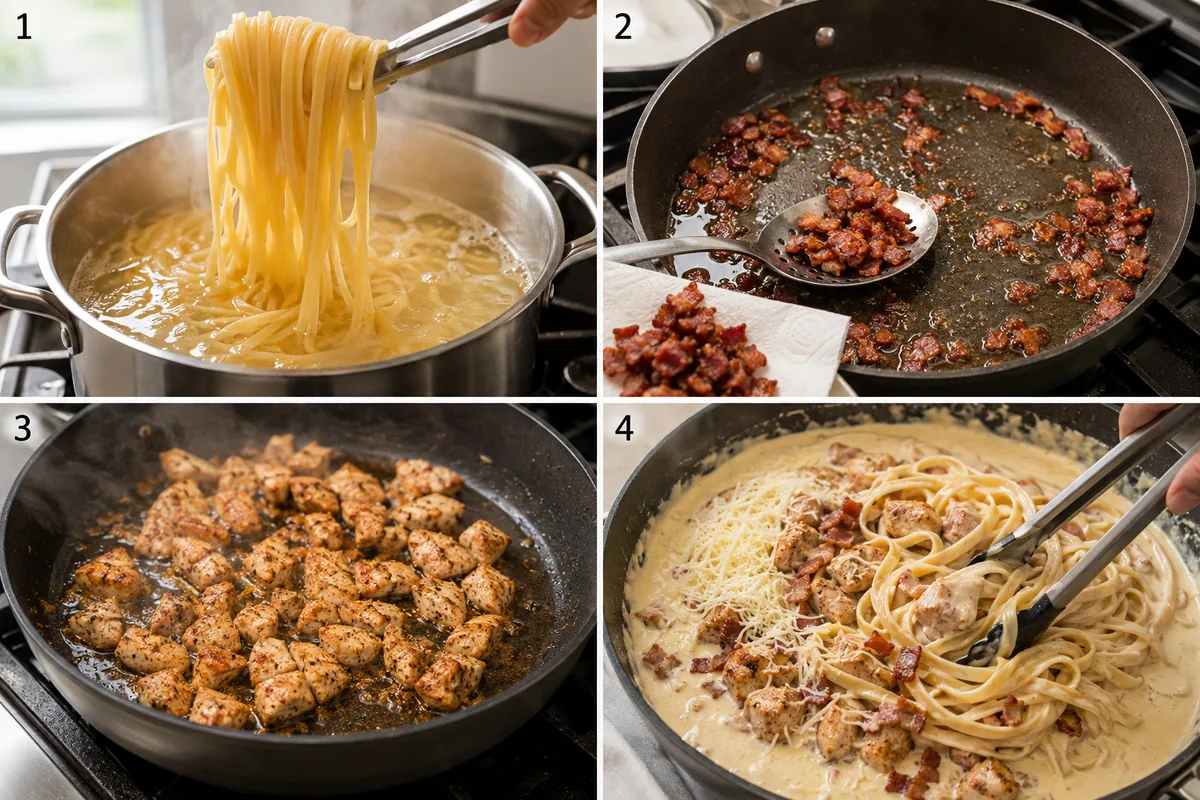
- Cook the pasta. Bring a large pot of well-salted water to a boil. Cook fettuccine until al dente according to the package, reserve about 1 cup pasta water, and drain.
- Crisp the bacon. Cook the chopped bacon in a large skillet over medium heat until crisp. Transfer it to a paper towel-lined plate, leaving only a few tablespoons of fat in the pan.
- Season and cook the chicken. Toss chicken pieces with onion powder, garlic powder, Cajun seasoning, paprika, and pepper. Add them to the hot skillet and cook for 6 to 8 minutes, turning until browned and 165°F in the center. Remove to a plate.
- Start the sauce. Reduce the heat to low. Melt the butter, pour in the heavy cream, and bring it only to a low simmer. Do not let it boil.
- Melt the Parmesan. Add shredded Parmesan a handful at a time, stirring constantly until each addition melts and the sauce is smooth.
- Combine. Add the drained fettuccine, chicken, and bacon. Toss over low heat until evenly coated, loosening with a little reserved pasta water if necessary. Serve immediately.
For storage details after serving, the USDA leftovers and food safety guidance.
Cook the Chicken in Even Pieces
Cut the chicken into pieces close to 1 inch so they cook at the same rate. Pat the meat dry before adding the seasonings; a dry surface browns instead of steaming. Spread the pieces across the skillet in a single layer and leave them undisturbed briefly before turning.
The chicken is ready at 165°F in the thickest piece. Remove it as soon as it reaches that point because it will warm again in the finished sauce. If your skillet is small, cook in two batches rather than crowding it.
If you enjoy this recipe, you may also like Meat Lover's Pizza Rice Skillet.
How to Make a Smooth Parmesan Sauce
Let the cream warm gently before the cheese goes in. Shred the Parmesan finely so it melts quickly, then add it in several small handfuls while stirring. Dumping cold cheese into boiling cream creates a sudden temperature change and encourages clumps.
The sauce should look slightly looser in the skillet than on the plate because fettuccine keeps absorbing it. Reserved pasta water is the safest way to adjust consistency: add one tablespoon at a time. Its starch helps the cream cling rather than becoming watery.
Coordinate the Pasta and Sauce
Start the pasta water first, then cook the bacon and chicken while it heats. The drained fettuccine should meet the sauce while both are hot. If pasta sits too long, it becomes sticky; toss it with the sauce promptly rather than rinsing away the helpful surface starch.
Cook to al dente because the noodles spend another minute in the skillet. Soft pasta can turn heavy under a cream sauce. Before draining, scoop out pasta water with a heatproof measuring cup so you have it ready for the final toss.
Balance the Richness
Bacon, Parmesan, and Cajun seasoning all contain salt, so taste only after the pasta is coated. Fresh black pepper brings contrast, and chopped parsley adds color without changing the sauce. A squeeze of lemon is optional but useful if you want a brighter finish.
Serve with roasted broccoli, asparagus, green beans, or a crisp salad dressed with vinaigrette. A vegetable with acidity or a little char balances the creamy pasta better than another rich side.
Troubleshooting
- Sauce is grainy: The pan was likely too hot or the cheese was added too quickly. Remove from heat and stir in a splash of warm cream.
- Sauce is too thick: Add reserved pasta water one tablespoon at a time while tossing.
- Sauce is thin: Let it stand for a minute; Parmesan sauce thickens quickly as it cools.
- Chicken is dry: Use evenly sized pieces and remove them when the center reaches 165°F.
- Pasta is bland: Salt the pasta water well, but judge final salt after adding bacon and Parmesan.
Storage and Gentle Reheating
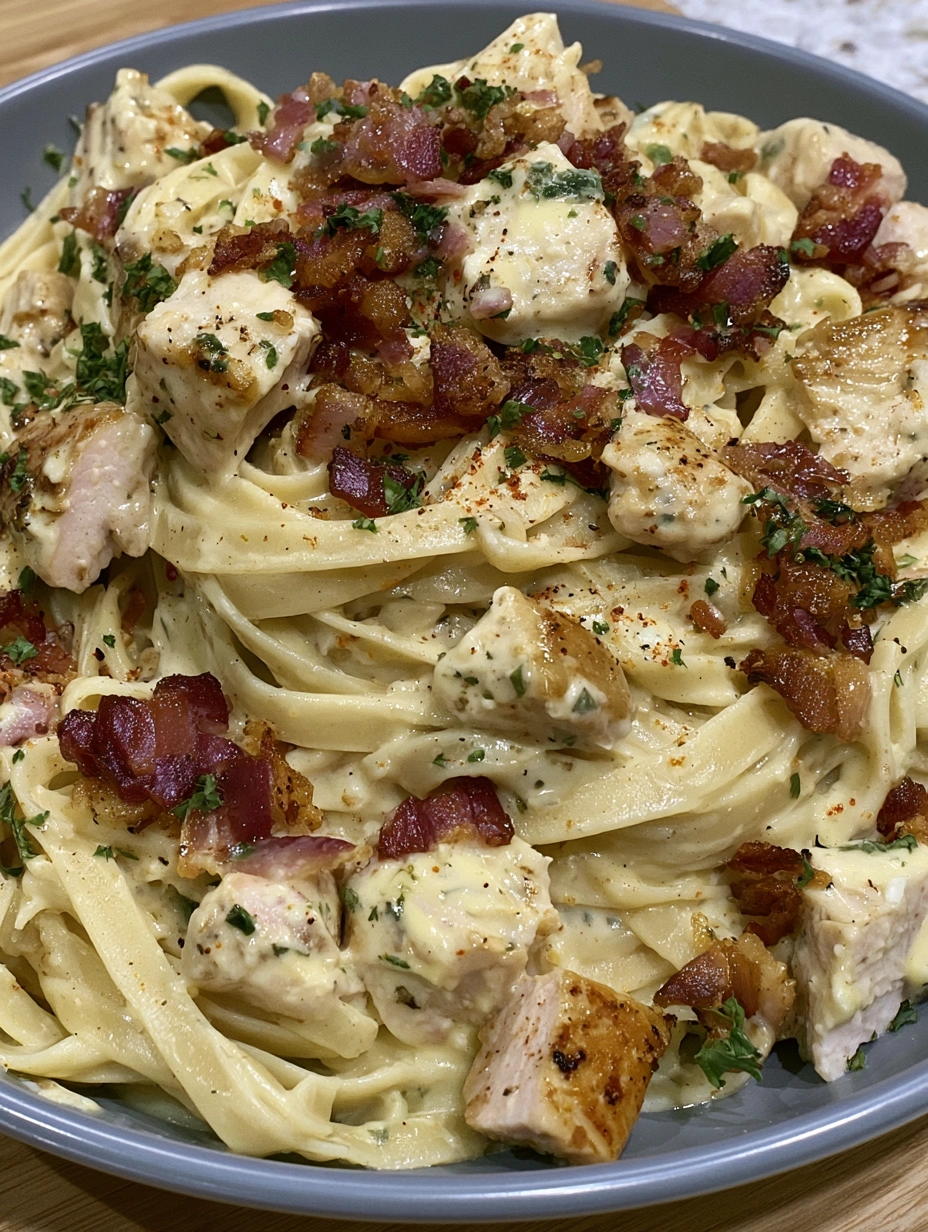
Alfredo is best immediately, when the emulsion is loose and glossy. Refrigerate leftovers in a shallow covered container for up to 2 days. The pasta will absorb sauce in the refrigerator, so expect it to look much thicker when cold.
Reheat slowly in a skillet over low heat with a splash of cream or milk. Stir frequently and remove it as soon as it is hot; boiling can split the sauce and overcook the chicken. The microwave works for a single portion at reduced power in short intervals, stirring between each one. Cream sauces do not freeze particularly well because they can separate after thawing.
Conclusion
Cook fettuccine al dente, crisp the bacon, and cook evenly cut seasoned chicken to 165°F. Warm butter and heavy cream over low heat, melt in freshly shredded Parmesan gradually, then toss with pasta, chicken, and bacon. Use reserved pasta water to loosen the sauce.
Frequently Asked Questions
- → Why did my Alfredo sauce turn grainy?
The heat was probably too high or the cheese was added too quickly. Keep the cream below a boil and stir in finely shredded Parmesan a handful at a time.
- → Can I use pre-grated Parmesan?
Freshly shredded Parmesan melts more smoothly. Pre-grated cheese often contains anti-caking ingredients that can leave a grainy sauce.
- → How do I reheat chicken bacon Alfredo?
Warm it gently over low heat with a splash of cream or milk, stirring often. Do not boil it, or the sauce may separate.
- → What temperature should the chicken reach?
The thickest chicken piece should reach 165°F. Remove the chicken promptly because it will warm again when returned to the sauce.