

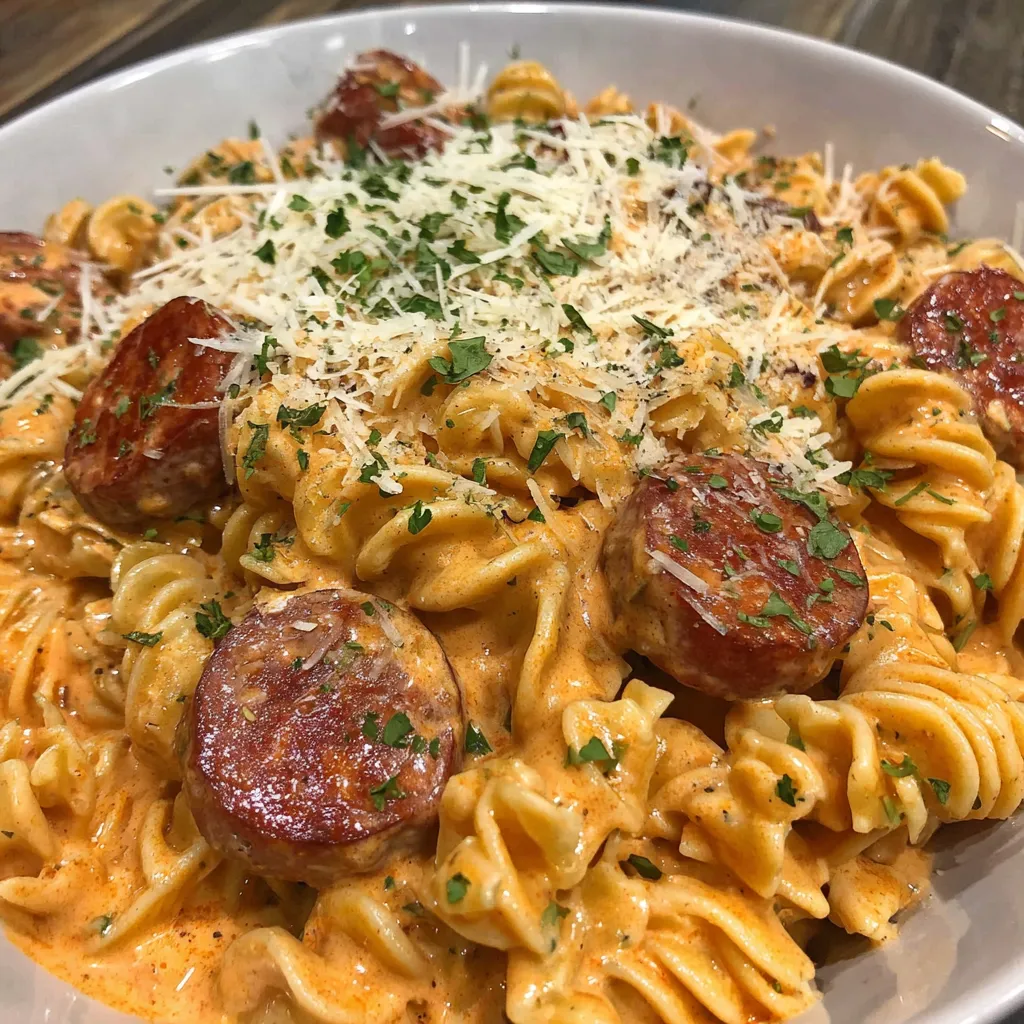
Creamy smoked sausage pasta combines browned kielbasa, tender pasta, and a tomato-Parmesan cream sauce in a practical 30-minute dinner. The sausage brings savory flavor, while tomato paste gives the sauce enough depth to balance the cream.
The method is straightforward, but a few details make the result noticeably better: brown the sausage instead of merely warming it, cook the pasta just to al dente, and simmer the sauce gently after adding dairy. This guide explains each step so the sauce stays smooth and clings to every piece of pasta.
Ingredients for Creamy Smoked Sausage Pasta
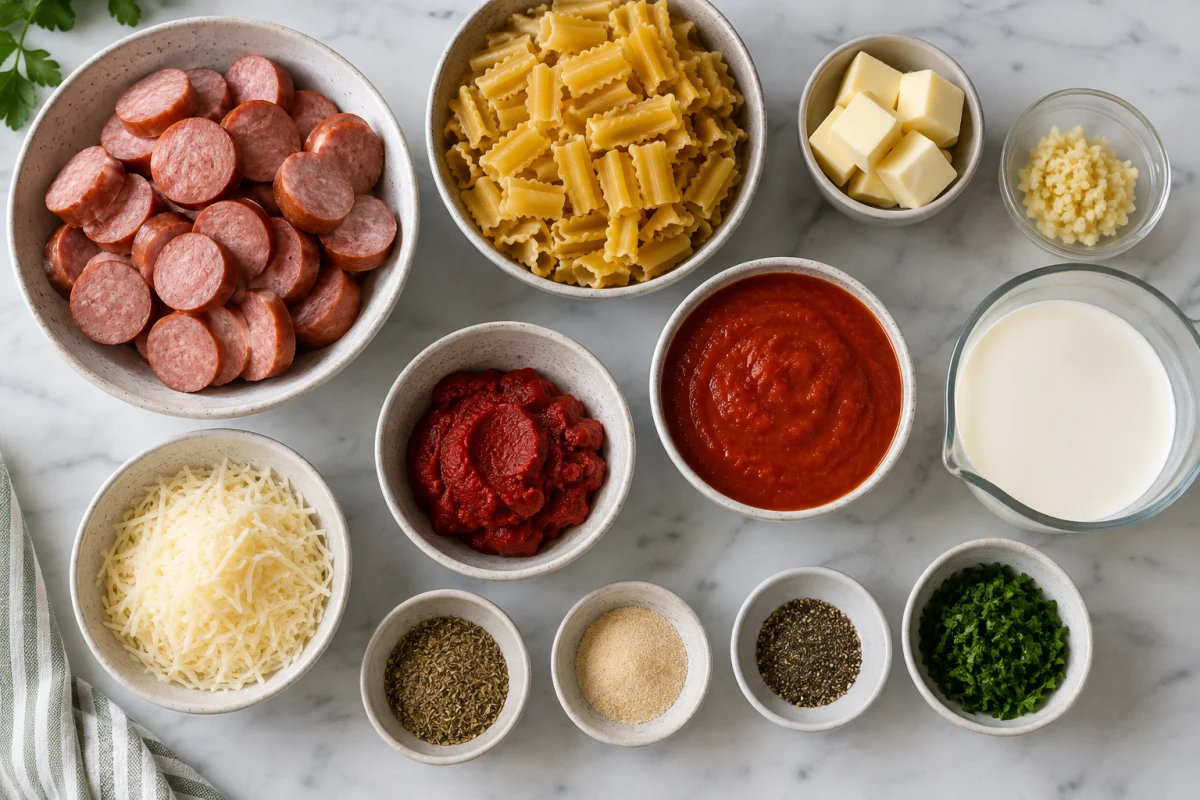
You need 12 ounces sliced kielbasa or another fully cooked smoked sausage and 16 ounces short pasta. Choose a sturdy shape with ridges or curves so it can carry the creamy sauce.
For the sauce, gather 2 tablespoons butter, 2 tablespoons minced garlic, 1 cup heavy cream, two 8-ounce cans tomato sauce, 3 tablespoons tomato paste, and 1/2 cup finely grated Parmesan. Italian seasoning, garlic powder, salt, black pepper, and chopped parsley finish the dish. Keep extra Parmesan for serving.
If you enjoy this recipe, you may also like Philly Cheesesteak Grilled Cheese Casserole.
How to Make Creamy Smoked Sausage Pasta
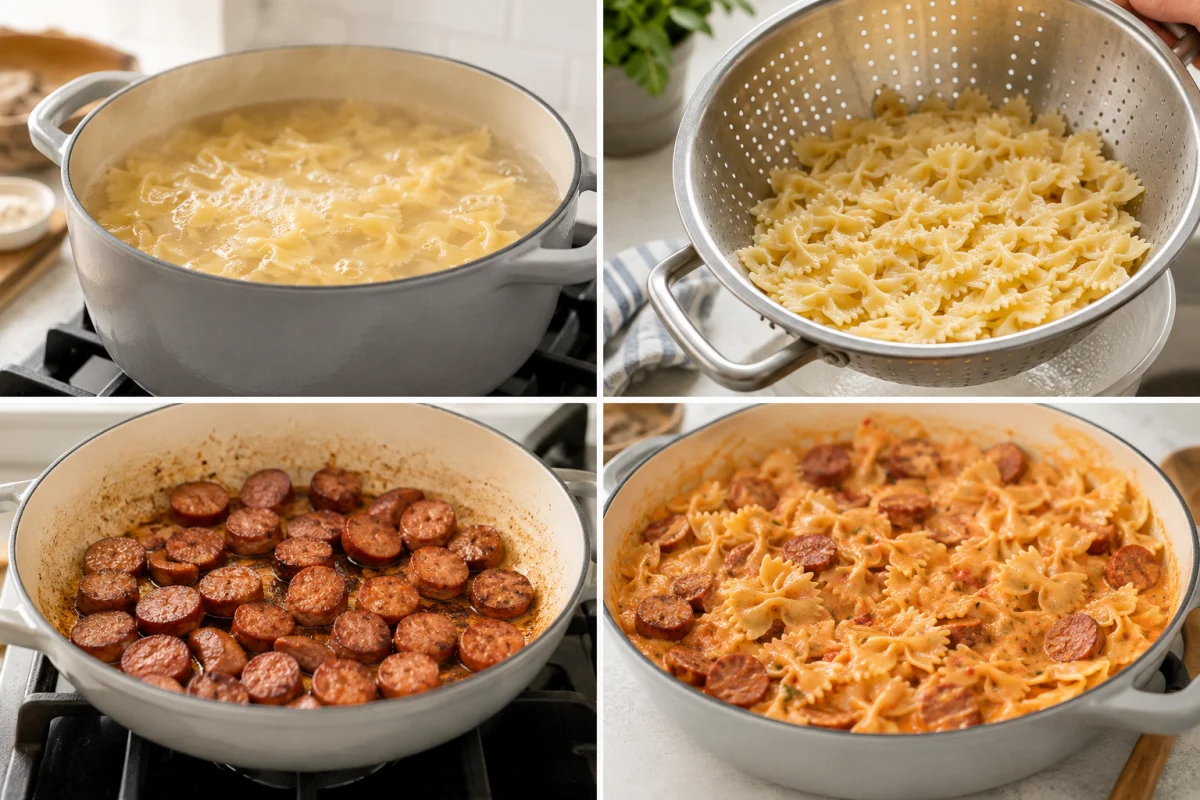
- Boil the pasta. Cook it in well-salted water until al dente. Reserve 1 cup cooking water, then drain.
- Brown the sausage. Sear sliced kielbasa in a wide skillet until both sides develop color, then transfer it to a plate.
- Start the sauce. Melt butter in the same skillet and cook the garlic briefly, without browning it.
- Add the base. Stir in tomato paste, tomato sauce, cream, Parmesan, Italian seasoning, garlic powder, salt, and pepper.
- Simmer gently. Cook until the sauce lightly coats a spoon.
- Combine. Return the sausage and add the drained pasta. Toss over low heat, loosening with reserved pasta water if needed.
- Finish. Taste, adjust seasoning, and serve with parsley and Parmesan.
For storage details after serving, the USDA leftovers and food safety guidance.
Choose a Pasta Shape That Holds Sauce
Rigatoni, penne, rotini, and medium shells are all strong choices. Their hollow centers or textured surfaces trap small amounts of sauce, making each bite taste evenly seasoned. Very delicate noodles can become soft while the sauce finishes, and long strands are less convenient with thick sausage slices.
Use the full pound of dry pasta for the intended balance. If you reduce the pasta without reducing the sauce, the finished dish can feel soupy. If your package is larger than 16 ounces, measure it rather than guessing.
If you enjoy this recipe, you may also like Apple Brie Stuffed Chicken.
Salt the Pasta Water Properly
Bring a large pot of water to a full boil before adding salt and pasta. The water should taste pleasantly seasoned, not aggressively salty. Stir during the first minute to prevent pieces from settling together on the bottom.
Stop cooking when the center still has a slight bite. The pasta continues to soften as it is tossed in the hot sauce. Reserve cooking water before draining; its starch helps loosen the sauce without making it thin or washing away flavor.
Brown the Smoked Sausage in One Layer
Cut the kielbasa into evenly thick coins so they heat at the same rate. Place them in a hot, wide skillet in one layer. Let the first side sit long enough to brown before turning; constant stirring prevents the flavorful crust from forming.
The sausage is already cooked, so the goal is color and texture rather than a long cooking time. Work in two batches if the pan is crowded. Transfer the browned slices to a plate while you build the sauce in the flavorful skillet.
Build Flavor in the Same Skillet
Lower the heat before adding butter so the browned bits do not burn. Stir in minced garlic and cook only until fragrant, about 30 seconds. Garlic becomes bitter when allowed to darken.
Add tomato paste next and stir it against the warm surface for a minute. This brief cooking removes its raw edge and concentrates its flavor. Tomato sauce then releases the browned bits from the pan, carrying the sausage flavor into the creamy base instead of leaving it behind.
Add Cream and Parmesan Gradually
Pour in the cream while stirring, then reduce the heat. Finely grated Parmesan melts more readily than coarse shreds. Add it a little at a time and stir until each addition disappears before adding more.
Pre-shredded cheese often contains anti-caking starch, which can leave the sauce less smooth. Freshly grated Parmesan gives better texture and a fuller savory flavor. If the sauce looks very thick at this point, wait until the pasta is added before deciding how much reserved water it needs.
Season in Stages
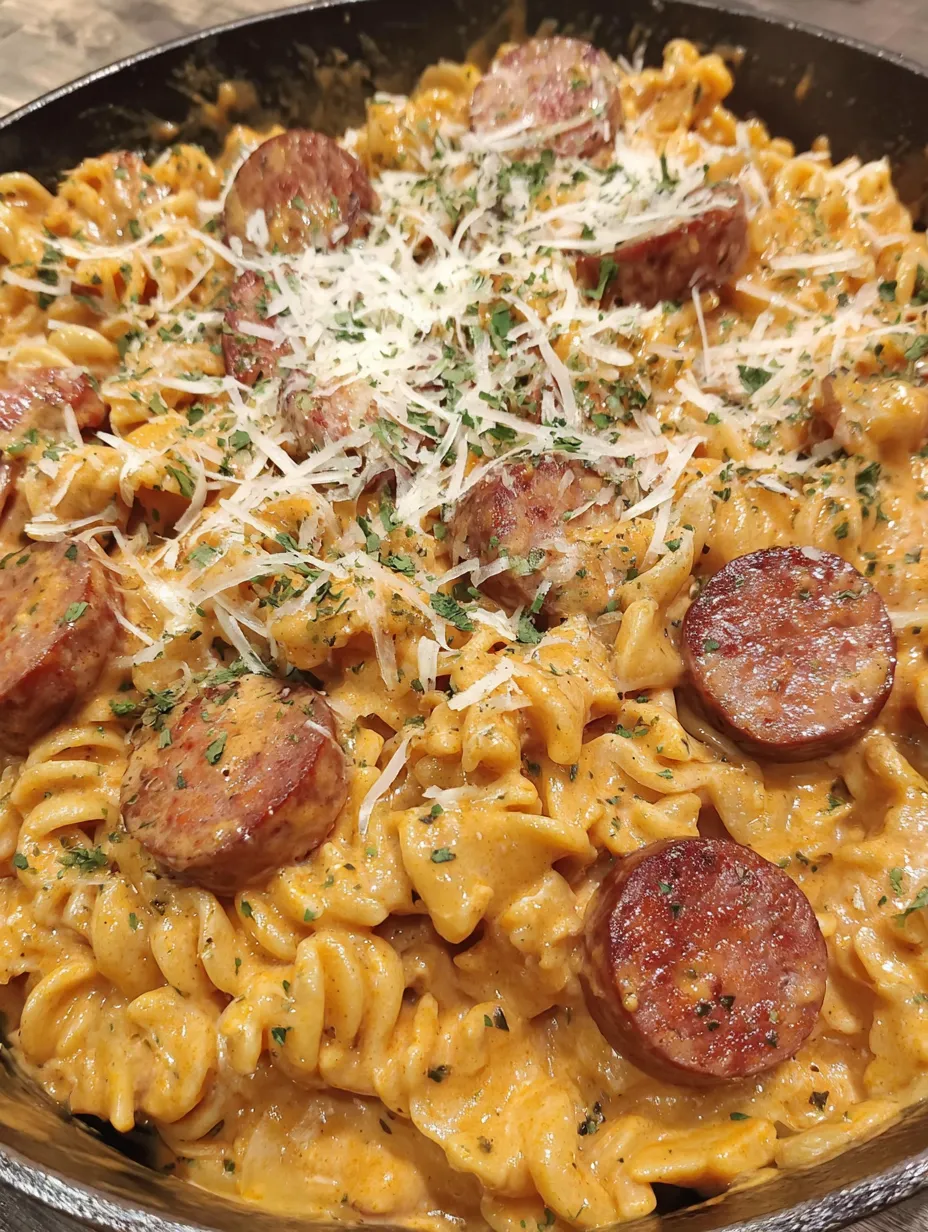
Smoked sausage and Parmesan both contribute salt, so begin conservatively. Italian seasoning adds dried herb flavor, while a small amount of garlic powder reinforces the fresh garlic throughout the sauce. Black pepper provides contrast to the cream.
Taste only after the sausage and pasta are returned to the skillet. At that point every salty component is present. Add extra salt in small pinches, or brighten a heavy-tasting sauce with a tiny splash of pasta water rather than adding more cream.
Use Pasta Water to Control Consistency
The sauce should coat the pasta while remaining fluid enough to settle around it. Add reserved water 1 or 2 tablespoons at a time and toss thoroughly after each addition. It often takes less than expected.
Remember that the sauce thickens as it stands because the pasta continues absorbing liquid. Stop when it appears slightly looser than the final texture you want. Plain tap water can dilute flavor, whereas starchy cooking water helps the sauce remain cohesive.
Avoid Overcooking After Combining
Once the pasta and kielbasa enter the sauce, keep the skillet over low heat only long enough to coat and warm everything. Several extra minutes of bubbling can make the noodles soft and the sausage rubbery.
Use a broad spoon or silicone spatula to lift from the bottom and turn the mixture gently. This distributes sausage coins without breaking the pasta. Remove the skillet from the heat as soon as the sauce reaches a glossy, even coating.
Serving Ideas
Finish each bowl with chopped parsley, freshly grated Parmesan, and black pepper. A crisp salad with a tart vinaigrette balances the creamy sauce. Roasted broccoli, green beans, or asparagus also make useful vegetable sides.
Garlic bread is a natural companion when serving a crowd, though smaller portions keep the meal from becoming too heavy. Bring the pasta to the table promptly; creamy sauces are at their best while hot and freshly tossed.
Storage and Reheating
Cool leftovers promptly and refrigerate them in an airtight container for up to three days. The pasta will absorb sauce in storage. Reheat a portion gently with a splash of milk or water, stirring halfway through so it warms evenly.
For a larger amount, use a covered skillet over low heat and add liquid a spoonful at a time. Avoid a hard boil. Freezing is possible for up to one month, but the cream sauce may be slightly less smooth after thawing.
Troubleshooting the Sauce
- Grainy sauce: Lower the heat and use finely grated Parmesan added gradually.
- Thin sauce: Simmer gently before adding pasta, then allow it to stand for one minute.
- Dry pasta: Toss in reserved cooking water a tablespoon at a time.
- Rubbery sausage: Brown it briefly and avoid prolonged simmering in the sauce.
- Flat flavor: Check salt only after sausage and Parmesan are fully mixed in.
Conclusion
Cook pasta until al dente and reserve some cooking water. Brown sliced smoked sausage and set it aside. In the same skillet, cook butter, garlic, and tomato paste, then add tomato sauce, cream, Parmesan, and seasonings. Simmer gently, return the sausage, toss with pasta, and adjust the consistency with pasta water.
Frequently Asked Questions
- → What type of smoked sausage is best for creamy pasta?
Fully cooked kielbasa works especially well because it browns readily and has enough seasoning to flavor the sauce. Turkey or chicken smoked sausage can also be used.
- → How do I keep the cream sauce from becoming grainy?
Keep the heat low after adding cream, grate Parmesan finely, and stir it in gradually without allowing the sauce to boil hard.
- → Can creamy smoked sausage pasta be made ahead?
It is best freshly cooked, but it can be refrigerated for up to three days. Reheat gently with a small splash of milk or water.
- → What vegetables can I add to smoked sausage pasta?
Spinach, peas, mushrooms, broccoli, or diced bell pepper work well. Cook firm vegetables before making the sauce and add delicate greens near the end.