

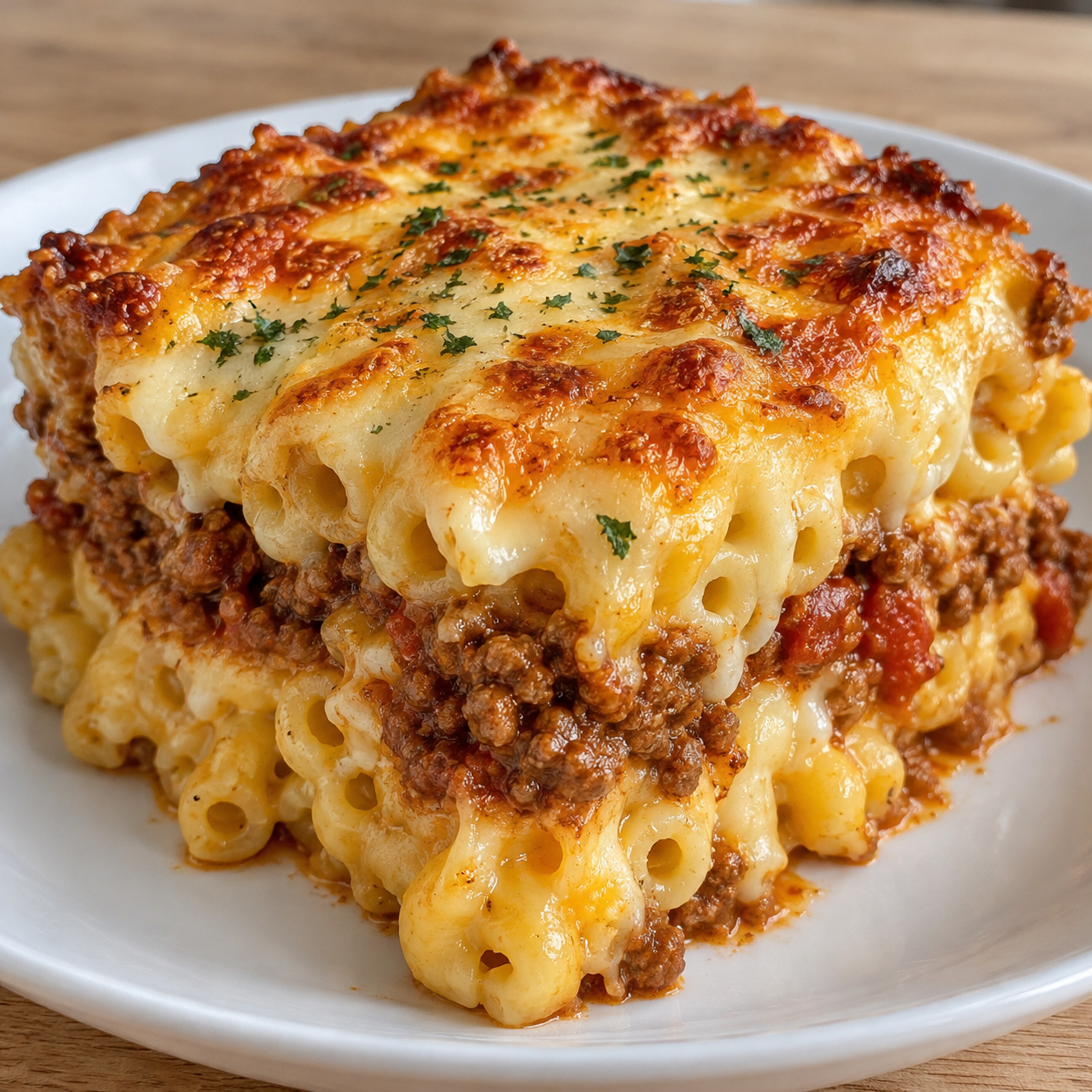
Mac and cheese lasagna bake stacks two comfort food classics instead of making you choose. A pot of stovetop mac and cheese goes in first, then a skillet of seasoned beef and tomato sauce, then another layer of that same cheesy pasta on top. It bakes until the edges turn deep gold and the center stays soft and saucy.
This is the dish for a cold Sunday, a potluck, or a week when one pan needs to feed everyone twice. It holds up well as leftovers and doubles easily in a bigger dish, so there is always a reason to make the full batch.
Two Comfort Foods One Shopping List
Everything here is easy to find and mostly already in your kitchen. Shred the cheddar and Colby Jack from a block instead of using a pre-shredded bag, since whole-milk block cheese melts smoother and tastes sharper in the sauce.
If you enjoy this recipe, you may also like Cheddar Bay Chicken Broccoli Bake.

- Elbow macaroni. Its ridges hold the cheese sauce in every bite.
- Unsalted butter. Starts the cheese sauce and keeps the salt level in your control.
- Evaporated milk. Gives the sauce body and a creaminess regular milk cannot match.
- Sharp cheddar cheese. Brings the tangy backbone of the whole dish.
- Colby Jack cheese. Melts into long, stretchy pulls and softens cheddar's sharp edge.
- Lean ground beef. Builds the savory middle layer without pooling grease in the dish.
- Yellow onion. Turns sweet once it softens in the skillet.
- Bell pepper. Adds color and a mild vegetable bite to the meat sauce.
- Italian seasoning. Gives the beef a familiar, herby lasagna flavor.
- Garlic powder and onion powder. Deepen the savory base without adding extra liquid to the pan.
- Petite diced tomatoes. Add bright acidity and a little texture against the cheese.
- Marinara sauce. Rounds the browned beef into a true sauce instead of dry crumbles.
For storage details after serving, the USDA leftovers and food safety guidance.
Layering and Baking the Casserole
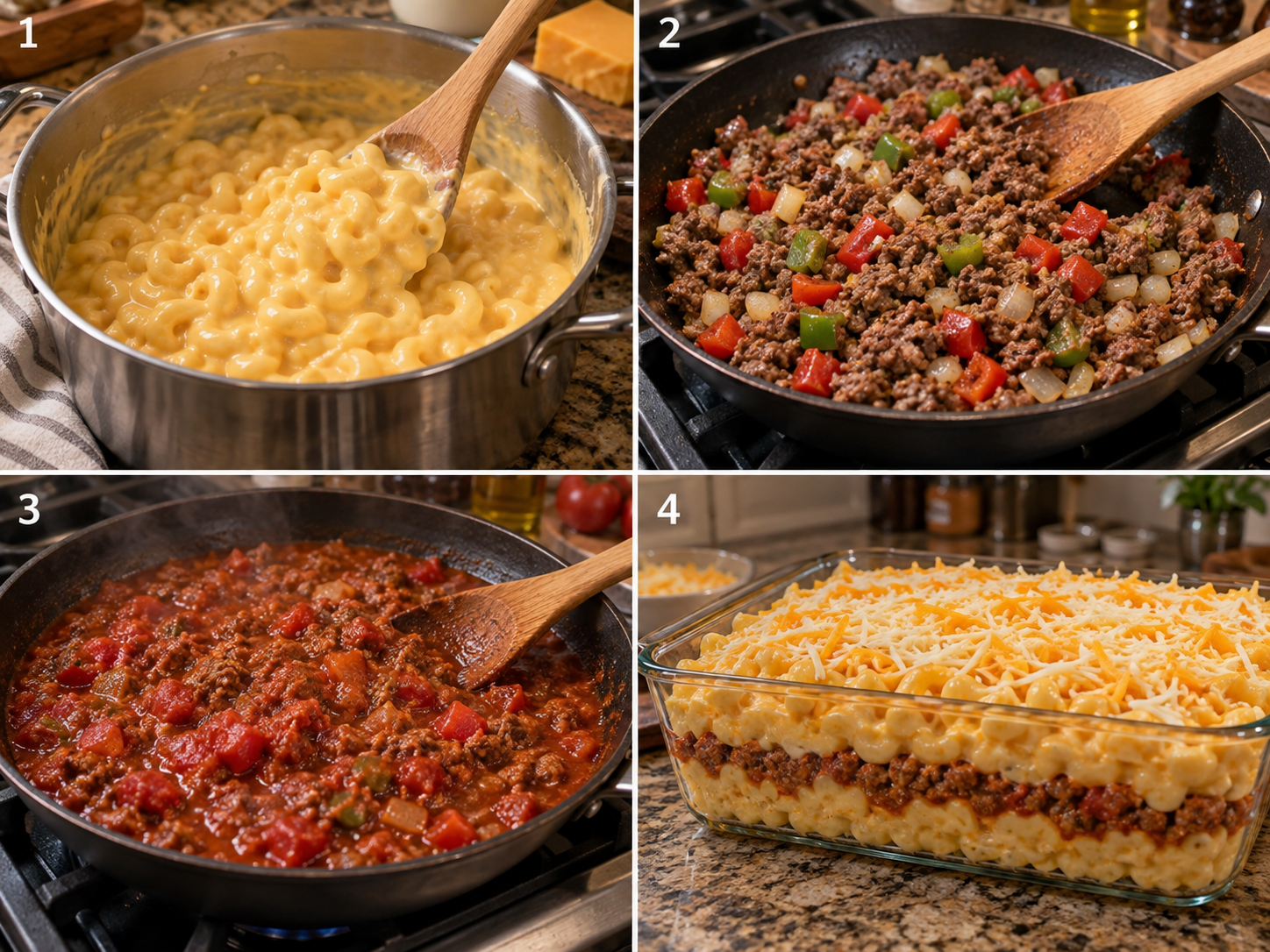
- Boil the macaroni. Bring a large pot of salted water to a boil and cook the elbow macaroni until just al dente, about 8 to 9 minutes. Drain well and set the pot aside.
- Build the cheese sauce. In the same pot over low heat, melt the butter, then stir in the evaporated milk. Add the cheddar and half the Colby Jack a handful at a time, stirring until smooth, then fold the drained macaroni back in and season with salt and pepper.
- Brown the beef. In a large skillet over medium-high heat, cook the ground beef with the onion and bell pepper until no pink remains and the beef reaches a safe internal temperature of 160°F on an instant-read thermometer, as confirmed by university food safety guidance on ground beef. Drain off excess fat.
- Season and simmer the sauce. Stir the Italian seasoning, garlic powder, onion powder and seasoned salt into the beef. Add the diced tomatoes and marinara sauce and simmer uncovered for 5 to 8 minutes until slightly thickened.
- Layer the casserole. Butter a 9x13-inch baking dish and spread half the mac and cheese across the bottom. Top with the meat sauce, then the rest of the mac and cheese, and finish with the remaining Colby Jack.
- Bake and broil the casserole. Bake uncovered at 350°F (175°C) for 15 to 18 minutes until bubbling at the edges. Switch to broil for 2 to 3 minutes until the top is deep golden, watching closely so it does not scorch. Let the casserole rest 10 minutes before slicing.
If you enjoy this recipe, you may also like Smash Burger Tacos.
Why the Cheese Sauce Stays Smooth
The sauce breaks when it gets too hot too fast, not because of the cheese itself. Keep the heat low once the evaporated milk goes in, and add the cheese gradually instead of dumping it all in at once. A block of cheese you shred yourself also melts more evenly than bagged shreds, which are coated with anti-clumping starch that can leave the sauce grainy. If the sauce still looks thin when you fold the macaroni back in, that's normal. It thickens again once it bakes under the meat sauce and second layer of pasta. Evaporated milk is doing real work here too. Its lower water content gives the sauce more body than regular milk would, which is why the recipe calls for it instead of a splash of cream or whole milk.
The Broiler Window That Decides Everything
Broiling is the step that turns a basic cheesy casserole into one with real contrast between crisp edges and a soft center. It also happens fast. Most ovens take the top from pale to deep gold in under three minutes, and a few seconds of distraction can turn gold into black. Stand at the oven the entire time broil is running and pull the dish the moment the cheese blisters and browns at the edges. If your broiler runs hot or sits close to the rack, move the dish down one position before you start. A slightly longer bake at 350°F and a shorter broil is always the safer trade.
Smart Swaps for This Casserole
Ground turkey or Italian sausage both work in place of the beef. Just brown them the same way and drain any excess fat. For extra vegetables, stir a couple of handfuls of chopped spinach or shredded zucchini into the meat sauce while it simmers. Both cook down fast and blend in without changing the texture much. Monterey Jack or a mild white cheddar can stand in for the Colby Jack if that's what's in your fridge, and a sharper aged cheddar pushes the flavor further if you want more bite. Gluten-free elbow pasta works in the same quantities. Watch it closely near the end of boiling, since it can go from firm to mushy faster than wheat pasta.
Make-Ahead Storage and Reheating
This casserole is a genuinely good make-ahead dish. Assemble it completely, cover tightly and refrigerate for up to a day before baking. Add five to ten extra minutes in the oven since it's starting cold. Once baked, refrigerate leftovers within two hours and eat them within three to four days. Reheat portions to 165°F, following general guidance on storing and reheating leftovers. The oven brings back the crisp top better than a microwave does, so reheat it covered at 350°F until the center is hot. Then uncover it for the last few minutes if you want the top to crisp again. To freeze, let the casserole cool completely. Wrap it tightly in plastic and then foil, and freeze for up to three months. Thaw overnight in the fridge before reheating.
What to Serve Alongside It
A simple green salad with a sharp vinaigrette cuts through the richness better than anything else at the table. Garlic bread or a crusty loaf is the obvious pick if you want something to catch the extra sauce. For a lighter plate, steamed broccoli or roasted green beans add color without competing with the cheese. If you're feeding a crowd, cut the casserole into squares ahead of time so people can serve themselves, and keep a serving spoon handy for the sauce that pools at the bottom of the pan.
Frequently Asked Questions
- → Can I use a different cheese in this recipe?
Yes. Monterey Jack, mozzarella or a mild white cheddar all melt well in place of the Colby Jack, and a sharper cheddar adds more bite if you want a stronger flavor.
- → Can I assemble this casserole ahead of time?
Yes. Build it completely, cover tightly and refrigerate for up to a day before baking. Add five to ten extra minutes in the oven since it will start cold.
- → How do I keep the macaroni from turning mushy?
Cook it only until al dente, about 8 to 9 minutes, since it softens further once it sits in the hot cheese sauce and then bakes. Pulling it a minute early is safer than letting it go too long.
- → Can I make a vegetarian version?
Yes. A plant-based ground crumble or a mix of sauteed mushrooms and lentils, seasoned the same way as the beef, makes a satisfying vegetarian swap.
- → What goes well with mac and cheese lasagna bake?
A crisp green salad with a tangy vinaigrette and some garlic bread round out the meal nicely. Steamed broccoli or green beans work too if you want a lighter side.
- → How should I store and reheat leftovers?
Refrigerate leftovers within two hours of baking and eat them within three to four days. Reheat portions to 165°F, covered, in the oven or microwave for the best texture.
- → Can I freeze this casserole?
Yes, either before or after baking. Cool it completely, wrap it tightly in plastic and then foil, and freeze for up to three months. Thaw overnight in the fridge before baking or reheating.
- → Why did the top burn before the center finished heating?
The broiler is likely too close to the rack or running hotter than expected. Move the dish down one rack position, broil in shorter bursts, and stay by the oven the whole time since it only takes a couple of minutes to go from golden to burnt.