
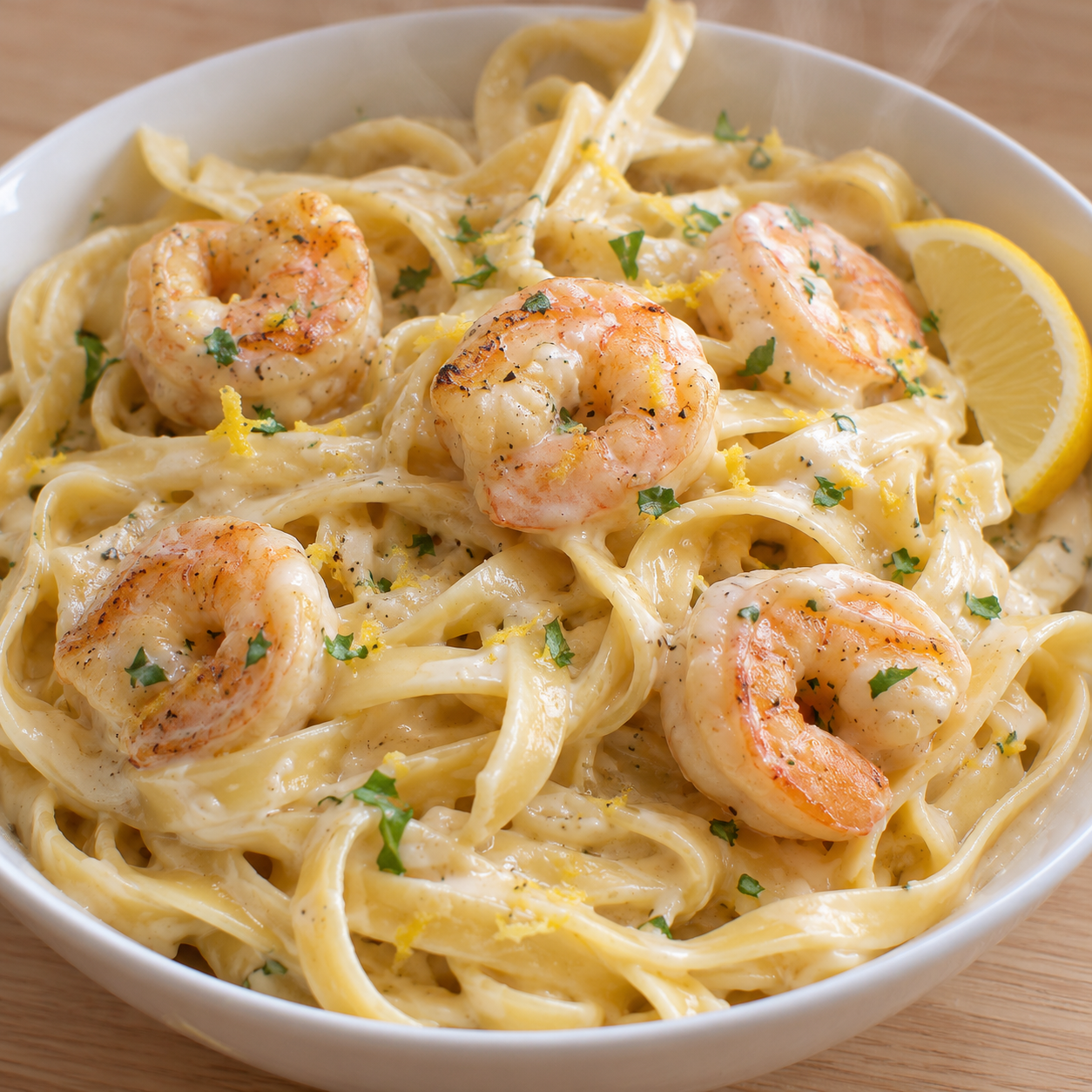
Fettuccine Alfredo with lemon garlic shrimp is the dinner I reach for when I want something that tastes like a restaurant order but takes less effort than driving there. The shrimp cook in minutes in garlic and lemon, and the Alfredo comes together in the same amount of time it takes the pasta to boil.
This version skips the jarred sauce and the rubbery pre-cooked shrimp. You build real Alfredo from butter, cream and parmesan, and you sear the shrimp just until they turn pink so they stay plump instead of chewy.
It works for a weeknight table and it works for company. Either way it lands on plates in under 40 minutes.
Two Short Lists That Do The Work
The shrimp need almost nothing beyond garlic, lemon and a hot pan. The Alfredo needs real butter, real cream and parmesan you grate yourself. The pre-shredded kind rarely melts smooth and can leave the sauce gritty.
If you enjoy this recipe, you may also like Cheesy BBQ Chicken Potatoes.
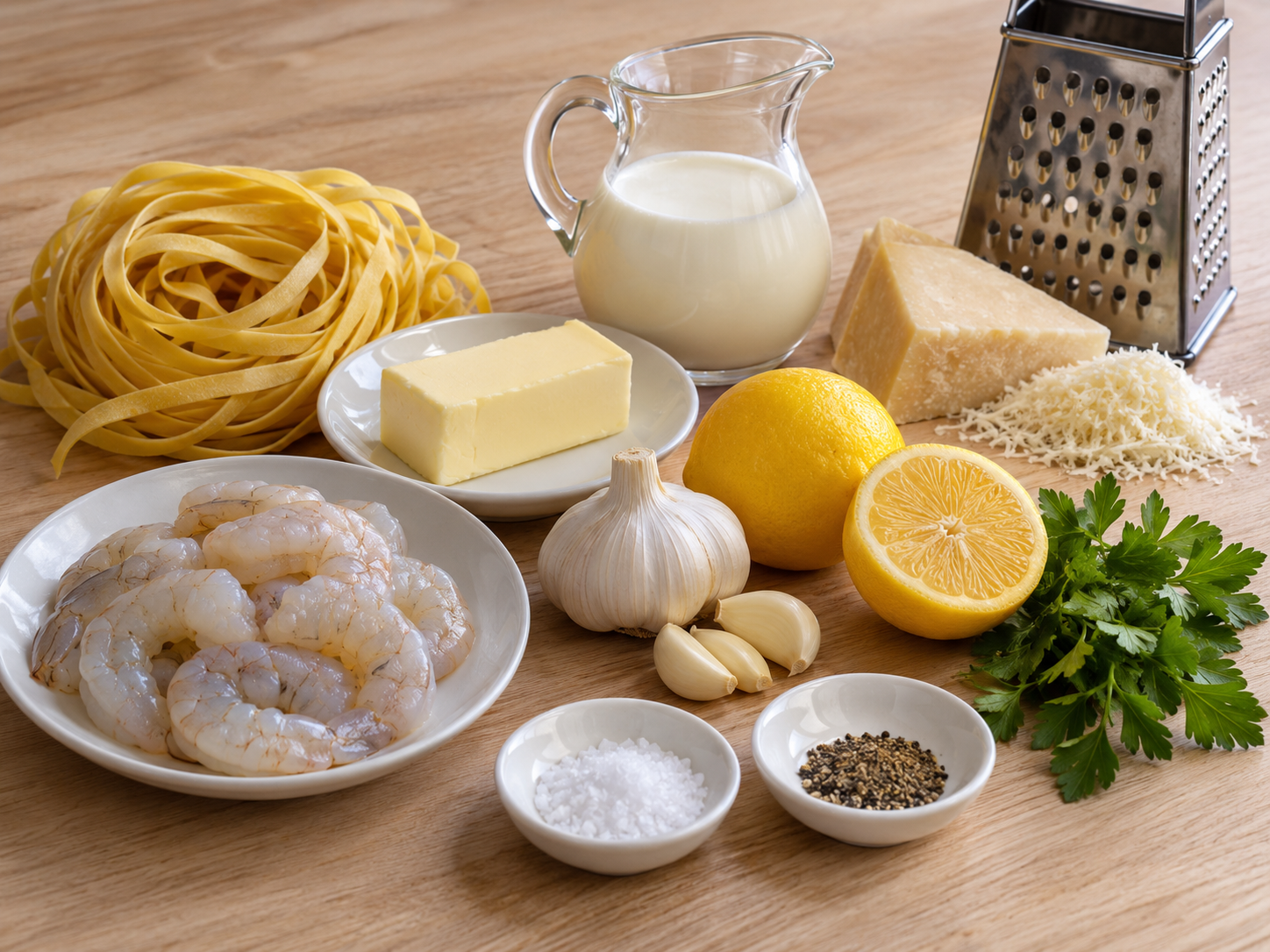
- Large shrimp. The main event, quick to cook and quick to turn rubbery if you walk away from the pan.
- Garlic. Split between the shrimp and the sauce, so the dish gets two separate hits of flavor instead of one muddy one.
- Lemon zest and juice. Cuts through the richness of the cream and parmesan and keeps the dish from feeling heavy.
- Unsalted butter. The base of the Alfredo, unsalted so you control the final seasoning.
- Heavy cream. Gives the sauce body without needing a flour-based roux.
- Parmesan cheese. Melts into the warm cream to thicken it and add salt and nutty depth.
- Fettuccine. Wide ribbons built to carry a heavy sauce without getting lost in it.
- Reserved pasta water. The starchy splash that loosens the sauce if it tightens up in the pan.
- Fresh parsley. A fresh, slightly peppery finish stirred in at the end.
For storage details after serving, the USDA leftovers and food safety guidance.
How The Two Parts Come Together
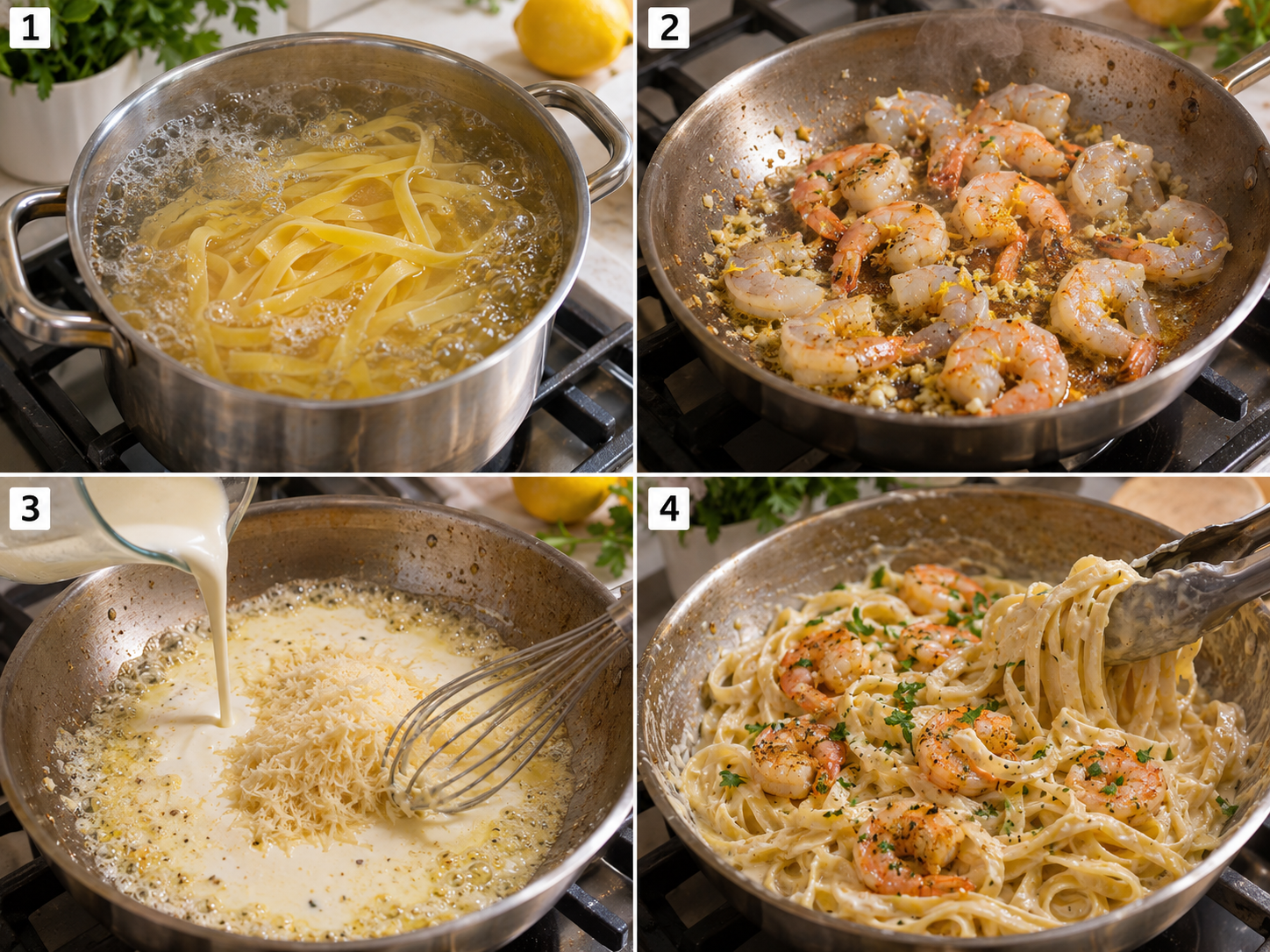
- Boil the fettuccine. Cook it in well-salted water until just shy of al dente, then scoop out a cup of the starchy water before you drain the pasta.
- Sear the shrimp. Toss the shrimp with garlic, lemon zest, salt and pepper, then sear in hot olive oil for about a minute per side until the flesh turns pink and opaque. Pull them out so they stop cooking.
- Start the Alfredo base. Lower the heat, melt the butter in the same pan, and cook the garlic for thirty seconds until fragrant but not browned.
- Build the sauce. Pour in the cream and let it warm through, then whisk in the parmesan a handful at a time off direct high heat until the sauce is smooth.
- Toss the pasta. Add the drained fettuccine to the pan with a splash of the reserved pasta water and toss until every strand is coated and glossy.
- Finish with the shrimp. Return the shrimp to the pan with the lemon juice and parsley, toss once more, and serve right away while the sauce is still silky.
If you enjoy this recipe, you may also like Cajun Chicken Broccoli Alfredo.
Why The Sauce Can Turn Grainy
Most Alfredo failures trace back to heat. Parmesan is a hard, aged cheese, and when it hits cream that is actively boiling, its proteins tighten and clump instead of melting smoothly. The fix is simple once you know it. Warm the cream through on a gentle simmer, then pull the pan down to low or off the heat entirely before you start adding cheese.
Add the parmesan gradually, a small handful at a time, whisking between additions. Each addition should fully melt and disappear into the sauce before the next goes in. If the sauce still looks thin, give it another minute off the heat. It thickens as it sits and as the cheese fully hydrates, so resist the urge to crank the heat back up to speed things along.
Keep The Shrimp From Turning Rubbery
Shrimp go from perfectly tender to tough in about sixty seconds, so the pan has to be hot and the shrimp have to be dry. Pat them with paper towels before they go anywhere near the oil. Surface moisture drops the pan's temperature and steams the shrimp instead of browning them.
Watch the flesh rather than the clock. It should turn from translucent gray to an opaque pink, and the shrimp will curl gently into a loose C shape. The FDA's guidance on seafood puts the safe internal temperature at 145°F, which shrimp of this size usually hit within a minute or two per side. Pull them out of the pan the moment they get there and let them rest on a plate while you finish the sauce, since they keep cooking a little from residual heat.
Garlic Timing Makes Or Breaks This
Garlic burns fast, and burnt garlic turns bitter in a way that no amount of cream and parmesan can hide. Keep the heat moderate when you add it to the butter, and give it thirty to sixty seconds, just long enough to smell fragrant and look barely golden at the edges. If it goes any darker than pale gold, start that part over rather than building the sauce on top of it.
Splitting the garlic between the shrimp marinade and the sauce base also means neither application has to carry the whole dish's flavor, so you can afford to be gentle with both.
Easy Swaps For Different Diets
As written, this dish is not dairy-free, gluten-free or low-carb, so plan ahead if you are cooking for someone with those needs. A gluten-free fettuccine or linguine swaps in directly, since the sauce itself has no flour in it. For a lighter sauce, half-and-half works in place of heavy cream, though it will taste thinner and is more prone to separating if it gets too hot.
Vegetarians can skip the shrimp and double the garlic and lemon in the sauce, or fold in sautéed mushrooms for something with a similar texture and bite.
Storing And Reheating Leftovers
Cream sauces are forgiving for a day or two but not indefinitely. Get leftovers into the fridge within two hours of cooking, which lines up with the FDA's general guidance on perishable foods, and keep them in an airtight container for up to 3 days.
Reheat gently in a skillet over low heat with a splash of cream, milk or reserved pasta water, stirring so the sauce comes back together instead of breaking. The microwave tends to overcook the shrimp and can cause the sauce to separate into a greasy layer, so a stovetop reheat is worth the extra few minutes.
What Pairs Well At The Table
This pasta is rich enough to stand on its own, so keep the sides simple. A green salad with a sharp vinaigrette cuts through the cream, and garlic bread or a plain crusty loaf is good for mopping up whatever sauce is left on the plate. Extra lemon wedges at the table let everyone brighten their own serving to taste.
Frequently Asked Questions
- → Can I use frozen shrimp for this recipe?
Yes. Thaw frozen shrimp overnight in the fridge or under cold running water, then pat them completely dry before cooking. Wet shrimp steam instead of sear and will not brown properly in the pan.
- → How do I know the shrimp are fully cooked?
The flesh turns pink and opaque and the shrimp curl into a loose C shape. The FDA recommends cooking seafood to an internal temperature of 145°F, and shrimp reach that point fast, usually within a minute or two per side.
- → Why did my Alfredo sauce turn grainy or split?
That almost always comes from melting the parmesan over direct high heat or letting the cream boil hard. Pull the pan off the heat, or down to the lowest simmer, before you whisk in the cheese, and add it gradually.
- → Can I make this gluten-free?
Swap in a gluten-free fettuccine or linguine. The sauce itself contains no flour, since it thickens from cream and parmesan rather than a roux, so only the pasta needs to change.
- → How should I store and reheat leftovers?
Refrigerate leftovers within two hours of cooking, as recommended by the FDA, in an airtight container for up to 3 days. Reheat gently in a skillet over low heat with a splash of cream or pasta water, stirring often. The microwave tends to make the shrimp tough and the sauce separate.
- → Can I substitute chicken or scallops for the shrimp?
Both work well. Cut chicken breast or thigh into bite-size pieces and cook it a few minutes longer, until no longer pink in the center. Scallops cook about as fast as shrimp, so sear them the same way and pull them out as soon as they turn opaque.