

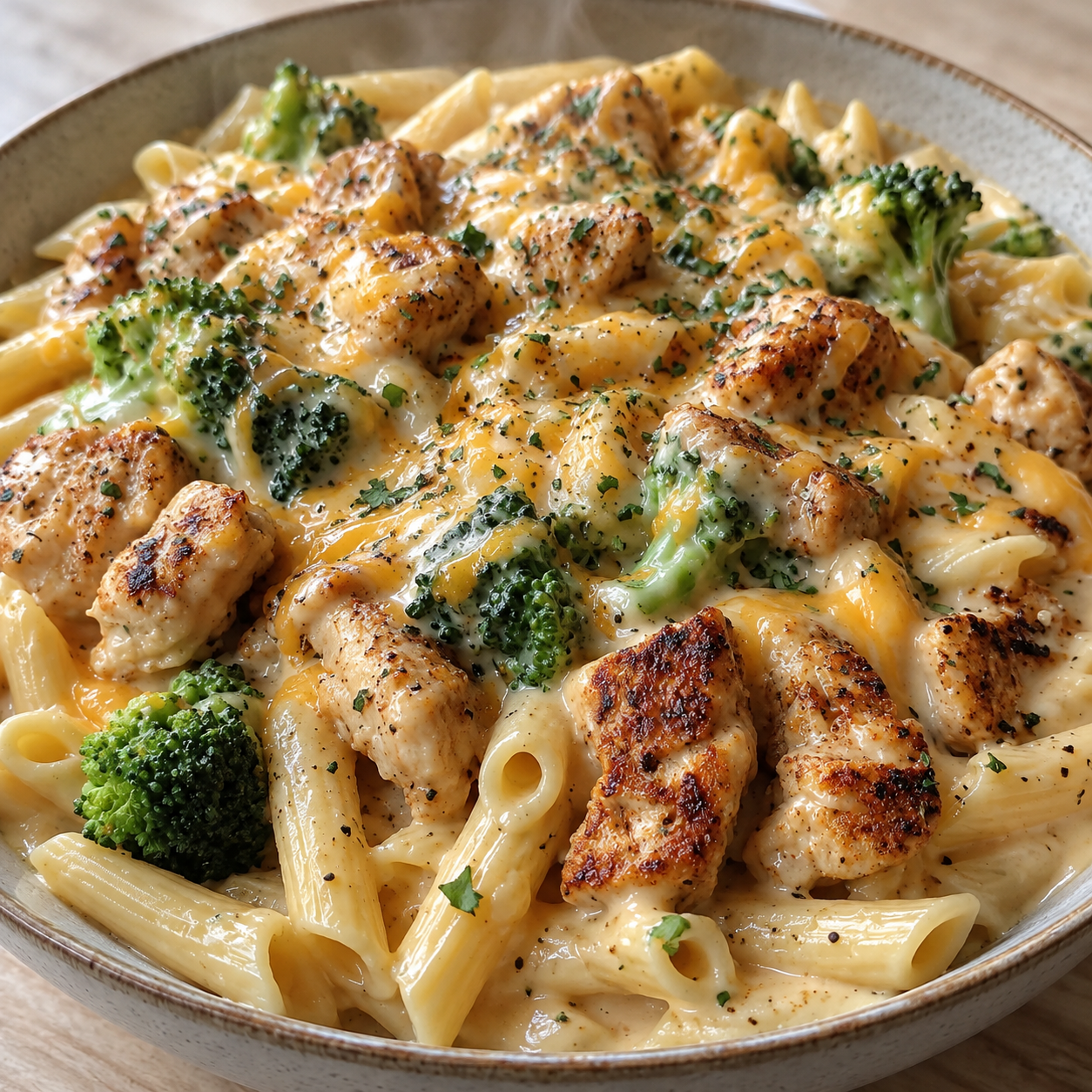
Cajun chicken broccoli Alfredo is what happens when a spice-rubbed Southern favorite meets a classic Italian-American cream sauce. Seared chicken carries real heat and smoky paprika, while a parmesan cream sauce ties pasta and broccoli into one skillet dinner.
This is the one-pan dinner for a weeknight when you want something that tastes like more effort than it took. The chicken sears fast, the broccoli blanches in the same pasta pot, and the sauce comes together in about ten minutes.
It is also forgiving. Swap the pasta shape, dial the Cajun seasoning up or down, and the dish still holds together because the technique, not the exact ingredients, is what makes it work.
What Goes Into the Skillet
Good Cajun Alfredo depends on a few ingredients doing real work, not a long shopping list. Buy a real block of parmesan and a Cajun blend with visible paprika and cayenne so the heat actually shows up.
If you enjoy this recipe, you may also like Cheddar Bay Chicken Broccoli Bake.
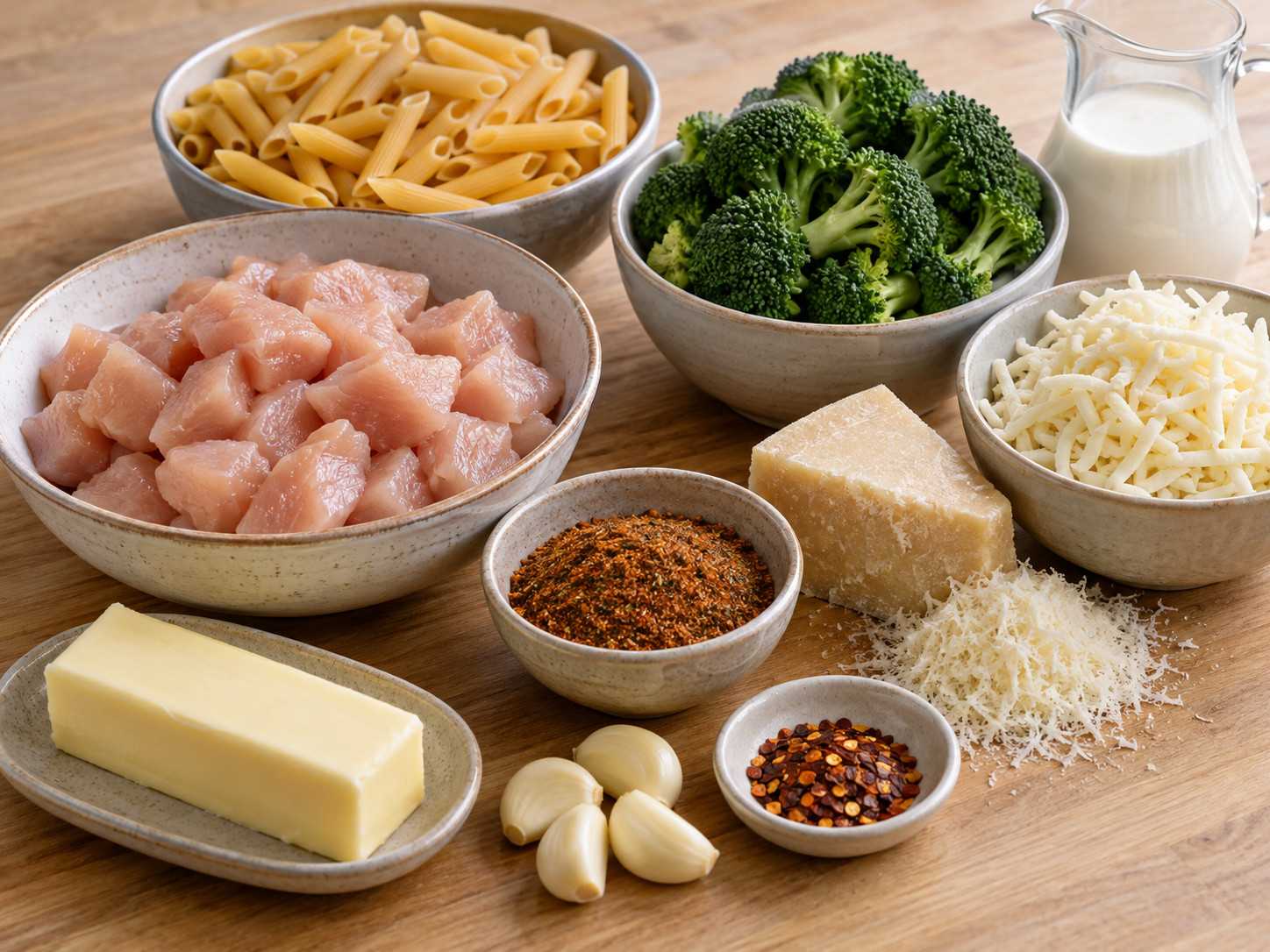
- Chicken breast. Cut into even pieces so it sears fast and cooks through at the same rate.
- Cajun seasoning. Carries the smoky paprika and cayenne heat through both the chicken and the sauce.
- Penne pasta. Short ridged tubes trap the cream sauce in every bite.
- Broccoli florets. Add color, crunch and a fresh contrast to the rich sauce.
- Heavy cream. Builds a sauce that is rich but still pourable, not gluey.
- Garlic. Cooked briefly in butter, it gives the sauce its savory backbone.
- Parmesan and mozzarella. Parmesan brings sharp depth, mozzarella melts it into a smooth, stretchy sauce.
For storage details after serving, the USDA leftovers and food safety guidance.
How the Skillet Comes Together
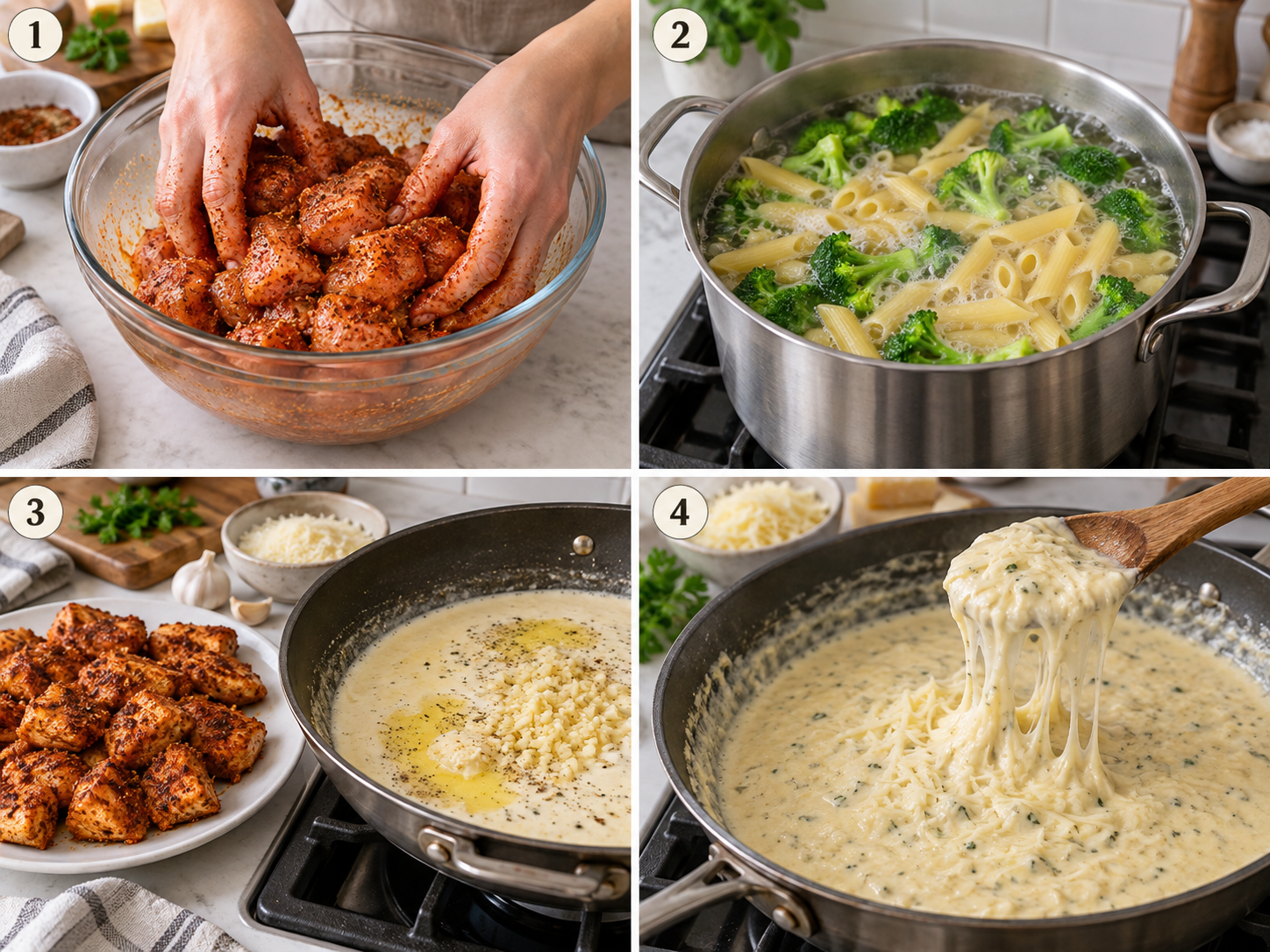
- Season the chicken. Toss the chicken pieces with Cajun seasoning, salt and pepper, then let them sit about 10 minutes so the spice clings instead of sliding off in the pan.
- Cook the pasta and broccoli together. Boil the penne in salted water, then slide the broccoli florets into the same pot for the last 2 to 3 minutes so they turn bright green and just tender. Reserve a cup of the starchy water before draining.
- Sear the chicken. Cook the pieces in hot olive oil for 4 to 5 minutes per side until deeply golden and cooked through to 165°F (74°C) on an instant-read thermometer, then move them to a plate.
- Build the Cajun cream base. Melt butter in the same pan, cook the garlic and a little extra Cajun seasoning for under a minute, then pour in the cream and let it bubble gently, never a hard boil.
- Melt in the cheese. Lower the heat and whisk in the parmesan and mozzarella a handful at a time so the sauce stays smooth instead of clumping or breaking.
- Combine and serve. Add the pasta, broccoli and chicken back into the sauce, tossing until everything is coated, loosening with reserved pasta water if it looks tight, then serve right away.
If you enjoy this recipe, you may also like Smash Burger Tacos.
Why the Sauce Breaks (and Fixes)
Cream sauces split when they get too hot too fast. The fat and water in the cream separate instead of staying blended, and you end up with a greasy, grainy mess instead of a silky coating. Keep the burner at medium-low once the cream goes in, and let it just bubble at the edges rather than boil hard. Add the cheese off the strongest heat, in small handfuls, whisking as you go so each addition melts before the next goes in. If the sauce ever looks oily or clumped, pull it off the heat completely and whisk in a splash of cold cream. The shock usually brings it back together. Cold cheese straight from the fridge can also seize if it hits the pan too fast, so let it sit at room temperature for a few minutes while the sauce base comes together.
Getting the Chicken Safely Done
Cajun seasoning browns fast, which can trick you into thinking the chicken is done before it actually is. Cut the pieces to a similar size so they all finish together, and always confirm doneness with a thermometer rather than color alone. Cornell Cooperative Extension lists 165°F (74°C) as the safe minimum internal temperature for poultry, checked at the thickest piece. Pull the chicken as soon as it hits that mark. It keeps cooking a little from residual heat once it is off direct heat, and overcooked chicken breast turns stringy fast in a cream sauce. If you are working with thicker pieces, slow the heat down slightly so the outside doesn't scorch before the center catches up.
Smart Swaps for This Skillet
Chicken thighs work in place of breast and stay juicier if you tend to overcook meat, just sear a minute longer per side since they're denser. Rotini, fusilli or even fettuccine all hold the sauce fine if penne isn't in the pantry. Shrimp is a quick swap too, added raw in the last few minutes so it doesn't turn rubbery. For a milder version, cut the Cajun seasoning by half and add it in two stages, tasting the sauce before you commit to the second half. Half-and-half can replace some of the heavy cream for a lighter sauce, though it won't reduce to quite the same thickness, so simmer it a little longer and expect a slightly thinner but still coating texture.
Picking and Storing Good Broccoli
Look for broccoli with tight, compact florets and a firm stem, both signs it was cut recently. NC State Extension notes that half a cup of cooked broccoli provides a meaningful share of daily vitamin C, more than half an orange, and that steaming keeps more of that nutrition intact than boiling does. If you're blanching it in the pasta water like this recipe does, keep the dip brief, just 2 to 3 minutes, so it stays bright green and a little crisp rather than going soft and olive colored. Store any extra raw broccoli loose in the crisper drawer and use it within a few days for the best texture.
Storing and Reheating Leftovers
Let leftovers cool briefly, then move them to the fridge in a shallow airtight container. University of Illinois Extension recommends refrigerating leftovers within two hours of cooking and using them within three to four days. Reheat gently in a skillet over low heat with a splash of cream stirred in to loosen the sauce, which tends to tighten up in the fridge. Stir constantly and bring it back to a full 165°F (74°C) rather than a quick microwave blast, which often heats unevenly and can make the sauce split. This dish doesn't freeze well since the cream sauce tends to separate once thawed, so plan to eat it within that four-day window instead.
Frequently Asked Questions
- → Can I use chicken thighs instead of chicken breast?
Yes. Boneless, skinless thighs work well and tend to stay juicier since they have a bit more fat. Sear them about a minute longer per side than breast pieces and check that they still reach 165°F (74°C) before moving on to the sauce.
- → What can I use instead of penne?
Rotini, fusilli and fettuccine all hold the cream sauce well. Pick a shape with some surface area or ridges rather than something very smooth, since smooth pasta sheds sauce more easily.
- → Why did my Alfredo sauce turn grainy or split?
This usually means the heat was too high when the cheese went in. Pull the pan off direct heat, whisk in a splash of cold cream, and the sauce typically comes back together. Going forward, add the cheese off the strongest burner and in small handfuls.
- → Can I make this ahead of time?
You can prep the chicken and chop the vegetables a day ahead and keep them covered in the fridge. The sauce itself is best made right before serving since cream sauces thicken and lose their silkiness the longer they sit.
- → How spicy is this dish, and can I adjust the heat?
Most store-bought Cajun blends land somewhere between mild and medium, mostly from paprika and cayenne. Use less seasoning or a milder blend to tone it down, or add red pepper flakes if you want more kick.
- → Can I use frozen broccoli instead of fresh?
Yes. Skip blanching it in the pasta pot and instead stir the frozen florets directly into the finished sauce for the last few minutes until heated through, draining off any extra water they release so the sauce doesn't thin out.