

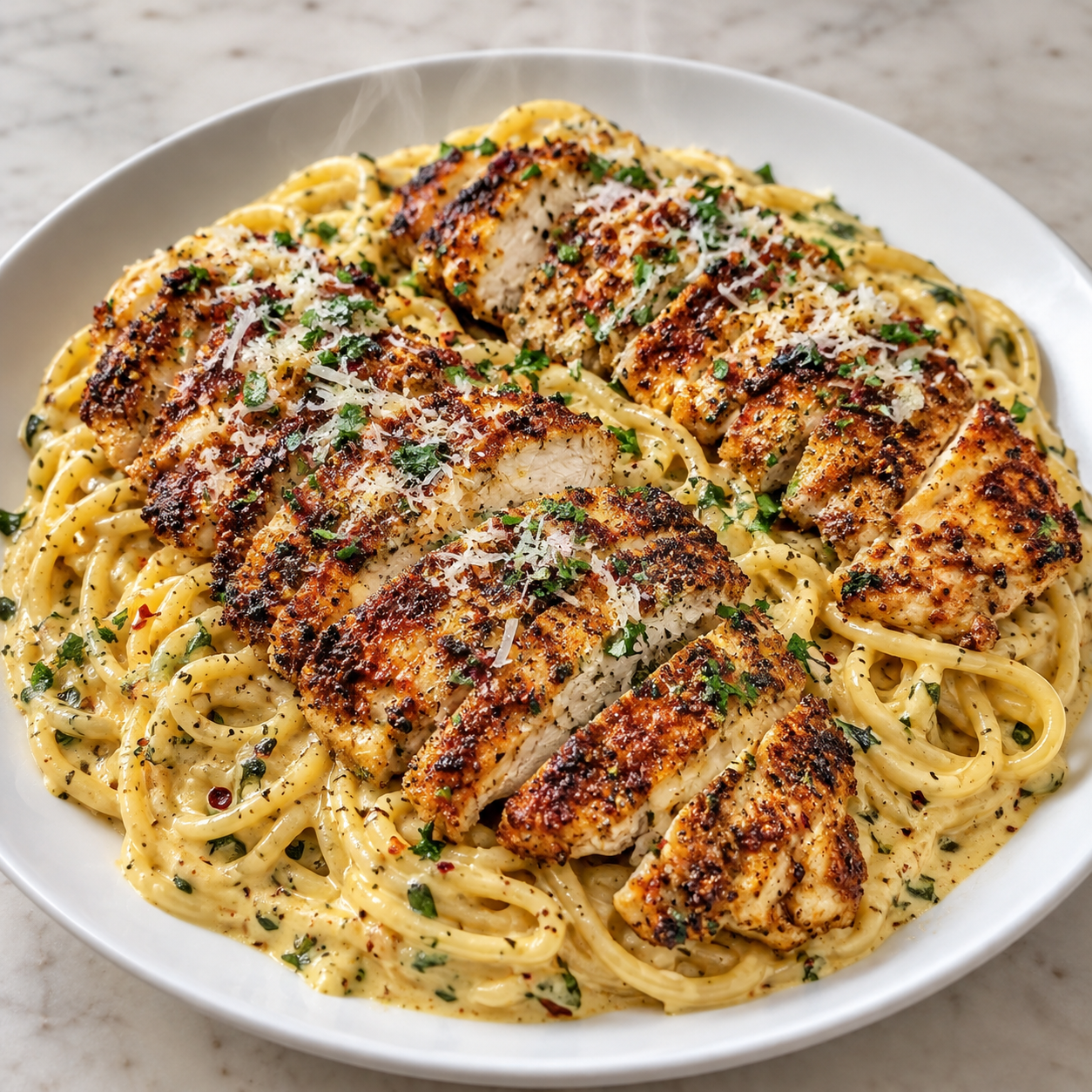
This is the dinner that turns a plain weeknight into something everyone fights over at the table. Crispy, Parmesan-crusted chicken sits on a nest of spaghetti coated in a spicy, cheesy Cajun cream sauce, and the whole thing comes together in one skillet and one pot.
It's built for people who want bold flavor without a long ingredient list. The heat is easy to dial up or down, the sauce is forgiving, and leftovers reheat well enough for lunch the next day.
What makes it work is simple. Sear the chicken first so it stays juicy, then use the same pan to build a sauce that picks up every bit of flavor left behind.
Behind the Bold Cajun Flavor
Good Cajun seasoning and real cheese carry this whole dish, so don't skip the fresh garlic or swap in pre-shredded cheese if you can help it. Buy chicken breasts on the thicker side so you have enough to slice into even cutlets.
If you enjoy this recipe, you may also like Cheddar Bay Chicken Broccoli Bake.
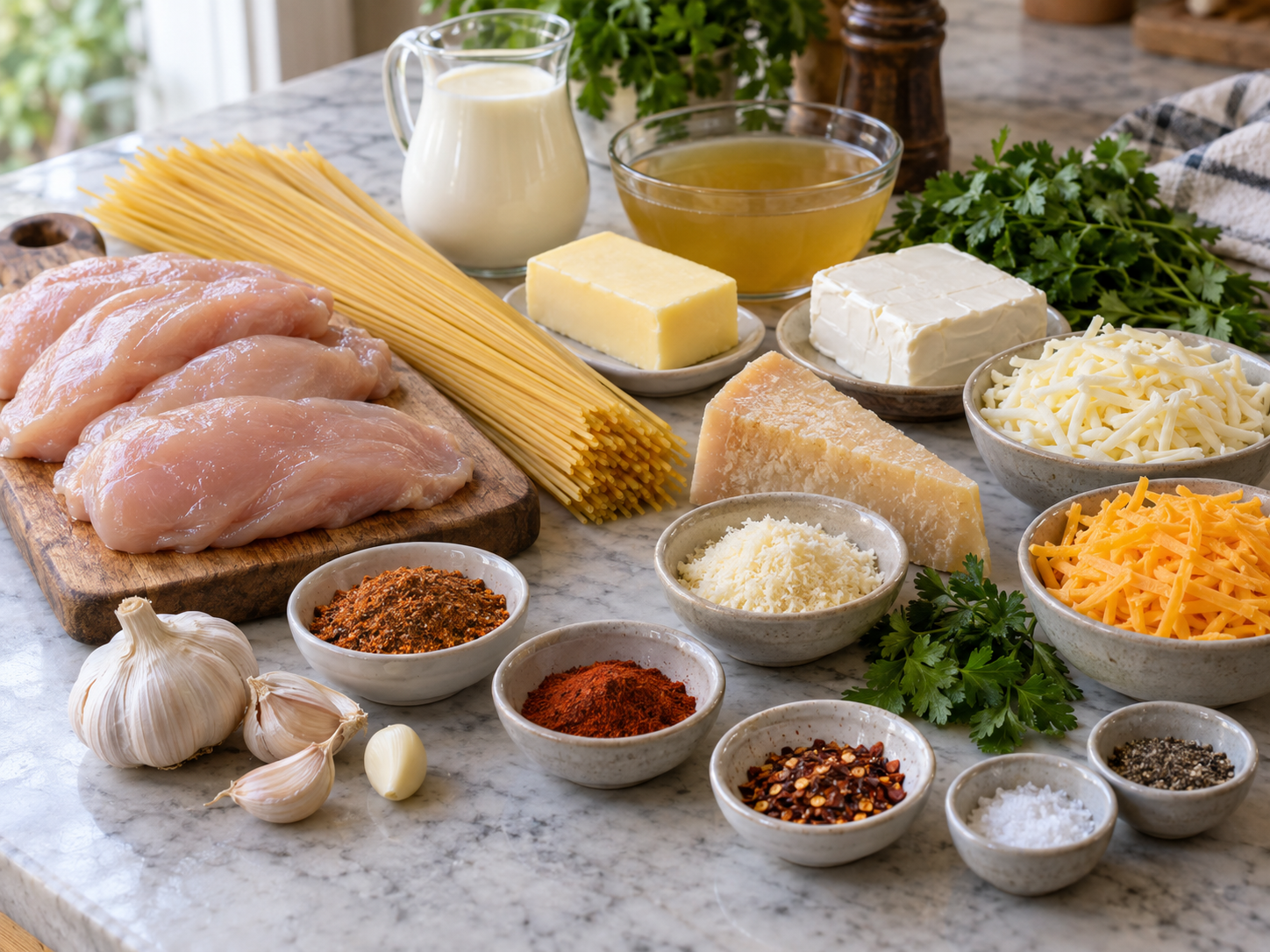
- Chicken breasts. The protein base, sliced thin so the pieces cook fast and the Parmesan crust gets properly crisp.
- Cajun seasoning. Carries the smoky, peppery heat through both the chicken crust and the sauce.
- Smoked paprika. Deepens the color and adds a mellow smokiness under the Cajun spice.
- Parmesan cheese. Pressed onto the chicken for a crust, then melted into the sauce for a nutty, salty backbone.
- Spaghetti. Long strands hold onto the thick cream sauce better than short pasta shapes.
- Garlic. Fresh cloves bring a sharp warmth that mellows into something sweeter once it hits the butter.
- Heavy cream. The base of the sauce, and the higher the fat content the silkier the finish.
- Chicken broth. Loosens the sauce so it doesn't taste purely of cream and cheese.
- Cream cheese. Melts into the sauce for extra body and a faint tang.
- Mozzarella and cheddar. Melt together for pull and a sharper cheese flavor underneath the Parmesan.
For storage details after serving, the USDA leftovers and food safety guidance.
Building the Crispy Chicken and Sauce
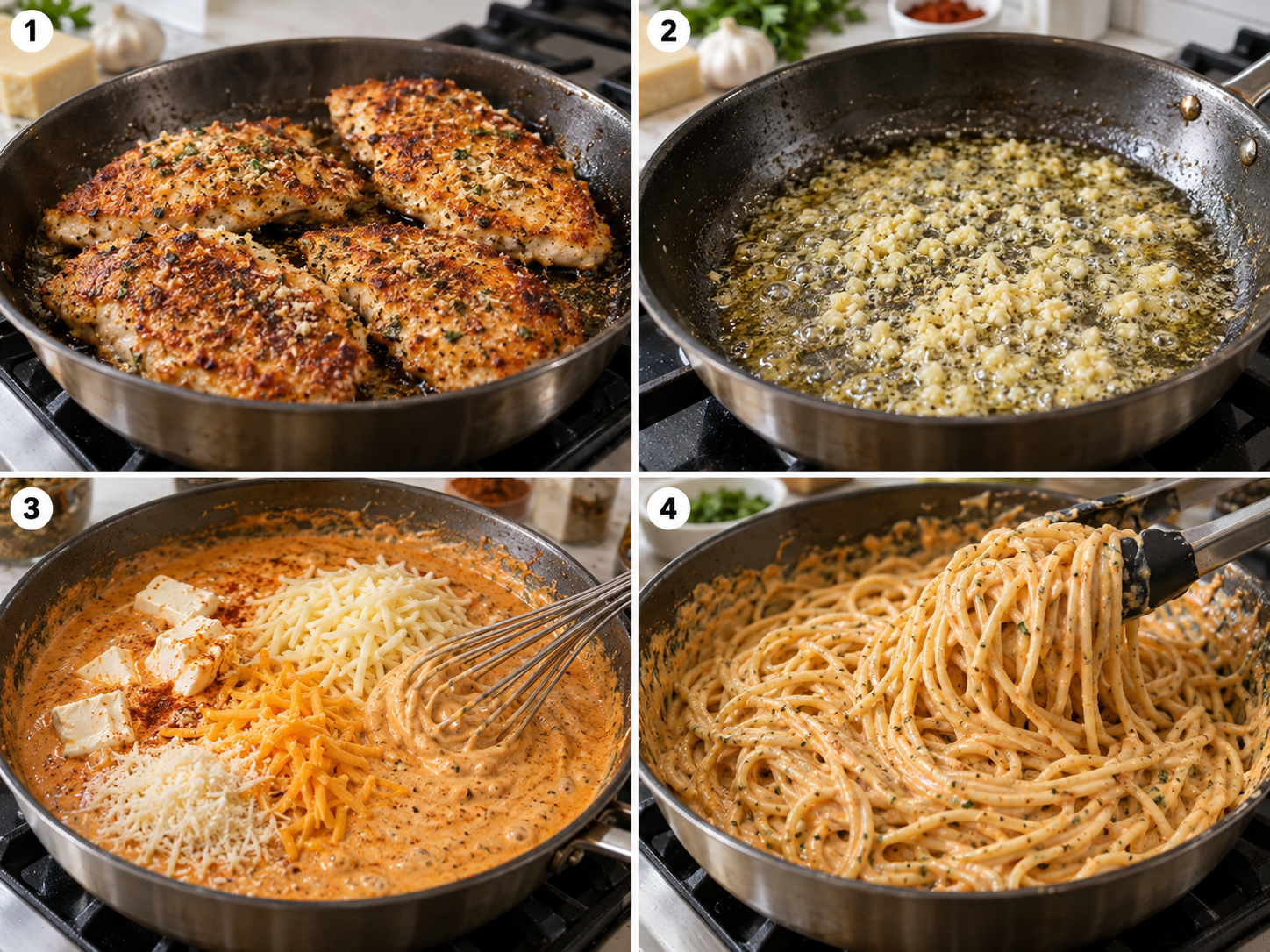
- Cook the spaghetti. Boil it in well-salted water until just shy of al dente, then scoop out a cup of the starchy water before draining. Skip rinsing the pasta so the sauce has something to cling to.
- Crust the chicken. Pat the cutlets completely dry, season both sides with Cajun seasoning, smoked paprika, salt and pepper, then press the grated Parmesan onto each piece so it has something to caramelize against the pan.
- Sear until golden. Heat the olive oil and 2 tablespoons of butter over medium-high heat and cook the chicken for 4 to 6 minutes per side until the crust is deep gold and the thickest part reaches 165°F, then rest it on a plate.
- Build the cream base. In the same skillet, melt the remaining butter and cook the garlic for about 30 seconds until fragrant, then pour in the cream and broth and bring to a gentle simmer.
- Melt in the cheese. Whisk in the cream cheese until smooth, then stir in the mozzarella, cheddar and Parmesan a handful at a time along with the Cajun seasoning, Italian seasoning, basil and red pepper flakes.
- Toss and plate. Add the drained spaghetti to the sauce and toss with tongs, loosening with the reserved pasta water until glossy, then top with the sliced chicken and a scatter of parsley.
If you enjoy this recipe, you may also like Smash Burger Tacos.
Getting a Real Parmesan Crust
The Parmesan crust is what separates this chicken from a plain seared breast, but it only works if the chicken is completely dry before you season it. Any surface moisture turns the Parmesan gummy instead of golden.
Press the cheese on with your palm rather than sprinkling it, so it actually sticks to the seasoned surface. A hot pan matters too. If the oil isn't shimmering when the chicken goes in, the crust steams instead of browning, and you lose the contrast between the crisp edge and the juicy inside.
Resist moving the chicken around once it hits the pan. Let it sit undisturbed for the first few minutes so the crust has time to set before you flip it.
The Cajun Heat Balance Explained
Cajun seasoning blends vary a lot by brand. Some lean peppery and salty, others lean more toward garlic and onion powder with milder heat, so taste yours before adding it and adjust the salt elsewhere in the dish.
The cream, broth and three cheeses mellow the spice considerably, so what tastes sharp in the dry seasoning turns into background warmth once it's stirred into the sauce. If you want real heat, red pepper flakes do more work than extra Cajun seasoning, since more seasoning mostly just adds salt.
For a milder version, cut the Cajun seasoning by half and skip the red pepper flakes entirely. The garlic and smoked paprika still carry plenty of flavor on their own.
Smart Swaps for This Pasta
Chicken thighs work in place of breasts if you want a richer, slightly fattier bite. Trim the excess fat and pound them to an even thickness first so they cook at the same rate. Shrimp is a good swap too, seasoned and seared the same way, but pull it from the pan the moment it turns pink since it overcooks fast.
Gluten-free spaghetti works for a celiac-friendly version, though it behaves a little differently in the pot, so check it a minute or two earlier than the package suggests. Half-and-half can stand in for heavy cream if you want something lighter, though the sauce will be noticeably thinner.
If you only have pre-shredded cheese on hand, add it gradually over low heat. It melts less smoothly than cheese you shred yourself and can turn grainy if it hits sauce that's too hot.
Make-Ahead and Reheating Leftovers
You can season and crust the chicken a few hours ahead and keep it covered in the fridge until you're ready to cook. The sauce itself is best made fresh, since cream sauces can separate slightly if they sit too long before the pasta goes in.
Leftovers keep for a few days in a sealed container in the refrigerator. University extension guidance recommends refrigerating leftovers within two hours of cooking and reheating them thoroughly to 165°F or until hot and steamy. A splash of milk or broth stirred in on the stovetop brings the sauce back to its glossy texture, since it naturally thickens once chilled.
What to Serve Alongside It
This pasta is rich enough that it doesn't need much on the side. A simple green salad with a sharp vinaigrette cuts through the cream sauce nicely, and garlic bread is an easy way to mop up whatever sauce is left on the plate.
Roasted broccoli or asparagus add some color and a little textural contrast without competing with the main dish. If you want something bright at the table, a squeeze of fresh lemon over the finished plate wakes up the richness more than any extra seasoning would.
Keep the sides simple. The chicken and sauce are already doing most of the talking.
Frequently Asked Questions
- → Can I use chicken thighs instead of chicken breasts?
Yes, boneless thighs work well and bring a slightly richer flavor. Trim visible fat and pound them to an even thickness so they cook at the same rate as the rest of the batch.
- → What can I use instead of heavy cream?
Half-and-half will work, though the sauce will be thinner and less rich. Avoid plain milk on its own, since it tends to split when it hits the hot pan.
- → How spicy is this dish?
It lands around medium, mostly from the Cajun seasoning in both the chicken and the sauce. Cut the seasoning by half and skip the red pepper flakes for a milder version, or add extra flakes if you want more heat.
- → How should I store and reheat leftovers?
Refrigerate leftovers in a sealed container within two hours of cooking and eat them within a few days. Reheat gently in a skillet with a splash of milk or broth until the chicken and sauce are hot all the way through.
- → Can I make this gluten-free?
Swap in a gluten-free spaghetti. It can cook a little faster than regular pasta, so start checking it a minute or two before the package time suggests.
- → Why did my sauce turn grainy or separate?
This usually means the cheese went in too fast or the heat was too high. Add the cheese gradually over low heat and stir constantly so it melts smoothly instead of clumping.