

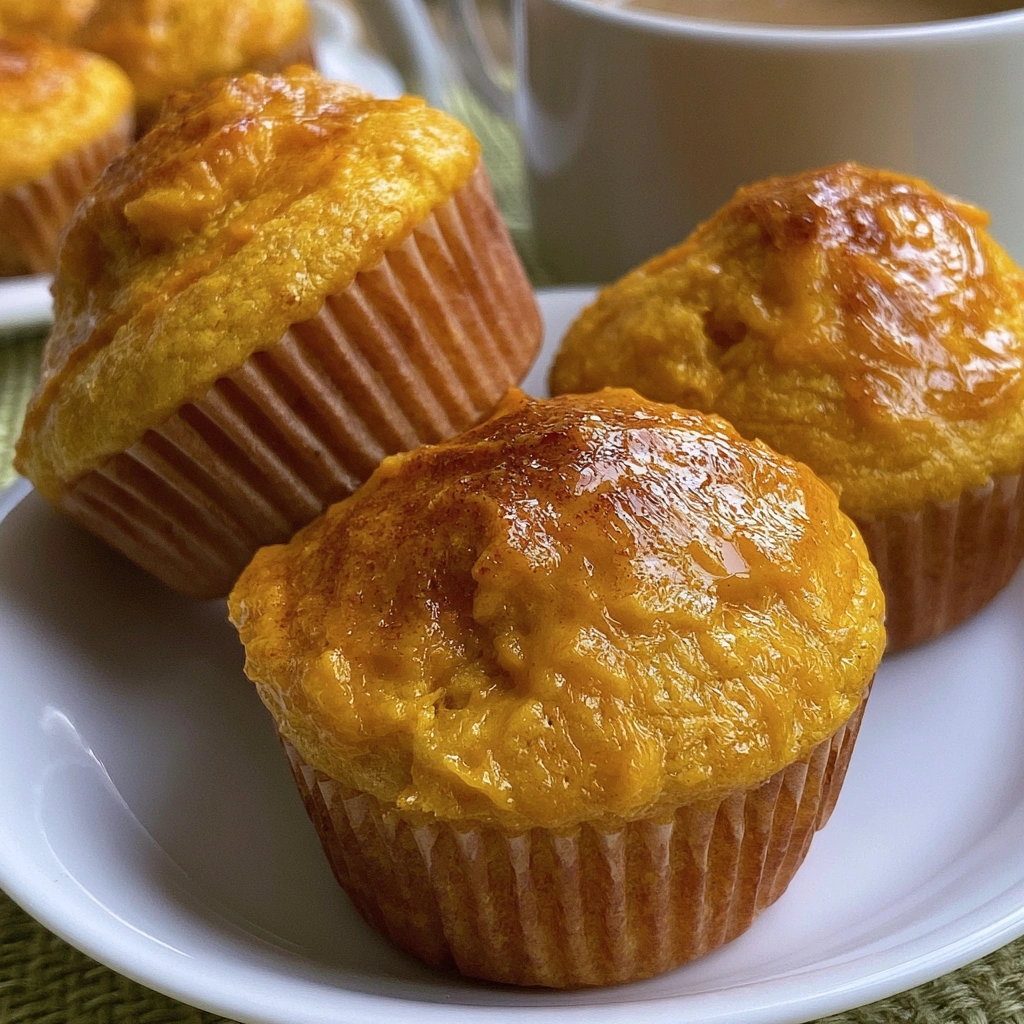
Sweet potato cornbread muffins combine mashed orange sweet potato with cornmeal, flour, brown sugar, milk, and eggs for a tender side with gentle sweetness. The batter is mixed in one bowl and baked in a standard 12-cup tin, making it practical for chili night, a holiday table, or breakfast with butter.
Moisture comes from the sweet potato as much as the milk and oil, so the mash should be smooth and measured after cooking. Mix only until the dry ingredients disappear, fill each liner about three-quarters full, and check doneness at 18 minutes. A center temperature near 200°F removes guesswork without overbaking.
Ingredients for Twelve Muffins
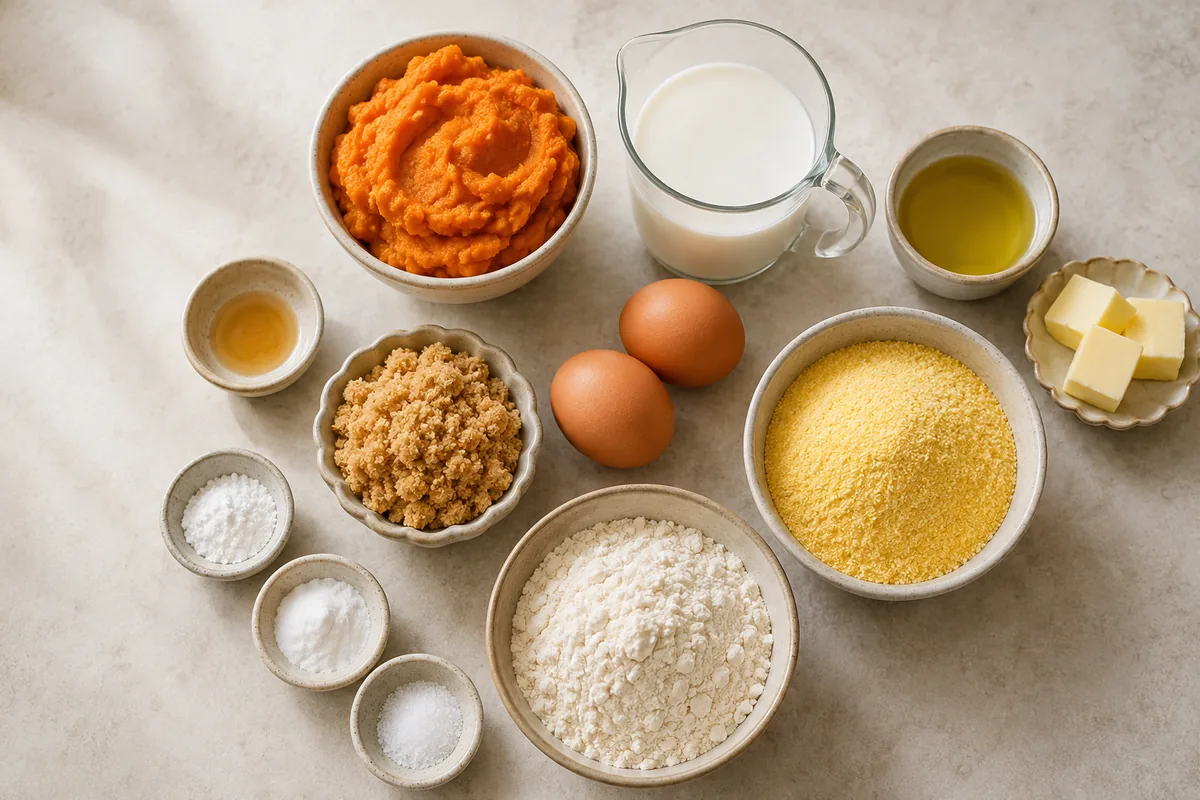
The wet mixture uses 1 cup cooked mashed sweet potato, 1 cup milk, 3 tablespoons avocado oil or melted butter, 1 teaspoon apple cider vinegar, 1/3 cup packed light brown sugar, and 2 large eggs. The dry ingredients are 1 cup yellow cornmeal, 1 cup all-purpose flour, 1 tablespoon baking powder, 1/2 teaspoon baking soda, and 1/2 teaspoon salt.
- Sweet potato: Cook until completely tender, mash smoothly, cool, and measure after mashing.
- Cornmeal: Fine or medium-grind yellow cornmeal works. Fine gives a softer crumb; medium gives more corn texture.
- Avocado oil or butter: Oil keeps the muffins soft even when cool. Melted butter adds a fuller dairy flavor.
- Apple cider vinegar: The small amount works with baking soda and lightly balances the sweetness.
- Brown sugar: One-third cup makes the muffins gently sweet rather than dessert-like.
If you enjoy this recipe, you may also like Mozzarella Stuffed Soft Pretzels.
How to Make Sweet Potato Cornbread Muffins
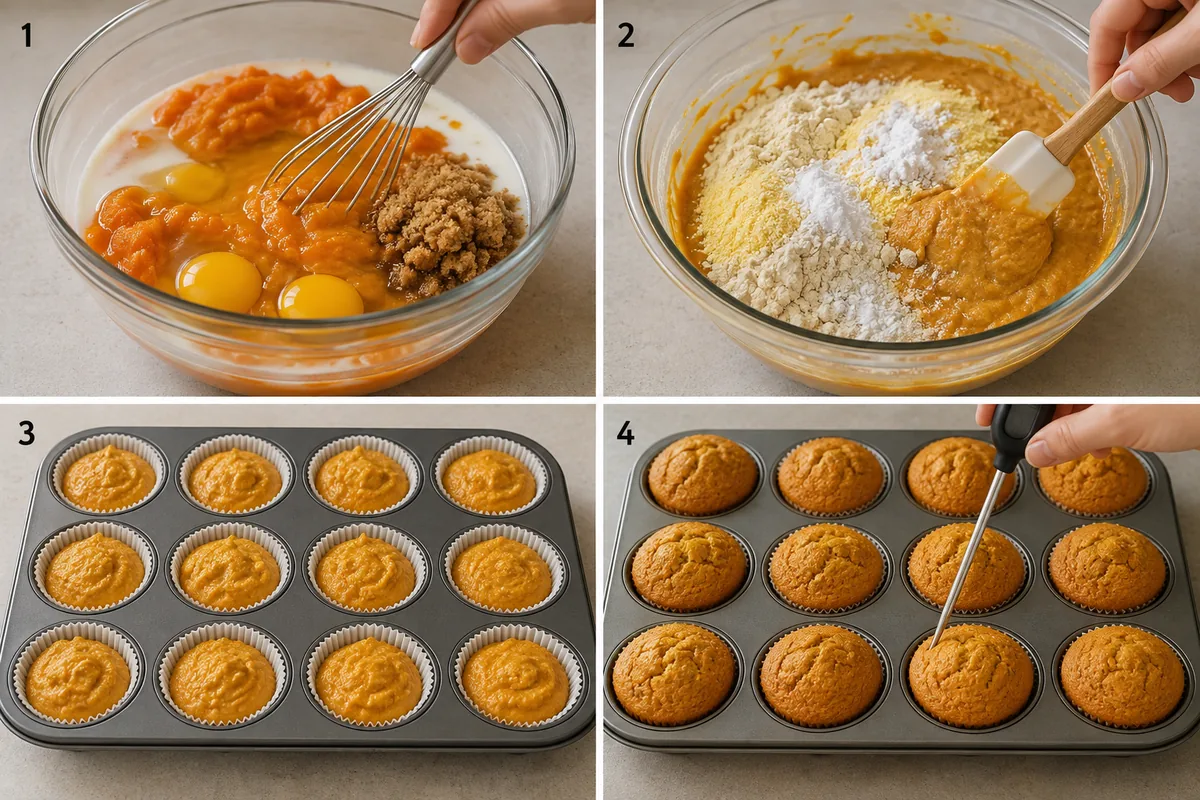
- Prepare the pan. Heat the oven to 375°F and line a standard 12-cup muffin tin with paper liners.
- Whisk the wet mixture. In a large bowl, whisk mashed sweet potato, milk, avocado oil or cooled melted butter, apple cider vinegar, brown sugar, and eggs until smooth and evenly colored.
- Add the dry ingredients. Add cornmeal and flour. Sprinkle baking powder, baking soda, and salt evenly over the surface rather than dropping them in one spot.
- Fold gently. Use a large spoon or rubber spatula to mix only until no dry flour remains. A few small lumps are acceptable.
- Portion. Divide the batter among the lined cups using about 1/4 cup per muffin. Each liner should be roughly three-quarters full.
- Bake. Bake for 18 to 20 minutes, until the tops are golden and a toothpick shows a few moist crumbs. An instant-read thermometer inserted into a center muffin should read about 200°F.
- Cool. Rest the muffins in the pan for 10 minutes, then transfer them to a rack. Serve warm or let them cool completely before storing.
For storage details after serving, the USDA leftovers and food safety guidance.
Cook and Measure the Sweet Potato
Bake, steam, or microwave the sweet potato until a knife passes through without resistance. Baking produces a relatively dry, concentrated mash; steaming and microwaving are faster but may hold slightly more water. Avoid boiling peeled chunks if possible because they can absorb excess liquid.
Remove the skin, mash until no firm pieces remain, and let it cool before mixing with the eggs. Measure a level cup of mash rather than estimating by the number of potatoes. Extra sweet potato sounds harmless but can make the center heavy and prevent a clean rise.
If you enjoy this recipe, you may also like Bourbon Maple Bacon Cinnamon Rolls.
Choose Fine or Medium Cornmeal
Fine cornmeal blends into a tender, cake-like crumb. Medium grind leaves a more noticeable corn texture and may need a minute for the batter to hydrate before portioning. Coarse polenta is not a direct substitute because the grains can remain hard during the short bake.
Use plain cornmeal, not a self-rising cornmeal mix that already contains flour, salt, and leavening. Adding the recipe's baking powder and soda to a self-rising blend can create a bitter taste and an uncontrolled rise.
Mix in One Bowl without Overworking
Whisk the wet ingredients until the sweet potato is evenly dispersed before adding any flour. Once flour enters the bowl, switch to a spatula and fold. Scrape along the bottom and lift the batter over itself, rotating the bowl after each pass.
Stop when the last obvious dry pocket disappears. A few lumps are safer than a perfectly smooth batter because vigorous mixing develops gluten and makes muffins rubbery. Sprinkling the leaveners across the dry surface helps distribute them with fewer strokes.
Portion for Even Domes
A 1/4-cup measure or spring-loaded scoop keeps all 12 portions similar, which means they finish together. Fill each liner about three-quarters full and wipe drips from the exposed metal so they do not burn. If one cup is short, borrow a spoonful from several others instead of leaving one oversized muffin.
Paper liners make cleanup easy, but lightly greased wells can produce a slightly crisper outer edge. If baking without liners, grease every corner thoroughly and wait the full 10 minutes before loosening the muffins with a thin spatula.
Use Temperature as a Doneness Check
Visual cues include a rounded golden top and edges that spring back when touched lightly. A toothpick should not carry wet batter, although a few moist orange crumbs are fine. For a more objective check, insert an instant-read thermometer into the center of a middle muffin and aim for about 200°F.
Begin checking at 18 minutes because ovens and pans differ. Dark nonstick tins brown faster than light metal. Remove the pan as soon as the centers are done; sweet potato protects moisture, but extra oven time can still dry the cornmeal crumb.
Gluten-Free and Dairy-Free Notes
The original option suggests replacing 1 cup all-purpose flour with 3/4 cup gluten-free flour blend. Blends absorb differently, so use one designed for one-to-one baking and expect the batter texture to vary. Confirm the cornmeal, baking powder, and all other ingredients are certified gluten-free if cross-contact matters.
For dairy-free muffins, use avocado oil rather than butter and choose an unsweetened plain nondairy milk that is suitable for baking. Soy or oat milk generally provides more body than a very thin beverage. These substitutions alter flavor slightly but preserve the basic method.
Troubleshooting
- Muffins are dense: The sweet potato may have been overmeasured or the batter overmixed. Use one level cup and fold gently.
- Centers stay wet: Confirm the mash was not watery, fill only three-quarters full, and bake until the center reaches about 200°F.
- Muffins crumble apart: Let them rest in the pan for 10 minutes so the structure sets before moving.
- Tops are pale: Verify the oven reached 375°F and use the center rack. Add a minute rather than moving too close to the top element.
- Texture is gritty: Use fine cornmeal or let medium-grind cornmeal hydrate briefly in the mixed batter.
Serving, Storage, and Freezing
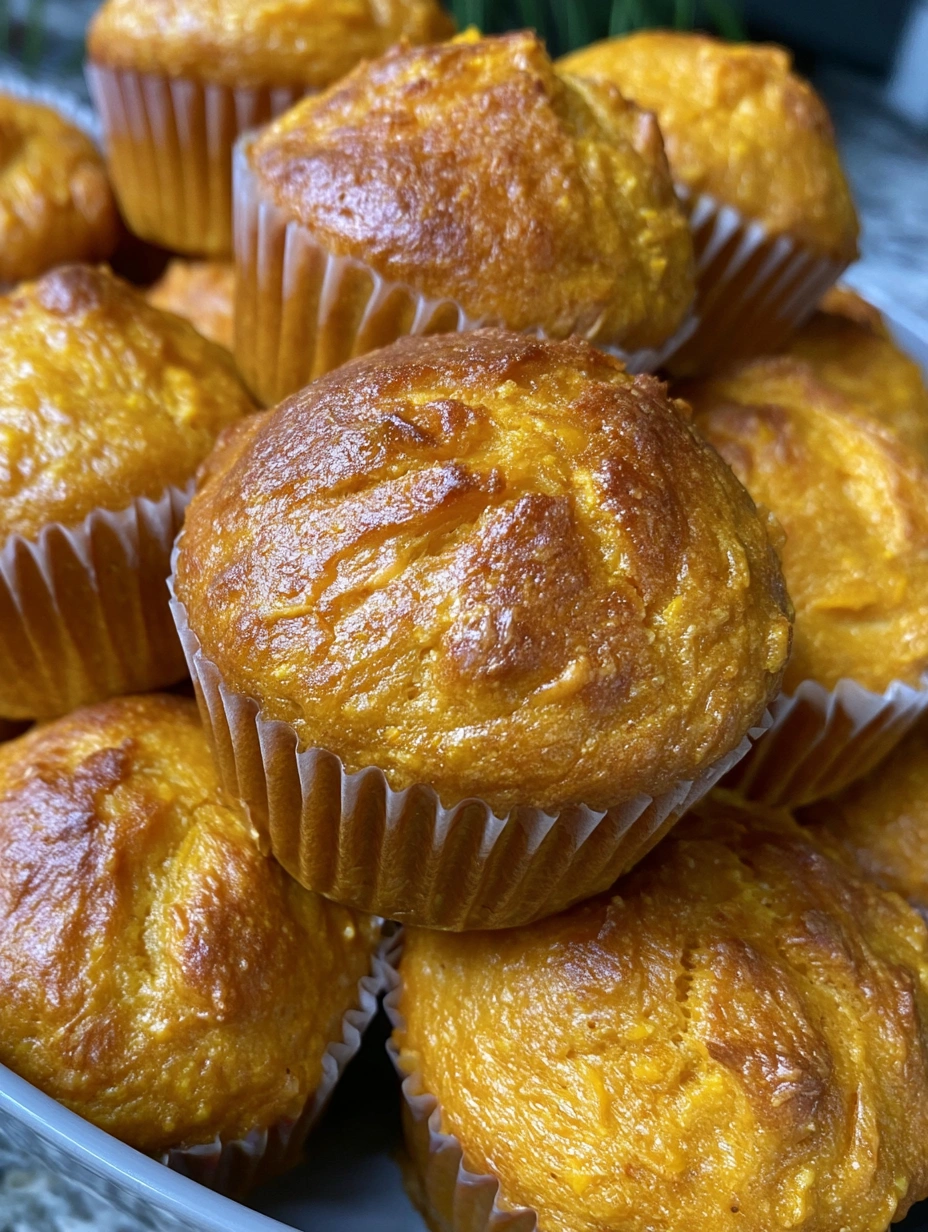
Serve the muffins warm with salted butter, honey butter, apple butter, or jam. Their mild sweetness works beside chili, barbecue, roast chicken, soup, or a holiday meal. For breakfast, pair one with eggs or yogurt rather than adding a heavy topping.
Cool completely before sealing so condensation does not make the tops sticky. Store airtight at room temperature for up to two days or refrigerate for 4 to 5 days. Reheat one muffin for about 10 to 15 seconds in the microwave or several minutes in a 300°F oven.
Freeze cooled muffins in a single layer, then transfer to a freezer bag for up to two months. Thaw covered at room temperature or warm gently from frozen. Mashed sweet potato can also be prepared up to three days ahead and kept refrigerated, making the one-bowl batter especially quick on baking day.
Conclusion
Measure one cup of smooth cooled sweet potato, whisk it with the wet ingredients, then fold in cornmeal, flour, and evenly scattered leaveners only until combined. Portion 12 lined cups three-quarters full and bake at 375°F until golden and about 200°F inside.
Frequently Asked Questions
- → Can I prepare the sweet potato ahead?
Yes. Cook, mash, cool, and refrigerate it in a covered container for up to three days. Measure one cup when you are ready to mix the batter.
- → Should I use fine or medium cornmeal?
Either works. Fine cornmeal gives a softer crumb, while medium grind produces more texture. Do not use coarse polenta as a direct substitute.
- → How do I know when the muffins are done?
The tops should be golden and spring back lightly, a toothpick should have no wet batter, and the center should register about 200°F on an instant-read thermometer.
- → Can sweet potato cornbread muffins be frozen?
Yes. Freeze completely cooled muffins airtight for up to two months, then thaw covered at room temperature or warm gently from frozen.