

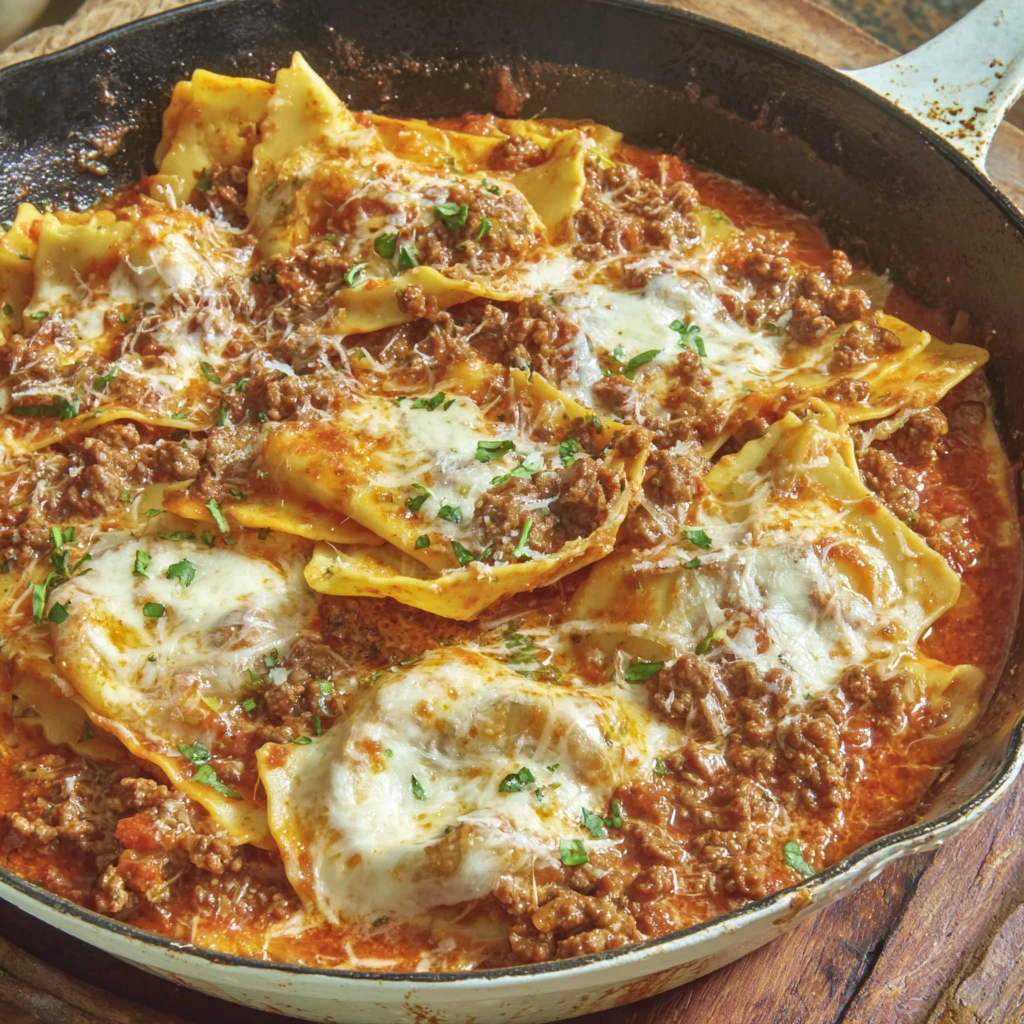
One-pan skillet lasagna delivers beef, Italian sausage, tomato sauce, tender pasta, ricotta, and melted mozzarella without building separate layers. Broken lasagna sheets cook directly in the seasoned sauce and broth, making this a hearty 30-minute dinner with only one main pan to clean.
The reliable method is to use a wide skillet with a lid, drain the browned meat, and stir the pasta pieces occasionally while they soften. Ricotta goes in after the noodles are tender, and mozzarella melts over the surface in the oven or under a covered stovetop finish.
Ingredients for Skillet Lasagna
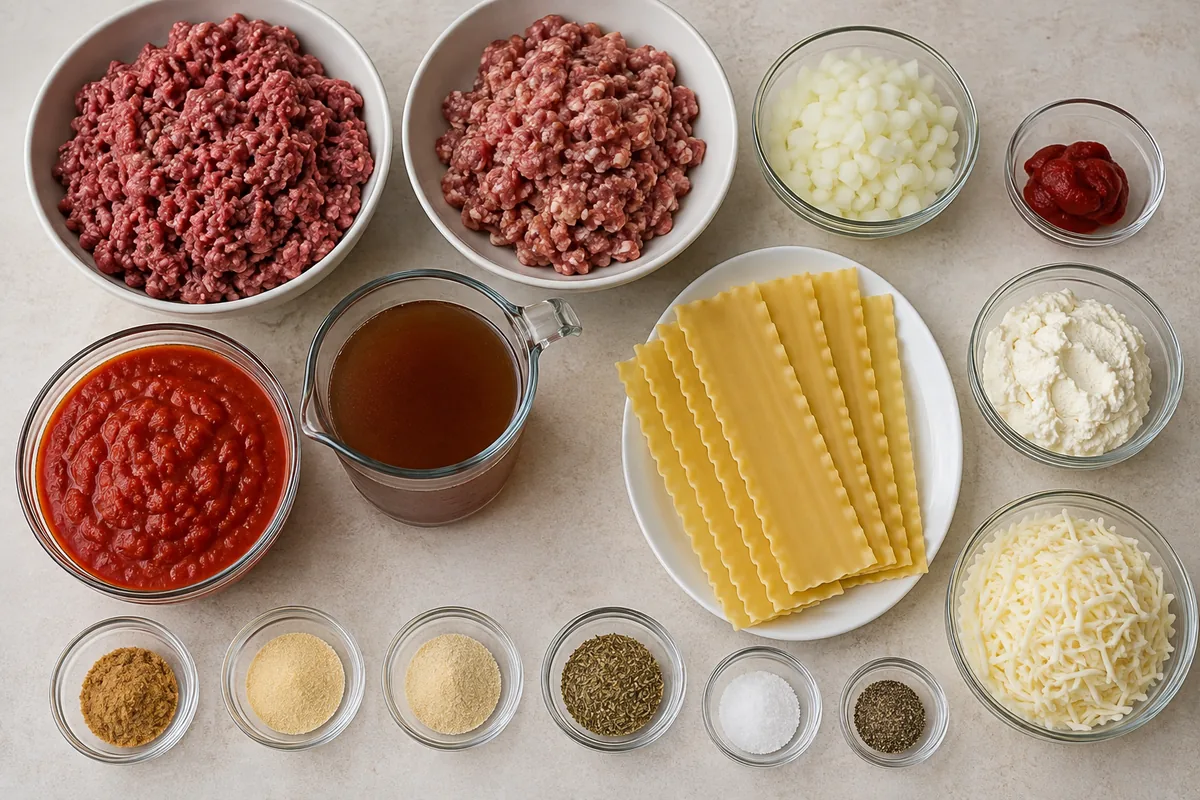
Use 1 pound ground beef, 1 pound Italian sausage, and 1/2 cup diced yellow onion. The sauce needs 1 tablespoon tomato paste, 24 ounces pasta sauce, 3 cups beef broth, 1 teaspoon beef bouillon powder, 1 teaspoon onion powder, 1 teaspoon garlic powder, 1 teaspoon Italian seasoning, salt, and pepper. Add 7 lasagna sheets broken into pieces, 1/2 cup ricotta, and 1 cup shredded mozzarella.
- Italian sausage: Mild or hot both work; remove casings before browning.
- Lasagna sheets: Standard dry sheets cook in the sauce. Break them into irregular 2-inch pieces.
- Broth: Three cups provide the liquid that rehydrates the pasta.
- Ricotta: Stir it in at the end for creamy pockets without a separate white sauce.
- Mozzarella: Low-moisture shreds melt neatly over the surface.
If you enjoy this recipe, you may also like Mac and Cheese Lasagna.
How to Make One-Pan Skillet Lasagna
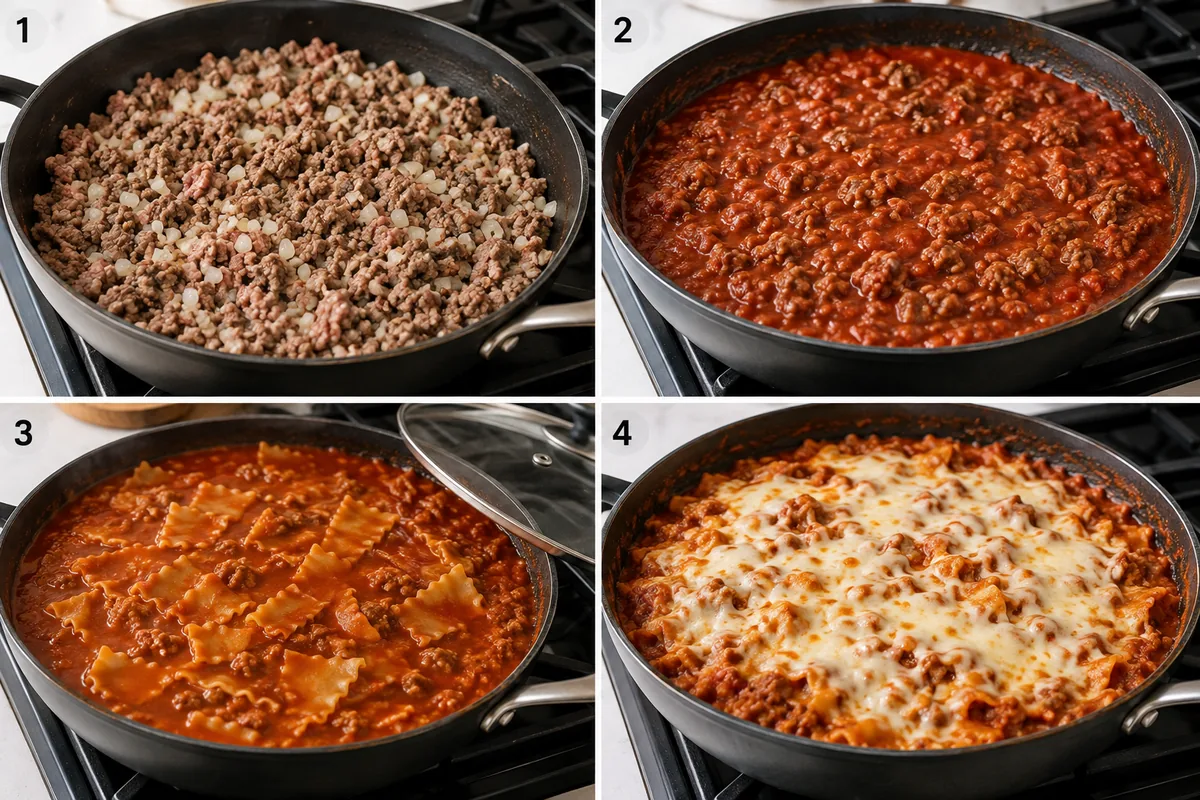
- Brown the meat. In a large skillet over medium-high heat, cook ground beef, sausage, and onion until no pink remains. Break up the meat and drain excess grease.
- Toast the tomato paste. Stir in tomato paste and cook for 1 minute to darken it slightly.
- Build the sauce. Add pasta sauce, broth, Italian seasoning, onion powder, garlic powder, bouillon, salt, and pepper. Bring to a gentle simmer.
- Cook the noodles. Add broken lasagna sheets and press them under the liquid. Cover and simmer for 15 to 20 minutes, stirring occasionally, until tender.
- Add ricotta. Stir in the ricotta, leaving a few visible creamy streaks if desired.
- Melt the mozzarella. Sprinkle mozzarella over the top. Transfer an oven-safe skillet to a 350°F oven for about 10 minutes, or cover on low heat until melted and bubbly.
- Rest and serve. Let stand 5 minutes so the sauce settles before spooning into bowls.
For storage details after serving, the USDA leftovers and food safety guidance.
Choose a Wide Skillet with a Lid
A 10- to 12-inch skillet gives the meat room to brown and lets the pasta spread into the liquid. A lid traps steam while the dry sheets soften. Deep sides are helpful because the recipe includes two pounds of meat, three cups of broth, and a full jar of sauce.
Confirm the handle is oven-safe before using the baked finish. If it is not, melt the mozzarella with the pan covered on the stovetop. The flavor remains the same, though the top will be softer rather than lightly browned.
If you enjoy this recipe, you may also like Cheesy Beef Enchiladas.
Brown and Drain the Two Meats
Ground beef supplies classic lasagna flavor and Italian sausage adds fennel, garlic, and richness. Break both into small crumbles so every spoonful contains a balanced amount. Let the onions soften in the rendered fat.
Drain thoroughly before adding tomato paste. Too much fat prevents the sauce from coating the noodles and can pool around the cheese. Cook the paste for a full minute after draining to remove its raw taste and build a deeper tomato base.
Cook Lasagna Sheets Directly in Sauce
Break seven dry sheets over the skillet, varying the shapes but keeping the pieces around 2 inches. Add them gradually so they do not stick into a single stack. Cover at a gentle simmer, lifting the lid every few minutes to separate and redistribute them.
Begin testing at 15 minutes. A piece should bend and bite easily without a chalky center. If the skillet dries before the noodles are tender, add broth a few tablespoons at a time rather than pouring in another full cup.
Add Cheese at the Right Time
Ricotta enters only after the pasta is tender. Stir it gently for a creamy sauce, or fold only a few times to keep white pockets similar to traditional lasagna layers. Adding it too early can make the sauce catch as the noodles cook.
Scatter mozzarella evenly and melt it just until bubbly. Ten minutes at 350°F is enough for an oven-safe pan. Avoid a long bake because the skillet contents are already fully cooked and the noodles continue absorbing sauce.
Variations and Serving
Add sautéed mushrooms, spinach, or diced bell pepper, but cook vegetables before adding broth so they do not release unexpected water. Hot Italian sausage and crushed red pepper create a spicier version; mild sausage keeps it family-friendly.
Serve with garlic bread, roasted broccoli, or a crisp salad. Fresh basil or parsley and a little Parmesan add a bright finish without making the skillet heavier.
Adjust the Final Consistency
The skillet should be saucy when the noodles first become tender because both pasta and cheese absorb moisture as the pan rests. If it looks dry before ricotta goes in, stir in a small splash of hot broth. If it looks loose, simmer uncovered for 2 to 3 minutes before adding the cheeses.
A five-minute rest is part of the method, not wasted time. It lets the starch settle and turns a bubbling sauce into spoonable portions. Avoid trying to make it firm like oven-baked lasagna; this version should remain soft and saucy.
Troubleshooting
- Pasta is still hard: Add a little broth, cover, and simmer a few minutes longer.
- Noodles stick together: Add pieces gradually and separate them during the first few stirs.
- Sauce is greasy: Drain the browned meat thoroughly before adding tomato paste.
- Mixture looks loose: Let the finished skillet rest 5 to 10 minutes; pasta keeps absorbing liquid.
- Cheese will not brown: Use the oven finish or broil very briefly while watching continuously.
Storage and Reheating
Refrigerate leftovers in a covered container for up to 3 days. The noodles continue to absorb sauce, so add a spoonful of water or pasta sauce before reheating. Warm gently in a covered skillet or microwave individual portions in short intervals.
The skillet can be frozen in portions, but ricotta and pasta become somewhat softer after thawing. Cool completely, seal airtight, freeze up to 2 months, and thaw overnight before reheating to the center.
Conclusion
Brown and drain beef, sausage, and onion, then cook tomato paste for 1 minute. Add sauce, broth, and seasonings; cover and simmer broken lasagna sheets for 15 to 20 minutes. Stir in ricotta, top with mozzarella, and melt at 350°F or on the covered stovetop.
Frequently Asked Questions
- → Do I need oven-ready lasagna sheets?
No. Standard dry lasagna sheets work because they simmer directly in three cups of broth and pasta sauce.
- → Can I finish skillet lasagna without an oven?
Yes. Sprinkle on mozzarella, cover the skillet, and keep it over low heat until the cheese melts.
- → Why is my skillet lasagna watery?
Let it rest 5 to 10 minutes. The pasta continues absorbing liquid and the sauce thickens as it cools slightly.
- → How long do leftovers keep?
Refrigerate airtight for up to 3 days and reheat with a small spoonful of water or pasta sauce.