
Pin it
Sausage bread is basically a giant rolled sandwich disguised as bread, which makes it perfect for feeding people who claim they're not hungry but will eat half a loaf if you put it in front of them. You brown ground sausage with garlic and Italian seasoning, layer it with provolone and mozzarella on rolled-out pizza dough, roll the whole thing up like a sleeping bag, and bake until the outside gets golden and crispy while the inside stays gooey with melted cheese. The result looks way more impressive than the effort required, making it perfect for parties where you want people to think you actually planned ahead instead of throwing something together at the last minute. I started making this when my son's soccer team needed snacks after games and I was tired of bringing the same boring orange slices and granola bars everyone else brought. One kid took a piece of this sausage bread, ate it in about four bites, then asked his mom why she never made "real food" for snacks. Now all the team parents text me before games asking if I'm bringing sausage bread, and I've accidentally created expectations I can't always meet.
My coworker Brad considers himself a serious carnivore who judges people's cooking based on meat content. He came to a potluck where I'd brought sausage bread, took a piece skeptically while making some comment about "basically just a hot pocket," then went back for three more slices without saying anything. Later his wife pulled me aside and asked for the recipe because apparently he'd been talking about it all week and requesting she make it. She seemed annoyed that he'd never shown that much enthusiasm for anything she'd made, which I felt bad about but also kind of found funny. Now he brings homemade sausage bread to every work event and acts like he invented it, which I don't even mind because at least there's always good food at company gatherings.
What Goes Into It
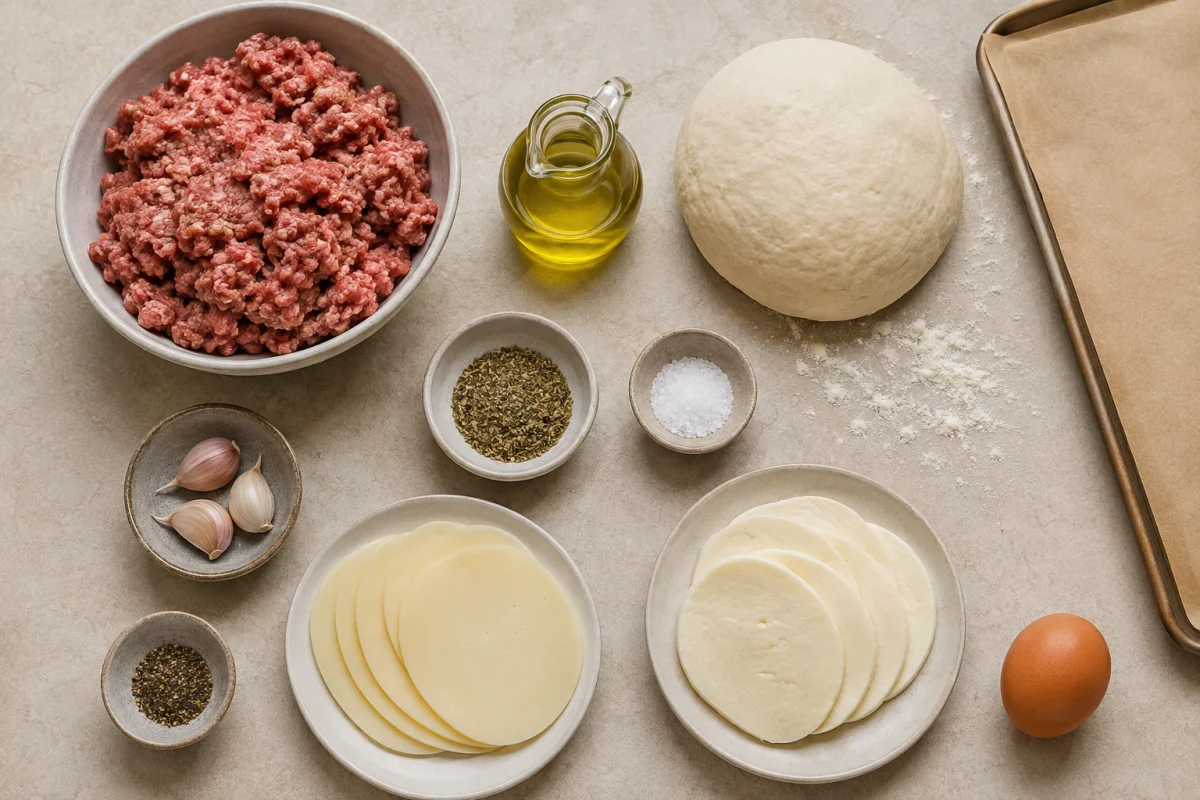
- Prepared pizza dough: One package or ball from the refrigerated section or bakery counter saves you from making dough from scratch, which would add hours to this recipe.
- Flour for dusting: Just enough to prevent sticking when you're rolling out the dough, probably a few tablespoons scattered on your work surface.
- Ground sausage: One pound of Italian sausage provides the main protein and flavor, with that characteristic fennel and spice combination everyone recognizes.
- Olive oil: Two tablespoons help brown the sausage and prevent it from sticking to your pan while it cooks.
- Garlic cloves: Three cloves minced and cooked with the sausage add aromatic flavor that makes everything smell amazing while it's cooking.
- Provolone cheese: Five to six slices create the first cheese layer with sharp, tangy flavor that stands up to the sausage without disappearing.
- Mozzarella cheese: Another five to six slices provide classic Italian cheese flavor and that stretchy, melty quality everyone expects.
- Egg: One beaten and brushed on the outside creates that golden, shiny crust that makes this look professional instead of pale and homemade.
- Salt and pepper: Season to taste while cooking the sausage, adjusting based on how salty your sausage already is.
- Italian seasoning: One tablespoon mixed into the sausage plus another teaspoon sprinkled on top before baking adds herbs throughout and on the crust.
Pin it
Making Sausage Bread
- Getting your oven ready:
- Turn your oven to 350 degrees and let it heat completely while you prepare everything else. This temperature is lower than you might expect for bread because you want the filling to heat through without the outside burning before the inside is done.
- Cooking the sausage:
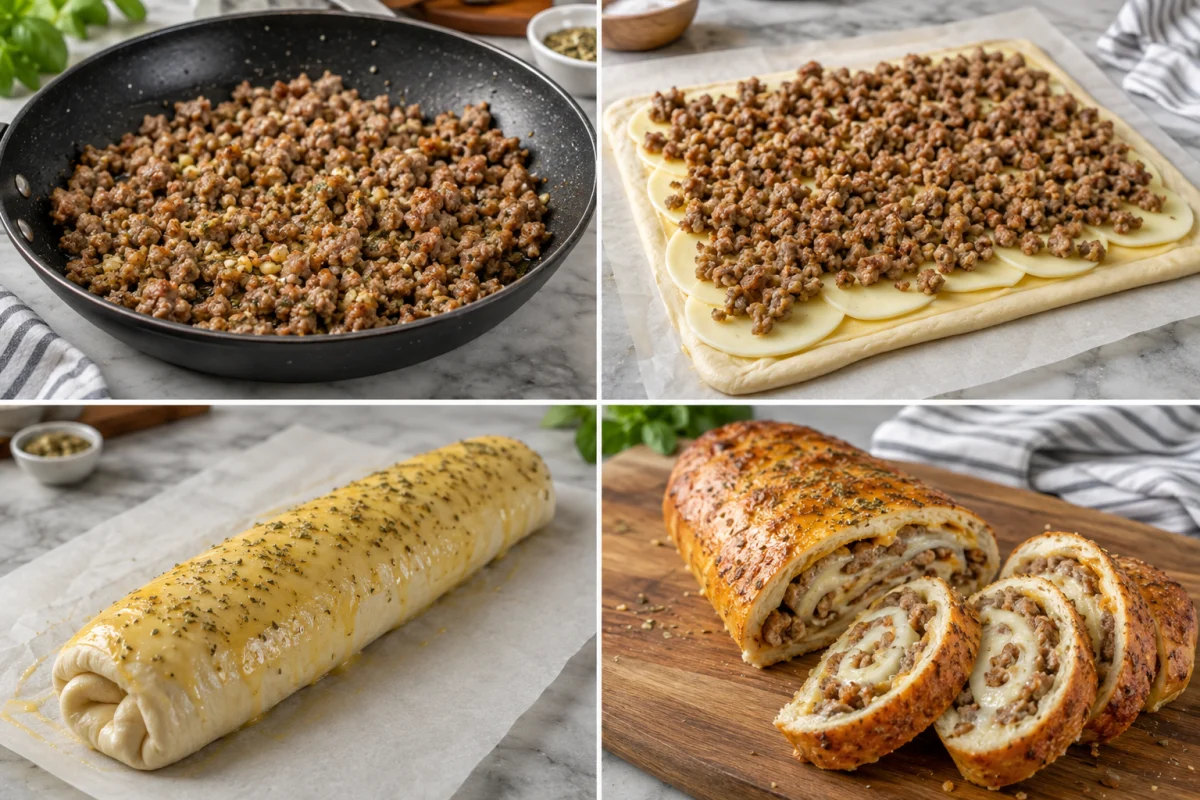
- Set a large skillet over medium high heat and pour in your two tablespoons of olive oil, swirling it around to coat the bottom of the pan. Add your pound of ground sausage and use a wooden spoon or spatula to break it up into small crumbles as it hits the hot oil. Keep breaking the meat into smaller and smaller pieces as it cooks, stirring frequently so everything browns evenly instead of just sitting there steaming in big clumps. You want the sausage broken down into pieces roughly the size of peas or smaller, creating tiny crumbles that distribute evenly when you roll everything up later. When all the pink is gone and the meat is nicely browned with some darker crispy bits here and there, which takes about 8 to 10 minutes, add your minced garlic cloves. Sprinkle salt and pepper over everything along with your tablespoon of Italian seasoning, stirring to distribute the seasonings throughout the meat. Cook for another minute just until the garlic becomes fragrant and loses its raw smell, then turn off the heat. If there's a lot of grease pooled in the bottom of the pan, tilt it and spoon out the excess fat into a bowl or can so your filling isn't swimming in oil.
- Rolling the dough:
- Sprinkle a light dusting of flour across a clean work surface like your counter or a large cutting board. Take your pizza dough out of its package and place it in the center of the floured area. Use a rolling pin to roll it out into a large rectangle shape, aiming for roughly 12 by 16 inches or whatever size lets you get the dough about a quarter inch thick. Don't worry about making it perfectly rectangular with sharp corners because nobody's measuring and uneven edges just add character. The dough will fight you and try to spring back as you roll it, which is normal, just keep rolling patiently until it stays at the size you want. Make sure the thickness is relatively even across the whole surface without thin spots that might tear when you fill it.
- Layering the fillings:
- Arrange your slices of provolone cheese across the entire surface of the rolled out dough, leaving about half an inch of bare dough around all the edges like a border. The cheese slices can overlap slightly or have small gaps between them, just try to get relatively even coverage across most of the surface. Layer your mozzarella cheese slices on top of the provolone, again covering most of the dough while maintaining that half inch border. Take your cooked sausage crumbles and sprinkle them evenly over the cheese layers, distributing them across the entire surface so every slice of the finished bread will have sausage in it. Try to get relatively uniform coverage instead of having all the meat piled in one area while other spots are bare.
- Rolling it up:
- Starting from one of the long edges of your rectangle, begin rolling the dough up tightly like you're making a jelly roll or cinnamon roll. As you roll, tuck the short ends in toward the center to seal those edges and prevent filling from escaping out the sides. Keep rolling, maintaining even tension so the roll is tight and compact without gaps between the layers but not so tight you're squeezing filling out the ends. When you get to the final edge, press it down firmly against the rolled cylinder to seal everything shut. The seam should run along the bottom once you're done rolling. Carefully pick up your rolled sausage bread using both hands and transfer it seam side down onto a parchment paper lined baking sheet, positioning it in the center with space on all sides.
- Final preparation and baking:
- Crack your egg into a small bowl and beat it thoroughly with a fork until the white and yolk are completely blended together. Use a pastry brush or your fingers to brush this beaten egg all over the exposed surface of your rolled sausage bread, coating it evenly so it'll turn golden and shiny in the oven. Sprinkle the remaining teaspoon of Italian seasoning over the egg washed surface, distributing the herbs across the top. Slide your loaded baking sheet into the preheated oven and set a timer for 25 minutes. Check it at 25 minutes to see if the outside looks deeply golden brown and the bread seems firm when you tap it. If it still looks pale or feels soft, give it another 5 minutes and check again. When the outside is gorgeously golden and the bread looks puffed and cooked through, take it out and let it rest on the pan for a full 10 minutes before slicing. This resting time lets the cheese inside firm up slightly so it doesn't all run out in a molten flood when you cut into it.
Things You Should Know
Draining excess grease from the cooked sausage prevents the bread from being oily and keeps the dough from getting soggy and greasy instead of crispy. Leaving that half inch border around the edges free of fillings is crucial for sealing the roll shut without toppings squishing out the sides. The 10 minute rest after baking allows the melted cheese to set up enough that slicing doesn't create a gooey mess everywhere. Using pre sliced cheese instead of shredded makes layering so much easier and creates better coverage. The egg wash really does make a visual difference even though it seems like an extra unnecessary step.
The first time I made this, I didn't drain the sausage well because I was in a hurry and thought a little grease wouldn't matter. The bottom of the bread absorbed all that fat and turned soggy and gross instead of crispy, and grease leaked out onto the baking sheet creating a mess. Now I'm thorough about draining, even pouring the whole pan into a colander and letting excess fat drip out for a minute before using the meat.
I learned about the border requirement when I spread cheese and sausage all the way to the edges thinking I was being generous with portions. When I tried rolling it up, filling squished out everywhere and I couldn't get the dough to seal properly because there was too much stuff in the way. The finished bread leaked cheese and meat all over the pan during baking, leaving the inside with less filling than I'd started with. That half inch margin makes all the difference in getting a tight seal that stays closed.
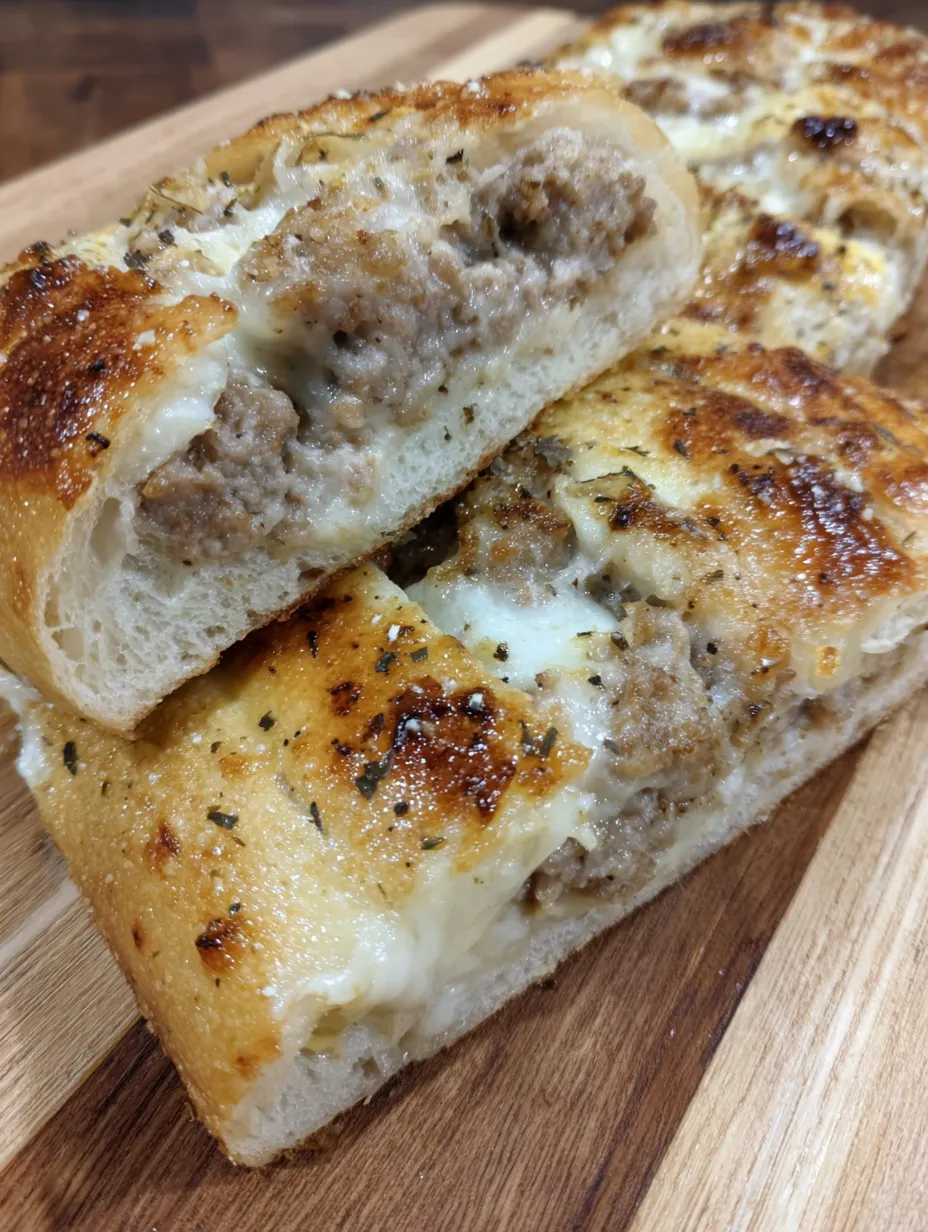
The resting time after baking seemed unnecessary when I was hungry and wanted to eat immediately. I sliced into the bread after only 2 minutes and molten cheese poured out everywhere, leaving the first few slices without much filling while creating a cheese puddle on the cutting board. Waiting the full 10 minutes lets everything settle and firm up enough that each slice holds together with filling intact.
Using pre sliced cheese instead of shredded makes layering so much easier and creates better coverage. I tried using shredded mozzarella once and it was hard to get even distribution, with bare spots and clumps instead of uniform cheese layers. Slices lay flat and overlap nicely, creating consistent cheese throughout every spiral.
The egg wash really does make a visual difference even though it seems like an extra unnecessary step. I skipped it once to save time and the bread came out looking pale and dull instead of golden and appetizing. That shiny, brown crust is what makes this look bakery quality instead of homemade, and it takes literally 30 seconds to brush on some beaten egg.
Serving This Bread
Let the sausage bread cool for those crucial 10 minutes, then use a sharp serrated knife to slice it into rounds about an inch thick, revealing those pretty spirals of meat and cheese inside. Serve these slices on a platter at parties where people can grab them easily with their hands without needing plates or forks. This works perfectly as an appetizer before dinner, a substantial snack after sports practices or games, or even a casual main course with a salad on the side. Set out marinara sauce for dipping if you want that classic pizza flavor experience, though this is honestly delicious enough to eat plain without any sauce. Each slice is filling enough that 2 or 3 pieces usually satisfies most people, making one loaf serve about 6 to 8 people depending on appetites and what else is being served.
For parties, you can slice the whole loaf in advance and arrange the slices standing up on a platter so people can see those appealing cheese and sausage spirals. The visual presentation gets people interested and reaching for pieces before they even taste it. Kids especially love these because they can hold them easily and the familiar pizza adjacent flavors appeal to even picky eaters who claim they don't like anything.
This is substantial enough to serve as actual dinner for casual family meals, especially paired with a simple side salad or some roasted vegetables. The combination of bread, meat, and cheese hits all the comfort food buttons without being as heavy as lasagna or baked ziti. My teenagers will eat this for dinner without complaining, which is basically a miracle in my house where everyone has opinions about everything.
The leftovers reheat surprisingly well, maintaining decent texture even after being refrigerated. I usually pop slices in the microwave for about 45 seconds or warm them in a 300 degree oven for 10 minutes, and they come back to life pretty well. The bread loses some of its initial crispness but still tastes good, and the cheese re melts nicely.
Different Ways to Try It
Use sweet Italian sausage instead of hot for a milder version that kids prefer without the spicy kick. Try ground beef seasoned with taco spices, add pepper jack cheese, and serve with salsa for a Mexican inspired variation. Make it with pepperoni slices and pizza sauce spread on the dough before adding cheese for straight up pizza bread. Add sautéed bell peppers and onions to the sausage filling for more vegetables and flavor complexity. Use breakfast sausage with scrambled eggs and cheddar cheese for a breakfast version that's perfect for brunch gatherings. Try spinach and ricotta with mozzarella for a vegetarian option that's still filling and flavorful. Add some red pepper flakes to the sausage for extra heat throughout. Use different cheese combinations like cheddar and pepper jack, or Swiss and gruyere for totally different flavor profiles.
Keeping It Fresh
Leftover sausage bread keeps in the refrigerator for up to 4 days wrapped tightly in foil or stored in an airtight container. The bread will soften as it sits, losing that initial crispy exterior, but it still tastes good reheated. Warm individual slices in the microwave for 45 seconds to a minute, or reheat the whole loaf wrapped in foil in a 300 degree oven for about 15 minutes until heated through. You can freeze baked sausage bread for up to 3 months wrapped really well in plastic wrap and then foil. Thaw frozen bread in the refrigerator overnight, then reheat as directed. For best results, you can also assemble this completely but freeze it unbaked, then bake it straight from frozen adding about 10 extra minutes to the baking time.
Pin it
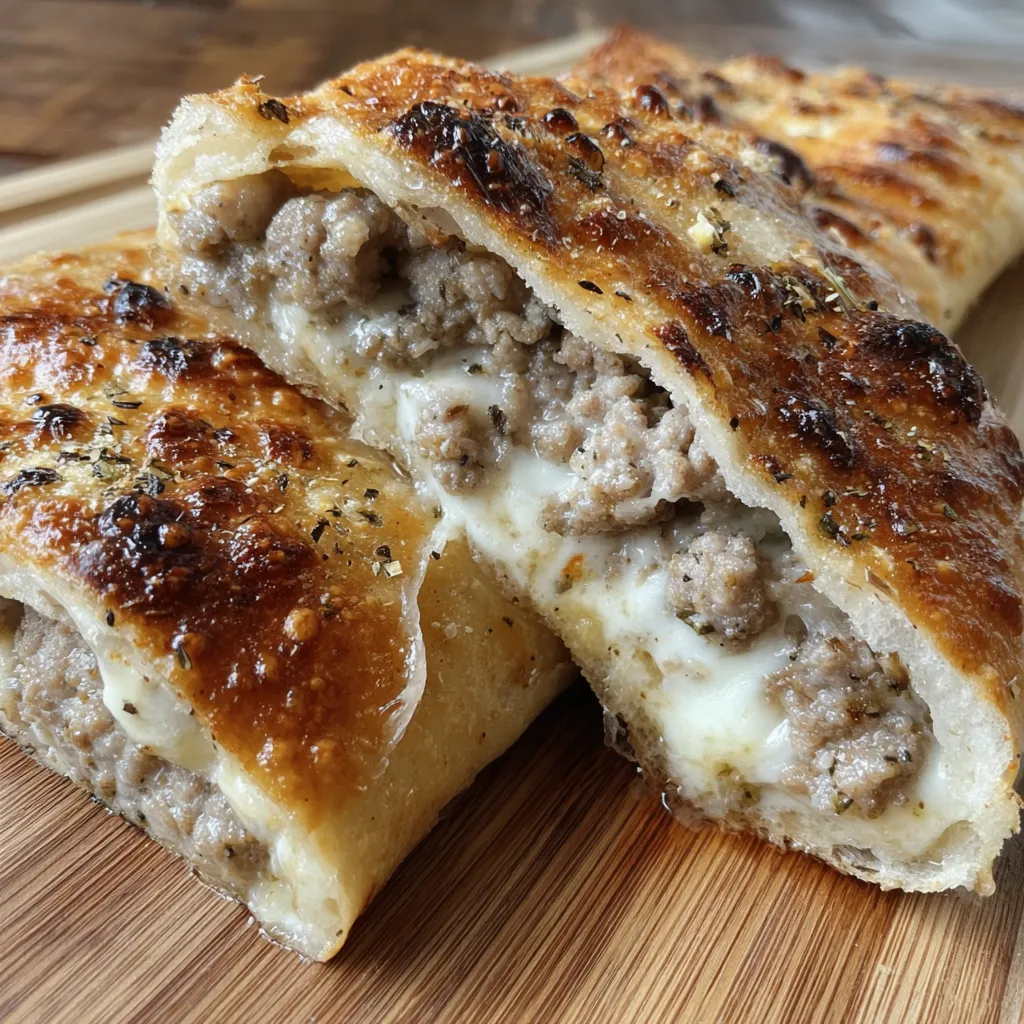
I've made this sausage bread countless times over the past few years for soccer games, birthday parties, family dinners, and random weeknight meals when I need something that feels special without requiring real effort. There's something really satisfying about slicing into that golden loaf and seeing those perfect spirals of cheese and meat that make it look like you know what you're doing in the kitchen. The store bought dough is what makes this actually happen instead of staying on my "someday I'll make that" list, because I'm never going to spend hours making pizza dough from scratch for a casual appetizer. My kids genuinely get excited when they come home and smell sausage bread baking, and I love that I can feed a crowd with one simple loaf that costs less than ordering pizza delivery. This has earned its permanent spot in my regular cooking rotation, joining that small group of recipes I make constantly because they're foolproof, crowd pleasing, and consistently make everyone happy without requiring me to be an expert baker!
Frequently Asked Questions
- → Can I use breakfast sausage instead of Italian sausage?
- Sure! Breakfast sausage works fine. You might want to add a bit more Italian seasoning since breakfast sausage has a different flavor profile.
- → How do I keep the filling from leaking out?
- Make sure you leave that half inch border around the edges and really pinch the seams closed when you roll it up. Placing it seam side down also helps.
- → Can I make this ahead of time?
- You can assemble it a few hours ahead and keep it covered in the fridge. Just let it sit at room temp for 15 minutes before baking and add 5 minutes to the cook time.
- → What should I serve with this?
- Marinara sauce for dipping is the classic choice. A simple salad on the side makes it a complete meal. Ranch dressing is good for dipping too.
- → Can I freeze sausage bread?
- Yes! Bake it first, let it cool completely, wrap it tight in foil and freeze for up to 3 months. Reheat in the oven from frozen at 350°F for about 20 minutes.
- → Why does my dough keep shrinking when I roll it?
- The dough might be too cold or hasn't rested enough. Let it sit at room temperature for 10-15 minutes before rolling. If it keeps shrinking, let it rest for 5 minutes then try again.