

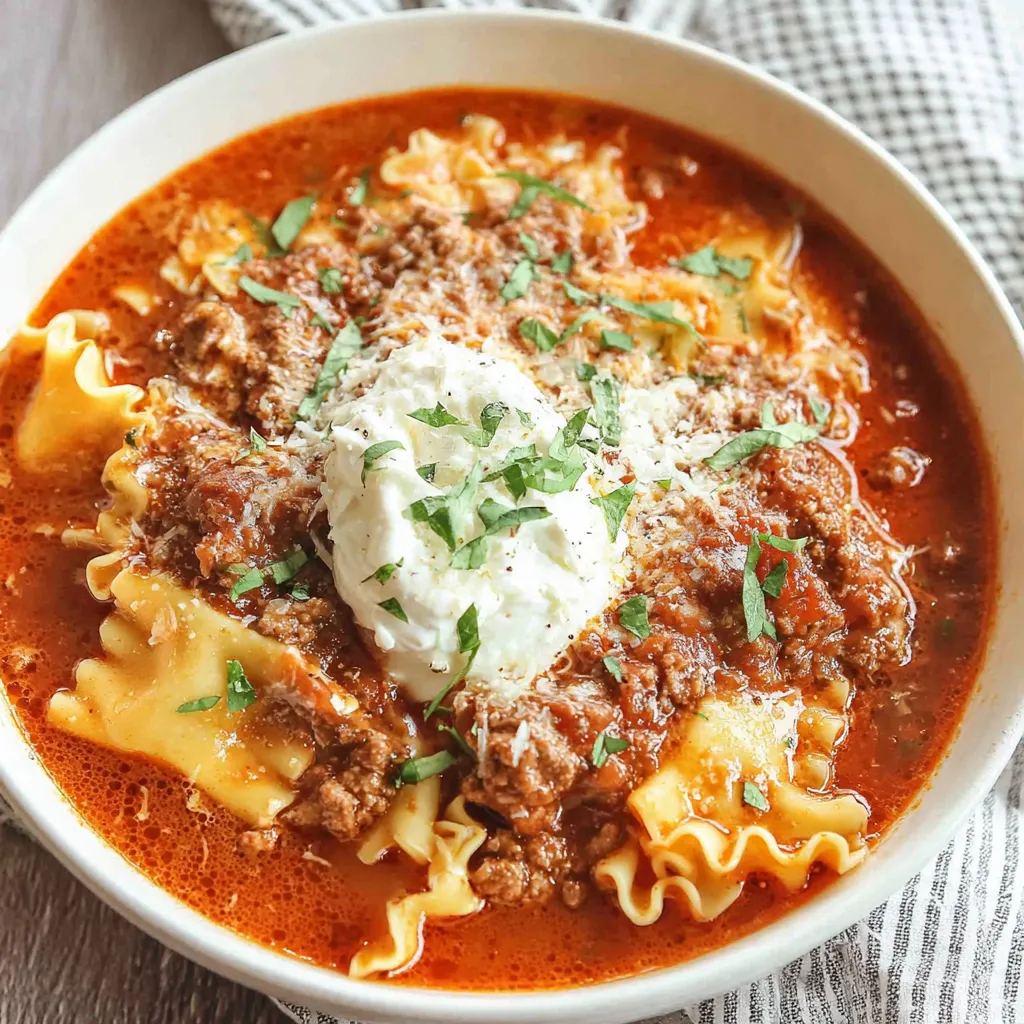
Lasagna soup turns the familiar layers of meat sauce, tender pasta, and creamy cheese into a relaxed one-pot dinner. Lean ground beef, tomatoes, beef broth, and Italian seasoning form the rich base, while broken lasagna noodles cook directly in the soup and pick up its savory flavor.
The recipe serves eight in about 35 minutes. A spoonful of ricotta mixed with Parmesan gives each bowl the creamy finish of baked lasagna without assembling or baking a casserole.
Ingredients for Easy Lasagna Soup
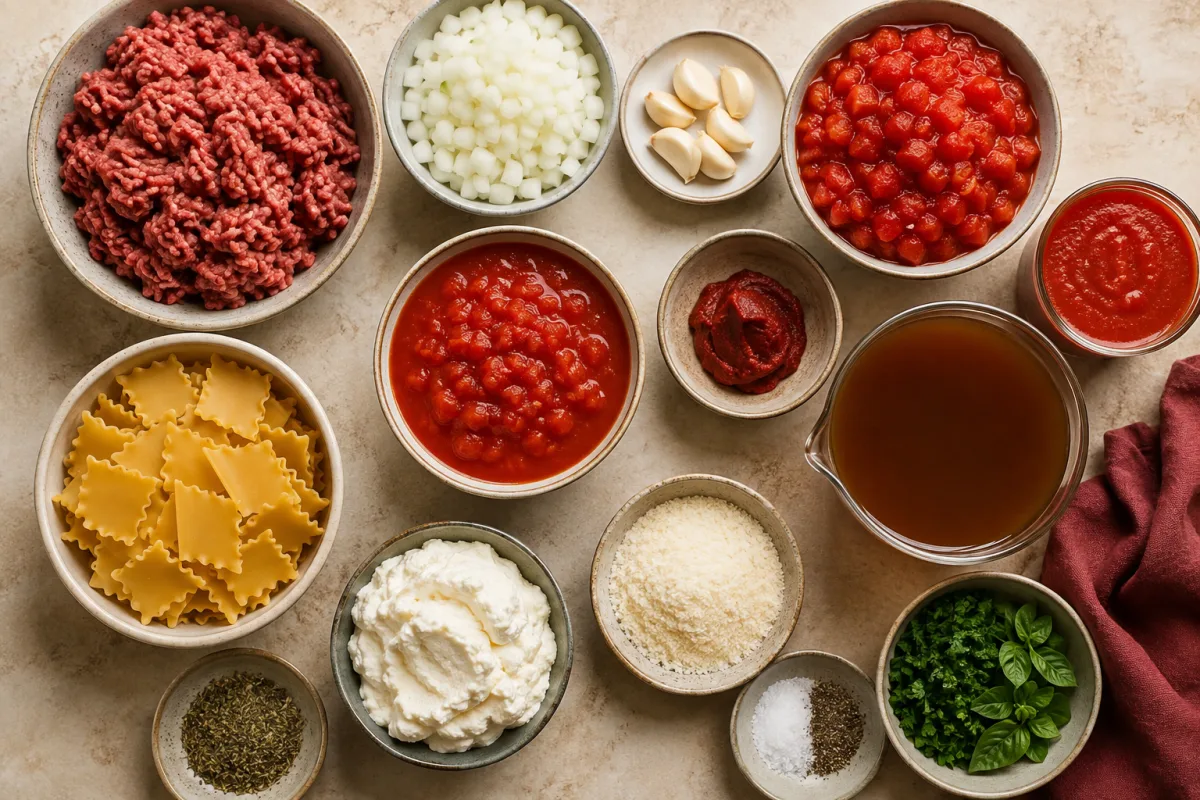
For the soup, gather 1 pound lean ground beef, 1 cup diced onion, 3 minced garlic cloves, two 14.5-ounce cans diced tomatoes with their juices, 8 ounces tomato sauce, 1/4 cup tomato paste, 4 cups low-sodium beef broth, 2 teaspoons Italian seasoning, and 6 uncooked lasagna noodles broken into roughly 1 1/2-inch pieces. Season with salt and black pepper.
For the topping, combine 8 ounces ricotta, 1/2 cup grated Parmesan, and 1/4 teaspoon salt. Chopped parsley or basil is optional for a fresh finish. Italian sausage can replace the beef, and chicken broth can stand in for beef broth.
If you enjoy this recipe, you may also like Smoked Macaroni and Cheese.
How to Make Lasagna Soup
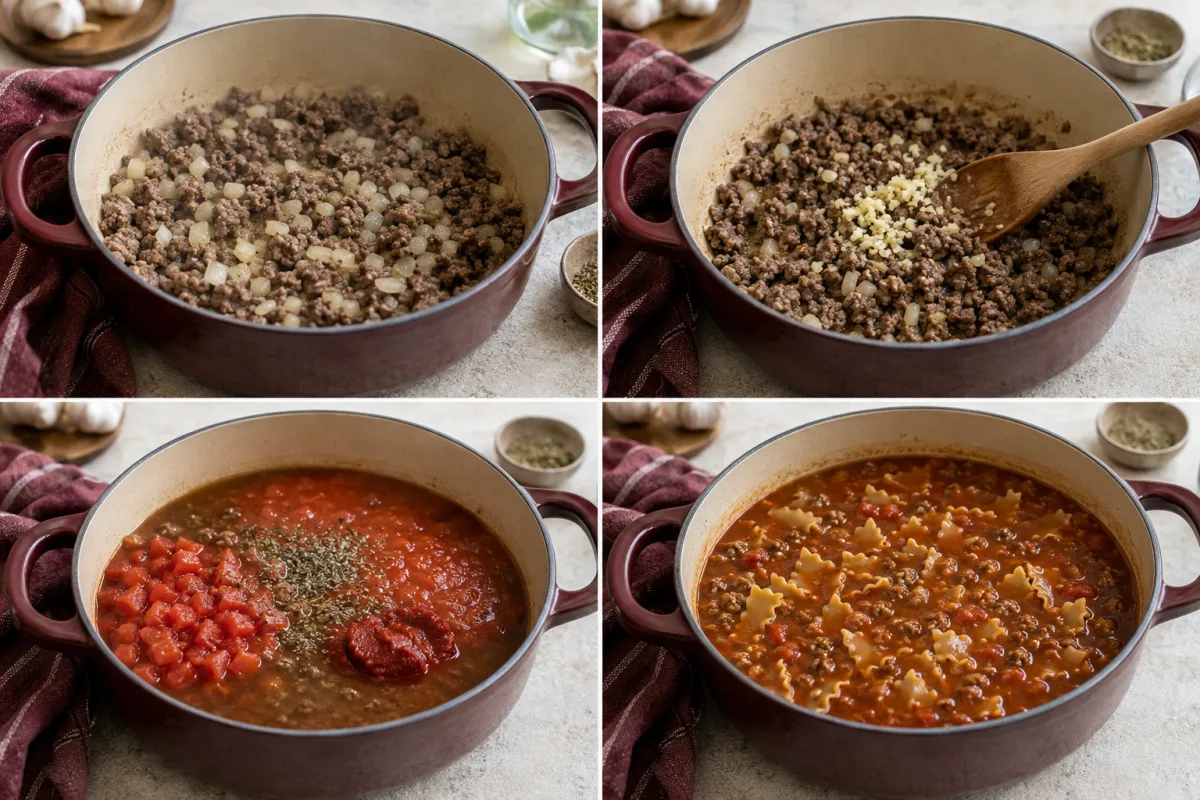
- Brown the beef and onion. Cook them together in a Dutch oven over medium heat until the beef is no longer pink and the onion has softened.
- Add garlic. Stir in the minced garlic for 30 to 60 seconds, then drain excess fat if necessary.
- Build the soup. Add diced tomatoes and their juices, tomato sauce, tomato paste, broth, and Italian seasoning. Bring to a boil.
- Cook the noodles. Stir in the broken lasagna pieces, lower the heat, and simmer about 10 minutes or until tender.
- Season. Taste and add salt and black pepper as needed.
- Mix the topping. Stir ricotta, Parmesan, and 1/4 teaspoon salt until evenly combined.
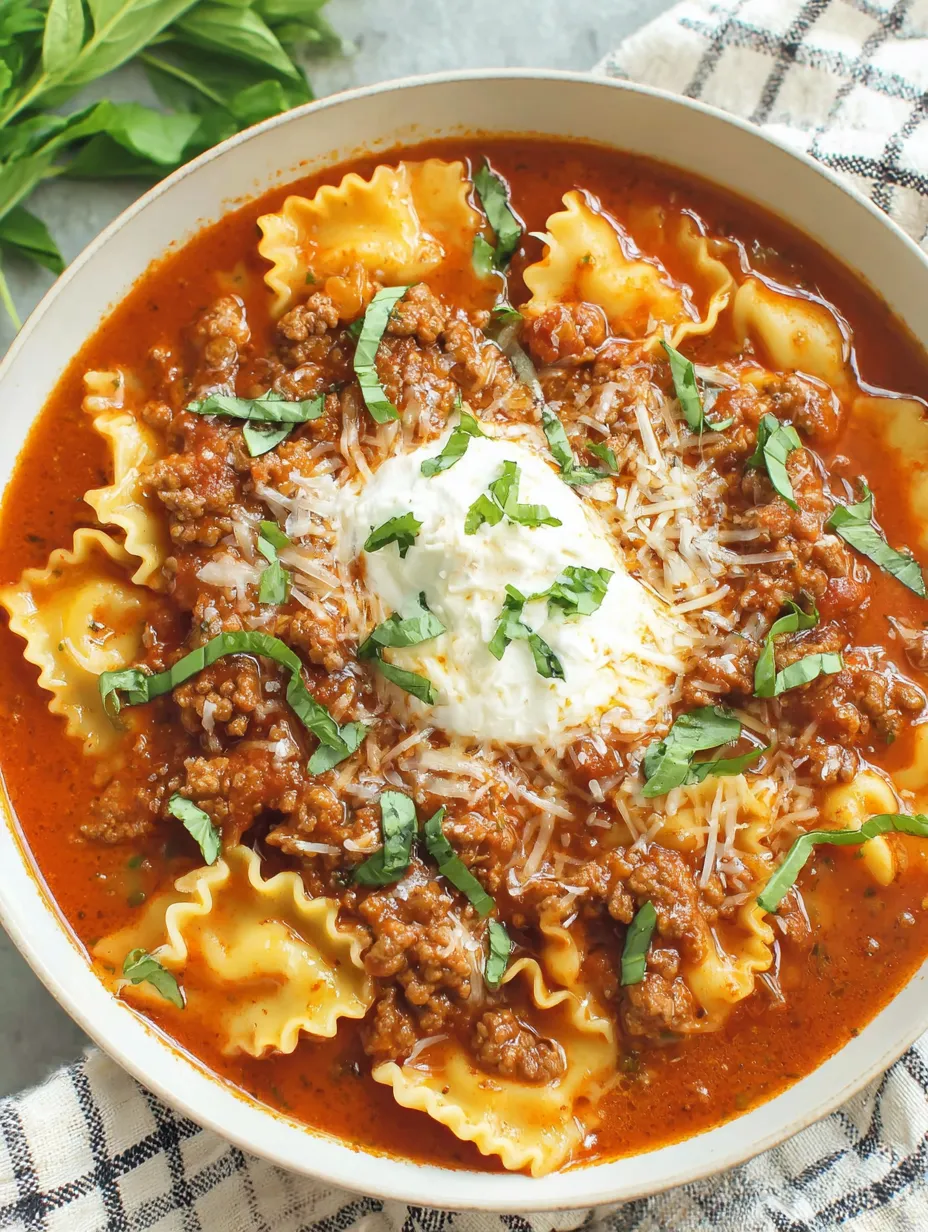
- Serve. Ladle the hot soup into bowls and add a generous spoonful of ricotta topping.
For storage details after serving, the USDA leftovers and food safety guidance.
Brown the Beef Without Steaming It
Use a wide Dutch oven or heavy soup pot so the ground beef has enough contact with the hot surface. Add the beef and diced onion together, breaking the meat into small pieces as it cooks. Let some pieces rest against the pan long enough to develop browned edges.
If the pot is crowded or the heat is too low, the beef releases liquid and simmers rather than browns. Keep the heat at medium and stir only as needed. Drain excessive fat after adding the garlic, but leave the flavorful browned bits in the pot.
If you enjoy this recipe, you may also like Stuffed Patty Melt.
Add Garlic at the Right Time
Garlic needs only 30 to 60 seconds in the hot beef mixture. Adding it after the meat and onion are cooked gives it enough time to become fragrant without scorching.
Stir continuously during this short step. Burnt garlic can make the entire soup bitter, so have the tomatoes and broth measured and ready to cool the pot as soon as the garlic smells aromatic.
Create a Full-Flavored Tomato Broth
Diced tomatoes provide texture, tomato sauce fills the space between the larger pieces, and tomato paste adds concentrated depth. Use the liquid from both cans of diced tomatoes; it belongs in the measured soup base.
Low-sodium broth keeps the final seasoning under control because Parmesan and the meat also contribute salt. Stir the tomato paste thoroughly so no dense pockets remain, then bring the soup to a full boil before adding pasta.
Break the Noodles Into Spoon-Friendly Pieces
Break six dry lasagna noodles into pieces about 1 1/2 inches wide. They do not need to be perfectly uniform, but very large shards are awkward to eat and tiny crumbs soften too quickly.
Add the pieces gradually while stirring so they do not stack and stick together. Keep the soup at a gentle simmer rather than an aggressive boil, which can break the pasta down and make the tomato broth splash.
Know When the Pasta Is Done
Begin checking the noodles near the 10-minute mark. They should be tender enough to bite easily while still holding their wavy shape. The exact time depends on noodle thickness and the strength of the simmer.
Remember that pasta continues softening in hot broth after the pot leaves the stove. Stop cooking as soon as it reaches the texture you like, especially if the soup will wait several minutes before serving.
Make the Ricotta-Parmesan Topping
Stir the ricotta, grated Parmesan, and 1/4 teaspoon salt in a small bowl. Mixing first distributes the Parmesan and makes the topping easy to portion instead of adding separate cheeses to every bowl.
Place the mixture on the soup just before eating. The heat softens it into creamy ribbons while leaving a few cool, rich pockets, which recreates the contrast of ricotta layers in traditional lasagna.
Make-Ahead Method
For the best make-ahead texture, prepare the tomato-beef soup base but boil the noodles separately. Cool and refrigerate the two components in separate airtight containers.
Reheat only the amount of soup you need, adding broth if it has thickened, then stir in cooked noodles just long enough to warm them. This prevents the pasta from absorbing the broth overnight and becoming overly soft.
Useful Substitutions
Italian sausage can replace ground beef for a more seasoned flavor. Chicken broth works in place of beef broth, although the finished base will taste slightly lighter. About 2 1/2 cups of another small or broken pasta can replace the lasagna noodles.
Choose a pasta with enough body to stand up to the chunky sauce. If using a smaller shape, start checking it according to the package timing so it does not overcook.
Troubleshooting Lasagna Soup
- The soup is too thick: Add warm broth a little at a time until it reaches the consistency you want.
- The noodles stick together: Add them gradually and stir several times during the first few minutes.
- The tomato flavor tastes flat: Check the salt first, then allow the base to simmer briefly before serving.
- The pasta is too soft: Reduce the cooking time or use the separate-pasta make-ahead method.
- The ricotta topping is stiff: Let it sit at room temperature briefly and stir before portioning.
Serving and Storage
Serve lasagna soup hot with the ricotta mixture, extra Parmesan, and optional parsley or basil. A crisp green salad or warm bread makes it a complete dinner without competing with the hearty tomato broth.
Refrigerate cooled leftovers in an airtight container for up to 3 days. Reheat gently on the stovetop or in short microwave intervals, adding broth as needed. The noodles will continue to soften during storage, so the separate-pasta method is preferable when planning leftovers.
Conclusion
Brown ground beef with onion, add garlic briefly, then stir in tomatoes, tomato sauce, tomato paste, broth, and Italian seasoning. Bring to a boil, add broken lasagna noodles, and simmer until tender. Serve with a ricotta, Parmesan, and salt topping.
Frequently Asked Questions
- → Can I make lasagna soup ahead of time?
Yes. Prepare the soup base and pasta separately, refrigerate both, and combine them while reheating so the noodles stay firm.
- → Can I use Italian sausage instead of ground beef?
Yes. Italian sausage is a direct option and gives the tomato broth a more seasoned flavor.
- → Why did my lasagna soup become thick?
The noodles keep absorbing broth as they sit. Stir in additional warm broth until the soup reaches the desired consistency.
- → How long does lasagna soup keep?
Store cooled soup airtight in the refrigerator for up to 3 days. Reheat gently and add broth if needed.