
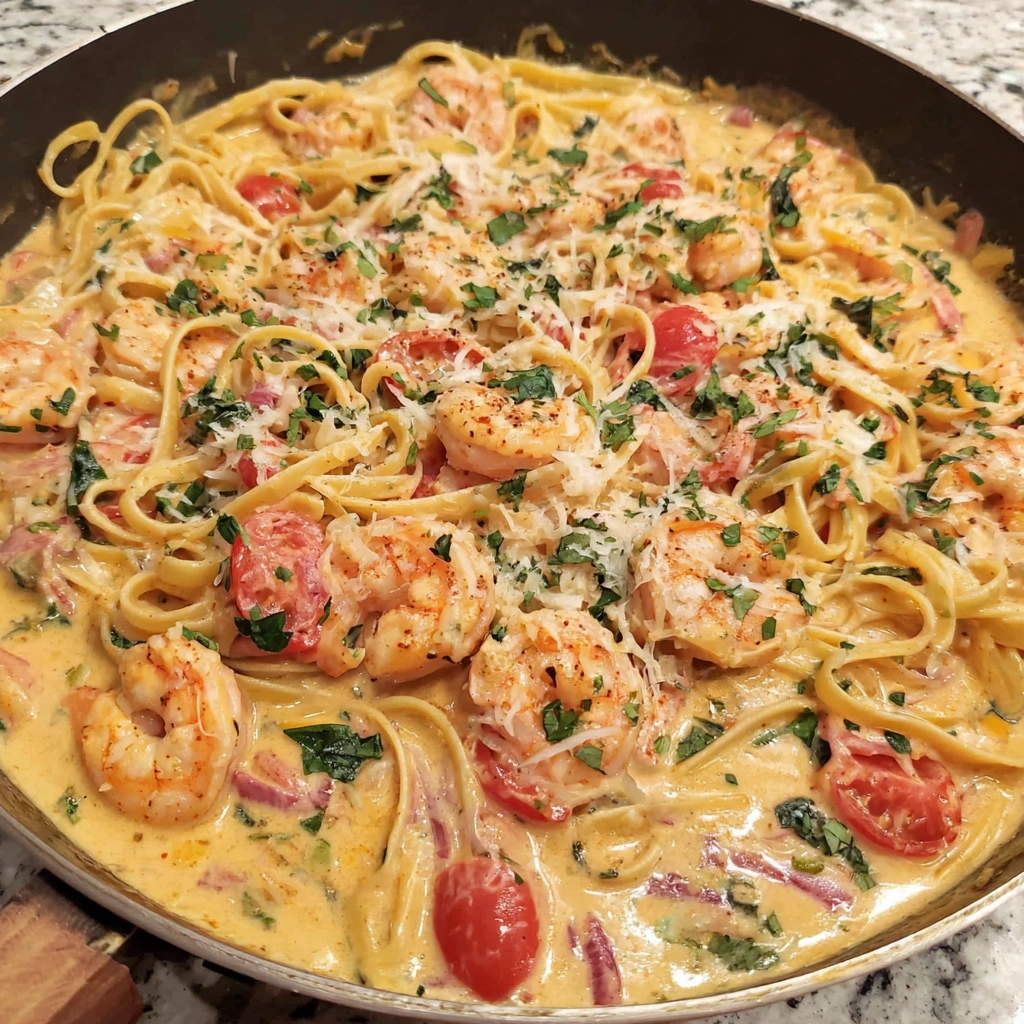
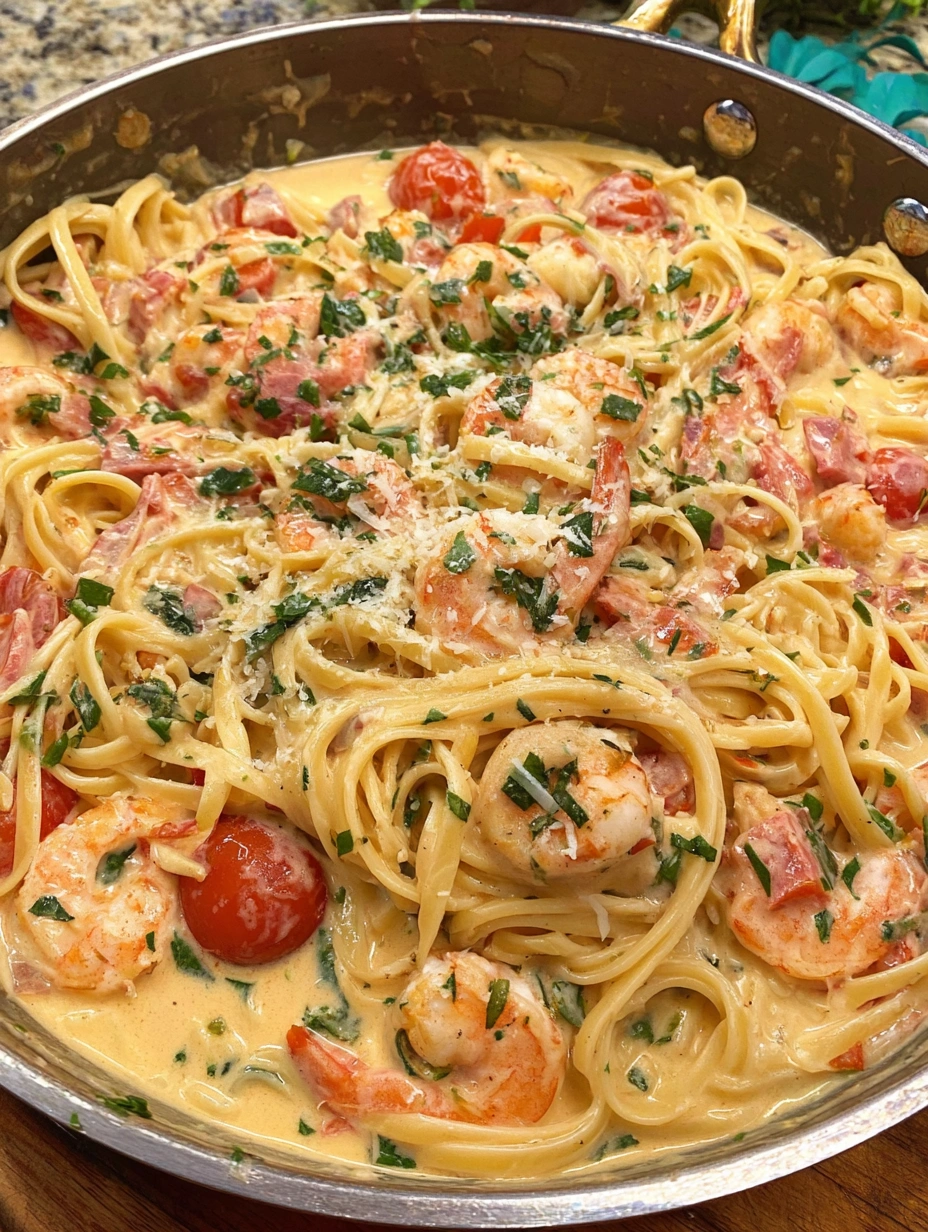
One-pot creamy shrimp linguine cooks pasta, cherry tomatoes, red onion, garlic, herbs, broth, and cream in the same skillet used to sear Cajun-seasoned shrimp. Parmesan finishes the sauce while lemon and basil keep the rich pasta lively.
The shrimp are removed after a quick sear and returned only at the end, so they stay tender while the linguine absorbs the seasoned cooking liquid. The recipe serves six in about 35 minutes and leaves only one main pan to wash.
Ingredients for Creamy Shrimp Linguine
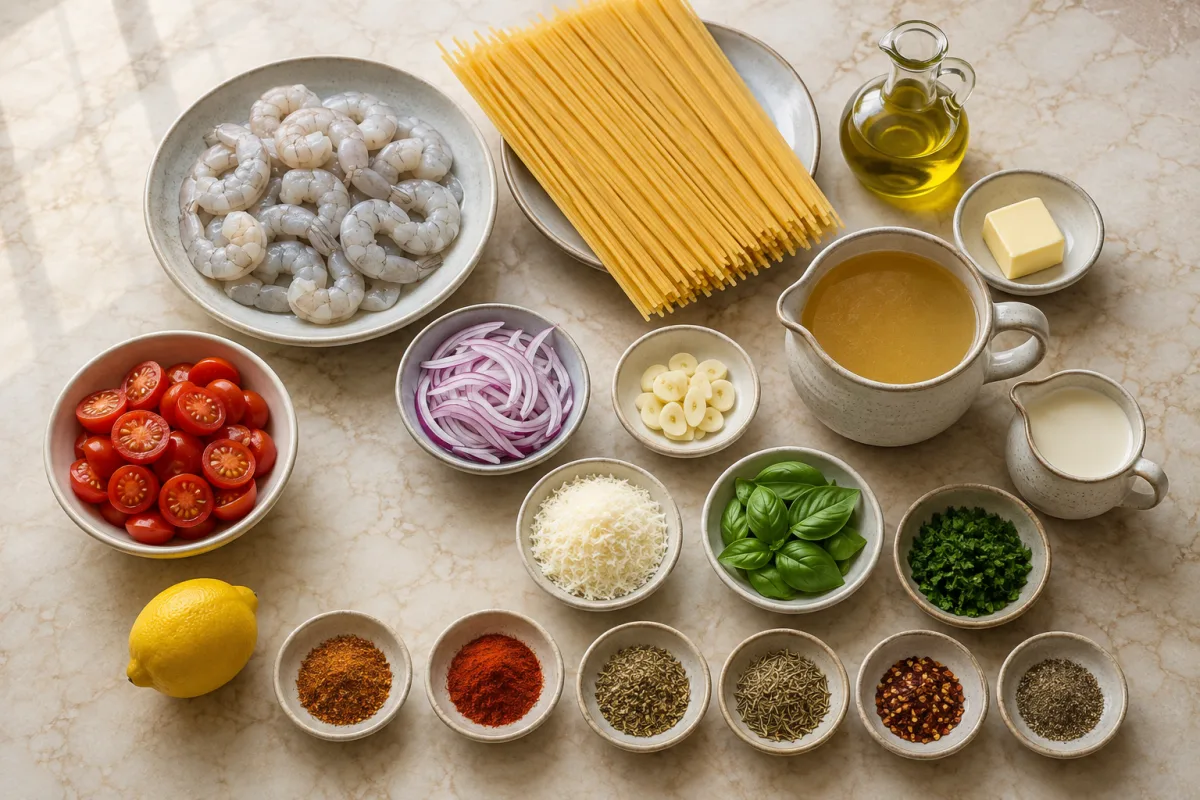
You need 1 pound peeled and deveined large raw shrimp and 12 ounces linguine. Sear the shrimp in 1 tablespoon avocado oil and 1 tablespoon salted butter. The pasta cooks with 12 ounces halved cherry tomatoes, 1/2 small thinly sliced red onion, 4 thinly sliced garlic cloves, 3 cups chicken broth, and 1 cup heavy cream or half-and-half.
Finish with 1 cup freshly grated Parmesan, 4 to 5 basil leaves divided, 1 to 2 teaspoons parsley, and the juice of one lemon. Season with 1 teaspoon Cajun seasoning, 1 teaspoon smoked paprika, 1 teaspoon Italian seasoning, 1/2 tablespoon Herbs de Provence, 1 teaspoon red pepper flakes, and 1/8 teaspoon black pepper.
If you enjoy this recipe, you may also like Honey Glazed Stuffed Salmon.
How to Make One-Pot Shrimp Linguine
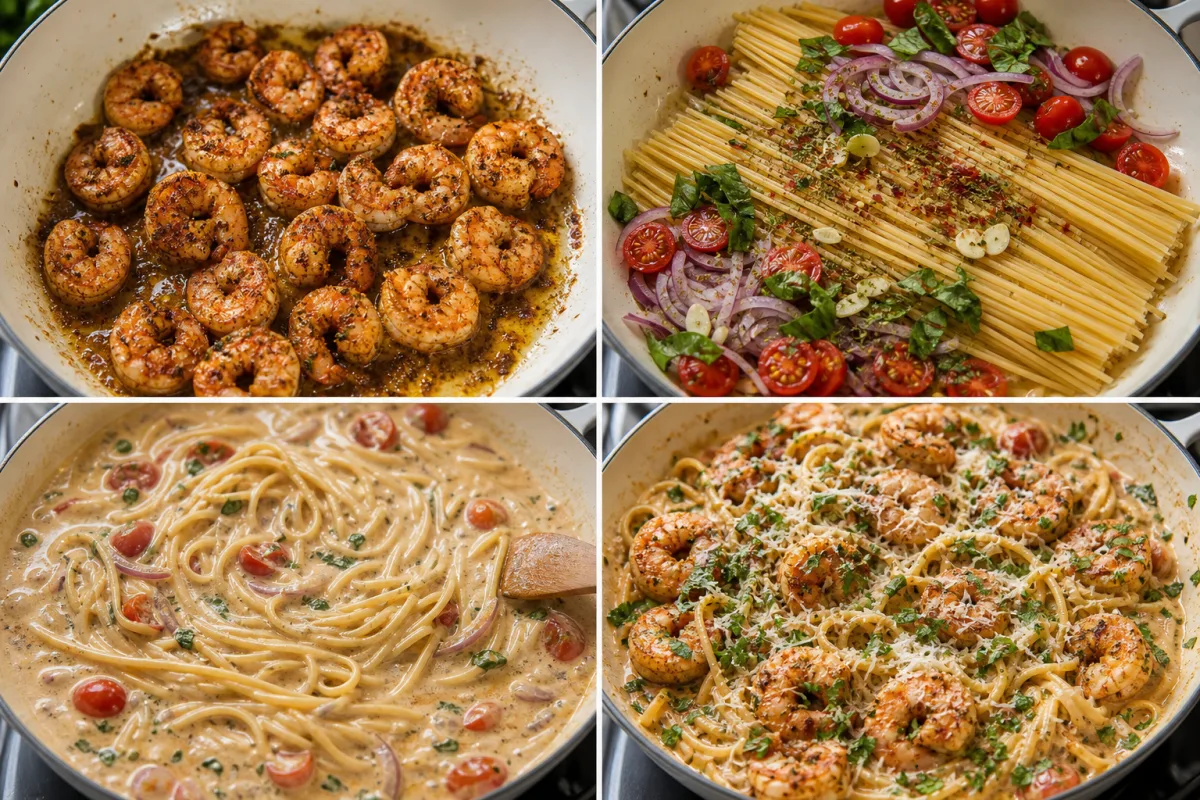
- Season the shrimp. Pat the shrimp dry and coat with Cajun seasoning, smoked paprika, Italian seasoning, and black pepper.
- Sear. Heat avocado oil and butter in a large skillet. Cook shrimp 1 to 2 minutes per side, then transfer them to a plate.
- Build the pot. Add uncooked linguine, tomatoes, red onion, garlic, 2 to 3 basil leaves, Herbs de Provence, and red pepper flakes to the same skillet.
- Add liquid. Pour in chicken broth and cream. Bring to a light boil.
- Cook the pasta. Cook 10 to 12 minutes, stirring often, until the linguine is al dente and most liquid is absorbed.
- Finish the sauce. Lower the heat and stir in Parmesan until smooth.
- Return the shrimp. Add the shrimp, lemon juice, parsley, and remaining chopped basil. Toss gently and serve.
For storage details after serving, the USDA leftovers and food safety guidance.
Dry and Season the Shrimp Before Searing
Patting peeled shrimp dry is the difference between a quick golden sear and pale, watery shrimp. Remove excess surface moisture with paper towels, then distribute the Cajun seasoning, smoked paprika, Italian seasoning, and black pepper evenly.
Different Cajun blends contain different amounts of salt and heat. Taste the finished sauce before adding any extra salt. The salted butter, chicken broth, Cajun blend, and Parmesan may already provide enough. If your seasoning is especially spicy, reduce the red pepper flakes later rather than reducing the smoked paprika.
If you enjoy this recipe, you may also like One Pot Broccoli Cheddar Pasta.
Sear Briefly and Remove the Shrimp
Heat avocado oil and salted butter in a wide, deep skillet. Avocado oil supports the higher searing temperature while butter contributes flavor. Add the shrimp in an even layer and cook for only 1 to 2 minutes per side, just until they begin to curl and turn opaque.
Transfer them to a plate promptly. They do not need to be aggressively browned or cooked hard at this point because they will warm again in the finished pasta. Leaving them in the pan for the full pasta cooking time would make them firm and rubbery.
Layer the Aromatics Around the Linguine
After removing the shrimp, place the uncooked linguine in the same skillet with halved cherry tomatoes, thin red onion, sliced garlic, 2 or 3 basil leaves, Herbs de Provence, and red pepper flakes. Keeping the garlic in thin slices rather than tiny mince helps it cook gently in the liquid without scorching.
The tomatoes soften and release juice as the pasta cooks, while the onion becomes tender enough to blend into the sauce. Reserve the remaining basil for the end, when its fresh aroma will be more noticeable.
Cook the Pasta Directly in Broth and Cream
Pour in 3 cups chicken broth and 1 cup heavy cream or half-and-half. Bring the mixture to a light boil, then cook for 10 to 12 minutes. Stir frequently and use tongs to separate the linguine as the strands become flexible.
Direct cooking lets the pasta release starch into the liquid, which naturally thickens the sauce. Keep the boil controlled; very high heat can cause dairy to separate and can evaporate liquid before the noodles are tender. If the pan becomes dry while the linguine is still firm, add broth a few tablespoons at a time.
Choose Heavy Cream or Half-and-Half
Heavy cream produces the richest, most stable sauce. Half-and-half makes a slightly lighter dish and still works because the pasta starch and Parmesan provide body. With either option, avoid using very lean milk as a direct substitute because it is more likely to look thin or split under heat.
The amount of liquid left when the pasta reaches al dente can vary with skillet width and burner strength. The pan should look saucy rather than soupy. Remember that Parmesan thickens it further and the linguine continues absorbing moisture as it rests.
Add Parmesan Only After Lowering the Heat
Turn the burner to low before adding 1 cup freshly grated Parmesan. Sprinkle it in gradually while tossing the linguine so it melts into the hot liquid instead of collecting in a heavy clump. Cheese grated from a block melts more smoothly than pre-shredded Parmesan.
If the sauce tightens too quickly, loosen it with a splash of warm broth. If it seems thin, let it stand over low heat for 1 minute while stirring. Do not boil aggressively after adding the cheese, as excessive heat can make the sauce grainy.
Finish with Lemon and Fresh Herbs
Return the shrimp and any juices from the plate. Add the juice of one lemon, 1 to 2 teaspoons parsley, and the remaining chopped basil. Toss gently just until the shrimp are hot. The lemon should brighten the sauce without overwhelming the garlic, Parmesan, or Cajun spices.
Serve immediately while the sauce is loose and glossy. If the pasta sits before serving, keep a small amount of broth available and fold in a splash to restore its consistency.
Troubleshooting
- Tough shrimp: Remove them after the brief initial sear and return them only at the end.
- Dry pasta before it is tender: Add warm broth a few tablespoons at a time.
- Thin sauce: Let the pasta rest briefly after Parmesan is incorporated.
- Grainy cheese: Lower the heat and add finely grated Parmesan gradually.
- Overly spicy pasta: Reduce the red pepper flakes when using a hot Cajun blend.
Storage and Reheating
Refrigerate cooled leftovers in an airtight container for up to 3 days. Seafood is best reheated gently and only once. Add a small splash of broth or cream, then warm over low heat while stirring. Remove the pan as soon as the shrimp and pasta are hot.
A microwave also works for individual portions. Use reduced power, cover loosely, and heat in short intervals, stirring between them. Freezing is not recommended because the dairy sauce can separate and the shrimp may become tough after thawing.
Conclusion
Season and briefly sear the shrimp, then remove them. In the same skillet, cook uncooked linguine with tomatoes, onion, garlic, herbs, chicken broth, and cream for 10 to 12 minutes. Lower the heat, stir in Parmesan, and return the shrimp with lemon juice, parsley, and fresh basil.
Frequently Asked Questions
- → Can I use half-and-half instead of heavy cream?
Yes. Half-and-half makes a lighter sauce, while pasta starch and Parmesan still provide body.
- → Why are the shrimp removed before cooking the linguine?
Removing them after a quick sear prevents overcooking while the pasta simmers for 10 to 12 minutes.
- → What if the liquid is absorbed before the pasta is tender?
Add warm chicken broth a few tablespoons at a time and continue stirring until the linguine is al dente.
- → How long does creamy shrimp linguine keep?
Store it airtight in the refrigerator for up to 3 days and reheat gently with a splash of broth or cream.