

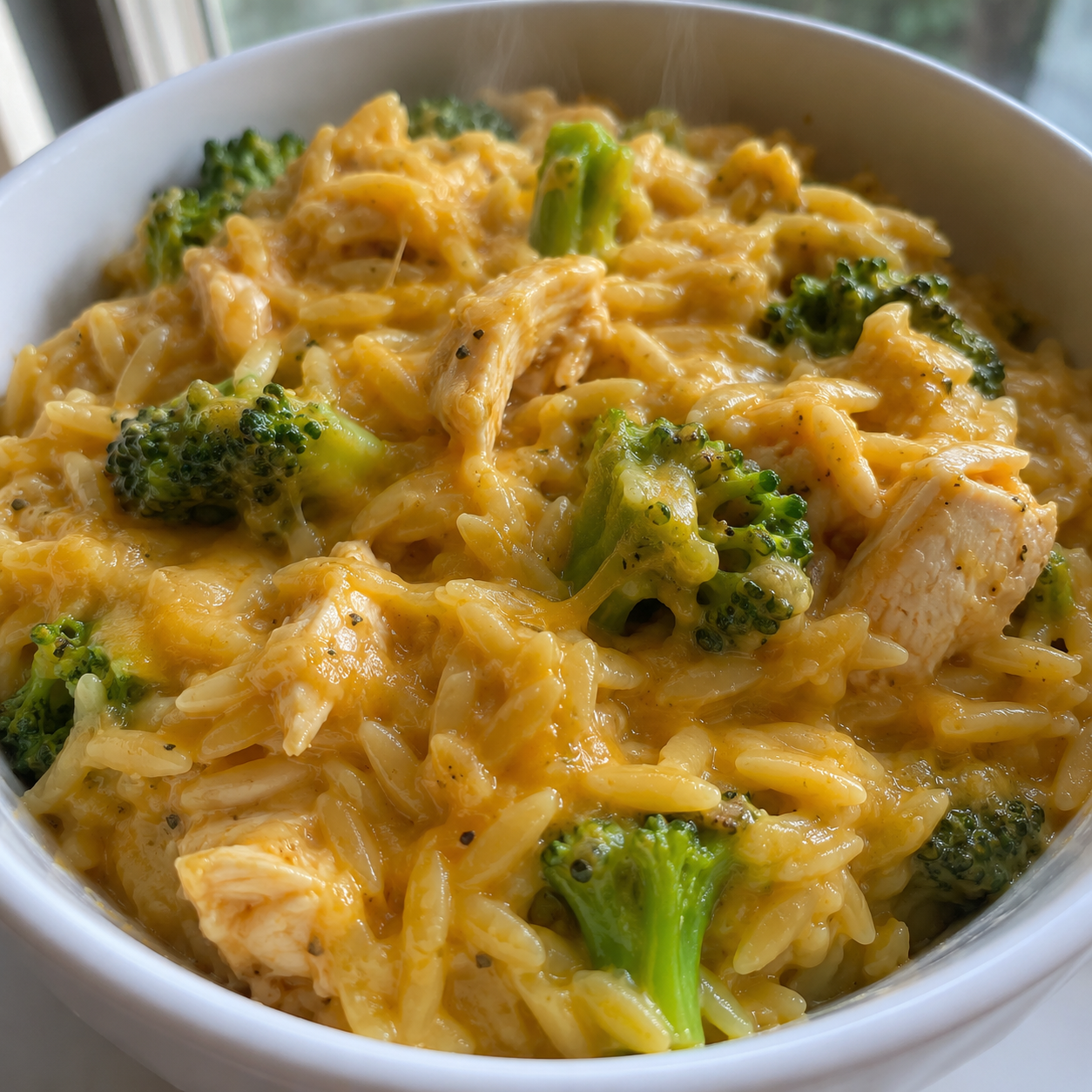
This is the dinner that shows up when a plain bowl of pasta feels too thin and a casserole feels like too much work. Orzo cooks right in the broth until it turns plump and a little starchy, broccoli goes in at just the right moment to stay bright, and a fast cheddar sauce pulls it all together in the same pan.
It is built for weeknights: one skillet, about forty minutes, and ingredients most kitchens already have. Shredded chicken makes it filling enough for a full dinner, and the leftovers reheat into something almost as good as the first bowl.
What Goes Into The Skillet
Nothing here is fancy, but the quality of two things matters: the cheddar and the broth. A block of cheddar you shred yourself melts smoother than the bagged pre-shredded kind, and a broth with real flavor seasons the orzo as it cooks.
If you enjoy this recipe, you may also like Cajun Chicken Broccoli Alfredo.
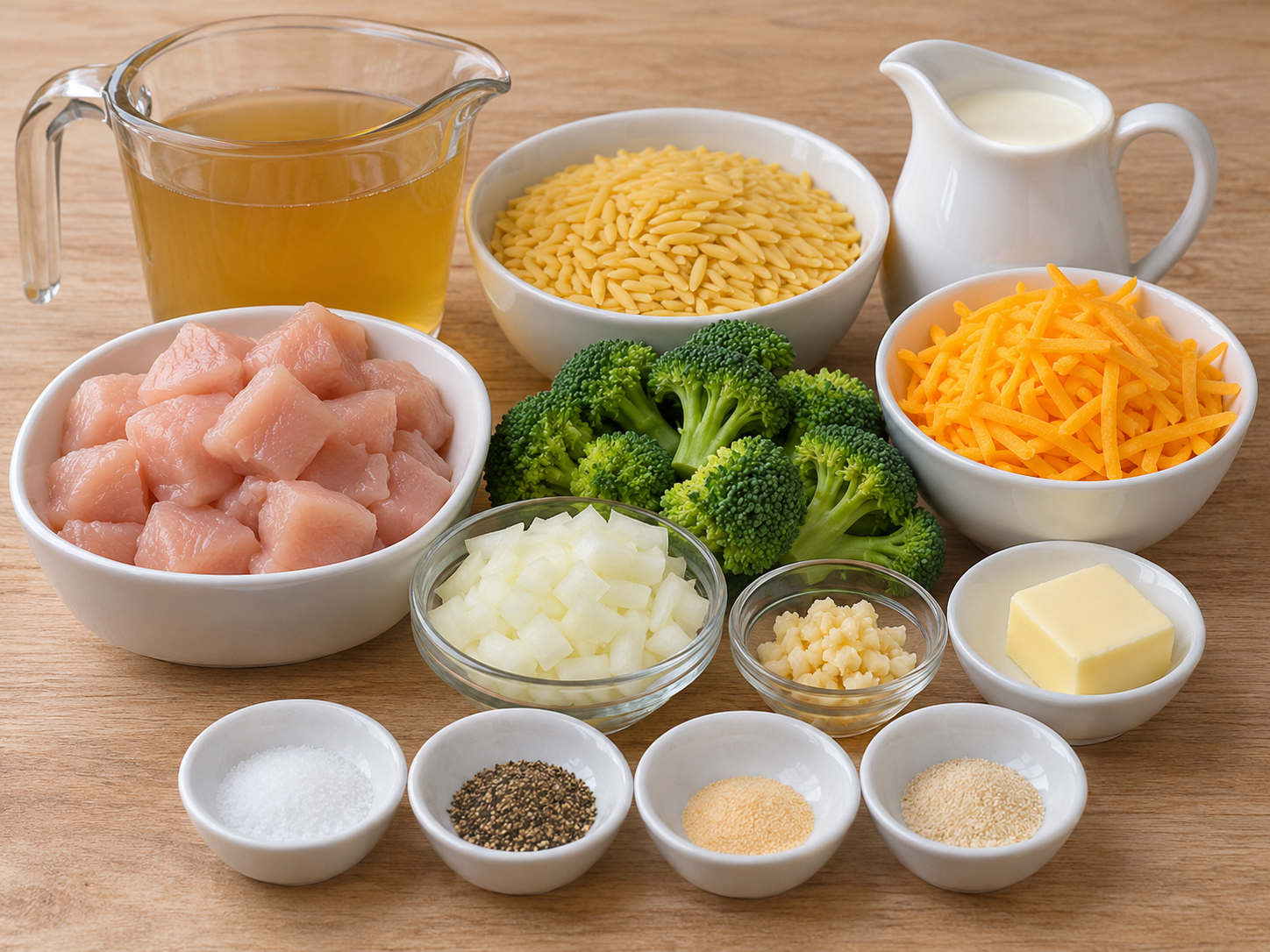
- Chicken breast. Cut into small even pieces so it sears fast and stays juicy.
- Olive oil. Gets the chicken browned without sticking.
- Butter. Starts the onion and toasts the orzo for a nuttier flavor.
- Onion and garlic. The aromatic base that flavors everything else in the pan.
- Orzo pasta. Small enough to cook right in the broth like a quick risotto.
- Chicken broth. Cooks the orzo and seasons it from the inside out.
- Broccoli florets. Added partway through so they stay bright green and tender, not mushy.
- Heavy cream. Loosens the sauce and makes it richer before the cheese goes in.
- Sharp cheddar cheese. Melts into the glossy sauce that coats every piece of orzo.
- Garlic powder, onion powder, salt and pepper. Round out the seasoning without hiding the cheddar.
For storage details after serving, the USDA leftovers and food safety guidance.
From Searing Chicken To Glossy Sauce
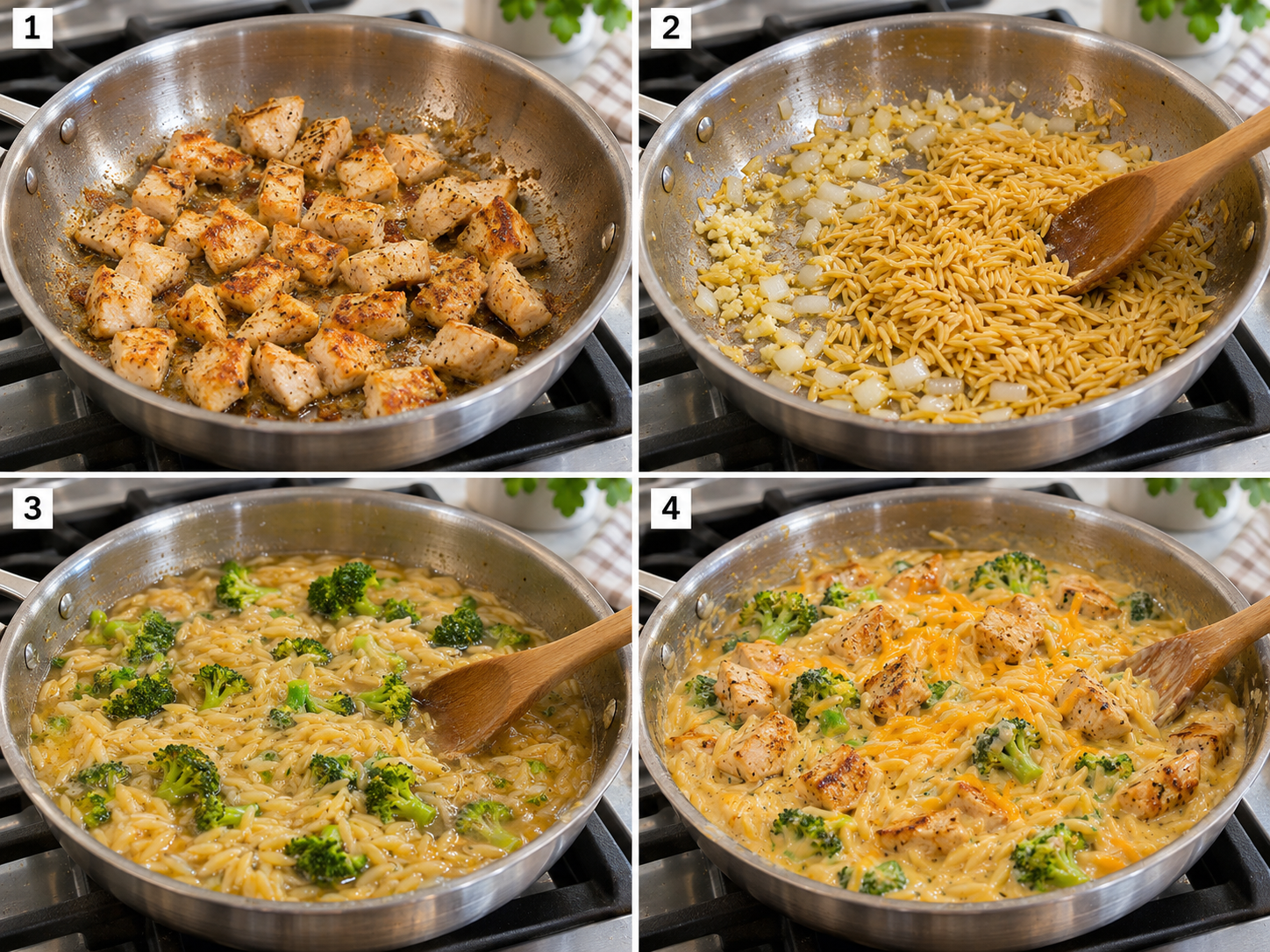
- Sear the chicken. Season chicken pieces with salt, pepper and garlic powder, then sear in hot olive oil for 5 to 7 minutes until golden outside and cooked through to 165°F (74°C). Move to a plate.
- Sauté the onion and garlic. Lower the heat, melt the butter in the same skillet, and cook the onion for 3 to 4 minutes until soft, then add the garlic for 30 seconds.
- Toast the orzo. Stir the orzo into the butter and drippings for 1 to 2 minutes until it smells nutty and looks lightly golden.
- Simmer with broth and broccoli. Pour in the chicken broth, onion powder and pepper, bring to a gentle simmer, and cook uncovered for about 8 minutes. Add the broccoli and continue 3 to 4 minutes until the orzo is tender and most of the broth is absorbed.
- Stir in the cheese sauce. Take the skillet off the heat, stir in the cream, then add the cheddar in small handfuls until melted and glossy.
- Fold in the chicken and serve. Return the chicken to the skillet, stir to coat and warm through over low heat for 1 to 2 minutes, then serve right away.
If you enjoy this recipe, you may also like Crispy Cajun Chicken Parmesan Pasta.
Why Orzo Cooks Like Risotto
Orzo is small enough to cook directly in broth the same way rice does for risotto, absorbing flavor as it goes instead of draining it down a sink. The starch it releases along the way is also what thickens the sauce slightly before the cream and cheese even go in.
Stir it every few minutes so it doesn't catch on the bottom of the pan, and keep the broth at a gentle simmer rather than a hard boil. Too much heat cooks the outside of the orzo before the center catches up, leaving it chalky in the middle.
Keeping The Cheese Sauce Silky
Cheese sauce turns grainy or separates when it gets too hot too fast. Pulling the skillet off the burner before you add the cream and cheese keeps the proteins from tightening up and squeezing out fat.
Add the cheddar in small handfuls, stirring each one in before the next. If the sauce still looks a little loose, it will thicken more as it sits for a minute, so resist cranking the heat back up to fix it.
Getting Chicken Safely To Temperature
The chicken only needs a quick sear, not a long braise, so pieces that are too big won't cook through evenly. Cut the breast into roughly even 3/4-inch pieces before it goes into the hot oil, and give the pan space so the chicken browns instead of steaming.
A thermometer is the only reliable way to know the chicken is done. Cooked poultry needs to reach an internal temperature of 165°F (74°C) throughout, and color alone won't tell you that. Check the thickest piece before you pull the pan off the heat.
Simple Swaps For This Skillet
Rotisserie chicken works well here and skips the searing step entirely; just stir in about 3 cups of shredded meat at the end. Frozen broccoli florets are fine too, added straight from the freezer in the last few minutes so they don't turn mushy.
Swap in monterey jack or a sharp white cheddar if that's what's in the fridge, or add a pinch of smoked paprika for warmth. For a gluten-free version, a gluten-free orzo or small gluten-free pasta shape works the same way, though cook times can run a minute or two longer.
Why Broccoli Earns Its Spot
Broccoli isn't just there for color. A cup of it brings fiber, vitamin C, folate and a handful of other nutrients to the bowl, and how it's cooked affects how much of that stays intact, with gentler methods generally holding onto more than a hard boil.
Cut the florets small and add them partway through the orzo's simmer rather than at the very start. They'll turn tender and bright green instead of dull and waterlogged, and they'll be sized to scoop up evenly with the pasta.
Storing And Reheating Leftovers Well
Let the dish cool briefly, then move it into an airtight container and refrigerate it within two hours of cooking to keep it out of the temperature range where bacteria grow fastest. Plan to eat the leftovers within a few days.
The orzo keeps soaking up the sauce as it sits, so reheat gently on the stove or in the microwave with a splash of broth or milk stirred in to loosen it back up. Reheat until the dish is hot all the way through before eating.
Frequently Asked Questions
- → Can I use rotisserie chicken instead of searing it myself?
Yes, and it saves time. Skip the searing step and stir about 3 cups of shredded rotisserie chicken in with the cheese at the end, since it only needs to warm through rather than cook.
- → What can I use instead of orzo?
A small pasta shape like ditalini or small shells works in a pinch, though the texture will be a little different since orzo is smaller and cooks faster. Keep an eye on the broth level and adjust the simmer time to the pasta you choose.
- → Can I make this gluten-free?
Swap in a gluten-free orzo or another small gluten-free pasta shape. It behaves similarly, though it can need a minute or two longer to turn tender, so check it a little past the time orzo would be done.
- → How do I keep the cheese sauce from turning grainy?
Pull the skillet off the heat before adding the cream and cheese, and stir the cheddar in gradually. High, direct heat is what makes a cheese sauce separate or turn gritty.
- → Can I use frozen broccoli?
Yes. Add it straight from the freezer in the final few minutes of the orzo's simmer so it heats through without turning mushy. There's no need to thaw it first.
- → How should I store and reheat leftovers?
Refrigerate leftovers in an airtight container within two hours of cooking and eat them within a few days. Reheat gently on the stove or in the microwave with a splash of broth or milk, stirring until hot throughout.