


Nutella donuts combine a light yeast dough, a crisp sugar coating, and a generous chocolate-hazelnut center. They are not difficult, but they do reward careful timing. The yeast must be active, both rises need enough time, and the frying oil has to stay hot enough to cook the centers without making the crust greasy.
What Makes These Donuts Light
Bread flour supplies enough structure to hold the air created during two rises, while egg yolks and shortening keep the crumb tender. Cutting solid rounds instead of rings gives the filling plenty of room without making the donuts heavy.
The recipe uses an unheated oven with a pan of boiling water as a warm proofing box. The enclosed steam protects the dough from drafts and helps it rise evenly. The oven should remain switched off during both rises.
If you enjoy this recipe, you may also like 4th of July Cake Pops.
Ingredients and What Each One Does
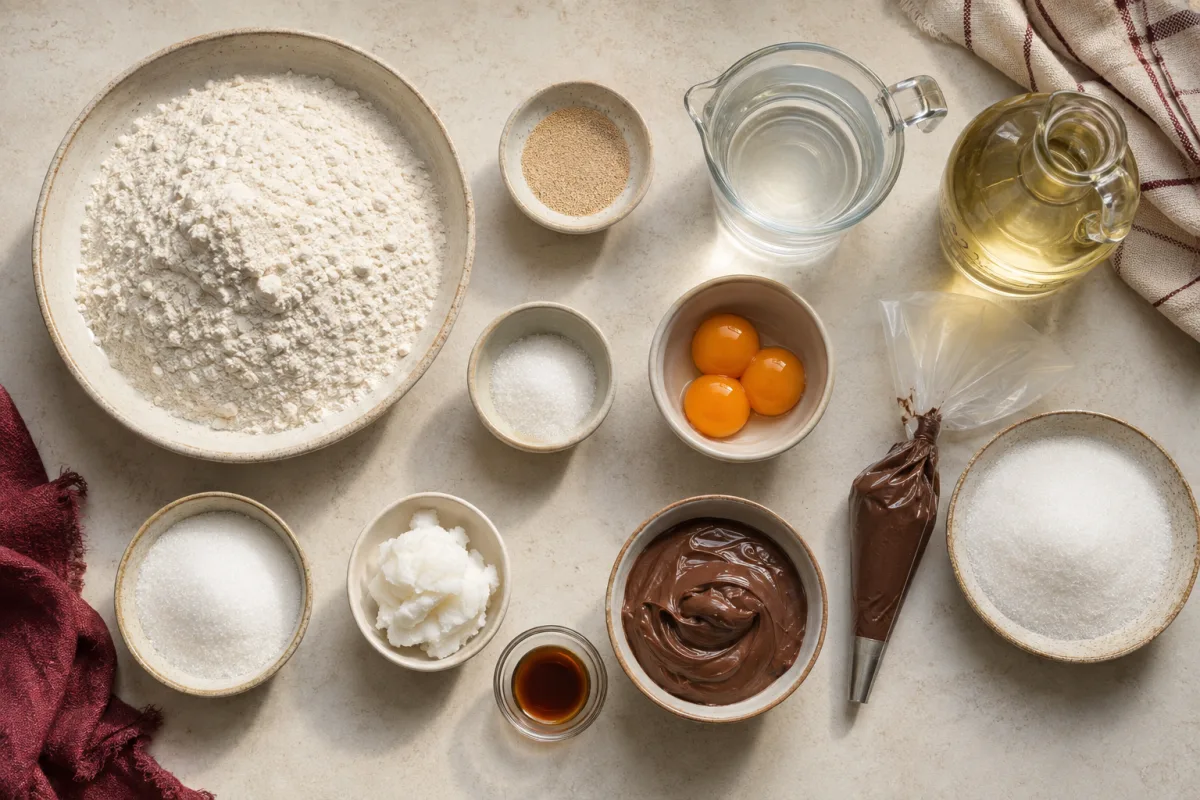
- Active dry yeast: The surface should become visibly foamy within 5 to 10 minutes. If it stays flat, replace the yeast before adding the other ingredients.
- Warm water: Aim for 105°F. Water that feels hot can damage the yeast, while cool water makes the rise unnecessarily slow.
- Bread flour: Its extra protein gives the dough enough strength to puff without becoming fragile. Add extra flour only when the dough is genuinely sticky.
- Egg yolks and shortening: These enrich the dough and soften the crumb. Room-temperature shortening blends into the yeast mixture more easily.
- Granulated sugar: A small amount feeds the yeast, more sweetens the dough, and the largest portion coats the fried donuts while they are warm.
- Frying oil: Use peanut oil, light olive oil, or another neutral high-heat oil. The pan needs 1 1/2 to 2 inches of oil and enough headroom for safe bubbling.
- Chocolate-hazelnut spread: Let it warm slightly so it moves through the piping tip smoothly, but do not heat it until runny.
For storage details after serving, the USDA leftovers and food safety guidance.
How to Make Nutella Donuts
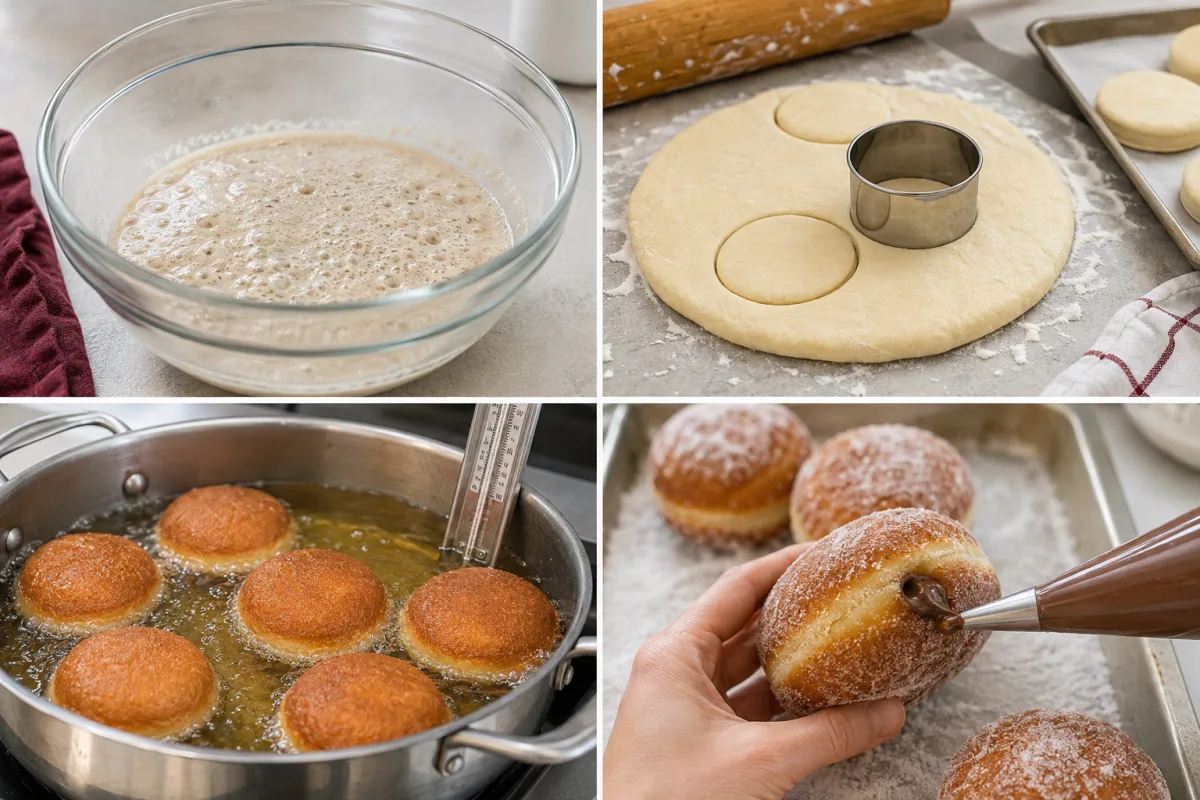
- Proof the yeast. Stir the yeast, 105°F water, and one tablespoon of sugar together. Wait 5 to 10 minutes for a thick layer of foam.
- Mix the dough. Combine the flour, salt, baking powder, and the remaining dough sugar separately. Stir shortening, egg yolks, and vanilla into the yeast, then work in the dry mixture in two additions.
- Knead briefly. Knead for about 2 minutes, until the dough is smooth and begins to clean the sides of the bowl. It should feel soft rather than stiff.
- Complete the first rise. Put the dough in a greased bowl and cover it loosely. Place it in the switched-off oven above a pan of boiling water for about 1 hour, until doubled.
- Roll and cut. Roll the dough to roughly half a thumb's thickness. Press a 2 1/2-inch cutter straight down without twisting, then place the rounds on greased, parchment-lined pans.
- Let the rounds rise again. Return the uncovered pans to the switched-off oven with fresh boiling water below. Allow about 45 minutes, or until the rounds look doubled and airy.
- Fry in small batches. Keep the oil between 360°F and 370°F. Fry 3 or 4 donuts at a time for 30 to 45 seconds on the first side and 20 to 30 seconds on the second.
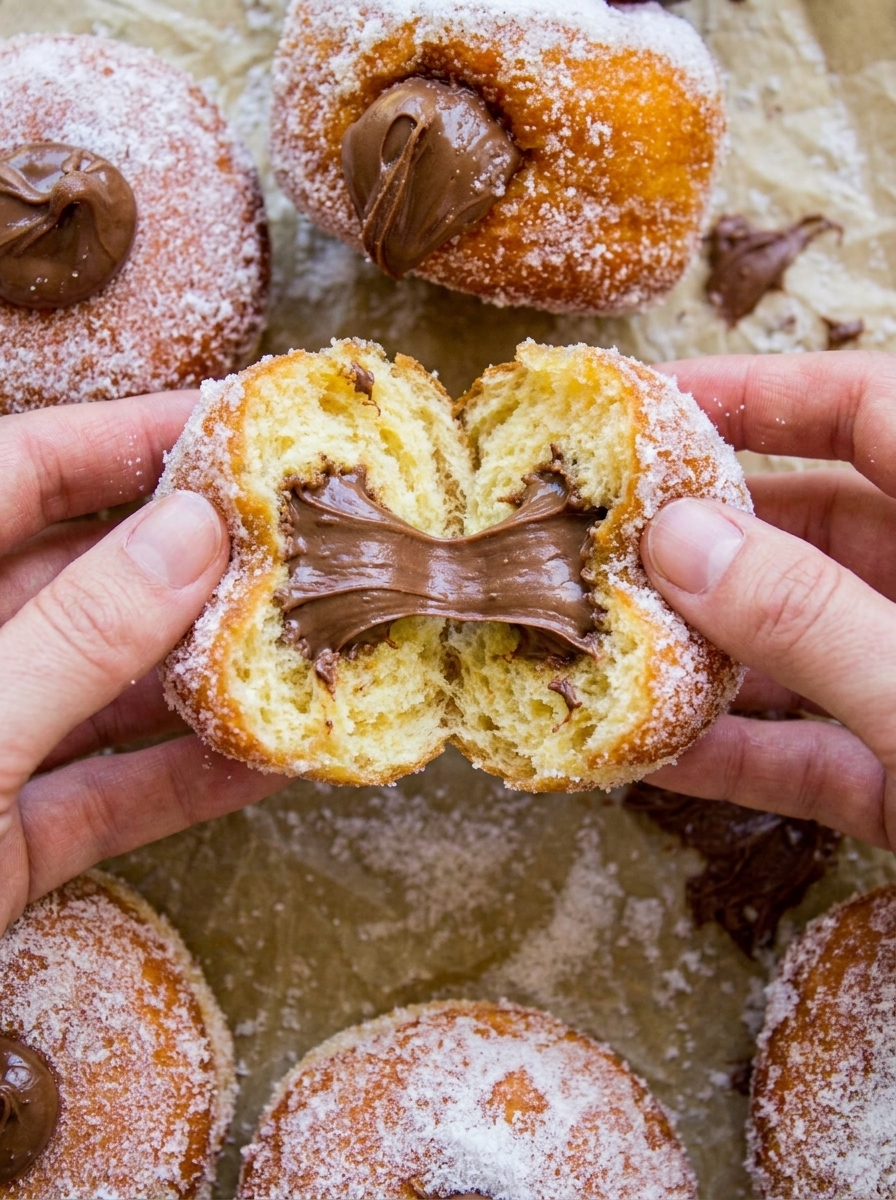
- Coat and fill. Drain briefly, roll each warm donut in sugar, then cool until comfortable to handle. Make a cavity through the side and pipe in the filling until the donut feels plump.
If you enjoy this recipe, you may also like Fireworks Sugar Cookie Cake.
Keep the Oil in the Right Range
Oil temperature changes every time dough enters the pan. Begin near 370°F so the temperature does not immediately fall below the target range, then adjust the heat between batches. Oil that is too cool produces a greasy crust; oil that is too hot browns the outside before the center cooks.
A clip-on thermometer gives the clearest reading. If you do not have one, fry a small scrap of dough first. It should rise and bubble immediately without darkening in a few seconds.
Troubleshooting Before the Next Batch
- The yeast never foamed: The yeast may be old or the water may have been too hot. Start again rather than continuing with inactive yeast.
- The dough is dense: It may contain too much extra flour or may not have doubled during both rises. Judge the dough by its size and feel, not only by the clock.
- The donuts are oily: Let the oil return to at least 360°F and reduce the number of donuts in each batch.
- The centers are doughy: Lower the heat slightly and extend frying by a few seconds per side. Very thick rounds may also need more time.
- The filling leaks out: Cool the donuts a little longer, keep the piping tip inside the cavity, and stop when the donut feels full rather than forcing in another squeeze.
Filling, Serving, and Variations
A piping bag fitted with a wide round tip gives the cleanest fill, but a sturdy zip-top bag with a small corner removed also works. Make the opening through the side and gently move a chopstick or two toothpicks inside to create space before piping.
Serve the donuts the day they are fried, when the sugar shell is dry and the center is still soft. The same dough can be filled with smooth jam, pastry cream, or lemon curd. Cinnamon sugar is an easy alternative to the plain coating.
Make-Ahead and Storage
The dough can complete its first rise in the refrigerator overnight. Let it warm just enough to roll without springing back, then cut the rounds and complete the full second rise before frying.
Filled donuts are best within several hours. Keep leftovers in a paper-towel-lined container at room temperature for up to two days. A 10-second microwave warm-up softens the crumb and filling, though the sugar coating will be less crisp.
Conclusion
For light Nutella donuts, confirm the yeast is foamy, let the dough double twice, and fry at a steady 360°F to 370°F. Coat the donuts while warm, but wait until they are comfortable to handle before piping the chocolate-hazelnut filling through the side.
Frequently Asked Questions
- → Can I use all-purpose flour instead of bread flour?
Yes, but the donuts may be slightly less chewy and structured. Start with the listed amount and add extra flour only if the dough remains very sticky after kneading.
- → Why should I not twist the biscuit cutter?
Twisting can press and seal the cut edge, which limits how evenly the round expands. Push straight down and lift the cutter directly back up.
- → What temperature should the frying oil be?
Keep it between 360°F and 370°F. Check between batches because adding dough temporarily lowers the temperature.
- → Can Nutella donuts be baked instead of fried?
The dough can be baked, but it will have a softer bread-like crust rather than the thin fried shell this recipe is designed to produce.