


Strawberry cheesecake crepes bring together three components that can each be prepared with confidence: thin vanilla crepes, a light cream-cheese filling, and a bright strawberry compote. The important part is not rushing the assembly. Rested batter cooks more evenly, whipped cream keeps the filling airy, and fully cooled fruit preserves the clean contrast between every layer.
Why Rested Crepe Batter Cooks Better
Flour needs time to absorb the milk and eggs. A 20- to 30-minute rest relaxes the batter and lets bubbles rise to the surface, producing crepes that bend without tearing and cook with fewer holes. The batter should pour like light cream rather than sit heavily in the pan.
A moderately hot nonstick skillet gives enough time to swirl the batter before it sets. The first crepe is a useful temperature check: if it stays pale for much longer than a minute, increase the heat slightly; if it browns before you can spread it, lower the heat.
If you enjoy this recipe, you may also like 4th of July Cake Pops.
Ingredients and What They Contribute
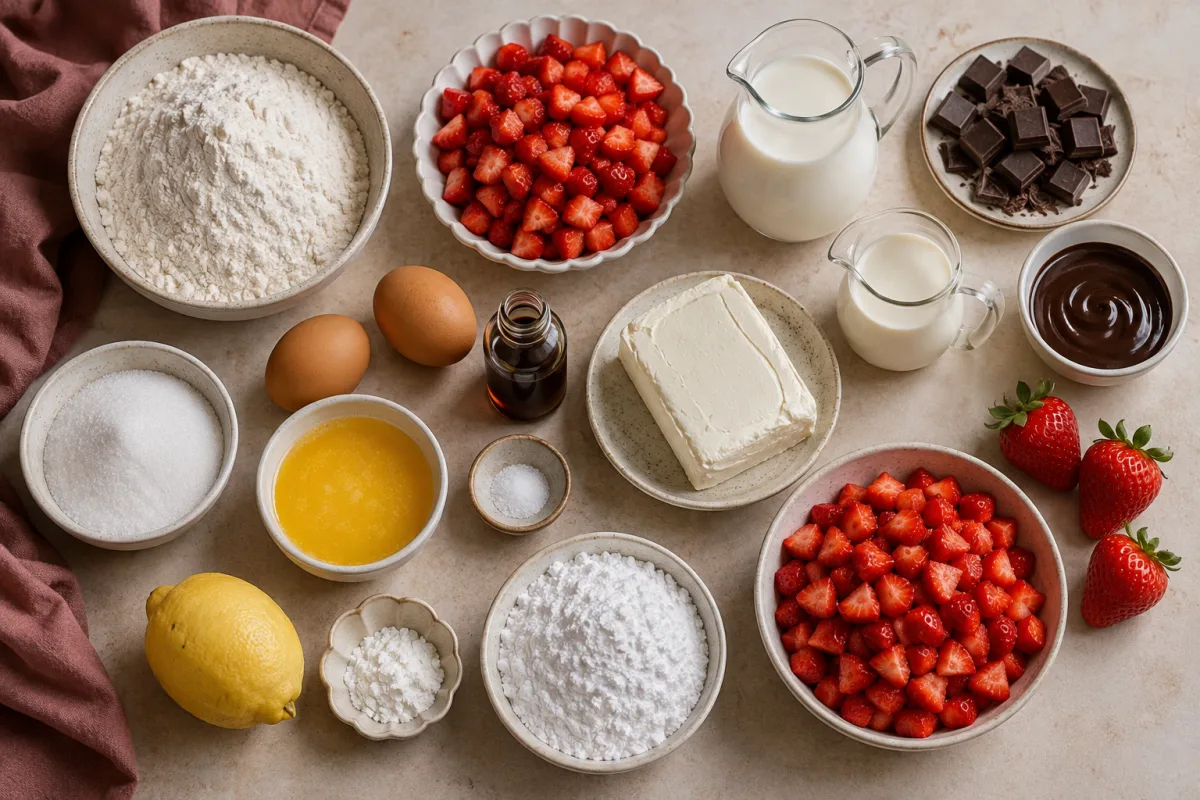
- All-purpose flour: One cup gives the batter enough structure while keeping the finished crepes delicate. Spoon and level it rather than packing the measuring cup.
- Eggs and whole milk: Eggs provide flexibility and color, while whole milk makes a tender batter that spreads easily.
- Melted butter: Butter enriches the crepes and reduces sticking. Let it cool slightly before whisking it into the eggs.
- Sugar, vanilla, and salt: A small amount of each seasons the crepes without making them dessert-sweet on their own.
- Cream cheese: Bring the full-fat block to room temperature so it beats smooth without small lumps.
- Heavy whipping cream: Cold cream whips to the firm peaks that lighten the cream-cheese base.
- Powdered sugar: It dissolves quickly and sweetens the filling without a grainy texture.
- Fresh strawberries: Choose fragrant, evenly red berries. Dice them to a similar size so the compote softens at the same rate.
- Lemon juice: Its acidity sharpens the strawberry flavor and balances the rich filling.
- Cornstarch: This is optional. Use the small slurry only when the berries release enough juice to make the compote runny.
- Dark chocolate: A restrained drizzle adds bitterness and helps the fresh strawberry flavor stand out.
For storage details after serving, the USDA leftovers and food safety guidance.
How to Make Strawberry Cheesecake Crepes
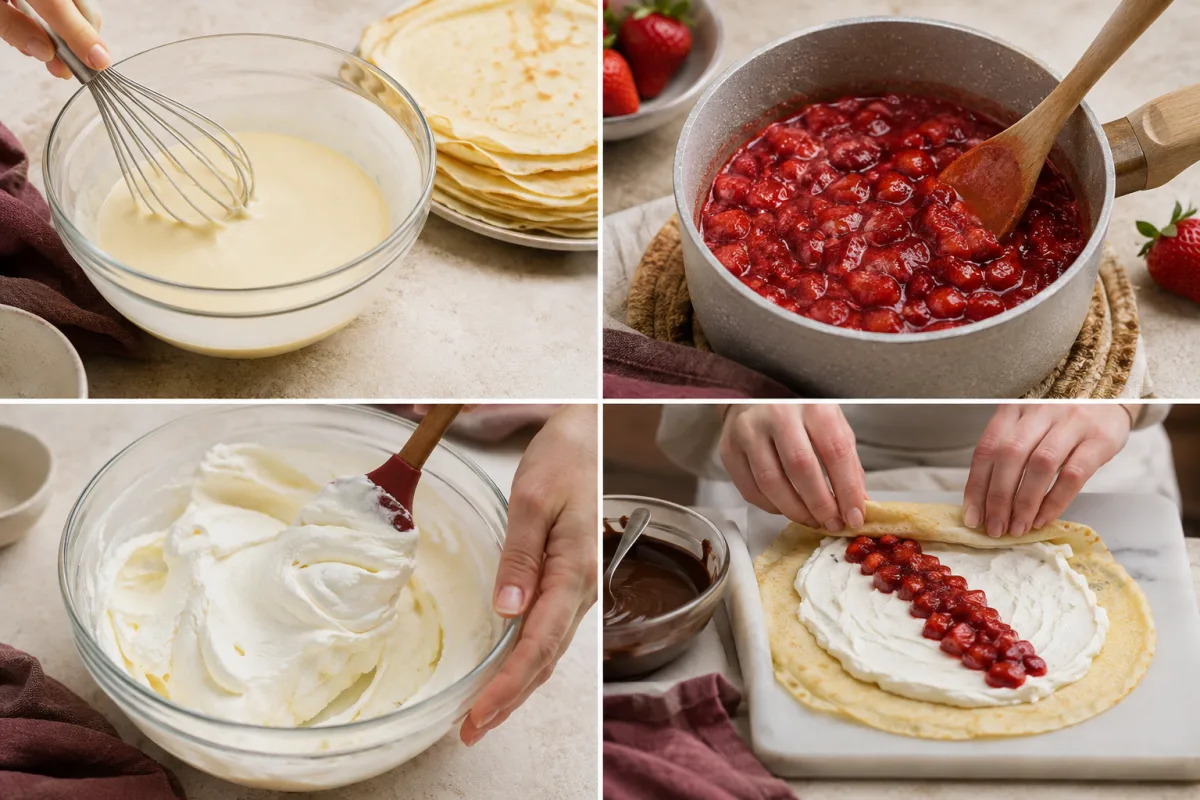
- Mix the batter. Whisk the flour, eggs, whole milk, melted butter, sugar, vanilla, and salt until smooth. Scrape the sides and bottom of the bowl so no dry pockets remain.
- Let it rest. Cover the bowl and leave the batter for 20 to 30 minutes. Whisk once more before cooking; add a small splash of milk only if it no longer pours easily.
- Cook thin crepes. Warm a lightly buttered nonstick skillet over medium heat. Add about 1/4 cup batter and immediately tilt the pan in a circle. Cook about 1 minute, flip, and cook the second side for roughly 30 seconds. Stack and cool all 8 to 10 crepes.
- Make the compote. Simmer the diced strawberries, granulated sugar, and lemon juice for 6 to 8 minutes, stirring gently. If necessary, add the cornstarch slurry and cook just until glossy. Transfer to a bowl and cool completely.
- Beat the cheesecake base. Mix softened cream cheese, powdered sugar, and vanilla until completely smooth.
- Whip the cream. In a chilled bowl, beat the heavy cream to stiff peaks. Stop when the peaks hold their shape so the cream stays smooth rather than grainy.
- Fold without deflating. Fold the whipped cream into the cream-cheese mixture in two additions, using broad strokes from the bottom of the bowl.
- Fill each crepe. Spread a modest layer of cheesecake filling over a cooled crepe and place a narrow line of cooled compote slightly off center.
- Roll and arrange. Fold in the sides if you want a closed parcel, then roll gently into a log and place seam-side down.
- Finish just before serving. Drizzle with melted dark chocolate and garnish with fresh strawberries, keeping the decoration light enough that the crepes remain easy to cut.
If you enjoy this recipe, you may also like Fireworks Sugar Cookie Cake.
Pan Temperature and Swirling Technique
Preheat the skillet before adding batter, but keep the heat moderate. Lift the pan from the burner as soon as the batter goes in, then tilt and rotate it until a thin film reaches the edge. Return it to the heat only after the base is evenly covered.
The crepe is ready to flip when the surface looks dry, the edge lifts easily, and the underside has light golden freckles. Use a thin spatula to loosen the perimeter, then turn it in one confident motion. Re-butter the pan only when the crepes begin to stick; too much butter can fry the edges.
Common Problems and Reliable Fixes
- The batter will not spread: It may be too thick or the skillet may be too hot. Whisk in milk one teaspoon at a time and lower the heat slightly.
- The crepes tear when flipped: Let the first side set until the edge releases cleanly, then use a wider spatula. A badly torn first crepe usually means the pan needs another minute to heat.
- The filling has cream-cheese lumps: The cream cheese was too cold. Beat it smooth by itself before adding sugar and never try to hide lumps with extra cream.
- The filling is loose: Whip the cream to stiff peaks and fold gently. Refrigerate the finished mixture for 15 minutes if the kitchen is warm.
- The compote runs out of the crepes: Cook it a little longer or use the optional cornstarch slurry, then chill it completely before assembly.
- The finished crepes become soggy: Use less compote inside, keep the components separate until near serving time, and add fresh garnish last.
Serving Ideas and Simple Variations
Serve one or two crepes per person for brunch, or a single crepe as a plated dessert. A few fresh strawberry slices and a fine dark-chocolate drizzle are enough; a heavy topping hides the delicate texture.
Blueberries, raspberries, or a mixed-berry compote can replace the strawberries using the same cooling rule. For a brighter filling, finely grate a little lemon zest into the cream cheese. Milk chocolate gives a sweeter finish, while toasted sliced almonds add contrast without changing the filling.

Make-Ahead, Storage, and Assembly
Cook the crepes and strawberry compote up to one day ahead. Place parchment between the cooled crepes, wrap the stack well, and refrigerate it separately from the fruit. The cheesecake filling can also be made a day ahead and kept covered and cold.
For the cleanest result, assemble within a few hours of serving. Filled crepes keep for up to two days in the refrigerator, but they gradually soften as they absorb moisture. Store them in a single layer when possible and add chocolate and fresh berries only after plating.
Conclusion
Rest the batter, cook the crepes in a moderately hot skillet, and cool the crepes and strawberry compote completely. Whip the cream to firm peaks before folding it into the smooth cream-cheese base, then use a restrained amount of filling and fruit so each crepe rolls neatly and stays tender.
Frequently Asked Questions
- → Can strawberry cheesecake crepes be made ahead?
Yes. Make the crepes, compote, and filling one day ahead and refrigerate them separately. Assemble within a few hours of serving for the best texture.
- → Why does crepe batter need to rest?
Resting gives the flour time to hydrate and allows bubbles to settle. The batter spreads more evenly, and the cooked crepes are less likely to tear.
- → How do I keep the cheesecake filling from becoming runny?
Start with softened cream cheese but cold heavy cream. Whip the cream to stiff peaks, fold it gently into the smooth base, and never add warm compote.
- → Can frozen strawberries be used for the compote?
Yes. Cook them directly from frozen and allow extra time for their liquid to reduce. Use the optional cornstarch slurry only if the cooled compote remains loose.